Opioid Tapering Calculator
Personalized Opioid Tapering Calculator
Calculate a safe, gradual reduction plan based on CDC and medical guidelines. Always consult your healthcare provider before starting any tapering process.
Why Tapering Opioids Isn’t Just About Stopping
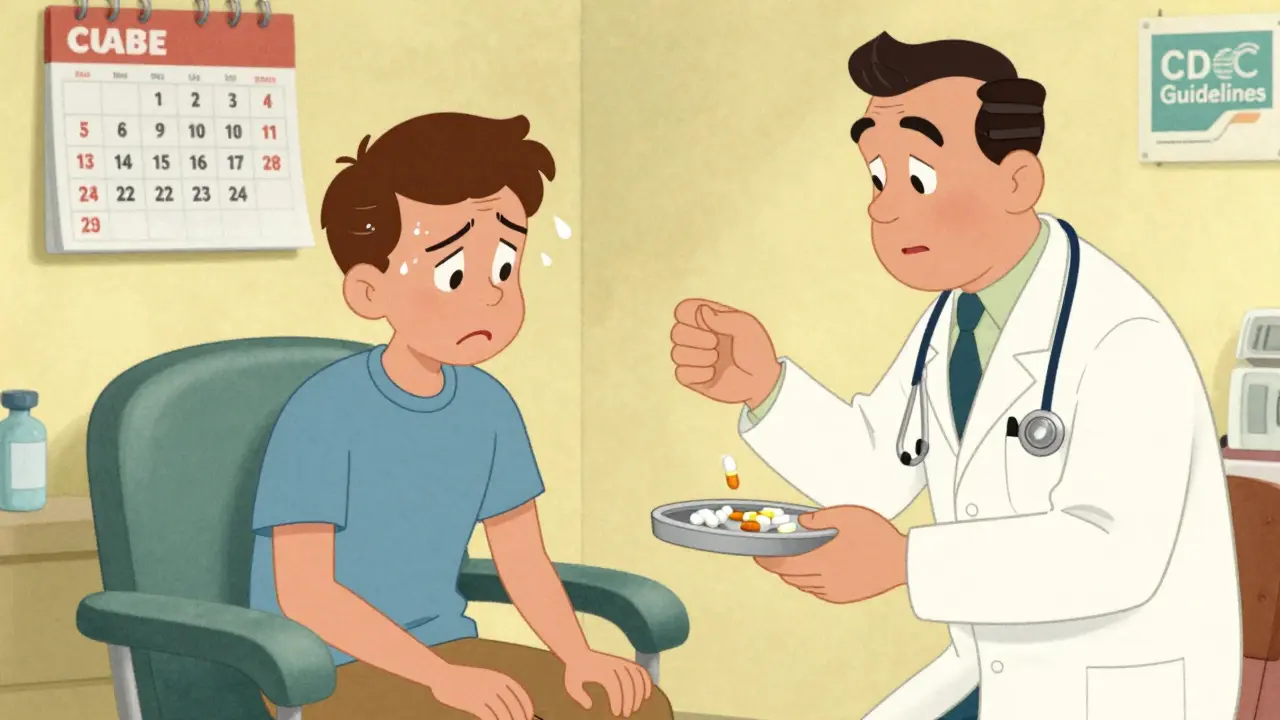
Many people think tapering opioids means cutting the pills in half and hoping for the best. That’s not how it works-and it can be dangerous. If you’ve been on opioids for more than a few weeks, your body has adapted. Stopping suddenly doesn’t just make you feel sick-it can trigger severe withdrawal, worsen pain, or even lead to overdose or suicide. The CDC found that between 2012 and 2017, over 100 people were hospitalized or died after being abruptly taken off opioids. That’s why tapering isn’t a one-size-fits-all process. It’s a careful, personalized plan designed to protect your health while reducing dependence.
When Should You Consider Tapering?
You don’t taper just because someone told you to. There are clear medical reasons to start the process:
- Your pain hasn’t improved in months, even at higher doses
- You’re experiencing side effects like drowsiness, constipation, confusion, or mood changes
- You’ve had an overdose or near-overdose event
- You’re taking opioids with benzodiazepines or alcohol-this combination increases risk of breathing problems
- You’re refilling prescriptions early, losing pills, or using them in ways not prescribed
- You’re feeling hopeless, anxious, or having thoughts of self-harm
These aren’t signs of weakness. They’re signals that your body and brain need a different approach. The goal isn’t always to stop completely. For many, it’s about finding the lowest effective dose that lets you move, sleep, and live without being numb or trapped in side effects.
The Risks of Going Too Fast
Some providers, under pressure to cut opioid prescriptions, have pushed patients into rapid tapers-cutting doses by 20% or more every week. But research shows this backfires. A 2021 study in the Annals of Internal Medicine found patients who were tapered too quickly had a 68% higher chance of opioid overdose and a 78% higher risk of suicide attempt or self-harm. Why? When pain returns suddenly and withdrawal hits hard, people often turn back to opioids-or other substances-to cope. The body isn’t ready. The brain isn’t ready. And the risk spikes.
The CDC now explicitly warns against rapid tapers. Their 2022 guidelines say: “Abrupt discontinuation can lead to serious harm.” That’s not a suggestion. It’s a clinical fact backed by data.
What Does a Safe Taper Look Like?
A safe taper moves slowly. Most guidelines agree on this:
- Reduce by 10% to 25% of your current dose every 2 to 4 weeks
- For high-dose users (over 90 morphine milligram equivalents or MME daily), slow it down even more-5% to 10% per month
- Never reduce frequency before dose. Keep the same number of doses per day while lowering the amount
- Preserve the nighttime dose until the very end-it helps with sleep and reduces withdrawal during rest
For example, if you’re taking 60 mg of oxycodone daily, a safe first step is dropping to 54 mg (10% reduction) after 3 weeks. Then 49 mg, then 44 mg. Some people need even slower steps-like 5 mg reductions every month. That’s okay. The goal isn’t speed. It’s stability.
What Happens During Withdrawal? (And How to Manage It)
About 35% of people on long-term opioids experience moderate to severe withdrawal during tapering. Symptoms aren’t the same for everyone, but common ones include:
- Anxiety (reported by 82% of those affected)
- Insomnia (76%)
- Muscle aches and cramps (68%)
- Diarrhea and nausea (59%)
- Sweating, runny nose, chills
You don’t have to suffer through this alone. Supportive medications can help:
- Clonidine (0.1-0.3 mg twice daily): Reduces sweating, anxiety, and high blood pressure from withdrawal
- Hydroxyzine (25-50 mg at bedtime): Helps with anxiety and sleep
- Loperamide (2-4 mg as needed): Controls diarrhea without opioid effects
- NSAIDs or acetaminophen: For lingering pain, not opioids
These aren’t magic fixes. But they make the process bearable. And they’re approved by the CDC and the National Academy of Medicine for use during tapering.
Why Your Consent Matters
One of the biggest mistakes in opioid tapering is doing it without the patient’s agreement. The CDC found that when patients were forced into a taper without input, discontinuation rates were 47% higher. That means people quit the plan-or quit seeing their doctor altogether.
Successful tapers start with a conversation. Your provider should review your medical history, pain levels, mental health, and goals. You should be able to say: “I want to try this,” or “I need more time,” or “I’m scared.” That’s not resistance. That’s participation.
Many clinics now use written tapering agreements. These aren’t legal contracts-they’re roadmaps. They include your current dose, reduction schedule, backup plans for setbacks, and contact info for emergencies. Patients who signed these agreements were 35% more likely to stick with the plan.
When You Need More Than a Taper
Some people need more than just a slower taper. If you have:
- A history of opioid use disorder
- Untreated depression, PTSD, or anxiety
- Been on high doses for years (over 120 MME)
- Used opioids with benzodiazepines or alcohol
Then a simple dose reduction isn’t enough. You need a team. That means working with a pain specialist, a mental health counselor, and possibly starting buprenorphine-a medication that eases withdrawal and reduces cravings. A 2021 JAMA study showed that when patients got this kind of integrated care, their chance of failing the taper dropped from 44% to just 19%.
Physical therapy and cognitive behavioral therapy (CBT) also help. CBT teaches you how to cope with pain without relying on pills. It’s not a quick fix, but it’s one of the most effective tools for long-term recovery.
What About Naloxone?
Naloxone (Narcan) isn’t just for overdoses. It’s a safety net during tapering. The SAMHSA recommends giving naloxone to anyone tapering opioids if they’re on more than 50 MME daily, have a history of overdose, or use benzodiazepines. Why? Because the first 30 days after reducing your dose are the riskiest. Your tolerance drops fast. If you relapse-even with a small amount-you could overdose.
Keep naloxone at home. Teach a family member how to use it. It’s not about expecting the worst. It’s about preparing for the unexpected.
What Success Really Looks Like
Success isn’t always quitting opioids completely. In fact, only about 32% of people who taper fully stop. The other 68% stabilize at a lower dose-one that lets them function better. Maybe you go from 80 MME to 30 MME. Maybe you stop daily pills and only use them for flare-ups. That’s still progress.
A 2022 survey of 1,200 chronic pain patients showed:
- 63% preferred a 10% monthly reduction
- 28% were okay with 15% every two weeks
- Only 9% wanted faster than 20% weekly
And those who chose slower tapers had 32% higher adherence. That’s the real takeaway: the slower you go, the more likely you are to stick with it-and the safer you’ll be.
What’s Changed Since 2023?
As of January 1, 2024, all prescribers in the U.S. must complete 8 hours of continuing education on opioid tapering. That’s because between 2017 and 2020, 12% of doctors mistakenly stopped opioids abruptly for stable patients-misinterpreting earlier guidelines. That led to at least 17 documented suicides.
Today, the message is clear: tapering must be patient-centered, slow, and supported. It’s not a policy checkmark. It’s a medical intervention.
Final Thoughts: You’re Not Alone
Tapering opioids is one of the hardest things you can do for your health. It’s not about giving up. It’s about reclaiming control-over your body, your pain, and your life. The goal isn’t to suffer less today. It’s to live better tomorrow.
If you’re considering a taper, ask for a plan. Ask for support. Ask for time. And if your provider pushes you too fast, speak up. You have the right to be heard. You have the right to safety. And you don’t have to do this alone.