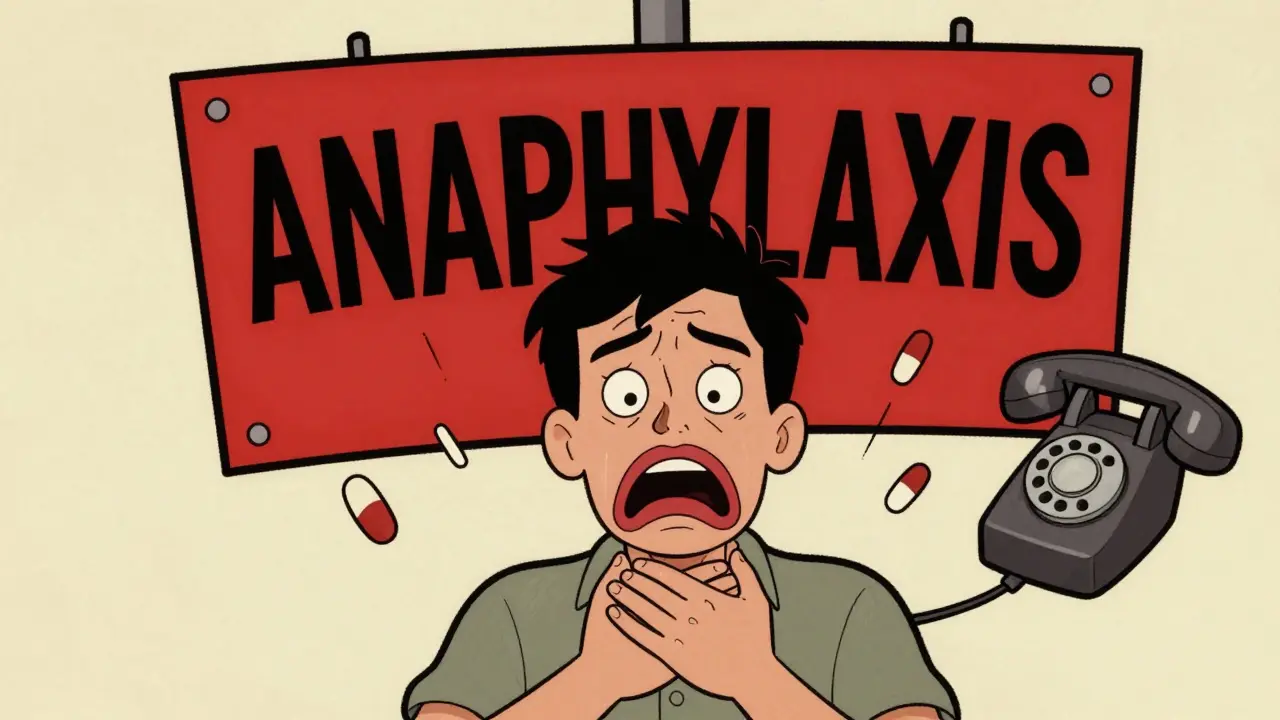
Taking medication shouldn’t feel like a gamble. You’re supposed to feel better, not worse. But sometimes, what starts as a mild headache or a bit of nausea turns into something serious - and you don’t realize it until it’s too late. The truth is, medication side effects are more common than most people think. About 7% of hospital admissions in the U.S. are linked to them. And while many reactions are harmless, some can kill you in minutes. Knowing the difference isn’t just helpful - it’s life-saving.
What Counts as a Red Flag?
Not every weird feeling means you need to rush to the ER. Nausea after antibiotics? That’s common. Dry mouth from antihistamines? Normal. Drowsiness from a sleep aid? Expected. These are side effects - annoying, maybe, but not dangerous. The FDA defines a serious reaction as one that causes death, hospitalization, disability, permanent damage, or a birth defect. So what do those look like in real life?If you’ve ever felt like your throat is closing up, your lips are swelling, or you can’t catch your breath - stop. Don’t wait. Don’t text your doctor. Call 911 or your local emergency number right away. These are signs of anaphylaxis, a severe allergic reaction. It happens in 1 to 15 out of every 10,000 prescriptions, but when it does, it can kill within minutes. Hives, facial swelling, wheezing, dizziness, or fainting? Same thing. These aren’t "maybe" symptoms. They’re red flags. And they need immediate action.
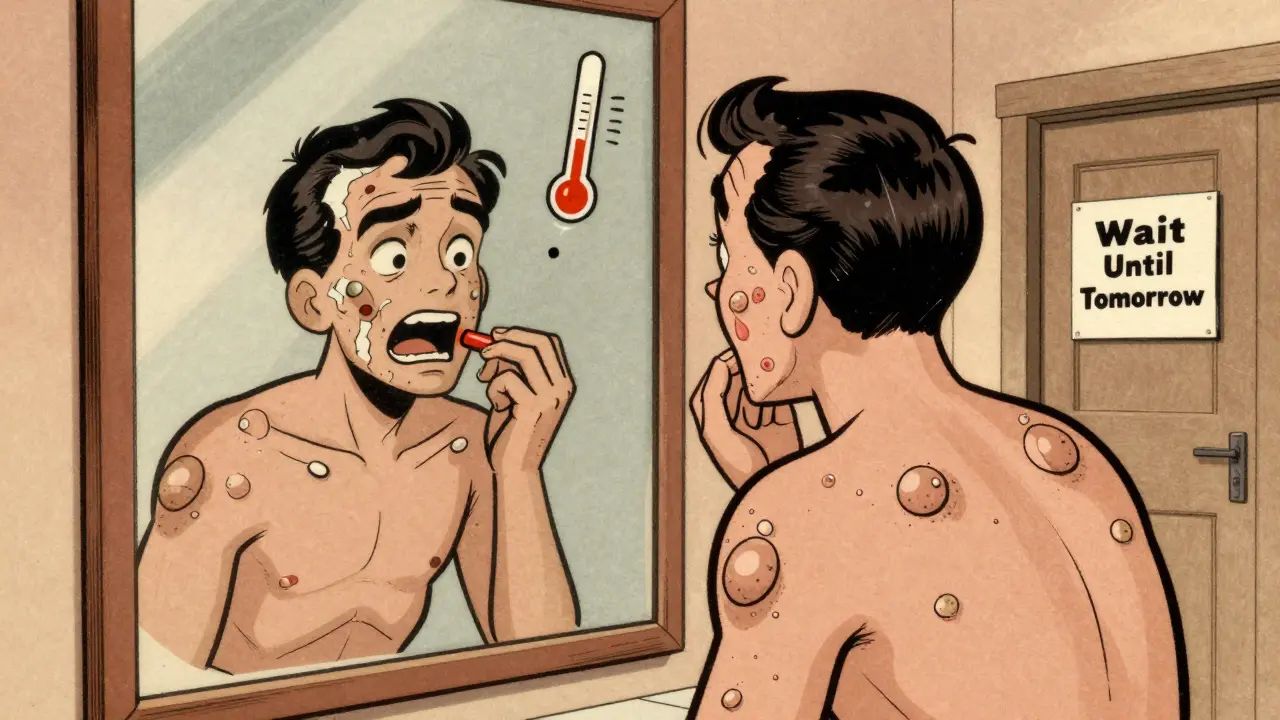
Another silent killer is Stevens-Johnson Syndrome (SJS) or Toxic Epidermal Necrolysis (TEN). These are rare, but deadly. You might start with flu-like symptoms - fever, sore throat, burning eyes. Then, your skin begins to blister. Blisters on your lips, inside your mouth, or around your eyes? That’s not a rash. That’s your skin detaching. Mortality rates for TEN hit 35%. If you see this, stop the medication immediately and get to a hospital. Don’t wait for your next appointment. Don’t try to treat it with creams. This is a medical emergency.
When Side Effects Get Dangerous
Some reactions sneak up on you. You might not realize something’s wrong until you’ve already fallen, bled out, or passed out. Dizziness isn’t just annoying - especially for older adults. It increases fall risk by 200%. A single fall can break a hip, lead to surgery, and change your life forever. If you’re feeling lightheaded after starting a new blood pressure pill or a painkiller, write it down. Note when it happens. Is it right after you take the pill? Does it last for hours? Tell your doctor. Don’t assume it’s just aging.Severe nosebleeds? If you’re on blood thinners like warfarin or apixaban, and you’re bleeding for more than 10 minutes, or you’re swallowing blood, that’s not normal. It could mean your dose is too high. Same with unexplained bruising, dark stools, or coughing up blood. These aren’t "just side effects." They’re warning signs your body can’t handle the drug.
And then there’s the slow burn - symptoms that don’t go away. If you’ve had diarrhea for more than three days after starting an antibiotic, it could be C. diff, a life-threatening gut infection. If your skin turns yellow or your urine looks like tea, that’s liver damage. If you’re suddenly confused, having trouble speaking, or feeling weak on one side of your body, it could be a stroke triggered by a drug interaction. Don’t wait for it to get worse. Call your doctor now.
What’s Usually Safe to Ignore (For Now)
It’s easy to panic when your body feels off. But you don’t need to stop every medication the second you feel weird. Most side effects fade after a few days as your body adjusts. Here’s what’s typically harmless:- Nausea from antibiotics (affects 20-30% of users)
- Constipation from opioids (40-50% of users)
- Diarrhea from amoxicillin (25% of users)
- Dry mouth from antihistamines (35% of users)
- Drowsiness from first-gen antihistamines (30% of users)
- Mild rash from penicillin (5-10% of users)
- Headache from various meds (15-20% of users)
If these stick around longer than 72 hours - or if they start interfering with your daily life - then it’s time to call your doctor. But don’t quit cold turkey. Stopping meds without advice causes 50% of treatment failures for chronic conditions like high blood pressure, diabetes, or depression. You might feel worse than before.
What to Do When Something Feels Wrong
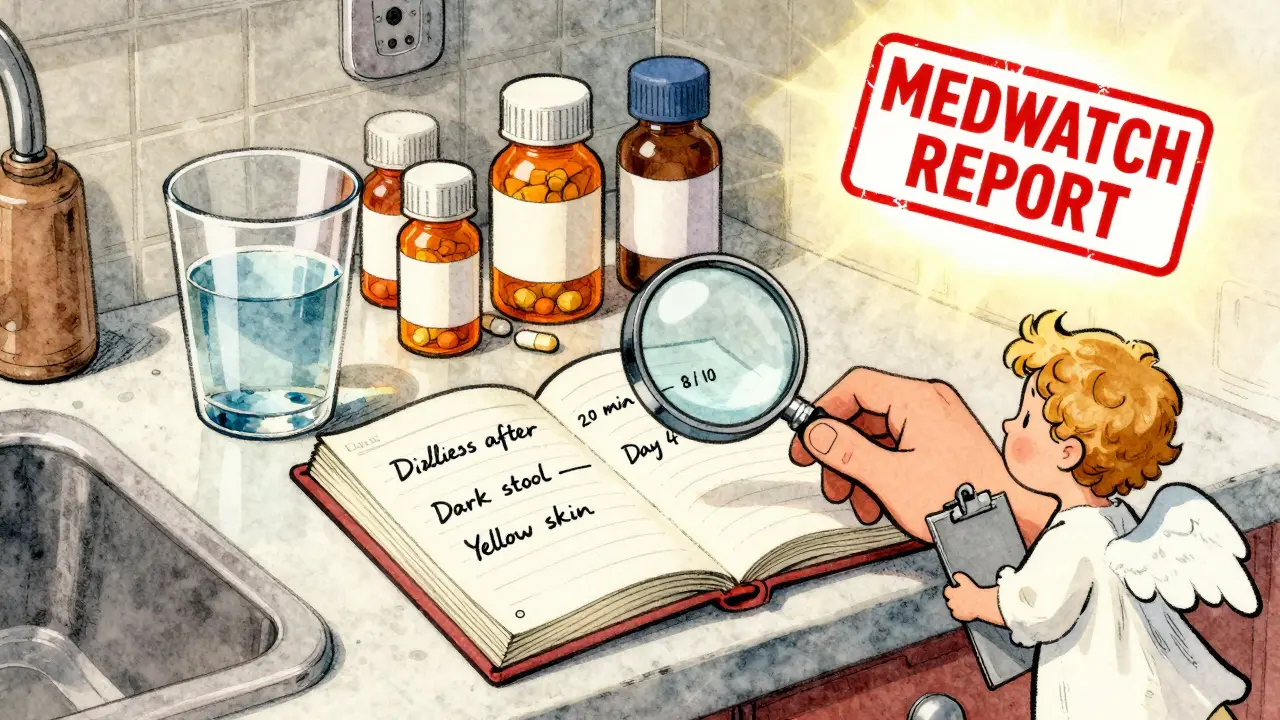
You don’t need to be a doctor to spot trouble. You just need to pay attention. Here’s what to do:- Write it down. Note the symptom, when it started, how bad it is (use a 1-10 scale), and what time you took your medicine. Did the dizziness hit 20 minutes after your pill? Did the rash appear after your third dose? Details matter.
- Don’t stop unless it’s an emergency. Unless you’re having trouble breathing, swelling, or blisters, keep taking your meds. Call your doctor first. They might adjust your dose, switch you to another drug, or tell you it’s normal.
- Call 911 if you have trouble breathing, swelling, or fainting. No waiting. No texting. Emergency services exist for this.
- Keep a side effect diary. Studies show this improves diagnostic accuracy by 65%. It helps your doctor see patterns you might miss.
- Report it. The FDA’s MedWatch program takes reports from patients. You can call 1-800-332-1088 or report online. One report might not change anything - but 1,300,000 reports? That’s how drugs get pulled or labeled better.
Why Reporting Matters
Most people think side effects are just "part of the deal." But they’re not. Every report you make helps protect others. The FDA’s MedWatch system gets about 1.3 million reports a year - and 15-20% come from patients like you. Those reports led to 200-300 label changes and 15-20 drug recalls just since 2020. The FDA’s Sentinel Initiative now watches 300 million patient records in real time. It caught a heart failure risk with a diabetes drug in six months - something that used to take years.And here’s the kicker: only 35% of patients can correctly identify red flag symptoms. That’s why the FDA started a new initiative in January 2025 to make side effect info clearer on medication guides. Pharmacies now hand out these guides for drugs with serious risks. They’re written in plain language - no jargon, no fine print. Read them. Keep them. They’re your first line of defense.
What to Say When You Call Your Doctor
You don’t need to sound like a medical expert. Just be clear. Try this:"I started [medication name] on [date]. Since then, I’ve had [symptom]. It started [time after dose], lasts [duration], and feels like a [1-10]. I’ve tried [what you did]. It hasn’t improved. I’m worried because [reason]."
That’s it. You’re not overreacting. You’re being smart. Your doctor has seen this before. They’ll thank you for catching it early.
Final Thought: Trust Your Body
You know your body better than anyone. If something feels off - really off - it probably is. Don’t brush it off as "just stress" or "getting older." Don’t wait until you’re in the ER to realize you should’ve called sooner. Medication safety isn’t about fear. It’s about awareness. And awareness saves lives.When should I call 911 instead of my doctor for a medication side effect?
Call 911 immediately if you experience trouble breathing, swelling of your face, lips, tongue, or throat, sudden dizziness or fainting, or if you develop blisters on your skin or inside your mouth. These are signs of anaphylaxis or Stevens-Johnson Syndrome - both life-threatening emergencies that need emergency care right away. Don’t wait to see if it gets better.
Can I just stop taking my medication if I’m having side effects?
Only stop if you’re having a severe allergic reaction (like trouble breathing or swelling) or blistering skin. For most other side effects - nausea, drowsiness, dry mouth - keep taking your medicine and call your doctor. Stopping without advice can cause your condition to worsen. In fact, 50% of treatment failures for chronic illnesses happen because people quit meds too soon.
How do I know if a side effect is serious or just annoying?
Ask yourself: Is it interfering with daily life? Is it getting worse? Is it new and unusual for you? If the answer is yes, it’s worth calling your doctor. Serious side effects often include symptoms like chest pain, confusion, yellow skin, dark urine, uncontrolled bleeding, or sudden weakness. Minor ones - like mild nausea or headache - usually fade within a few days. If they don’t, it’s time to check in.
Should I report side effects to the FDA?
Yes. The FDA’s MedWatch program relies on patient reports to spot rare but dangerous side effects that clinical trials miss. You can report online or call 1-800-332-1088. Even if you think it’s "not that bad," your report could help prevent someone else from being hurt. Over 1.3 million reports are filed each year - and they’ve led to hundreds of drug label updates and recalls.
I’m on multiple medications. How do I know which one is causing the problem?
Keep a side effect diary. Write down every medication you take, the time you take it, and when symptoms appear. Did the dizziness start after you added a new blood pressure pill? Did the rash show up after you began a new antibiotic? This helps your doctor connect the dots. Studies show this method improves diagnosis accuracy by 65%. Don’t guess - track it.
Are over-the-counter drugs safe? Can they cause serious side effects too?
Yes. Many people assume OTC meds are harmless, but they’re not. NSAIDs like ibuprofen can cause stomach bleeding. Acetaminophen can damage your liver if taken too often. Decongestants can spike blood pressure. Even herbal supplements like St. John’s Wort can interfere with antidepressants or birth control. Always read the label and talk to your doctor or pharmacist before mixing OTC drugs with prescriptions.
What if I’m not sure whether my symptom is related to my medication?
When in doubt, call your doctor. It’s better to be safe than sorry. Even if it turns out to be nothing, you’ve taken a responsible step. Doctors expect these calls - especially when patients are new to a medication. Your concern helps them make better decisions for you and others. Don’t second-guess yourself.
Comments
Man, I wish I’d had this guide when I started that new blood pressure med last year. Thought the dizziness was just me being tired. Turns out it was a 7/10 on the ‘I’m-about-to-fall-down-the-stairs’ scale. Wrote it down, called my doc, they lowered the dose. Life’s better now. Seriously, keep a diary. It’s not extra work-it’s self-preservation. 🙏
Let’s be real-pharma doesn’t care if you live or die. They just want you to keep buying. The FDA? A toothless dog wagging its tail for corporate cash. They only act when 12 people die and the media picks it up. Your ‘side effect diary’? Cute. It won’t stop the machine. But hey, if it makes you feel like you’re fighting back, go ahead. Just don’t confuse hope with safety.
OMG I’m so done with this whole ‘call your doctor’ nonsense 😤 Like, why do I have to be a detective just to not die from my own meds? I took lisinopril and got a rash. I posted on Reddit. Someone said it was ‘probably fine.’ I went to urgent care anyway. Turns out it WASN’T fine. Now I have a scar and a PTSD-level fear of prescriptions. Can we just get rid of all pills and eat kale? 🥬😭
Bro, I’ve been on 8 different meds in the last 18 months. Some worked, some turned me into a zombie, some made me hallucinate my cat was talking. The real issue? No one tells you about the *cumulative* shit. It’s not just one drug-it’s the cocktail. Your liver’s not a superhero. It’s a tired janitor cleaning up after a rave. If you’re on more than 4 prescriptions, you’re playing Russian roulette with your organs. And yeah, I’ve written down every symptom. My journal’s thicker than my college textbooks. Still alive. Barely.
This is so important!! I used to ignore every little thing until I almost passed out from low potassium after a diuretic. Now I track everything-time, dose, mood, even what I ate. My doc was shocked I caught the pattern. 🙌 You’re not being paranoid-you’re being powerful. And yes, report it to the FDA. One report might not change the world, but 1000? That’s a revolution. We’re not just patients-we’re watchdogs. 💪❤️
They want you to report side effects? That’s what they want. But who’s really behind the FDA? Big Pharma owns them. Why do you think they only pull drugs after 10,000 people die? They knew. They always knew. And now they’re giving you pamphlets to make you feel safe. Don’t fall for it. Your ‘side effect diary’ is just a trap to make you think you’re in control. The system is rigged. Stay off all meds. Eat garlic. Pray. That’s real medicine.
My grandma took 12 pills a day. One day she started forgetting her own name. We thought it was dementia. Turns out it was a drug interaction between her blood pressure med and her sleep aid. Took her doctor 3 months to catch it. She’s fine now, but I swear-I now ask every doc: ‘Could this be making me worse?’ Simple question. Big answer. Don’t be shy. Your life’s worth it.
Wait so you’re telling me that the same FDA that approved OxyContin and then didn’t do anything for 10 years is now telling me to trust their ‘plain language’ guides?? 😂 I’m not a fool. That’s like asking a fox to write the chicken safety manual. And ‘report to MedWatch’? Yeah right. I reported a rash from a statin. Got an auto-reply. 6 months later, same drug got a black box warning. They don’t care. They just want you to keep taking it. 🤷♀️
While the information presented is clinically accurate and commendable, I must emphasize the importance of professional medical consultation prior to any therapeutic adjustment. Self-diagnosis, even with meticulous documentation, cannot replace clinical judgment. Patient autonomy is vital, but must be exercised within the boundaries of evidence-based practice.
There’s a quiet dignity in listening to your body-not as a rebel, not as a victim, but as a steward. We’ve been conditioned to see medication as a cure-all, a silver bullet, when in truth, it’s a tool with edges. Every pill carries the weight of unintended consequence. And yet, we are not powerless. To document, to speak, to report-not as a demand, but as a quiet act of witness-is perhaps the most radical form of care we can offer ourselves in this age of algorithmic medicine. The body remembers. So should we.