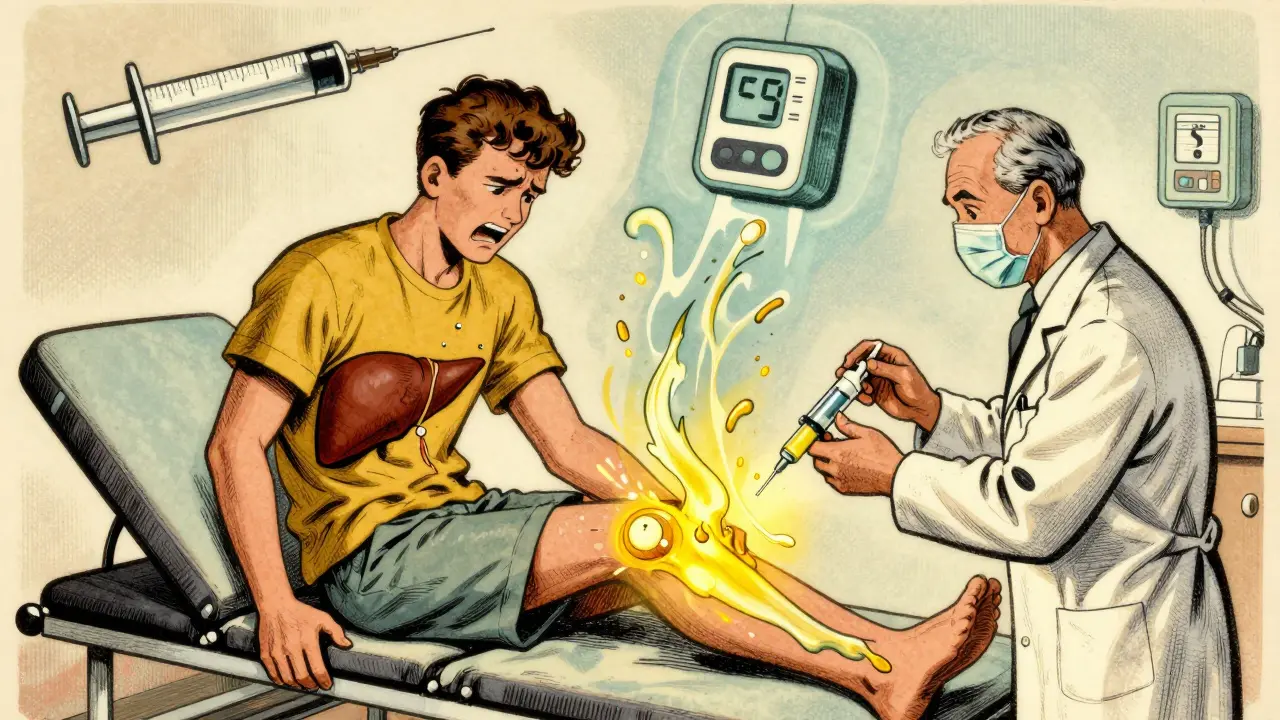
When your knee or hip aches from osteoarthritis, a steroid injection can feel like a lifeline. Quick relief. No pills. No surgery. But what if that quick fix is quietly doing more harm than good over time? The truth is, intra-articular steroid injections aren’t as safe as most doctors and patients assume. While they’ve been used for decades to calm joint inflammation, new evidence shows they can accelerate joint damage, trigger systemic side effects, and even push people toward joint replacement sooner than expected.
How These Injections Work - and Why They Might Not Be Local
Intra-articular corticosteroid injections (IACS) are meant to be targeted. A needle goes straight into the joint - knee, hip, shoulder, wrist - and delivers a powerful anti-inflammatory drug like triamcinolone, methylprednisolone, or betamethasone. The idea is simple: stop the inflammation right where it hurts, without affecting the rest of the body. But here’s the problem: steroids don’t stay put. A 2023 study in Radiology found that these drugs leak out of the joint into the bloodstream. Even when injected into a single joint, your body absorbs enough to trigger real, measurable effects elsewhere. Triamcinolone acetonide, one of the most commonly used forms, shows particularly high absorption rates. That means what’s supposed to be a local treatment becomes a systemic one.The Hidden Costs: Systemic Side Effects You Might Not Realize Are Connected
Most people know about the short-term risks - a flare-up of pain right after the shot, or a little skin thinning at the injection site. But the real dangers often show up weeks or months later, far from the joint.- High blood sugar: Even if you don’t have diabetes, steroid injections can spike your blood glucose. For people with type 2 diabetes, this can mean days of unstable readings and increased insulin needs.
- Bone loss: Steroids suppress bone formation and increase breakdown. Over time, this leads to osteoporosis - especially risky for postmenopausal women. One study found bone density drops measurable within 6 weeks of a single injection.
- Adrenal suppression: Your body naturally makes cortisol. When you flood your system with synthetic steroids, even briefly, your adrenal glands can shut down production. That means if you get sick, injured, or need surgery later, your body may not respond properly.
- Fluid retention and high blood pressure: Steroids make your body hold onto salt and water. That’s why some people notice puffy ankles or sudden weight gain after a shot. Blood pressure can climb, sometimes significantly.
- Cushing-like symptoms: Facial rounding, thinning skin, purple stretch marks - these aren’t just cosmetic. They’re signs your body is being overwhelmed by too much steroid exposure, even from injections.
The Cleveland Clinic and Mayo Clinic both list these as real, documented risks - not rare outliers. And they get worse with repeated use.
Accelerating Joint Destruction: The Dark Side of Pain Relief
The biggest shocker? Steroid injections might be speeding up the very condition they’re meant to treat. A 2023 study tracking 1,000 patients with hip and knee osteoarthritis found that those who got injections were more likely to develop:- Joint space narrowing - meaning cartilage was wearing away faster
- Subchondral insufficiency fractures - tiny cracks under the cartilage
- Osteonecrosis - death of bone tissue due to reduced blood flow
- Rapid progressive osteoarthritis - joints deteriorating so fast they needed replacement within a year
The data was startling: patients who got multiple injections had 4.67 times higher odds of radiographic progression than those who didn’t get any. In hip joints, 44% of patients showed measurable joint space loss within just six months.
Dr. Ali Guermazi, a leading radiologist at Boston University, put it bluntly: “We’ve been telling patients that even if these injections don’t relieve your pain, they’re not going to hurt you. But now we suspect that this is not necessarily the case.”
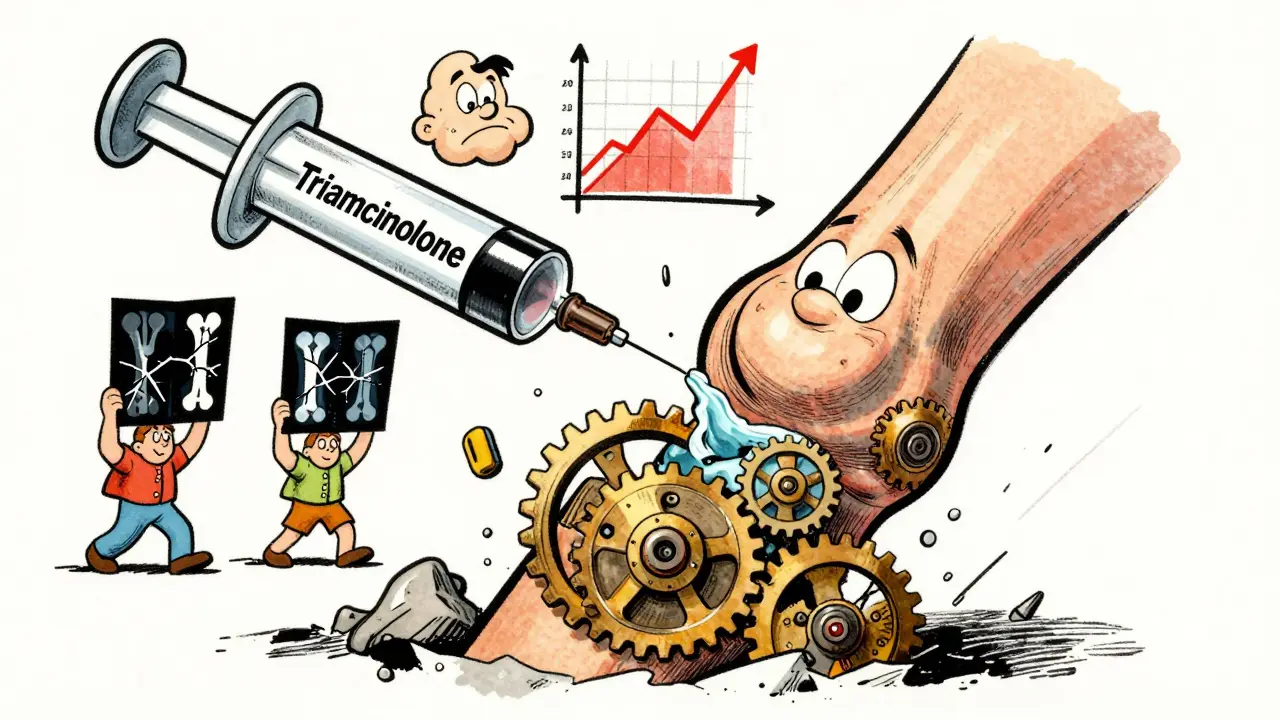
Why Do Some Studies Say They’re Safe?
You might have heard that steroid injections are “safe and effective.” That’s because older studies, and even some recent ones, only looked at short-term pain relief - not long-term joint damage. For example:- A 2017 study by Dr. McAlindon found increased cartilage loss over two years, but no sudden bone damage.
- Dr. Raynauld’s trial showed no change in joint space narrowing on X-rays.
- A 2023 NIH review found no difference in adverse events between steroid and placebo groups - but it didn’t measure structural joint changes.
The difference? Imaging. The new studies use high-resolution MRI and precise X-ray measurements to track tiny changes over time. Older studies relied on patient reports or basic X-rays that miss early damage.
So when someone says “studies show it’s safe,” they’re often quoting outdated methods. The science is shifting - and the warnings are getting louder.
Who’s at Highest Risk?
Not everyone gets hurt the same way. Some people are far more vulnerable.- People with early osteoarthritis: If your X-ray shows only mild wear, you’re likely a candidate for long-term joint preservation. Steroid injections may destroy what’s left.
- Patients with diabetes: Even one injection can throw blood sugar out of control for days.
- Postmenopausal women: Already at higher risk for bone loss, steroid injections compound that risk.
- People planning surgery: Steroids weaken tissues and delay healing. Getting an injection within 3-6 months of joint replacement increases infection and failure risks.
- Those getting multiple injections: The more you get, the higher the cumulative dose - and the higher the risk.
And here’s something many doctors don’t tell you: if your pain doesn’t match your X-ray - if your knee hurts badly but looks fine on imaging - you might have something else going on. Inflammation from infection, gout, or early rheumatoid arthritis can mimic osteoarthritis. Injecting steroids in those cases can mask the real problem and delay proper treatment.
Current Guidelines - And Why They’re Not Enough
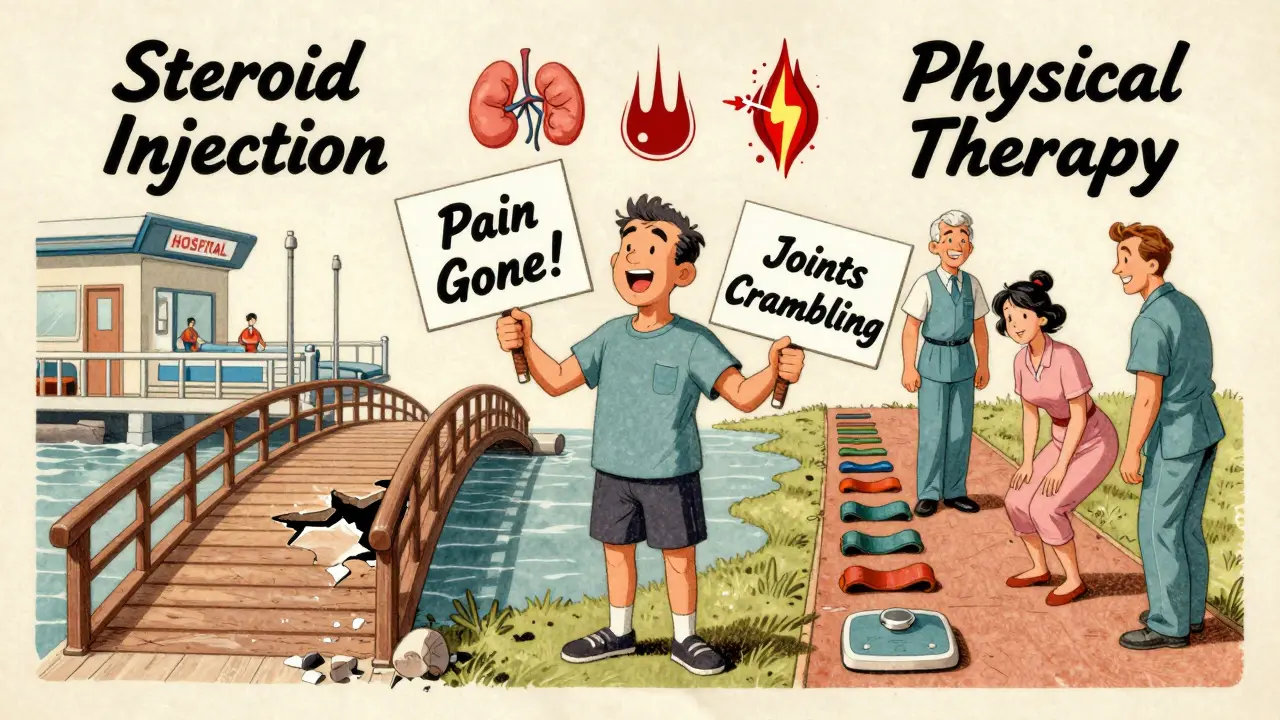
Most medical societies still recommend up to 3-4 injections per year per joint. The American Academy of Orthopaedic Surgeons conditionally supports them for knee osteoarthritis. But these guidelines were written before the new evidence emerged. The real problem? There’s no standard for “safe” dose. A 20 mg injection of triamcinolone in the knee might be fine for one person, but dangerous for another. Factors like body weight, age, existing steroid use (even oral), and genetics all affect how much systemically gets absorbed.The American Academy of Physical Medicine and Rehabilitation now advises caution in high-risk groups - but doesn’t say “don’t do it.” That leaves doctors guessing.
What Should You Do?
If you’re considering or have had steroid injections:- Ask your doctor: “What’s the long-term impact on my joint structure?” Don’t settle for “it helps with pain.”
- Get a baseline MRI if you haven’t already. X-rays miss early cartilage damage. MRI shows the real story.
- Track your blood sugar for 3-5 days after each injection, even if you’re not diabetic.
- Limit injections to once per joint per year - unless you have severe, disabling pain and no other options.
- Explore alternatives: Physical therapy, weight loss, bracing, and newer treatments like hyaluronic acid (though its benefits are debated) or platelet-rich plasma (PRP) may offer longer-lasting relief without the same risks.
There’s no magic bullet for osteoarthritis. But steroid injections aren’t the low-risk tool we’ve been told they are. They’re a powerful, double-edged sword - effective for pain, potentially destructive for joints.
The goal isn’t to avoid them completely. It’s to use them wisely - with full awareness of what you’re trading for short-term comfort.
Can steroid injections cause permanent joint damage?
Yes. Multiple studies, including a 2023 Radiology study, show that repeated intra-articular steroid injections can accelerate cartilage loss, cause subchondral fractures, and lead to osteonecrosis - all forms of structural damage that may not be reversible. This damage can hasten the need for joint replacement surgery.
How long do systemic side effects last after a steroid injection?
Systemic effects like elevated blood sugar, adrenal suppression, and fluid retention can last for weeks. Cortisol levels may remain suppressed for up to 6 weeks after a single injection, especially with higher doses or repeated use. This means your body may not handle stress, illness, or surgery well during that time.
Are steroid injections safe for people with diabetes?
They can be risky. Steroid injections often cause significant spikes in blood glucose, sometimes lasting several days. Diabetic patients may need to adjust insulin or oral medications temporarily and should monitor glucose closely for at least 5 days after the injection. In some cases, the spike is severe enough to require hospitalization.
How many steroid injections are too many per joint?
While many guidelines allow up to 3-4 per year, newer evidence suggests even 1-2 per year may carry long-term risks, especially for younger patients or those with early osteoarthritis. The safest approach is to limit injections to once per year per joint, unless pain is severe and no other options exist. Cumulative dose matters - every injection adds to total steroid exposure.
What are safer alternatives to steroid injections for joint pain?
Physical therapy remains the most effective long-term option for osteoarthritis, improving strength and joint mechanics without risk. Weight loss, even modest amounts, significantly reduces joint stress. Other options include hyaluronic acid injections (though evidence is mixed), platelet-rich plasma (PRP), and non-steroidal anti-inflammatories (NSAIDs) used cautiously. Emerging therapies like stem cell injections are still experimental and not yet proven superior.




Comments
i got one of these last year and my blood sugar went nuts for like 5 days 😅 i didnt even know steroids did that
Dear friends, I must emphasize-with the utmost gravity-that this article is not merely informative; it is a clarion call to reevaluate our medical assumptions. The systemic absorption of corticosteroids, as meticulously documented, is not an anomaly-it is a revelation. We must no longer permit convenience to eclipse caution. The body is not a compartmentalized machine; it is a symphony, and every injection is a note that echoes beyond the joint.
Let us not forget: the adrenal glands, those quiet sentinels of our survival, may fall silent under the weight of synthetic cortisol. And for the diabetic, the spike in glucose is not a mere inconvenience-it is a perilous tremor in the fragile architecture of metabolic balance.
Moreover, the cartilage-our body’s natural cushion-is not merely worn; it is actively dissolved by repeated exposure. The radiographic evidence is irrefutable. We are, in essence, trading temporary relief for irreversible decay.
Therefore, I urge every patient, every clinician, every caregiver: seek alternatives. Physical therapy is not a fallback-it is the foundation. Weight loss is not a suggestion-it is a lifeline. PRP, hyaluronic acid, bracing-these are not fringe options; they are the responsible path.
Let us choose wisdom over convenience. Let us choose long-term integrity over short-term comfort. The joint may ache today-but the soul aches more when we wake up five years from now, facing replacement surgery we could have avoided.
Really glad someone finally put this out there. I’ve seen so many patients get these injections like they’re candy. My grandma got three in her knee over two years and ended up needing a replacement way sooner than expected. The doc never mentioned the bone loss risk.
Also, the part about adrenal suppression is wild-I didn’t even know that could happen from a shot. I’m gonna start asking my own doctor about this before I agree to anything.
so like... if you get one of these shots, your body stops making its own cortisol? that sounds scary. like, what if you get in a car crash or something?
man, this hits different. we think medicine is about fixing things, but sometimes it's like pouring gasoline on a fire and calling it a bandaid. these shots? they're not healing-they're silencing the alarm so you don't feel the house burning down.
we got used to quick fixes. pain goes away? great. but what if the pain was the only thing keeping you from walking right into the wall? now you're walking blind.
my uncle got five of these for his hip. he thought he was winning. turned out he was just losing faster. now he's on a cane and waiting for surgery. no one warned him.
we gotta stop treating symptoms like enemies and start listening to them like messengers.
and hey-physical therapy ain't sexy, but it's the only thing that don't come with a side of slow suicide.
so i just found out my cousin got 4 of these in a year for her knee... and she’s only 48? that’s wild. i thought they were safe. my mom used to get them for her back in the 90s and no one said anything. guess we just didn’t have the tech to see the damage back then.
also-blood sugar spikes?? i didn’t even know that was a thing. i’m gonna tell my aunt to track hers after her next one.
obviously the pharma companies don’t want you to know this. they make billions off these shots and the replacements they cause. wake up people.
THEY’RE DOING THIS ON PURPOSE. WHY DO YOU THINK THE CDC AND FDA NEVER WARNED US? IT’S THE NEW WORLD ORDER. THEY WANT US WEAK. THEY WANT US DEPENDENT. THEY WANT US ON SURGERY AND MEDS SO WE’RE TOO TIRED TO PROTEST. THIS ISN’T MEDICINE-IT’S CONTROL.
MY NEIGHBOR GOT ONE AND HIS FACE SWELLED UP. I TOLD HIM IT WAS THE ILLUMINATI. HE LAUGHED. NOW HE’S ON INSULIN.
This is a critical and overdue conversation. The medical community has, for too long, prioritized symptom mitigation over structural preservation. The evidence presented here is not speculative-it is radiologically quantified and clinically replicated.
For clinicians: we must update our counseling protocols. For patients: you have the right to demand imaging-based risk assessment prior to intervention. For policymakers: guidelines must be revised to reflect the latest high-resolution data.
Let us not confuse palliation with prevention. The goal of orthopedic care should be longevity of joint function-not merely the absence of pain in the next 48 hours.
honestly i’ve been avoiding these for years just because i don’t trust quick fixes. i got PT for my knee instead and it’s been 3 years and i’m still walking fine. no shots, no drama.
also-i never knew steroids could mess with your adrenal glands. that’s wild. i’ll be asking my doc about this next time.
THEY’RE DOING THIS BECAUSE THEY WANT YOU TO NEED A JOINT REPLACEMENT. IT’S A $30 BILLION INDUSTRY. THEY MAKE MORE MONEY OFF THE SURGERY THAN THE INJECTION. THIS ISN’T A MISTAKE-IT’S A BUSINESS MODEL. AND YOUR DOCTOR? THEY GET BONUS POINTS FOR PUSHING THE SHOTS. THEY DON’T CARE ABOUT YOUR BONES.
I SAW A DOCUMENTARY ABOUT THIS. THEY’RE LYING TO YOU. EVERY SINGLE ONE OF THEM.
finally someone says it. i got one last year and my blood sugar spiked to 280 and no one told me it could do that. i thought it was just stress. now i know. no more. ever.
yeah ok