Photosensitivity Sunscreen Calculator
Sunscreen Calculator
This tool calculates the exact amount of sunscreen you need based on your body size to prevent photosensitivity reactions. The Skin Cancer Foundation recommends 2 mg/cm² of sunscreen for full protection.
Results
Total sunscreen needed for full body coverage:
Recommended sunscreen application by body part:
| Face & Neck | 0.0 oz |
| Arms | 0.0 oz |
| Torso | 0.0 oz |
| Legs | 0.0 oz |
Why This Matters
Most people use only half the recommended amount. With photosensitivity, even a small amount of UV exposure can trigger reactions. The article states: "You need 2 milligrams per square centimeter of skin. That's about one ounce—enough to fill a shot glass—for your whole body."
SPF Comparison
For photosensitivity protection:
SPF 30 blocks 97% of UVB rays
SPF 50+ blocks 98% of UVB rays
The difference between 97% and 98% is critical for photosensitive skin. That 1% remaining UV exposure can trigger reactions when your skin is highly sensitive.
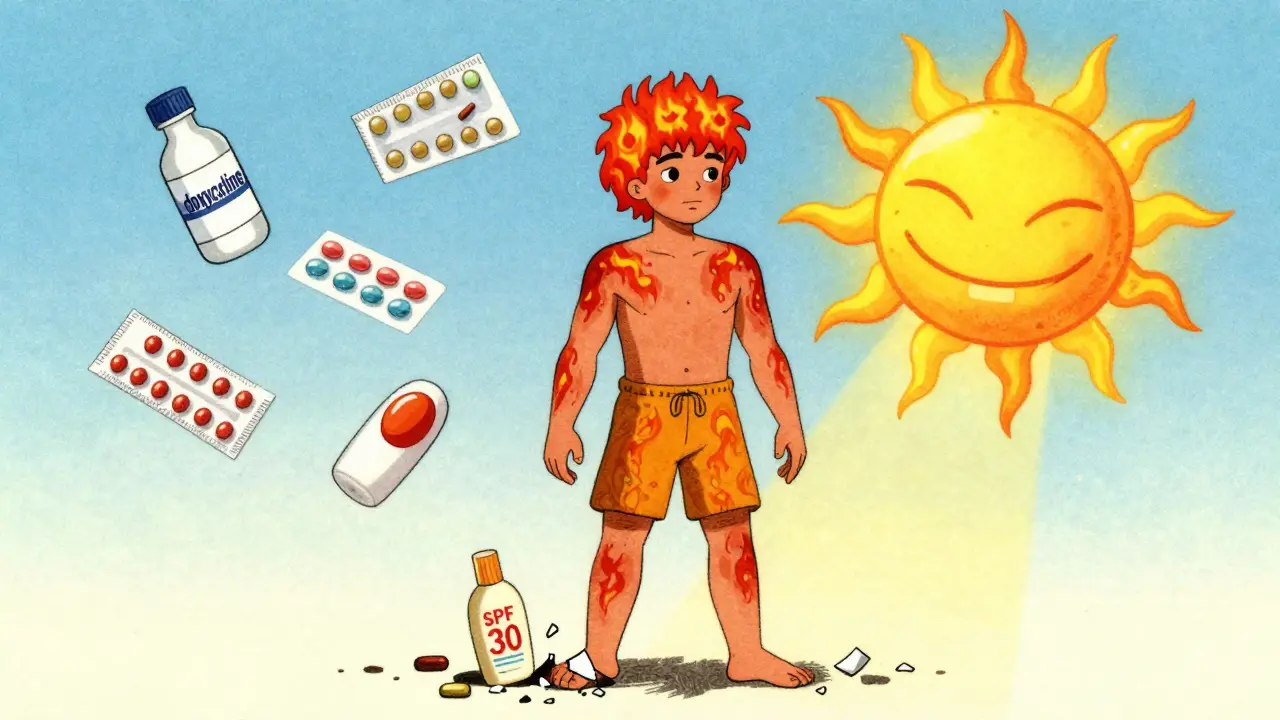
When your skin reacts to sunlight like it’s on fire-even after just a few minutes outside-you’re not just getting a bad sunburn. You’re experiencing photosensitivity, a condition where your body overreacts to ultraviolet (UV) light. It’s not rare. About 1 in 5 people taking common medications like doxycycline, ibuprofen, or hydrochlorothiazide deal with it. And if you have lupus, rosacea, or certain autoimmune disorders, your risk jumps even higher. The good news? You can stop the reactions before they start. But it’s not just about slathering on sunscreen. It’s about building a full defense system.
What Causes Photosensitivity?
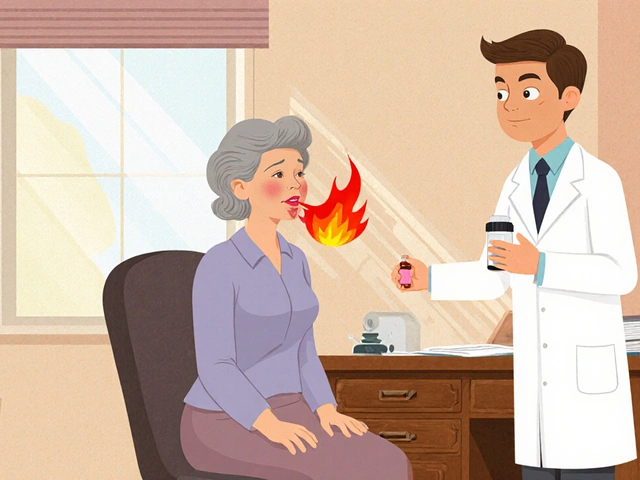
Photosensitivity isn’t one thing. It comes in two main types: phototoxic and photoallergic. Phototoxic reactions are the most common. They look like a bad sunburn-red, painful, sometimes blistering-and happen when certain chemicals in your body react to UV light. These chemicals often come from medications, skincare products, or even some foods like celery or lime juice. Photoallergic reactions are rarer and trickier. They’re immune-driven. Your body sees the UV-altered chemical as a threat and attacks it, leading to itchy rashes that can spread beyond sun-exposed areas.Some of the biggest culprits? Antibiotics like tetracycline and doxycycline. Diuretics like hydrochlorothiazide. NSAIDs like ibuprofen and naproxen. Even some acne treatments with retinoids or alpha-hydroxy acids. And don’t forget fragrances-bergamot, lemon, and lavender oils in perfumes or lotions can trigger reactions. If you’ve noticed your skin flares up after starting a new medication or switching skincare brands, that’s a red flag.
Why Regular Sunscreen Isn’t Enough
Most people think SPF 30 is enough. For someone with normal skin, maybe. For someone with photosensitivity? Not even close. SPF 30 blocks about 97% of UVB rays. SPF 50 blocks 98%. That 1% difference matters when your skin is this sensitive. The Skin Cancer Foundation recommends SPF 50+ for anyone with photosensitivity. And it has to be broad-spectrum-meaning it protects against both UVB (burning rays) and UVA (aging, deeper-penetrating rays).But here’s the catch: sunscreen only works if you apply it right. You need 2 milligrams per square centimeter of skin. That’s about one ounce-enough to fill a shot glass-for your whole body. Most people use half that. And if you’re sweating, swimming, or wiping your face? You’ve lost most of the protection. Reapply every two hours. No exceptions.
Chemical sunscreens absorb UV rays. But for sensitive skin, they can cause irritation or even trigger more reactions. Physical sunscreens with zinc oxide or titanium dioxide sit on top of your skin and reflect UV light. They work immediately. They’re less likely to cause allergies. And they’re the gold standard for photosensitive skin.
UPF Clothing: Your Real Secret Weapon
Sunscreen fades. Clothing doesn’t. UPF (Ultraviolet Protection Factor) clothing is designed to block UV radiation. A UPF 50 fabric lets through only 2% of UV rays. That’s better than most sunscreens. And it doesn’t wash off, sweat off, or rub off.Not all clothes are created equal. A white cotton T-shirt might only offer UPF 5-barely better than nothing. But dark, tightly woven fabrics like polyester, denim, or wool can block up to 98%. Look for labels that say UPF 50+. Many brands now make lightweight, breathable versions that won’t make you sweat buckets-even in Perth’s summer heat.
Don’t forget the details: wide-brimmed hats, UV-blocking sunglasses, and gloves for your hands. People forget their ears, necks, and the backs of their knees. Those are common spots for reactions. Cover them.
Windows Don’t Protect You
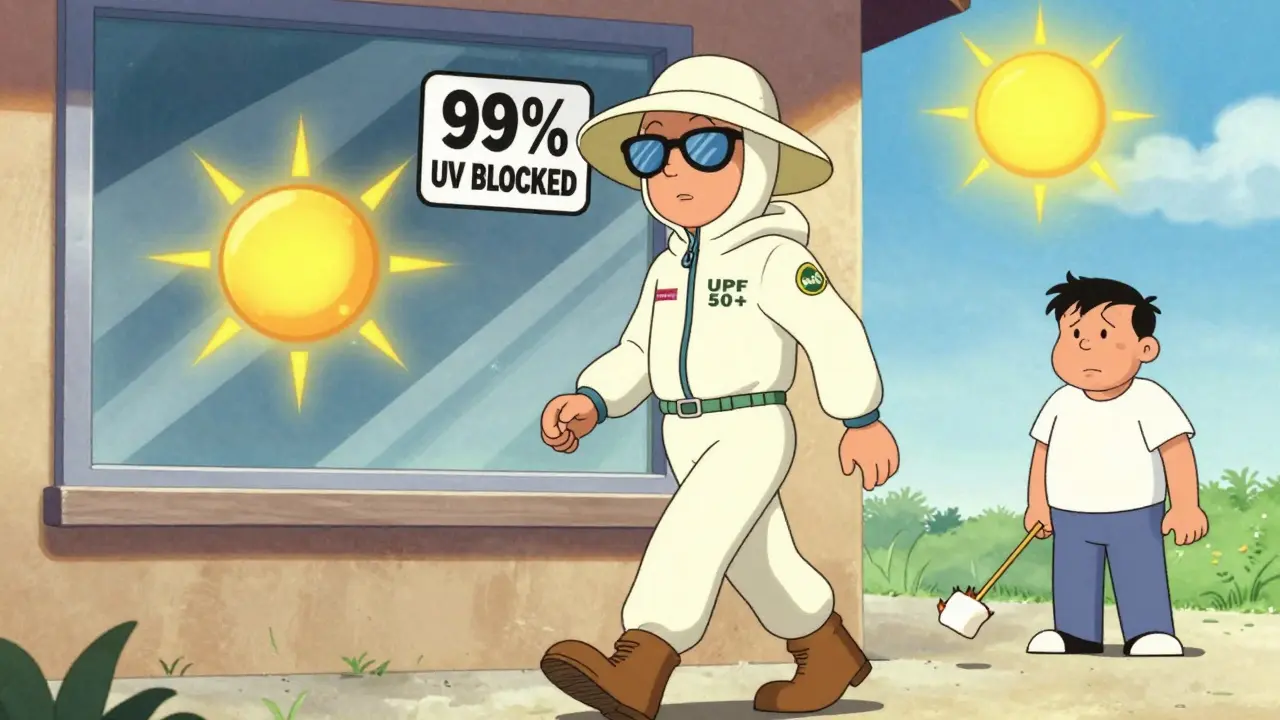
You might think sitting by a window is safe. It’s not. Standard glass blocks almost all UVB rays-the ones that cause sunburn. But it lets through 75% of UVA rays. Those are the ones that penetrate deeper, cause long-term damage, and trigger photosensitivity reactions. If you work near a window, drive often, or spend time in your living room during the day, you’re still exposed.Install UV-blocking window film. It’s not expensive-$5 to $15 per square foot-and it blocks up to 99% of UVA. Many people with severe photosensitivity install it in their cars and homes. It’s a game-changer. And if you’re on long-term medication? It’s non-negotiable.
Timing Matters More Than You Think
UV radiation peaks between 10 a.m. and 4 p.m. That’s when shadows are shorter than your height. If you’re outside during those hours without protection, you’re playing Russian roulette with your skin. Plan your walks, errands, and outdoor time for early morning or late afternoon. Even on cloudy days, up to 80% of UV rays get through. Don’t let the weather fool you.Check the UV index daily. Apps from the Bureau of Meteorology or the Skin Cancer Foundation give real-time updates. When the index hits 3 or above, you need full protection. In Perth, it hits 12+ in summer. That’s extreme. You need to treat it like a health emergency.
Supplements That Help-But Don’t Replace Protection
Some supplements can give you a little extra shield. Nicotinamide (vitamin B3) has been shown in clinical trials to reduce new non-melanoma skin cancers by 23% in high-risk people when taken at 500mg twice daily. Polypodium leucotomos, an extract from a Central American fern, acts like an internal sunscreen-giving you the equivalent of SPF 3 to 5. Carotenoids like beta-carotene and lycopene may help too.But here’s the truth: these don’t replace sunscreen or clothing. They’re like adding a seatbelt to your car. You still need to drive carefully. Talk to your doctor before starting any supplement. They’re not magic pills. But for people on long-term photosensitizing meds, they’re a smart layer in your defense plan.
What to Avoid
Avoid tanning lotions with dihydroxyacetone (DHA). They give you a fake tan but only offer SPF 3 at best. That’s useless for photosensitive skin.Steer clear of skincare with alpha-hydroxy acids, retinoids, or essential oils like bergamot, lime, or lemon. Even if you’ve used them for years, they can suddenly turn your skin into a lightning rod for UV damage.
And never skip the pharmacist. When you get a new prescription, ask: “Is this photosensitizing?” If they say no, ask again. Some doctors don’t think to mention it. But your skin will thank you.
Real-Life Adjustments That Work
People with severe photosensitivity make big changes-and they stick with them. Some switch to night shifts. Some wear UPF 50+ hats and long sleeves even to the grocery store. Others use portable shade canopies on patios or install UV film on their car windows. One patient I spoke to sets hourly phone alarms to reapply sunscreen at work. It sounds extreme. But when your skin breaks out after walking to your mailbox, you do what it takes.It’s not about being paranoid. It’s about being smart. Photosensitivity isn’t something you grow out of. It gets worse with age and repeated exposure. And every sunburn increases your risk of skin cancer. The Skin Cancer Foundation says 1 in 5 Americans will develop skin cancer by age 70. Most of those cases are preventable.
Building Your Daily Routine
Here’s what a full day of protection looks like:- Apply zinc oxide-based SPF 50+ sunscreen to all exposed skin. Use a shot glass amount.
- Wear UPF 50+ clothing: long sleeves, pants, wide-brimmed hat, UV-blocking sunglasses.
- Check the UV index. If it’s above 3, avoid being outside between 10 a.m. and 4 p.m.
- Reapply sunscreen every two hours-or after swimming, sweating, or towel-drying.
- Install UV-blocking film on home and car windows.
- Review all medications and skincare with your doctor or pharmacist.
- Consider adding 500mg of nicotinamide twice daily (if approved by your doctor).
This isn’t a checklist you do once. It’s a lifestyle. But it’s the difference between living in fear of the sun-and living freely, safely, without rashes, pain, or panic.
Can photosensitivity go away on its own?
Sometimes, yes-but only if the trigger is removed. If a medication caused the reaction, stopping it may allow your skin to return to normal over weeks or months. But if it’s linked to an autoimmune condition like lupus, it’s likely permanent. Even after symptoms fade, your skin remains more vulnerable. Sun protection should be lifelong.
Is higher SPF really worth it?
For photosensitive skin, absolutely. SPF 30 blocks 97% of UVB rays. SPF 50 blocks 98%. That extra 1% is the difference between a mild redness and a painful, blistering reaction. With photosensitivity, even small amounts of UV can trigger damage. SPF 50+ gives you a safety margin you can’t afford to skip.
Do I need to wear sunscreen indoors?
If you’re near a window, yes. Standard glass blocks UVB but lets through 75% of UVA rays-enough to trigger reactions in sensitive skin. If you sit by a window all day, apply sunscreen. If you’re in a room with no windows, you’re safe. But most people spend time near windows without realizing the risk.
Can I use tanning beds if I have photosensitivity?
Never. Tanning beds emit intense UVA and UVB radiation-often stronger than the midday sun. For someone with photosensitivity, this can cause severe burns, blistering, and long-term skin damage in minutes. There’s no safe level of artificial UV for photosensitive individuals.
What should I do if I get a reaction?
Get out of the sun immediately. Cool the area with a damp cloth or cold shower. Avoid popping blisters. Use a fragrance-free moisturizer or hydrocortisone cream (1%) if recommended by your doctor. If the reaction is severe-widespread rash, fever, or blistering-see a dermatologist. You may need prescription treatment. And never ignore a reaction. Each one increases your risk of skin cancer.
Are there any new treatments on the horizon?
Yes. Researchers are testing smart fabrics with UV sensors that change color when protection drops below safe levels. New window films are now blocking 99.9% of both UVA and UVB. Oral photoprotectants like polypodium leucotomos are becoming more widely available. And personalized medicine is starting to tailor sun protection based on genetic risk and medication profiles. These aren’t sci-fi-they’re coming fast.
If you’re managing photosensitivity, you’re not alone. Millions do this every day. It’s not about giving up the sun-it’s about enjoying it without paying the price. With the right tools, the right habits, and the right mindset, you can live fully, safely, and without fear.

Comments
OMG this is SO helpful!! 🌞💖 I just started doxycycline last month and had no idea my skin was screaming at me every time I stepped outside. I thought I was just 'sensitive'-turns out I was basically a human glow stick under UV light. UPF clothing changed my life. Bought a cute wide-brim hat and now I actually enjoy walks again. Thank you for not making this feel like a punishment!
This is ridiculous. You're telling people to live like they're in a nuclear bunker because of a little sunburn? Next you'll say we need lead-lined sunglasses. People have been outside for millennia without SPF 50+ and UV film on their windows. This is fearmongering dressed up as science.
Thank you for writing this with such care. I'm a nurse in Arizona, and I see patients with photosensitivity every week-especially those on diuretics or antibiotics. So many don’t realize that their window at home is a silent threat. I always tell them: 'If you can see the sun, your skin is being hit.' UPF shirts are non-negotiable. I keep a stack in my clinic for patients who can’t afford them. And yes-yes-UV film on car windows? Game changer. One lady told me she cried the first time she sat in her car without burning her neck. That’s the real win.
While the article presents a technically accurate overview of photosensitivity, it exhibits a troubling tendency toward medical overreach. The recommendation to apply sunscreen indoors near windows is not universally supported by peer-reviewed dermatological consensus. The distinction between phototoxic and photoallergic reactions is correctly delineated, yet the implied necessity of lifelong, extreme sun avoidance lacks nuance. One must consider the psychological toll of such restrictions, particularly in populations with vitamin D deficiency or seasonal affective disorder. The promotion of nicotinamide as a prophylactic agent, while promising, remains adjunctive and should not be framed as a standard of care without explicit clinical indication.
YES. YES. YES. I’ve been living this for 12 years with lupus. I wear a UPF 50+ hoodie to the grocery store. I have UV film on my entire house. I reapply sunscreen like it’s my job. And guess what? I’m still here. I’m still hiking. I’m still gardening. I’m still alive. This isn’t fear-it’s freedom. You don’t have to hide. You just have to be smart. If you’re reading this and you’re scared? Start small. One hat. One pair of sunglasses. One day without burning. You got this.
One cannot help but observe the alarming commodification of photoprotection in contemporary Western society. The elevation of SPF 50+ to a moral imperative, the commercialization of UPF apparel, the institutionalization of window films-all of this reflects a cultural pathology wherein the natural environment is perceived as an enemy to be neutralized. One wonders whether the medical community, in its zeal to mitigate risk, has inadvertently fostered a generation of individuals who fear daylight itself. Is this truly health-or is it a new form of asceticism?
lol so sunscreen is the new covid vaccine? first they said sun is bad, now they say windows are bad, now you need to drink magic fern juice? who is making all this stuff? Big Pharma? Big Sunscreen? I work in a factory with windows. You want me to put film on every window? And take a shot glass of sunscreen every 2 hours? I don't have time for this. Also, my grandma lived to 98 and never used sunscreen. She had a hat and a porch. That's all.
It’s not about being extreme. It’s about being informed. I was misdiagnosed for years because doctors didn’t connect my rash to my blood pressure med. When I finally stopped hydrochlorothiazide and started UPF clothing, the rashes vanished in weeks. This isn’t hype. It’s biology. And if you’re on any medication, ask your pharmacist. Don’t wait until your skin is on fire.
Stop using sunscreen. Use shade. Wear hat. Drink water. Sun is natural. Your body knows how to handle it. This article is fear-based marketing.
I really appreciate how thorough this is. I’ve got rosacea and used to think I just had bad skin. Turns out I was getting wrecked by UVA through my office window. Installed UV film last month-best decision ever. No more afternoon redness. No more hiding behind my laptop. Just a little reminder: it’s not about perfection. It’s about progress. Even small changes add up.
Wait, so... if I sit in my car, and my car window lets through 75% UVA... and I'm driving for 45 minutes every day... that's like 33 minutes of unprotected exposure? That's insane. I just got a new car. I'm getting the film on it tomorrow. Also-anyone know if those tinted windows in SUVs actually block UVA? Or is that just for heat? Asking for a friend who's terrified of their own commute.
Thank you for this. I’m a mom of a kid with photosensitive lupus. We live in Florida. We’ve had to become experts. My daughter wears a full-face sun mask to school. She has UPF pajamas. We use UV film on every window. We check the UV index like it’s the weather forecast. And yes-it’s exhausting. But she’s 10 and she’s alive. She’s playing soccer. She’s going to the beach at 7 a.m. She’s happy. This isn’t restriction. It’s liberation. And I’m so grateful someone finally said it out loud.