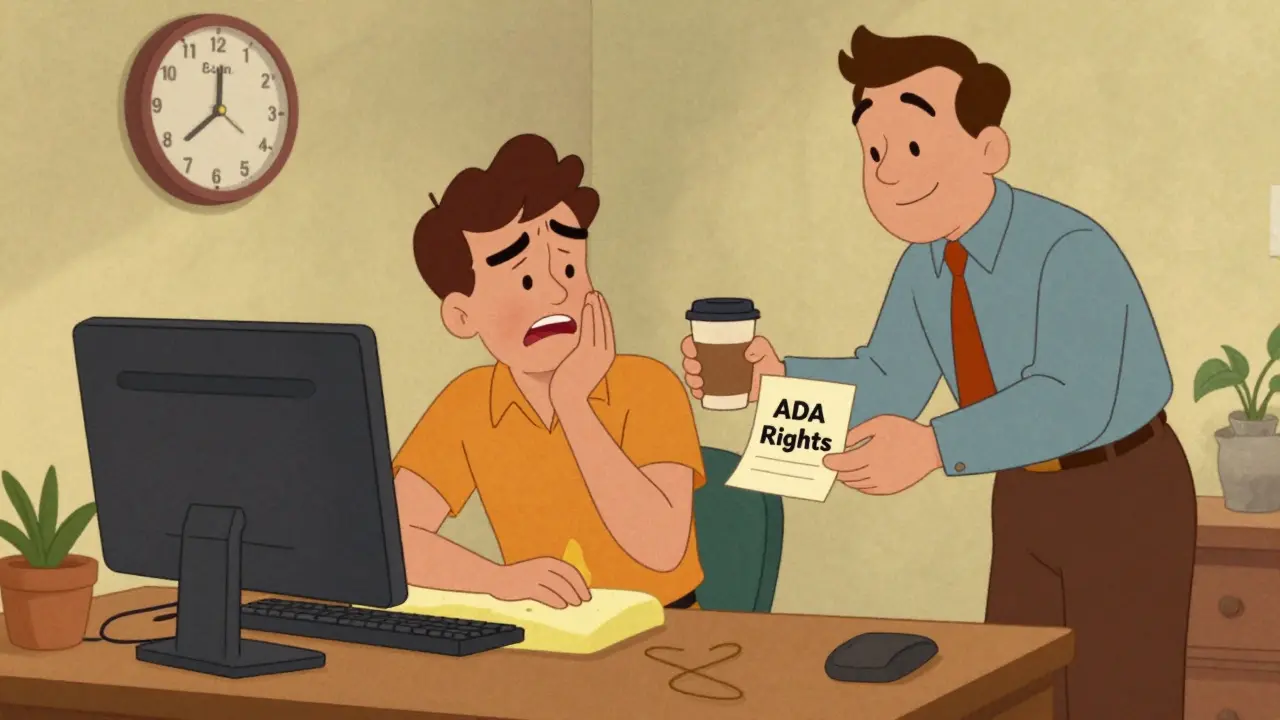
Returning to work with chronic pain isn’t about pushing through the discomfort. It’s about designing a work life that actually works-with your body, not against it. Too many people feel forced to choose between their job and their health. But that’s not the only option. With the right accommodations and a clear plan, you can stay employed, stay productive, and still manage your pain. This isn’t theoretical. It’s happening every day in offices, warehouses, hospitals, and remote setups across the country.
What Counts as Chronic Pain at Work?
Chronic pain isn’t just a bad back or a sore knee that lingers. It’s pain that lasts longer than three months and interferes with your ability to do everyday tasks-including work. Under the Americans with Disabilities Act (ADA), if your pain limits major life activities like walking, sitting, lifting, or concentrating, it’s legally recognized as a disability. That means your employer must make reasonable changes to help you do your job.
This applies whether you’re in a small office or a large corporation. The ADA covers employers with 15 or more workers. In states like California, the rules are even tighter-employers with just five employees must accommodate. Federal workers have additional protections under the Rehabilitation Act of 1973. The key point? You don’t have to suffer in silence. The law is on your side.
Accommodations That Actually Work (And Don’t Cost Much)
Many people assume accommodations mean expensive equipment or major office overhauls. That’s not true. In fact, 56% of accommodations for chronic pain cost employers nothing. Here’s what’s actually being used-and how simple they are to implement.
- Adjustable standing desks - These let you switch between sitting and standing every 30-60 minutes. Cost: $300-$1,200. Many employers already have spare units lying around.
- Ergonomic chairs and cushions - A good chair isn’t just comfortable-it’s a medical tool. Look for lumbar support and adjustable armrests. Memory foam cushions (around $50-$200) help with tailbone or hip pain.
- Flexible hours - Starting at 10 a.m. instead of 8 a.m. avoids morning stiffness. Ending early lets you fit in physical therapy or rest. This simple change cuts absenteeism by up to 30%.
- Extra breaks - Five to 15 minutes every 1-2 hours isn’t a luxury. It’s a necessity for managing fatigue and muscle tension. These breaks don’t reduce output-they prevent crashes.
- Remote or hybrid work - If commuting worsens your pain, working from home-even part-time-is a valid accommodation. You don’t need to be in the office five days a week to be fully productive.
- Voice recognition software - If typing hurts your hands or wrists, tools like Dragon NaturallySpeaking (around $100-$300) let you dictate emails and reports. It’s faster than you think.
- Workstation reorganization - Moving your desk closer to the bathroom, printer, or kitchen reduces unnecessary walking. If you can’t walk more than 100 feet without pain, your employer must adjust your space.
- Temperature control - For people with MS, fibromyalgia, or nerve damage, heat or cold can trigger flare-ups. A personal heater, fan, or even a heated seat cushion can make a huge difference.
None of these require a huge budget. Most are low-cost, practical, and proven. Employers who resist often do so because they don’t understand what’s needed-not because it’s too expensive.
How to Ask for Accommodations (Without Getting Pushed Back)
Asking for help is the hardest part. Fear of being seen as weak, lazy, or difficult keeps 62% of people with chronic pain from speaking up. But there’s a right way to do it.
Start with documentation. Get a note from your doctor that says:
- Your diagnosis (e.g., degenerative disc disease, neuropathy, fibromyalgia)
- How it affects your work (e.g., “Cannot sit for more than 45 minutes without severe lower back pain”)
- Recommended accommodations (e.g., “Requires sit-stand desk and 10-minute breaks every 90 minutes”)
Don’t say, “I need help with my pain.” That’s too vague. Say, “I need a sit-stand desk and 10-minute breaks every 90 minutes to manage my back pain.” Specificity cuts denial rates by 55%.
Put it in writing. Email your manager and HR. Use phrases like: “Per the ADA, I’m requesting reasonable accommodations to continue performing my job duties.” Mention the ADA by name. It signals you know your rights.
And don’t wait until you’re at your breaking point. The sooner you ask, the more likely your employer will respond positively. Federal agencies approve 87% of requests. Private employers? The rate is lower-but still high if you’re clear and prepared.
The Interactive Process: What Happens After You Ask
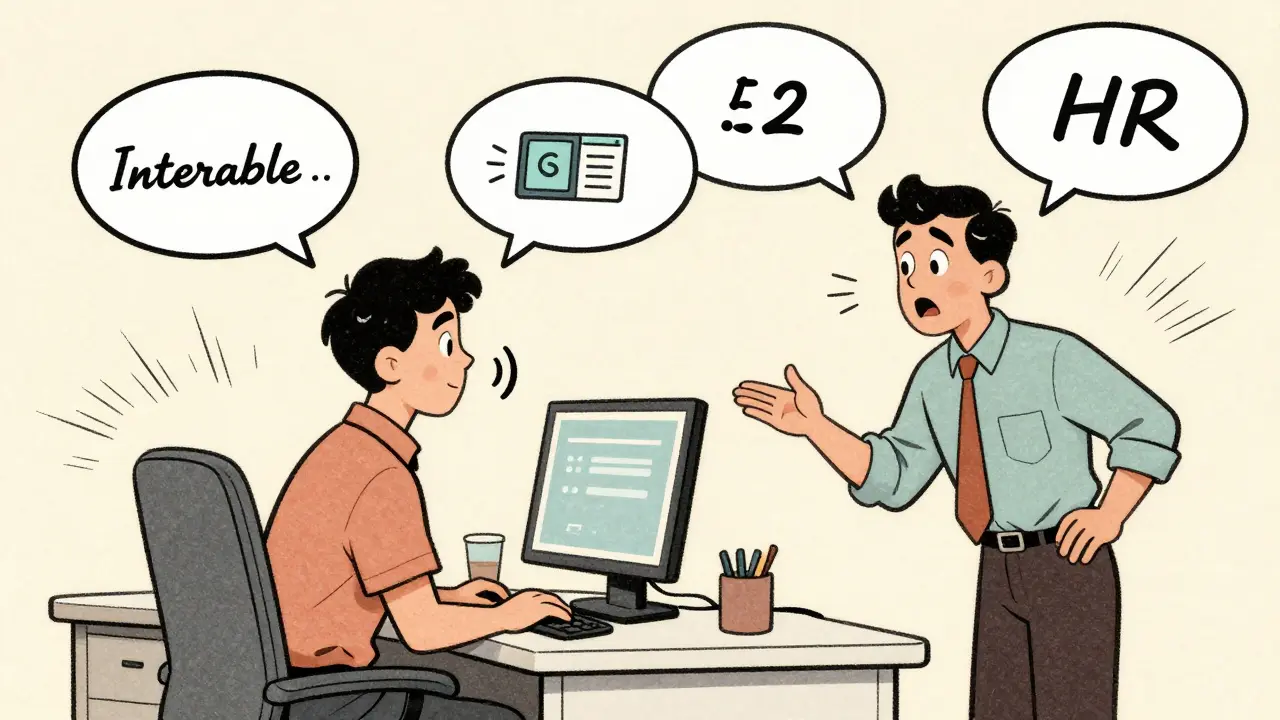
Once you submit your request, your employer must enter what’s called the “interactive process.” This isn’t a formality-it’s a conversation. They can’t just say no. They have to work with you to find a solution.
They might suggest something different than what you asked for. That’s okay. As long as it works. For example, if you ask for a standing desk but they don’t have one, they could offer a raised platform or allow you to work from a counter. The goal is function, not form.
They can’t force you to accept an accommodation you don’t think will help. But they can propose alternatives. If you refuse all options, they may have grounds to deny the request. But if you’re reasonable and open, most employers will meet you halfway.
Timeline matters. Federal agencies have 10 business days to respond. Private employers? No strict deadline-but the law says they must respond “promptly.” If you haven’t heard back in two weeks, follow up. Keep records of all emails and meetings.
What If They Say No?
Denials happen. But they’re often based on misunderstandings.
One big myth? That accommodations are permanent. Many people with chronic pain need adjustments only during flare-ups. Employers sometimes think, “If they need it now, they’ll always need it.” That’s false. You can request temporary changes. Document when you need them and when you don’t.
Another reason for denial? “Undue hardship.” That means the cost or disruption is too great for the company’s size. But this is rarely valid. The median cost of accommodations is $300. For a company with 100 employees, that’s less than $3 per worker. Courts rarely side with employers on this unless they’re tiny businesses.
If you’re denied:
- Ask for a written explanation
- Request a meeting with HR to review your request again
- Contact the Job Accommodation Network (JAN) for free advice-they help resolve 82% of cases without legal action
- If needed, file a complaint with the EEOC. You have 180 days from the denial date
Most denials are fixable. You’re not alone. And you don’t have to fight alone.
Gradual Return: A Smarter Way Back
Coming back full-time after months off? That’s a recipe for burnout. A better path is a graduated return-to-work plan.
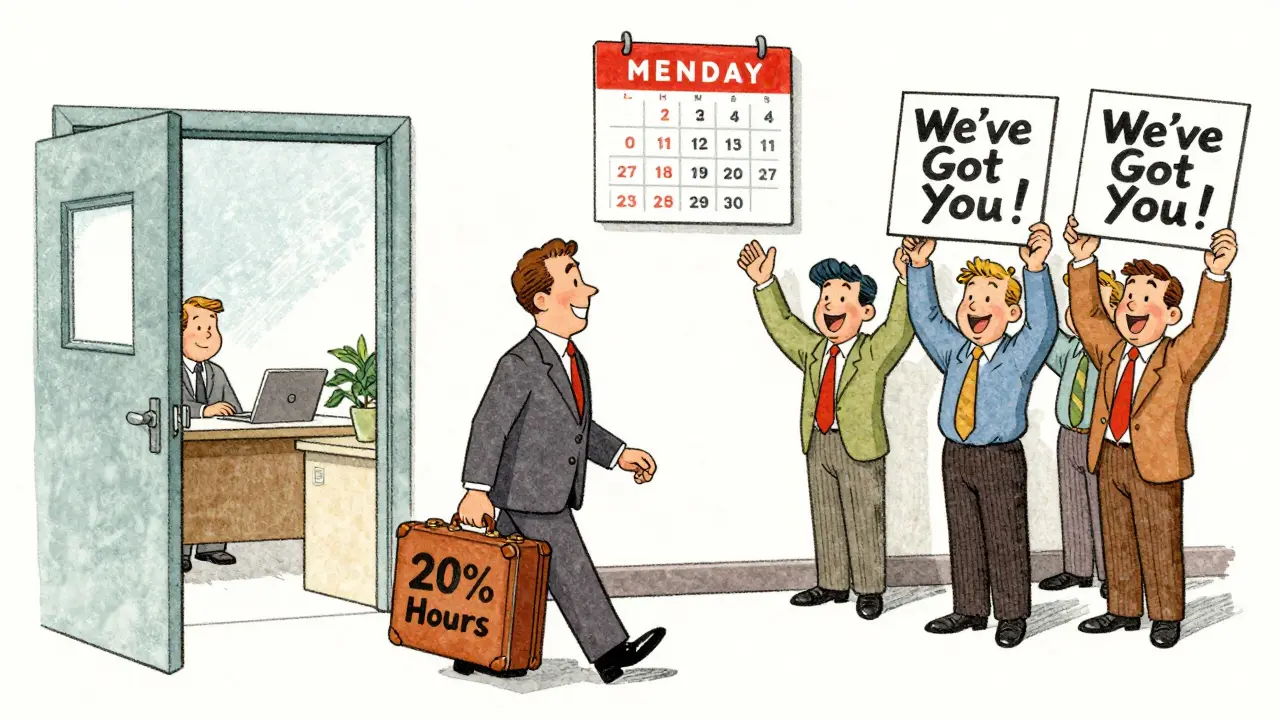
Instead of jumping into 40 hours a week, start at 20-30%. Work three days a week. Reduce your hours. Take longer breaks. Gradually increase as your body adjusts. Studies show this approach leads to 63% higher long-term retention than jumping back in full force.
It’s not about being lazy. It’s about sustainability. Your body needs time to adapt. Your employer needs time to adjust. A gradual return protects your health and your job.
Why Coworker Support Matters More Than You Think
Accommodations aren’t just about chairs and desks. They’re about culture.
Employees with strong relationships with coworkers are 2.3 times more likely to get their accommodations approved. Why? Because when people understand your pain, they’re more willing to help. They cover for you during breaks. They adjust meeting times. They don’t assume you’re slacking.
That’s why transparency helps-even if it feels scary. You don’t have to share medical details. But saying something like, “I’m managing a chronic condition, and I’ll be taking short breaks throughout the day to stay productive,” normalizes it. It turns suspicion into support.
Supervisors matter too. When managers are trained on chronic pain, RTW rates jump by 23%. That’s not magic. It’s empathy backed by knowledge.
What’s New in 2026?
Things are changing. Long COVID is now clearly recognized under the ADA as a potential cause of chronic pain. More employers are using wearable tech-like smart belts that track posture and movement-to objectively measure functional limits. It’s still rare (used in only 7% of cases), but it’s growing.
Legislation is also moving. Proposals are being discussed to expand FMLA coverage to smaller employers. Right now, you need to work 1,250 hours in a year for a company with 50+ employees to qualify for 12 weeks of unpaid leave. That excludes too many people. Change is coming.
For now, focus on what you can control: your request, your documentation, your communication. You don’t need to wait for new laws to protect your right to work.
Final Thoughts: You Belong at Work
Chronic pain doesn’t make you less capable. It just means you need different tools to do your job. The same way someone with glasses needs lenses, you need adjustments. Neither is a weakness.
Millions of people with chronic pain are working-quietly, effectively, and successfully. They didn’t wait for permission. They asked. They documented. They persisted.
You can too. You don’t need to be perfect. You don’t need to be brave. You just need to be clear. And you have the law on your side.





Comments
Just started using a memory foam cushion at my desk and it’s been a game changer. No more numb butt by 2 p.m. I didn’t even tell HR I had a diagnosis-just said I needed better support. They gave it to me without a fuss.
Let’s be real-most managers don’t care about ADA unless they’re sued. I’ve seen people get denied accommodations for ‘budget reasons’ while the company buys a new espresso machine. The law means nothing without enforcement.
While the piece gestures toward ADA compliance, it fundamentally misunderstands the ontological tension between neoliberal labor regimes and embodied vulnerability. The very notion of ‘reasonable accommodation’ presupposes a Cartesian separation between body and workplace-a false binary that reifies ableist structures under the guise of inclusion. We must interrogate the epistemic violence inherent in medicalizing pain as a logistical problem rather than a systemic failure of capitalist productivity metrics.
In India, we don’t have ADA, but we have something deeper-community. My employer didn’t give me a standing desk, but my coworkers started taking breaks together. We stretch, we walk, we check in. Sometimes the best accommodation isn’t hardware-it’s humanity.
For anyone asking for accommodations: always attach your doctor’s note in PDF format, label it clearly, and CC HR and your manager. I’ve helped over 40 people navigate this process. Most denials happen because the request was sent as a vague Slack message. Be precise. Be professional. Be persistent.
According to a 2023 Gartner survey, only 18% of Fortune 500 companies track accommodation request outcomes systematically. Without metrics, accountability is impossible. This article is well-intentioned but lacks data-driven policy recommendations. It’s a checklist, not a strategy.
Why do we keep calling it accommodation like it’s a favor instead of a right
I’ve been living with fibro for 12 years. I work remotely two days a week and it saved my career. Don’t wait until you’re broken to ask. Talk to your manager early-even if you’re not sure what you need yet. Most people want to help. They just don’t know how. Be the one to show them.
Let’s not pretend this is about fairness. People with chronic pain are gaming the system. I’ve seen coworkers take ‘breaks’ every hour while scrolling TikTok. The ADA was never meant to be a free pass for laziness disguised as medical need.
My team has three people with chronic conditions. We don’t have fancy gear. We just ask: ‘What do you need today?’ Sometimes it’s a quiet room. Sometimes it’s a 15-minute walk at lunch. We don’t make them justify it. We just let them be human.
Long COVID is now ADA-covered? Cool. Now when’s the government gonna cover my 8000$ MRI? 😅
My partner and I both have chronic pain. We’ve negotiated hybrid work, flexible hours, and a standing desk through quiet persistence. We didn’t cite the ADA. We cited results: fewer sick days, higher output, better morale. Facts > fear.