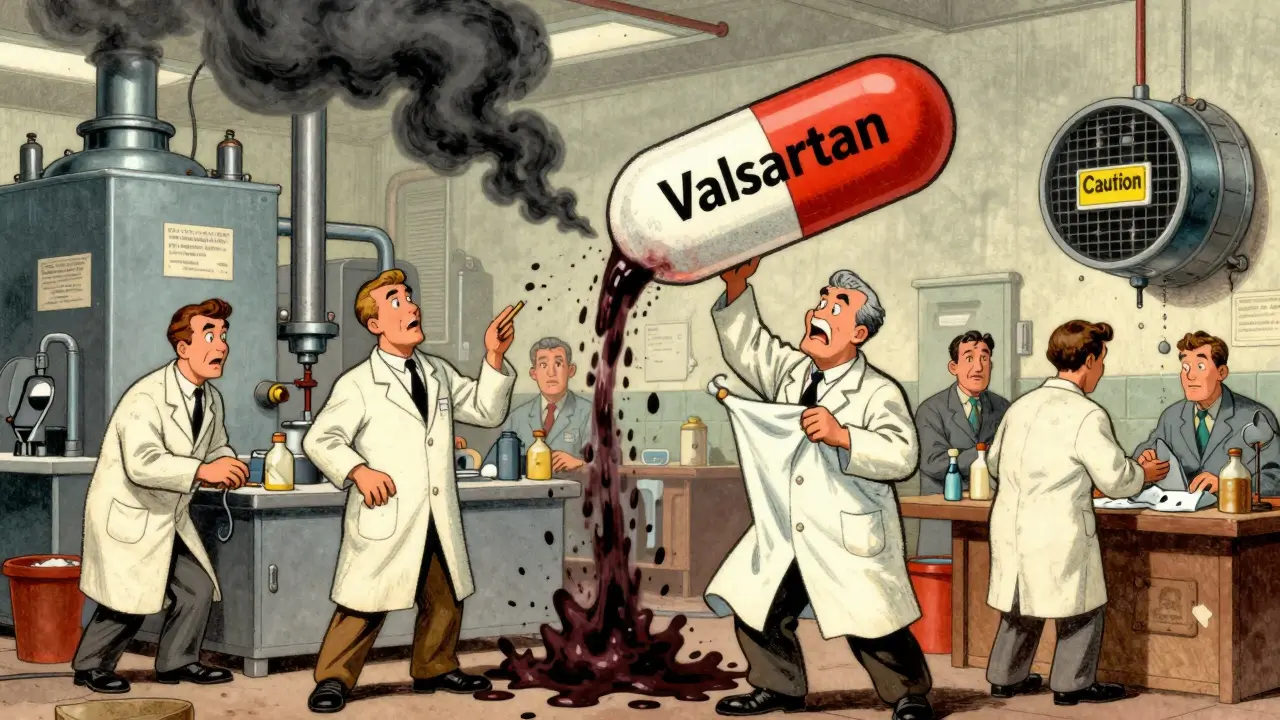
When you pick up a generic pill at the pharmacy, you expect it to work just like the brand-name version. But what if that pill was contaminated with traces of another drug? Or worse-carried harmful chemicals from a previous batch? This isn’t science fiction. It’s a real risk in generic drug manufacturing, and it’s why contamination controls are non-negotiable.
Why Contamination Matters More Than You Think
Generic drugs make up 90% of prescriptions in the U.S., but they only account for 22% of total drug spending. That means manufacturers are under intense pressure to cut costs. Unfortunately, cost-cutting can lead to corners being cut-especially in cleaning and environmental controls. In 2022, contamination-related violations made up 37.2% of all FDA Warning Letters issued to drug makers. That’s nearly four in ten companies failing basic safety standards. One of the worst examples was the 2020 Valsartan recall. Nitrosamines, cancer-causing impurities, showed up in blood pressure meds made by 22 different generic companies. The fallout? $1.2 billion in lost product, thousands of patients confused or scared, and a global shake-up in how generics are made. The FDA didn’t just issue a warning-they changed the rules. Now, every facility must prove they can prevent contamination before a single tablet is made.What Counts as Contamination?
Contamination isn’t just dirt or dust. It’s anything that shouldn’t be in your medicine:- Cross-contamination: Residue from a previous drug getting into the next batch-like leftover blood pressure medicine mixing with an antibiotic.
- Microbial contamination: Bacteria, mold, or yeast growing in the product during production.
- Chemical adulteration: Harmful substances like nitrosamines, heavy metals, or cleaning solvents left behind.
- Foreign particles: Fibers from clothing, metal shavings from equipment, or even hair.
How Clean Does It Really Need to Be?
Generic drug plants don’t look like labs. They look like factories. But inside, they’re some of the most controlled environments on Earth. Here’s what that means in practice:- ISO Class 5 cleanrooms (Grade A) are used for filling sterile products. These rooms must have fewer than 3,520 particles per cubic meter that are 0.5 microns or larger. That’s like counting every grain of sand in a small sandbox-and making sure none are out of place.
- Pressure differences between rooms matter. Air flows from clean to dirty, never the other way. A 10-15 Pascal difference between zones keeps contaminated air from creeping in.
- HEPA filters remove 99.97% of particles 0.3 microns in size. Some newer facilities use ULPA filters, which catch even smaller particles-but they use 25-40% more energy.
Human Error Is the Biggest Risk
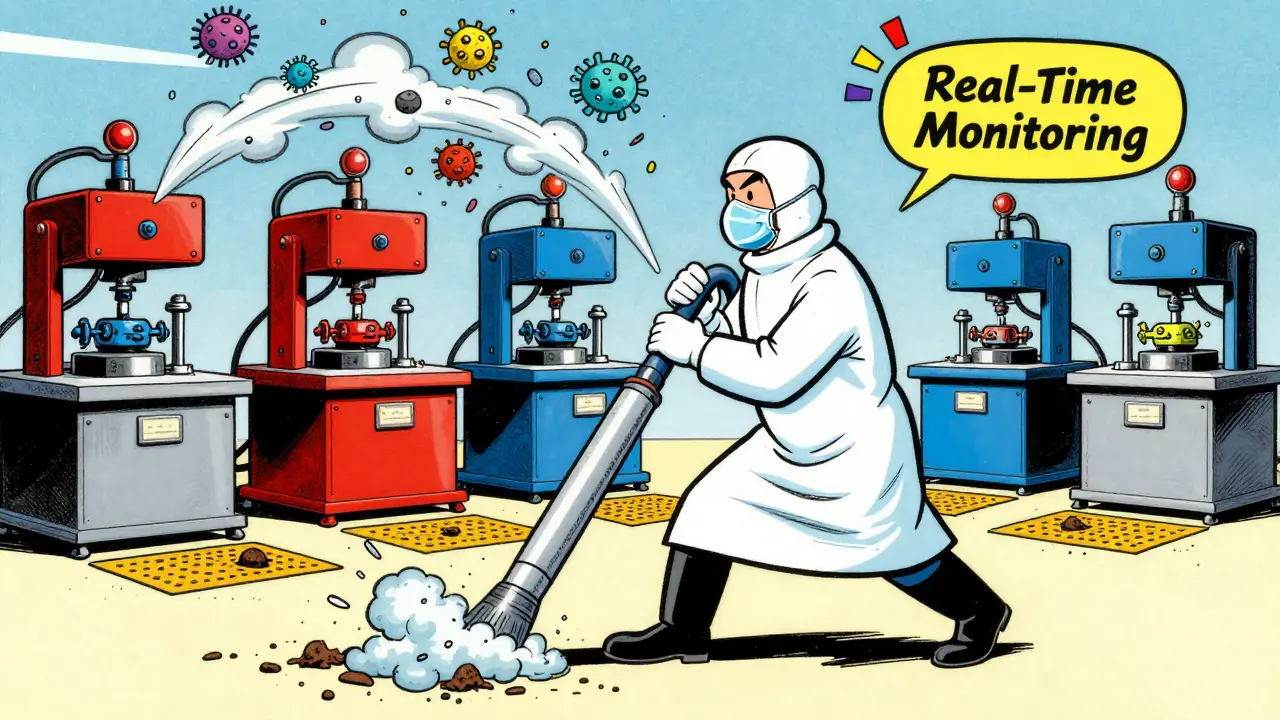
You might think machines cause most contamination. But here’s the truth: people do. A 2023 study by Dr. Michael Gamlen found that 83% of contamination events trace back to human behavior. Think about it:- A worker skips gowning because they’re tired after a 12-hour shift.
- Someone uses the wrong cleaning cloth because labels faded.
- A technician doesn’t wait long enough for the cleaning solution to dry before starting the next batch.
Real-Time Monitoring Is Changing the Game
For decades, contamination checks meant swabbing surfaces, sending samples to a lab, and waiting 5-7 days for results. By then, hundreds of pills might already be made-and contaminated. Now, real-time particle counters like the MetOne 3400+ are common in top-tier facilities. These devices monitor air quality every second. They don’t wait for results-they alert you the moment something’s wrong. A 2022 ISPE study found these systems cut contamination incidents by 63%. Manual checks? They miss 78% of transient events-those brief, sneaky spikes that happen when someone walks through a door. ATP bioluminescence systems are another game-changer. They detect biological residue in 5 minutes instead of days. And they’re 95% as accurate as old-school lab cultures. That means you can release a batch the same day it’s made-faster, safer, cheaper.Cost vs. Risk: The Big Debate
Here’s where things get messy. Building a state-of-the-art cleanroom costs $80 million for a medium-sized generic plant. Innovator companies spend $185 million. That’s more than double. So how do generics compete? Some try to cut corners. They use older equipment. They skip upgrades. They rely on end-product testing-checking pills after they’re made to see if they’re clean. But the FDA says that’s illegal. Dr. Janet Woodcock, former head of FDA’s drug division, made it clear: “Relying on end-product testing for contamination control is a fundamental CGMP violation.” Others invest smartly. They use risk-based approaches. Not every drug needs a Class 5 cleanroom. A low-risk tablet for allergies doesn’t need the same controls as a potent cancer drug. The EMA’s 2014 guideline on health-based exposure limits (HBELs) helps companies set appropriate thresholds based on toxicity-not just guesswork. But here’s the catch: by 2025, the FDA will require HBELs for all solid oral dosage forms. That means every generic maker must prove they’ve assessed the risk for every single product they make. The cost? Around $1.2 million per facility. For small companies, that’s a life-or-death investment.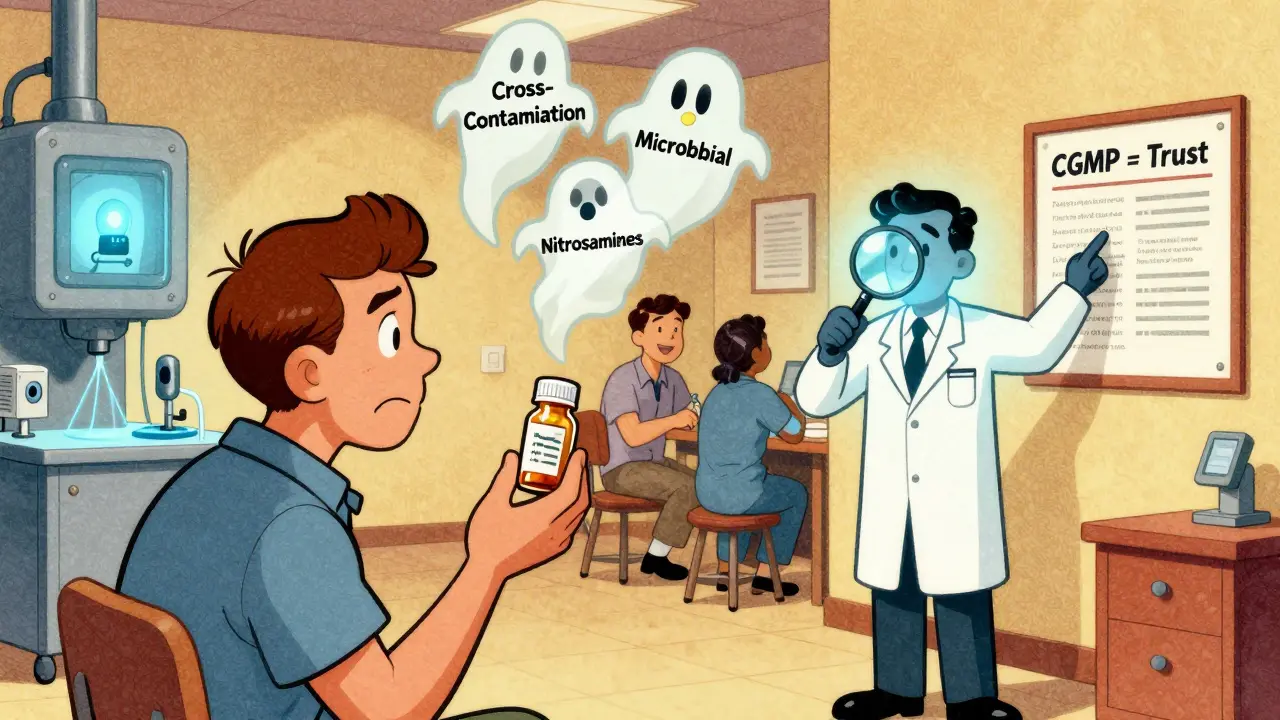
What’s Working Right Now?
The most successful generic manufacturers aren’t the ones with the fanciest equipment. They’re the ones with the best systems:- One batch at a time: Instead of running multiple products on the same line, they clean completely between batches. One case study showed this cut cross-contamination by 53%.
- Continuous monitoring: Real-time sensors, automated alerts, and data logs that never lie.
- Training that sticks: Not just a one-time class. Weekly refreshers, spot checks, and peer accountability.
- Software that works: Tools like ValGenesis help track cleaning validation-but they’re complex. One survey found users needed 147 hours of training just to use them properly.
What’s Next?
The future of contamination control is smarter, faster, and greener.- AI-powered systems like Honeywell’s Forge Pharma are learning patterns in air flow and particle movement. In a pilot at a Merck generics plant, false alarms dropped by 68%.
- Waterless cleaning is gaining traction. GlaxoSmithKline cut utility costs by 22% using solvent-based cleaning instead of water rinses.
- ICH Q13 guidelines, finalized in June 2023, are pushing the industry toward continuous manufacturing-where drugs are made in one long, uninterrupted flow. That changes everything about how contamination is controlled.
What You Can Do
As a patient, you don’t need to know the technical details. But you can ask:- Is this generic made by a company with a clean FDA inspection record?
- Has there been a recall on this drug in the past year?
- Does the manufacturer follow international standards like CGMP or EU GMP?
What is contamination control in generic drug manufacturing?
Contamination control refers to the systematic methods used to prevent harmful substances-like chemicals, microbes, or residues from other drugs-from entering generic medications during production. This includes cleanroom standards, validated cleaning procedures, environmental monitoring, and staff training to ensure products meet safety requirements set by the FDA and other global regulators.
Why are contamination controls stricter for generics than innovator drugs?
They’re not necessarily stricter-but generics face higher scrutiny because they’re made in shared facilities with multiple products. Innovator companies usually produce one drug per line. Generics often switch between dozens of drugs on the same equipment. That increases the risk of cross-contamination, so controls must be tighter to prevent mix-ups.
Can you tell if a generic drug is contaminated?
Usually, no. Contaminants like nitrosamines or trace chemicals don’t change the color, taste, or smell of pills. You won’t feel sick right away. That’s why testing and controls during manufacturing are critical. Regulatory agencies test samples after the fact, but patients rely on the manufacturer’s systems to catch problems before the drug even leaves the plant.
What’s the biggest cause of contamination in generic drug plants?
Human error. Studies show that nearly 83% of contamination events are caused by people-whether it’s skipping gowning procedures, using the wrong cleaning tool, or not following timing rules during cleaning. Equipment and materials matter, but the weakest link is often the person operating it.
Are all generic drugs safe?
Yes-when they’re made by compliant manufacturers. The vast majority of generic drugs are safe and effective. But the 2020 Valsartan recall and other incidents prove that not all facilities follow the rules. Always check if your generic has had recalls or FDA warnings. Reputable manufacturers invest in contamination controls because they know safety isn’t optional.
How do regulators check for contamination?
Regulators like the FDA inspect facilities unannounced. They review cleaning validation records, environmental monitoring data, staff training logs, and equipment maintenance. They also collect random samples from production lines and test them for impurities. Facilities with past violations face more frequent inspections-up to 27% more since 2023.
What happens if a generic drug is found to be contaminated?
The entire batch is destroyed. The company must issue a recall, notify patients and pharmacies, and report the incident to regulators. They may face fines, warning letters, or even suspension of manufacturing. In severe cases, the FDA can ban the company from producing drugs until they fix their systems-which can take years and cost millions.
Is it cheaper to make generic drugs without strong contamination controls?
In the short term, yes. But in the long term, no. A single contamination-related recall can cost hundreds of millions. The cost of a failed inspection, lost production time, or damaged reputation far outweighs the savings from skipping a HEPA filter or cutting cleaning time. Smart manufacturers see contamination control as an investment-not an expense.

Comments
It’s wild to think that the little pill you swallow could’ve been sitting next to a cancer-causing chemical just hours before. I never thought about how much goes into making generics safe - I just assumed they were just cheaper versions of the same thing. Turns out, it’s a whole different ballgame.
The fact that human error accounts for 83% of contamination events is not only statistically alarming - it is a damning indictment of the entire workforce culture in these manufacturing facilities. Where is the accountability? Where is the discipline? We are not talking about minor lapses here - we are talking about life-or-death negligence that should be met with criminal prosecution, not just another FDA warning letter. The fact that workers are skipping gowning procedures because they’re tired is not a training issue - it is a moral failure. And yet, we continue to allow these facilities to operate without consequence. This is not capitalism - this is corporate manslaughter dressed up as cost-efficiency.
China and India are running these plants, and we’re paying for it. We let them cut corners so we can save a few bucks on our prescriptions, and now we’re surprised when people get sick? Wake up. The FDA can’t inspect every factory overseas. They’re understaffed, underfunded, and outgunned. We need to stop pretending this is a technical problem - it’s a geopolitical one. Stop outsourcing safety and start paying for it at home.
so like… if the cleanroom needs to have less than 3,520 particles per cubic meter… how do they even count that? like do they have little robots with microscopes walking around? or is it just magic? also why do we trust these people with our lives??
Oh my god I just read this and I’m crying. Not because I’m dramatic - because I actually take 5 pills a day and now I’m terrified that one of them has someone’s sweat on it. I used to think generics were just cheaper, now I realize they’re basically a gamble. And the worst part? No one tells you. You just get your script filled and walk out like nothing happened. Meanwhile, someone in a factory in Hyderabad forgot to change their gloves and now your blood pressure med has a ghost of a cancer drug in it. Thanks, capitalism.
Hey, I get that this is scary - but let’s not panic. The system isn’t perfect, but most of these companies are trying. I know people who work in these plants. They’re not monsters - they’re overworked, underpaid, and scared they’ll lose their jobs if they speak up. The real villain isn’t the worker skipping gowning - it’s the corporate structure that pushes them to the edge. Maybe instead of screaming about contamination, we should be screaming about wages and staffing. Safety isn’t just about filters - it’s about dignity.
Interesting how the article mentions color-coded equipment reducing mix-ups by 65%. That’s such a simple fix. Makes you wonder how many other obvious solutions are being ignored because they’re ‘not scalable’ or ‘too low-tech’ for the boardroom. Sometimes the best tech isn’t AI - it’s a red sticker and a checklist.
As a quality assurance engineer in a GMP-certified facility in India, I can confirm that contamination control is not merely a regulatory requirement - it is a scientific discipline rooted in statistical process control, risk-based validation, and root-cause analysis. The notion that human error is the primary driver is misleading; it is a symptom of inadequate process design, insufficient training protocols, and non-validated cleaning procedures. The EMA’s HBEL framework and ICH Q13 are not suggestions - they are the minimum threshold for compliance. Any facility relying on end-product testing is operating in violation of CGMP and exposes patients to unacceptable risk. The solution is not blame - it is systemic engineering.
Sumit’s right - it’s not about blaming people it’s about fixing the system. But also… why do we even have so many drugs being made on the same line? Why not just give each company their own line? Seems like common sense. And why is cleaning validation so complicated? Can’t we just make it easier? People are trying. We just need better tools and less red tape. I’ve seen plants where the workers are proud of their work - they’re not lazy. The system just doesn’t support them.
Contamination is just a symptom of the deeper truth - we treat medicine like a commodity and not a sacred trust. We want cheap drugs but we don’t want to pay for the infrastructure that makes them safe. That’s not hypocrisy - that’s the collapse of moral imagination. The pill is not just chemistry - it’s a covenant between patient and producer. When we break that covenant, we don’t just get bad drugs - we get a broken society
One sentence: I just checked my last prescription - it’s made by a company that got an FDA warning letter in 2022. I’m switching to the brand. Not because I’m rich - because I’m not willing to gamble with my health.