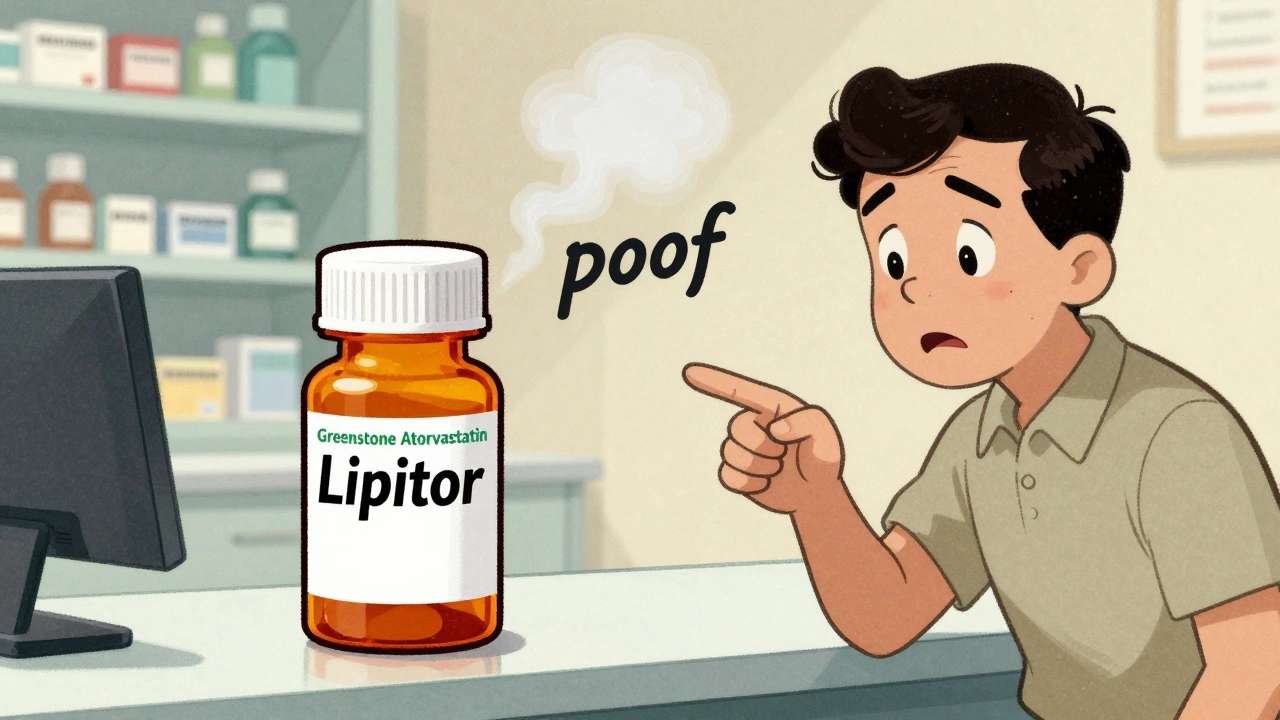
Ever picked up a prescription and noticed the pill looks different - maybe a different color or shape - but the name on the bottle is the same as your brand-name drug? You might think it’s a new generic. But what if it’s not a generic at all? What if it’s the exact same pill, just repackaged under a different label? That’s an authorized generic.
What Exactly Is an Authorized Generic?
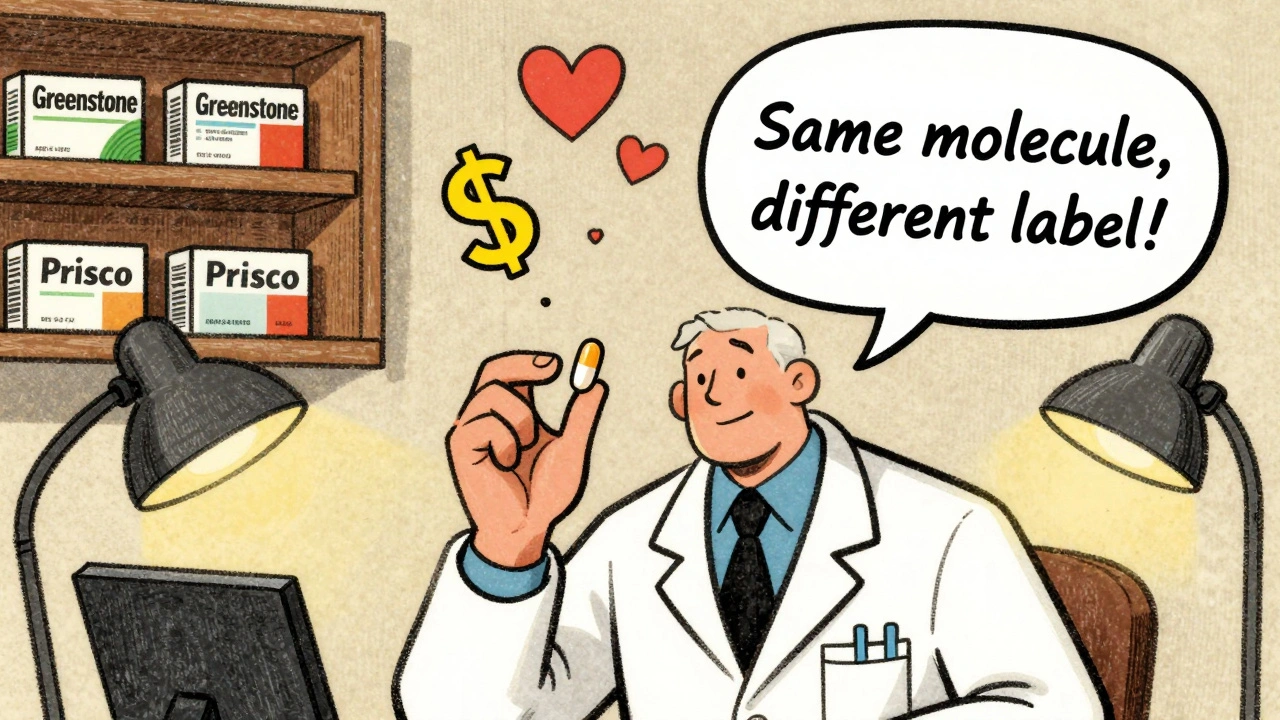
An authorized generic is the brand-name drug you already know, made by the same company, with the exact same ingredients, same strength, same shape, same everything - except it doesn’t carry the brand name on the label. It’s sold as a generic, often at a lower price, but it’s not a copy. It’s the original. The U.S. Food and Drug Administration (FDA) defines it clearly: it’s a drug approved under the brand’s original New Drug Application (NDA), but marketed with different labeling, packaging, or product codes. No new approval is needed. No bioequivalence studies. No waiting. The brand company just decides to sell its own product as a generic. For example, if you take Lipitor (atorvastatin), Pfizer might also sell an authorized generic version of atorvastatin under a different name - maybe "Greenstone Atorvastatin" - but it’s made in the same factory, with the same formula, same quality control, same everything. The only difference? The label says "generic."How Is It Different From a Regular Generic?
This is where things get confusing. Regular generics are made by other companies after the brand’s patent expires. They have to prove they work the same way as the brand - that’s called bioequivalence. They can have different inactive ingredients - like dyes, fillers, or coatings - which is why your generic might look different or even feel different in your mouth. Authorized generics don’t need to prove anything. They’re not copies. They’re the real thing. No inactive ingredient changes. No testing required. They’re identical down to the last molecule. Here’s how they stack up:- Brand-name drug: Made by the original company. Full FDA approval via NDA. Highest price.
- Regular generic: Made by another company. Approved via ANDA. Must prove bioequivalence. May have different inactive ingredients.
- Authorized generic: Made by the brand company. Sold under the brand’s NDA. Identical to brand. No ANDA needed.
Why Do Companies Do This?
It sounds strange. Why would a company that spent billions developing a drug turn around and sell its own product as a cheap generic? The answer is competition - and money. When a brand-name drug’s patent expires, the first company to file a generic version gets 180 days of exclusive market access under the Hatch-Waxman Act. That’s a huge financial incentive. But the brand company doesn’t want to lose all its customers. So they launch their own authorized generic - right before or right after the first generic hits the market. Now you’ve got two versions of the same drug competing for shelf space: one from a generic maker, one from the brand maker. The brand’s version often undercuts the generic’s price. The result? The first generic company loses sales. Sometimes, they lose their 180-day advantage entirely. This tactic has sparked debate. Critics say it undermines the whole point of the Hatch-Waxman Act - to encourage generic competition. Proponents say it gives consumers more choices and lower prices faster.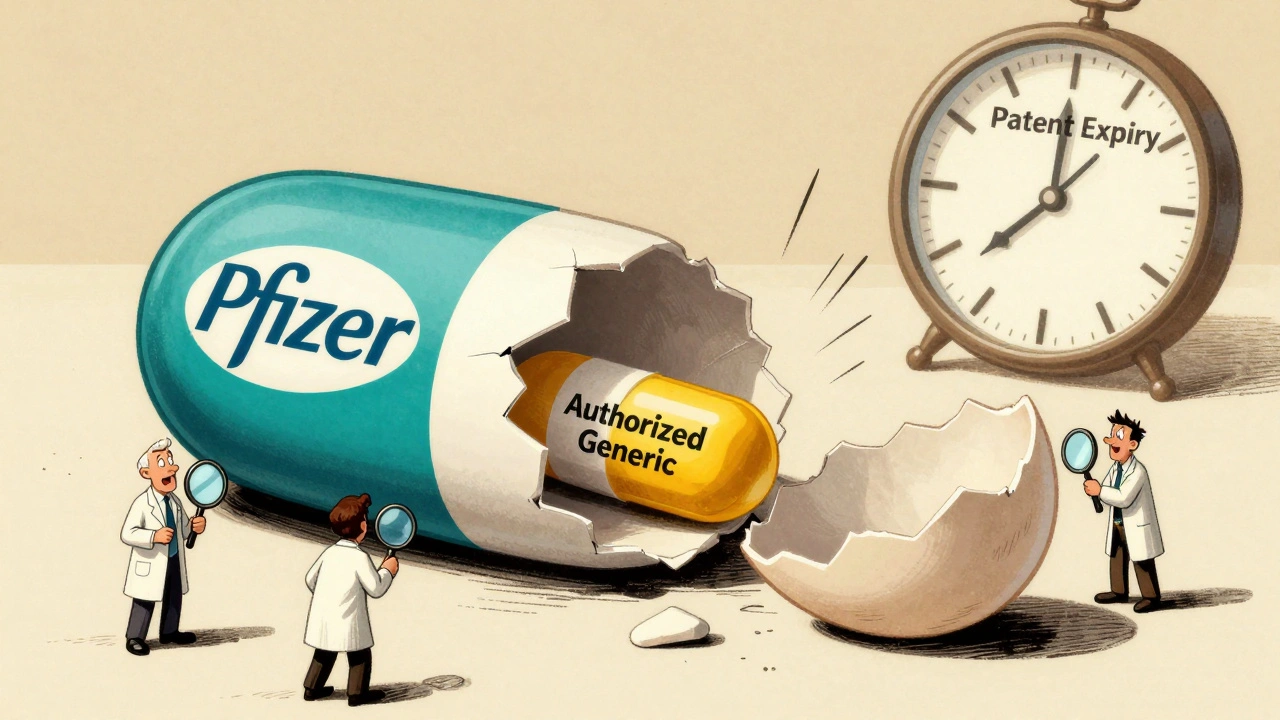
Are Authorized Generics Safe?
Yes. Absolutely. The FDA treats them as therapeutically equivalent to the brand-name drug. In fact, they’re more equivalent than regular generics because they’re identical. No guesswork. No risk of different fillers causing side effects. Many patients don’t even realize they’re taking an authorized generic. The pill might look different - maybe a different color or imprint - but that’s just to tell it apart from the brand. The active ingredient? Same. The dose? Same. The effect? Same. Pharmacists sometimes struggle with them too. Authorized generics don’t show up in the FDA’s Orange Book, which lists all approved generics and their equivalence ratings. So if a pharmacist checks the book to confirm a substitution, they won’t see it. They have to rely on manufacturer documentation or the FDA’s separate List of Authorized Generic Drugs.How to Spot an Authorized Generic
You won’t always know you’re getting one. But here’s how to find out:- Check the label. Does it say "authorized generic"? Sometimes yes, sometimes no.
- Look up the manufacturer. If it’s the same company that makes the brand (like Pfizer, AbbVie, or Janssen), it’s likely an authorized generic.
- Ask your pharmacist. They can tell you if the generic you’re getting is authorized.
- Use GoodRx or similar tools. They often flag authorized generics separately.
Why Should You Care?
Because money matters. And sometimes, the cheapest option isn’t the best - but the authorized generic is both cheap and identical. Let’s say your brand-name drug costs $120 a month. A regular generic might be $40. But the authorized generic? It could be $25. And it’s the exact same drug. No trade-offs. If you’ve had bad reactions to generics in the past - maybe your blood pressure spiked, or your stomach got upset - it might have been because of the inactive ingredients. With an authorized generic, that risk disappears. Also, if your insurance requires you to use generics, but you’re worried about effectiveness, ask if an authorized generic is available. You get the savings without the uncertainty.What’s the Catch?
The biggest issue isn’t safety. It’s transparency. Many doctors don’t know the difference between a regular generic and an authorized generic. Pharmacists might not always know either. Patients get confused when they get a different-looking pill and assume it’s a downgrade. There’s also the ethical debate: Is it fair for a brand company to use its market power to crush the first generic competitor? Some lawmakers think so. Others say consumers win either way. Right now, the FDA allows it. The market keeps growing. More brand companies are setting up authorized generic divisions. And more patients are benefiting from lower prices without sacrificing quality.What’s Next?
As more blockbuster drugs lose patent protection - like Humira, Enbrel, and others - authorized generics will become more common. The FDA keeps an updated list of them. You can find it on their website, though it’s not always easy to navigate. There’s talk in Congress about changing the rules - maybe limiting how soon a brand company can launch an authorized generic after the 180-day exclusivity period. But nothing’s changed yet. For now, if you’re looking to save money on a prescription, don’t just grab the first generic you see. Ask if there’s an authorized version. You might be surprised how much you save - and how familiar the pill feels.Bottom line: An authorized generic isn’t a knockoff. It’s the original - just without the brand name. And if you’re paying for it, you deserve to know the difference.
Comments
Let me get this straight - the brand company makes the exact same pill, slaps on a generic label, and calls it a day? Genius. Or just predatory capitalism with a side of FDA loopholes. Either way, I’m taking the $25 version that looks identical to my $120 Lipitor. No moral high ground here - just math. 🤑
I switched to an authorized generic for my thyroid med last year and honestly? My anxiety dropped. Not because the drug changed - but because I stopped worrying if it was ‘good enough.’ The label said ‘generic’ but my body knew it was the same. Sometimes the real magic is in the peace of mind. 🌿
Look, I’m not some pharma shill, but if you’ve ever had a regular generic make you feel like you swallowed a brick made of chalk and regret, you NEED to ask for the authorized version. I had a bad reaction to a generic metformin - weird tingling, nausea - switched to the Pfizer-made authorized generic? Zero issues. Same pill. Same factory. Same doctor. Just cheaper. Why are people still settling for ‘close enough’? It’s not 1998 anymore. The tech exists. The data exists. The savings exist. Stop letting inertia kill your health budget. 🚫💊
This is one of those quiet wins in healthcare that nobody talks about. The brand companies didn’t have to do this - they could’ve just sat back and watched generics eat their lunch. Instead, they offered a bridge: same quality, lower price. That’s not evil. That’s pragmatic. And honestly? If it helps someone afford their meds without sacrificing efficacy, that’s a win for everyone. Let’s not turn this into a villain origin story. 🙏
My pharmacist just told me my Zoloft is an authorized generic. I asked if it was the same as the blue one. She said, ‘Yep. Same factory. Same pill. Just cheaper.’ I almost cried. $180 down to $22. That’s not a discount - that’s a lifeline. Thanks for making this info easy to understand. 🙌
It is, without a doubt, a fascinating confluence of regulatory architecture, market incentive structures, and pharmaceutical ethics. The authorized generic phenomenon represents a unique intersection where the patent cliff is not merely navigated, but deliberately leveraged to maintain therapeutic continuity while simultaneously disrupting the anticipated generic market entry paradigm. One might argue that this constitutes a form of strategic regulatory arbitrage - yet, from a patient-centric perspective, the outcome remains unambiguously beneficial. The FDA’s non-inclusion of such products within the Orange Book, while technically accurate, is arguably an administrative oversight that impedes clinical transparency. A more robust, publicly accessible, and standardized labeling protocol would serve both prescribers and consumers with greater fidelity. The current state, while functional, is not optimal.
Oh please. You’re all acting like this is some revolutionary healthcare breakthrough. It’s not. It’s just Big Pharma playing chess with the Hatch-Waxman Act while you clowns cheer for ‘savings.’ You think you’re getting a deal? You’re getting a PR stunt disguised as altruism. The brand company still owns the manufacturing, the patents, the distribution - they’re just outsourcing the stigma. And don’t get me started on how they crush the real generics with predatory pricing. This isn’t consumer empowerment - it’s monopolistic theater. 🤡
Everyone’s acting like this is a miracle. Newsflash: the brand company is STILL making the same profit. They just moved the label. The real losers? The small generic manufacturers who actually invested in bioequivalence studies. You think they get a pat on the back? Nah. They get buried under the same pill with a different sticker. This isn’t about patients. It’s about control. And you’re all too dumb to see it. No emojis. No tears. Just facts. 💀
There is a grammatical inconsistency in the phrase: ‘It’s made in the same factory, with the same formula, same quality control, same everything.’ The final item in the series lacks the article ‘the’ before ‘everything,’ which breaks parallel structure. While this is trivial, precision in language reflects precision in thought - especially when discussing pharmaceuticals. Additionally, ‘authorized generic’ should be hyphenated when used attributively (e.g., ‘authorized-generic version’), per AP style. Small things matter.
So you’re telling me the guy who invented Lipitor is now selling it under a different name to undercut the guy who copied it? Classic. Now I get why my insurance won’t cover the brand - they’re just making me buy the same thing from a different shelf. Next thing you know, they’ll sell the same pill with a ‘premium’ label for $150 again. 😏