SSRI Bleeding Risk Estimator
Select a medication and check applicable factors to see your estimated risk profile.
Did you know that the medication helping you sleep better or feel less anxious might also be making it harder for your blood to clot? It sounds like a scary trade-off, but it is a well-documented reality for millions of people taking Selective Serotonin Reuptake Inhibitors, commonly known as SSRIs. These are the most prescribed antidepressants in the world, yet their impact on platelet function is often overlooked until a minor cut won't stop bleeding.
You take your pill to lift your mood. You don't expect it to change how your body handles injury. But here is the thing: serotonin does double duty. It keeps your brain happy, but it also tells your blood cells to stick together when you get hurt. When SSRIs block that process, the results can be surprising. Let's break down exactly what happens inside your body, which drugs carry the highest risk, and how you can stay safe without sacrificing your mental health.
The Hidden Link Between Mood and Clotting
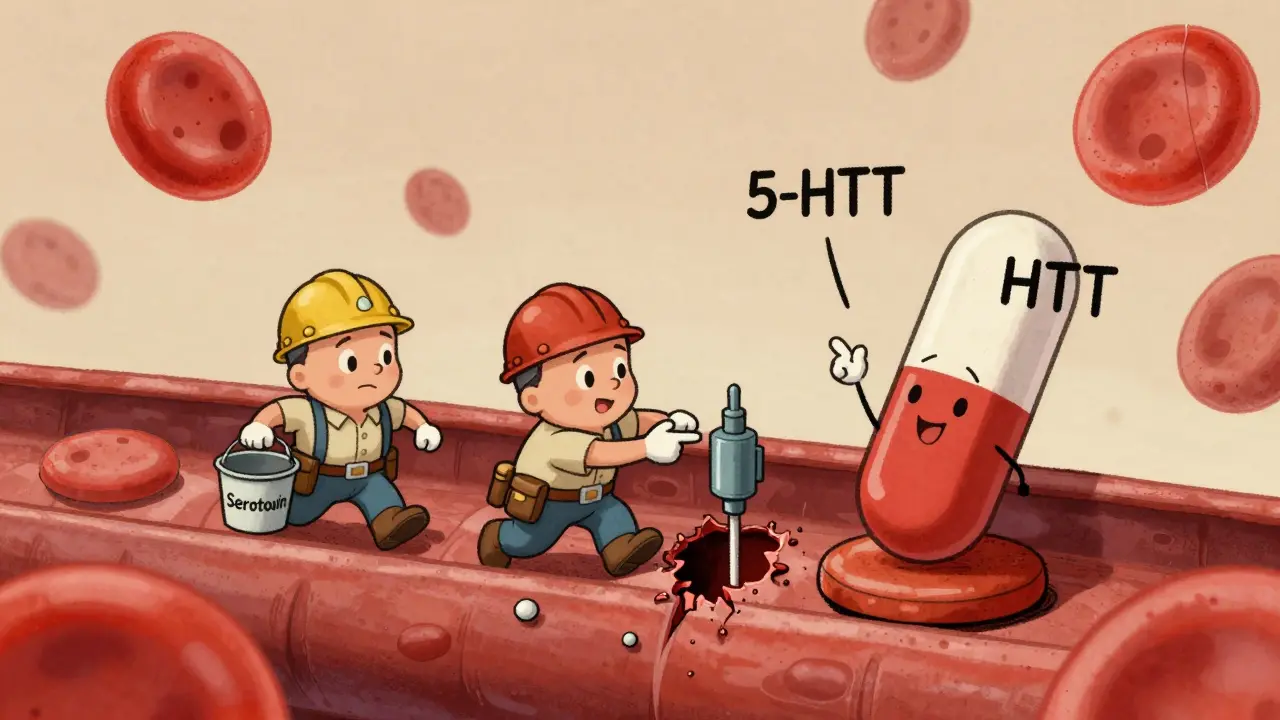
To understand why SSRIs cause bleeding issues, we have to look at a tiny cell in your blood called a platelet. Think of platelets as the emergency repair crew of your circulatory system. When you scrape your knee or cut your finger, these cells rush to the scene, stick together, and form a plug to stop the bleeding.
Here is where it gets tricky. Platelets cannot make their own serotonin. They have to steal it from your red blood cells. Once they have it, they store it up. When a platelet arrives at an injury site, it releases that stored serotonin to signal other platelets to come over and help out. This amplification step is crucial for forming a strong clot.
SSRIs work by blocking the serotonin transporter, or 5-HTT. This is the pump that moves serotonin back into cells so it can be reused. By blocking this pump, SSRIs keep more serotonin available in your brain to improve your mood. Unfortunately, that same pump is the only way platelets can load up on serotonin. If you block the pump, the platelets run empty. Without enough serotonin, the "repair crew" arrives late and works poorly. The result? A higher chance of bleeding, bruising, and slower clot formation.
Not All SSRIs Are Created Equal
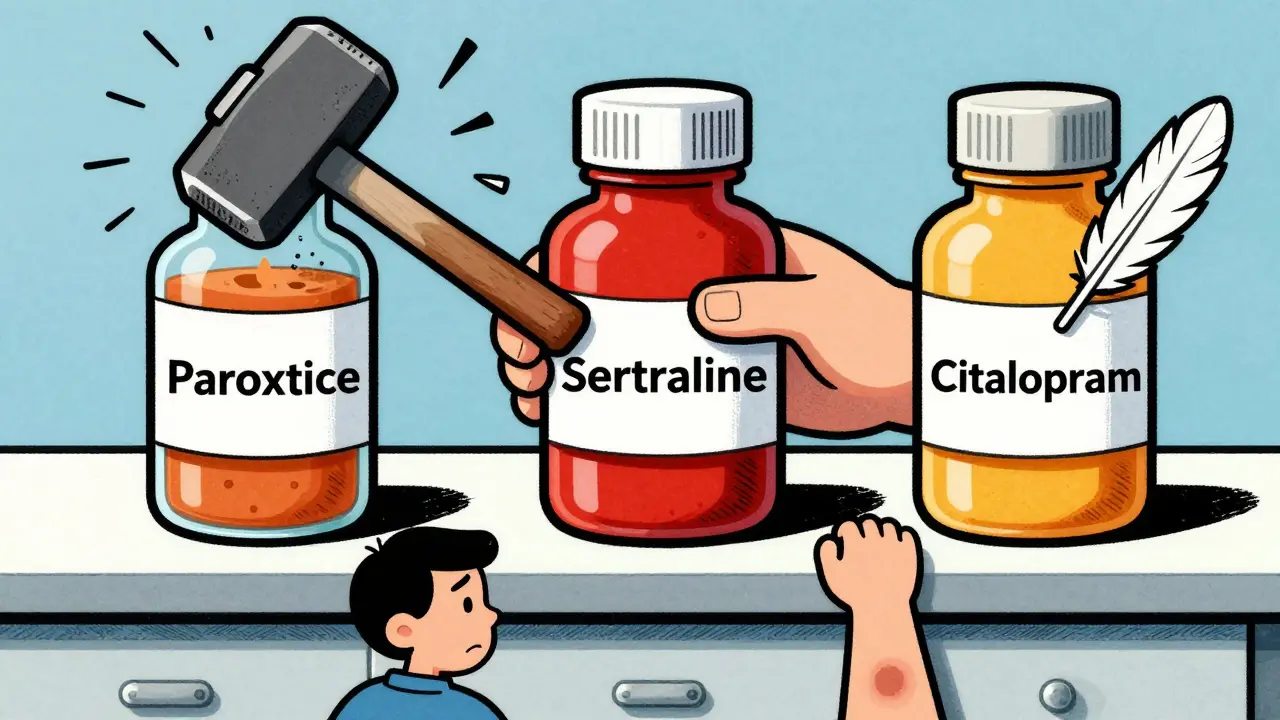
If you are worried about bleeding, not every SSRI poses the same threat. The risk depends on how tightly the drug binds to that serotonin transporter. Some medications are like a sledgehammer, completely shutting down reuptake. Others are more like a gentle tap.
| Medication (Brand) | Serotonin Binding Affinity (Ki) | Relative Bleeding Risk |
|---|---|---|
| Paroxetine (Paxil) | 0.17 nM (Highest affinity) | Highest (40-50% increased GI bleed risk) |
| Fluvoxamine (Luvox) | 0.34 nM | High |
| Sertraline (Zoloft) | 0.52 nM | Moderate (20-30% increased GI bleed risk) |
| Citalopram (Celexa) | 0.91 nM (Lower affinity) | Moderate/Low |
As you can see, Paroxetine has the strongest grip on the transporter, meaning it leaves the least amount of serotonin for your platelets. Studies show that users of Paroxetine face a significantly higher risk of upper gastrointestinal bleeding compared to those on Sertraline or Citalopram. If you have a history of stomach ulcers or easy bruising, your doctor might steer you toward the lower-affinity options like Citalopram or Sertraline.
The Dangerous Combo: SSRIs Plus Painkillers
Taking an SSRI alone increases your bleeding risk, but combining it with certain pain relievers turns up the danger dial significantly. The biggest culprit is NSAIDs, which includes common over-the-counter drugs like ibuprofen (Advil, Motrin) and naproxen (Aleve).
Why is this combo so risky? NSAIDs damage the lining of your stomach and inhibit another clotting pathway called thromboxane production. SSRIs, meanwhile, disable the platelet backup system. When you hit your body with both, you essentially remove two layers of defense against bleeding. Research indicates that combining SSRIs with NSAIDs can increase the risk of gastrointestinal bleeding by up to 4.5 times.
If you need pain relief while on an SSRI, acetaminophen (Tylenol) is generally considered safer because it does not interfere with platelet function or stomach lining. Always check with your pharmacist before mixing new medications, especially if you are also on blood thinners like warfarin or aspirin.
Who Is Most at Risk?
Not everyone on an SSRI will experience problematic bleeding. For many, the risk is theoretical or manifests only as slightly larger bruises than usual. However, certain groups need to be extra vigilant. Doctors often use the HAS-BLED score to estimate your personal risk. This tool looks at factors like:
- Hypertension: High blood pressure puts more stress on blood vessels.
- Abnormal Renal or Liver Function: Your kidneys and liver help regulate clotting factors.
- Stroke History: Previous vascular issues indicate fragile blood vessels.
- Bleeding History: If you have bled seriously before, you are likely to do so again.
- Elderly Age: Older adults often have thinner skin and more comorbidities.
- Drugs or Alcohol: As mentioned, concurrent use of anticoagulants, antiplatelets, or NSAIDs spikes the risk.
If your score is 3 or higher, you are in a high-risk category. In these cases, clinicians might consider alternative antidepressants that do not affect serotonin transport, such as Bupropion (Wellbutrin) or Mirtazapine (Remeron). These drugs work on different neurotransmitters and spare your platelets.
Real-World Signs to Watch For
You don't need a lab test to know if something is wrong. Your body will give you clues. While minor nosebleeds or small bruises might be annoying, they aren't usually emergencies. However, you should seek immediate medical attention if you notice:
- Gastrointestinal Bleeding: Stools that look black, tarry, or maroon. Vomiting material that looks like coffee grounds.
- Unusual Bruising: Large bruises appearing without any remembered injury, or bruises that don't fade after a week.
- Prolonged Bleeding: Cuts that take longer than 10-15 minutes to stop bleeding despite applying pressure.
- Blood in Urine: Pink, red, or brown urine without an infection.
Data from the FDA Adverse Event Reporting System shows that gastrointestinal bleeding is the most common serious issue, accounting for over 40% of bleeding-related reports in SSRI users. Postoperative bleeding and ecchymosis (skin bruising) follow closely behind. Being aware of these signs can save your life.
Managing the Risk During Procedures
If you are scheduled for surgery or a dental procedure, you must tell your surgeon and dentist that you are taking an SSRI. The standard advice used to be stopping the drug entirely, but that comes with its own risks. Stopping SSRIs abruptly can cause withdrawal symptoms and a relapse of depression or anxiety, which is dangerous during recovery.
Current guidelines from the American Psychiatric Association suggest maintaining SSRIs during major surgeries like cardiac operations due to the high stakes of mental health relapse. For minor procedures, doctors might recommend stopping the medication 5 to 7 days beforehand, as this is roughly how long it takes for platelet serotonin levels to replenish. This decision is highly individualized. Never stop your medication without a clear plan from your healthcare provider.
Newer research is also looking into genetic factors. Variations in the 5-HTTLPR gene can influence how much serotonin your transporters can handle. People with certain genetic markers (S/S genotype) may have a naturally higher baseline risk of bleeding when on SSRIs. As pharmacogenetic testing becomes more common, this could become a routine part of prescribing decisions.
Bottom Line: Balance Is Key
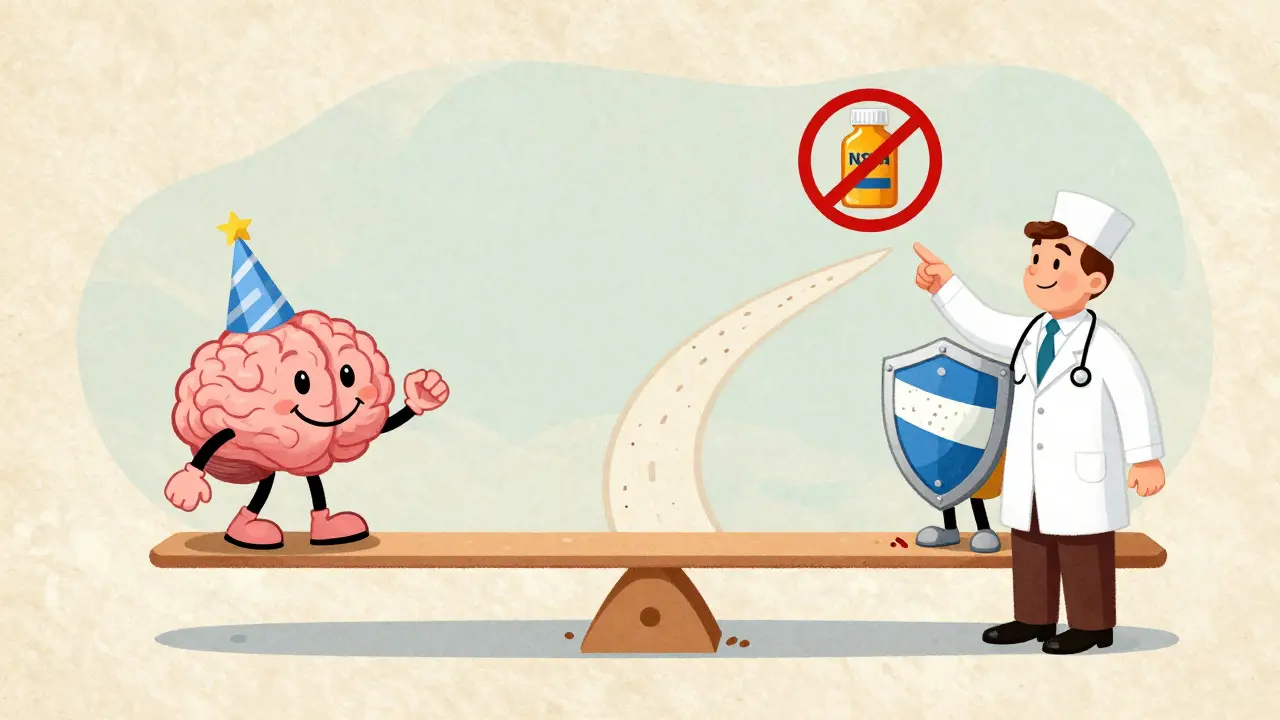
The bleeding risk associated with SSRIs is real, but it should not scare you off effective treatment. Untreated depression carries significant mortality risks, including suicide and poor self-care, which far outweigh the potential for bruising or minor bleeding for most people. The key is informed caution.
Talk to your doctor about your specific risk factors. Ask if a lower-affinity SSRI like Sertraline or Citalopram makes sense for you. Avoid NSAIDs whenever possible. And always keep an eye on your body's signals. With the right precautions, you can protect your mental health without compromising your physical safety.
Do all SSRIs cause bleeding problems?
No, not everyone experiences noticeable bleeding issues. However, all SSRIs impair platelet function to some degree because they block serotonin uptake. The severity varies by drug; Paroxetine has the highest risk, while Citalopram and Sertraline have lower risks. Individual factors like age, genetics, and other medications also play a huge role.
Can I take ibuprofen if I am on an SSRI?
It is generally recommended to avoid regular use of ibuprofen (Advil, Motrin) or naproxen (Aleve) while on an SSRI. Combining them increases the risk of gastrointestinal bleeding significantly. Acetaminophen (Tylenol) is a safer alternative for pain relief, but you should always consult your doctor or pharmacist before starting any new medication.
Should I stop my SSRI before surgery?
This depends on the type of surgery and your personal health history. For minor procedures, doctors may advise stopping the SSRI 5-7 days prior to allow platelet function to recover. For major surgeries, continuing the SSRI is often preferred to prevent depression relapse. Never stop your medication without explicit instructions from your healthcare provider.
What are the signs of serious SSRI-induced bleeding?
Watch for black, tarry stools; vomiting blood or coffee-ground-like material; unusual or large bruises without injury; blood in your urine; or cuts that bleed for more than 15 minutes despite pressure. If you experience any of these, seek medical attention immediately.
Are there antidepressants that do not affect platelets?
Yes. Antidepressants that do not primarily target serotonin reuptake, such as Bupropion (Wellbutrin) and Mirtazapine (Remeron), do not impair platelet function in the same way. They may be safer options for patients with a high risk of bleeding, though they have their own side effect profiles.