
Medication Eye Safety Checker
Check if your medications could be causing light sensitivity or halos. This tool identifies high-risk medications and provides personalized safety recommendations based on your current prescriptions.
Waking up to halos around streetlights or flinching at indoor lighting might seem like a minor annoyance-but if it started after you began a new medication, it could be a warning sign. You’re not imagining it. Medications can directly affect how your eyes process light, leading to painful sensitivity, blurry vision, or ghostly rings around bright objects. These aren’t rare quirks. They’re documented side effects tied to dozens of commonly prescribed drugs-and many people don’t realize their vision changes are drug-related until it’s too late.
What Causes Halos and Light Sensitivity?
Halos and photophobia (light sensitivity) happen when a medication interferes with how light enters or is processed by your eye. Some drugs change the way your cornea or retina responds to light. Others affect the brain’s visual processing centers, making even normal brightness feel overwhelming. It’s not just about being sensitive to sunlight. Fluorescent office lights, LED screens, and car headlights at night can become unbearable.
Medications linked to these issues fall into several key groups:
- Antimalarials like hydroxychloroquine (Plaquenil) build up in the retina over time, causing cloudiness and irreversible damage. Up to 20% of people taking it for over 10 years develop retinal toxicity.
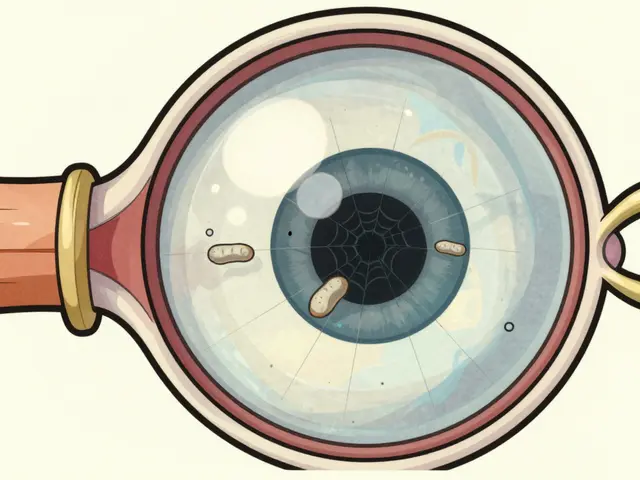
- Antibiotics such as amiodarone (Cordarone) and fluoroquinolones can cause halos, blurred vision, and corneal deposits. Amiodarone alone affects 1-10% of users.
- Antidepressants and antipsychotics like chlorpromazine (Thorazine) and certain SSRIs trigger light sensitivity by altering neurotransmitter balance in the visual pathways.
- Erectile dysfunction drugs like sildenafil (Viagra) can cause temporary but startling changes: blue-tinted vision, light sensitivity, and even optic nerve damage in rare cases.
- Chemotherapy agents such as vemurafenib and tamoxifen cause severe photosensitivity-some patients get sunburned through windows.
- Seizure medications like Dilantin (phenytoin) are known to cause photophobia in a significant portion of users, though many assume it’s part of their condition.
- NSAIDs like ibuprofen and naproxen may seem harmless, but they can inflame the eye’s surface, leading to light pain in up to 3% of users-far higher than most realize.
The problem? Many of these side effects start quietly. You don’t suddenly go blind. You just start avoiding bright rooms, squinting in the car, or skipping night walks. By the time you see an eye doctor, damage may already be done.
Which Medications Are Most Dangerous for Your Eyes?
Not all medications carry the same risk. Some are high-risk and require strict monitoring. Here’s who needs to act now:
- Hydroxychloroquine (Plaquenil): Used for lupus and rheumatoid arthritis. Risk of permanent retinal damage rises sharply after five years of use. The American Academy of Ophthalmology recommends a baseline eye exam before starting, then yearly scans using spectral-domain OCT. Over 95% of retinal damage from this drug shows no symptoms until it’s advanced.
- Amiodarone (Cordarone): For heart rhythm problems. Causes halos, corneal microdeposits, and optic neuropathy. Patients often report seeing halos around headlights within weeks of starting the drug.
- Ethambutol: Used for tuberculosis. Can damage the optic nerve. At standard doses, 1-2% of users develop vision loss. At higher doses, that jumps to 20-50%. Monthly vision tests are mandatory during treatment.
- Tamoxifen: For breast cancer. Leads to corneal clouding and retinal deposits in about 1.5% of users. Vision changes can be permanent even after stopping the drug.
- Chlorpromazine (Thorazine): An antipsychotic. Causes pigment changes in the eye and can lead to retinal damage over time.
- Vemurafenib: A melanoma drug. Causes severe photosensitivity-patients report blistering sunburns after just 15 minutes of sun exposure.
If you’re taking any of these, you need more than a routine eye checkup. You need a specialized exam that looks for early signs of damage-before you notice symptoms.
How to Protect Your Vision: 5 Actionable Tips
Waiting for symptoms to get worse is dangerous. Here’s what you can do right now:
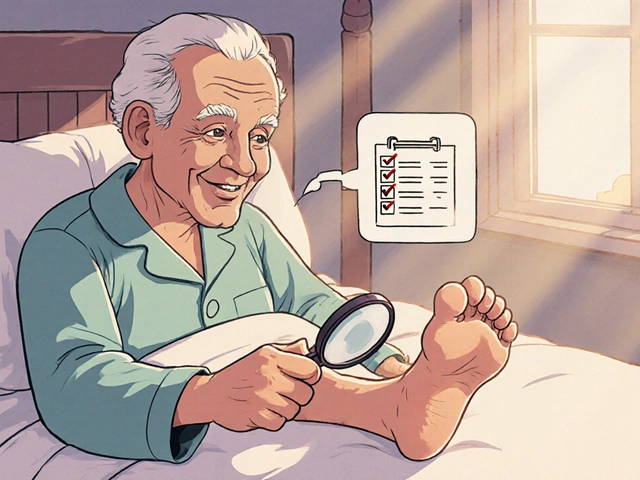
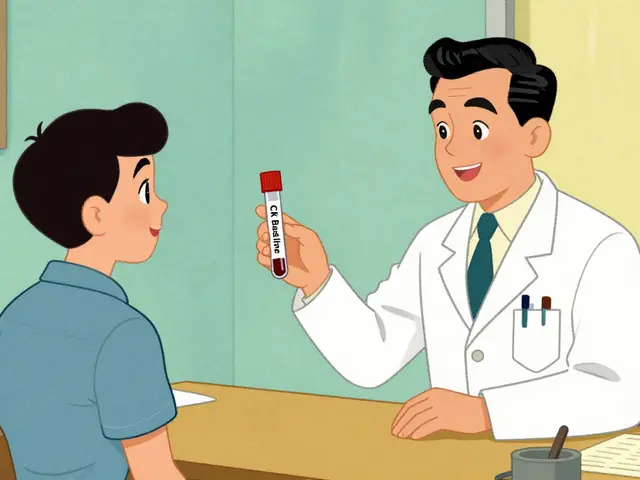
- Get a baseline eye exam before starting high-risk medications. This gives your doctor a reference point. If your vision changes later, they can compare it to your original scan.
- Follow the recommended monitoring schedule. For hydroxychloroquine, that’s yearly after five years. For ethambutol, it’s monthly. Don’t skip them-even if you feel fine. Damage often happens silently.
- Wear FL-41 tinted glasses. These aren’t regular sunglasses. They’re specially designed to block the specific wavelengths of light that trigger photophobia. Studies show they reduce symptoms by 40-70%. They work for people on amiodarone, Dilantin, or even migraine meds. You can wear them indoors without looking odd-they’re subtle, like light amber lenses.
- Adjust your lighting at home. Swap bright white LEDs (5000K+) for warm white bulbs (2700K-3000K). Keep brightness at 50-70%. Use dimmers. Avoid overhead fluorescents. Natural light is best-open blinds during the day, but use curtains to diffuse harsh sunlight.
- Use the 20-20-20 rule. Every 20 minutes, look at something 20 feet away for 20 seconds. Do this in dimmed lighting. It reduces eye strain and gives your visual system a reset. People with medication-induced photophobia report 73% less discomfort after one week of doing this consistently.
Some people think these tips are just for migraine sufferers. They’re not. They’re for anyone whose vision changed after starting a new pill.

When to See an Eye Doctor Immediately
Not every light sensitivity needs panic-but some do. Go to an ophthalmologist right away if you experience:
- Sudden, severe light pain with blurred vision
- Halos that appear only in one eye
- Color vision changes-like everything looking yellow or blue
- Loss of peripheral vision
- Eye pain or pressure
These could signal acute angle-closure glaucoma, optic nerve damage, or retinal toxicity-all of which need treatment within 24-48 hours to prevent permanent loss. A delay of even a few weeks can mean the difference between restored vision and lifelong impairment.
And don’t assume your primary care doctor will catch it. Most aren’t trained to spot early ocular side effects. You need an eye specialist who knows which drugs cause which damage.
Real Stories, Real Consequences
One Reddit user, 'MigraineWarrior89,' started amiodarone for atrial fibrillation. Within three weeks, halos around streetlights made night driving impossible. He didn’t connect it to the drug until he read about it online. By then, his cornea was already clouded.
Another, 'CancerSurvivor2020,' took vemurafenib and got sunburned through a window. He had to wear UV-blocking film on his home windows and never go outside without full coverage. He’s now on a different drug-but the skin and eye damage lingers.
On the flip side, 'VisionSaver2022' started taking Dilantin and developed severe photophobia. She couldn’t work in her office. After switching to FL-41 glasses, her symptoms dropped by 80%. She went back to work after six months.
These aren’t outliers. A 2023 survey by the American Migraine Foundation found that 78% of people with medication-induced light sensitivity lost 30-50% of their work productivity. One in five lost their job entirely.

What’s Being Done to Fix This?
There’s growing awareness. The FDA now tracks medication-induced photophobia complaints-up 47% since 2020. The European Medicines Agency now requires stronger warnings on fluoroquinolone antibiotics after 3.7% of users reported light sensitivity.
Research is accelerating too. The NIH is funding a $4.2 million network to track eye side effects in real time across 50 medical centers. The goal? Cut the average delay in diagnosis from 8.2 months to under 30 days by 2026.
And the market is responding. The global photophobia management market is projected to hit $2.4 billion by 2028. FL-41 glasses sales have doubled since 2020.
But technology alone won’t save your vision. Awareness will.
Final Reminder: Your Eyes Can’t Wait
You wouldn’t ignore chest pain after starting a new heart pill. Don’t ignore eye changes either. Halos and light sensitivity aren’t just annoyances-they’re red flags. Many people live with them for months, thinking it’s aging, stress, or screen time. It might be your medication.
Take action now:
- Check your medication list against the high-risk drugs above.
- If you’re on any of them, schedule a comprehensive eye exam with an ophthalmologist-not just your optometrist.
- Get FL-41 glasses if you’re struggling with bright lights.
- Don’t wait for symptoms to worsen. Damage from hydroxychloroquine, ethambutol, or tamoxifen is often permanent.
Your vision is irreplaceable. Don’t let a pill steal it silently.
Can over-the-counter painkillers like ibuprofen cause light sensitivity?
Yes. While most people think NSAIDs like ibuprofen and naproxen are safe for eyes, they can cause photophobia in up to 3% of users. The inflammation they trigger on the eye’s surface makes light feel painful. This is often mistaken for migraines or eye strain. If you notice new light sensitivity after starting these meds, talk to your doctor-don’t just increase the dose.
Are FL-41 glasses worth it for medication-induced photophobia?
Absolutely. Unlike regular sunglasses, FL-41 filters block the specific blue-green light wavelengths that trigger nerve pain in sensitive eyes. Clinical studies show 40-70% symptom reduction in people on amiodarone, Dilantin, and antidepressants. They’re affordable, discreet, and can be worn indoors. Many users say they’re the only thing that lets them return to normal life.
How often should I get my eyes checked if I’m on hydroxychloroquine?
You need a baseline exam before starting. After five years of use, you need a yearly exam with spectral-domain OCT and visual field testing. If you’re on a high dose (over 400mg/day), start annual exams immediately. Retinal damage from hydroxychloroquine is often symptom-free until it’s irreversible. Regular monitoring cuts the risk of severe toxicity from 7.3% to just 1.2% over five years.
Can I just stop the medication if I get halos?
Never stop a prescribed medication without talking to your doctor. Some side effects, like those from antipsychotics, resolve within 1-2 weeks after stopping. But others, like retinal damage from hydroxychloroquine or tamoxifen, are permanent. Your doctor can help you weigh the risks and may switch you to a safer alternative.
Is light sensitivity from medication always permanent?
Not always. Sensitivity caused by antidepressants, NSAIDs, or antipsychotics often improves after stopping the drug. But damage from hydroxychloroquine, ethambutol, or tamoxifen can be permanent-even after you stop taking them. That’s why early detection through regular eye exams is critical. The sooner you catch it, the better your chances of saving your vision.
Can I still drive at night if I have halos from medication?
It’s risky. Halos around headlights and streetlights can severely impair depth perception and reaction time. Many people stop driving at night without realizing why-until they get a warning from an eye doctor. If you’re experiencing halos, avoid night driving until you’ve been evaluated. Your safety and others’ depend on it.

Comments
I started taking ibuprofen for my migraines and suddenly couldn't handle my office lights. Thought I was going crazy. Turns out it was the meds. FL-41 glasses saved my job. 💚
The fundamental issue here is not merely pharmacological, but epistemological: we have outsourced our bodily awareness to pharmaceutical corporations who profit from our ignorance. The eye, as a conduit of perception, is not merely a biological organ-it is the phenomenological interface between self and world, and when pharmacology disrupts that interface without informed consent, we are not merely experiencing side effects-we are experiencing alienation from our own sensory reality.
Baseline eye exam before starting any high risk medication is non negotiable. Period. If your doctor does not suggest it ask for it. Your vision is worth more than your time
This is why America needs to stop letting big pharma run the show. In Germany they warn you about this stuff on the pill bottle. Here? You get a 12 point font disclaimer buried in a 40 page pamphlet. Wake up people
I know how scary this feels but you are not alone. I was on Plaquenil for 8 years and thought my blurry vision was just aging. Got the OCT scan and we caught it early. Switched meds. Got FL-41 glasses. Now I drive at night again. You got this
It is noteworthy that the prevalence of medication-induced photophobia has increased significantly over the past decade, particularly in populations with prolonged exposure to fluorescent lighting and digital screens. The confluence of pharmacological interference with environmental light exposure creates a compounding effect that is rarely addressed in clinical guidelines. Furthermore, the absence of standardized diagnostic criteria for early-stage retinal toxicity in non-specialist settings remains a critical gap in preventive ophthalmology.
lol i took amiodarone and thought the halos were just my eyes being tired. turned out my cornea was coated in crystals. switched meds. got FL-41 glasses. now i can watch tv without squinting. best 25 bucks i ever spent
Hey anyone else feel like this info should be in the med instructions? Like right on the bottle? Not just buried in a 50 page PDF? I showed my doctor and she said oh we dont always tell patients this because it scares them. But if you dont know you might lose your vision?? Come on
I find it profoundly irresponsible that physicians routinely prescribe hydroxychloroquine without mandating baseline OCT scans. This is not a borderline issue-it is a systemic failure of clinical due diligence. The American Academy of Ophthalmology has issued clear guidelines for over a decade, yet compliance remains abysmal. Patients are being treated as expendable variables in a profit-driven system, and the consequence is irreversible retinal degeneration. This is not negligence; it is malpractice by omission.
Ugh I hate when people act like this is some new revelation. My mom lost her vision on tamoxifen and they didn't catch it till she was legally blind. Now they're all like oh we should have known. Well why didn't you? Why didn't anyone tell us? I'm done trusting doctors
I got FL-41 glasses last year and they’re wild. I wear them inside at work and people think I’m going for a vibe. But I can actually look at my screen without wanting to cry. Worth every penny. 🙌
I appreciate the depth of this post... but I also need to say... I'm not sure I'm comfortable with the tone of some of the comments here. It's important to advocate, yes... but we also need to remember that many of these medications are life-saving. The goal isn't to vilify pharmaceuticals... it's to empower patients with knowledge... and to demand better monitoring... not to spiral into fear.
The real tragedy isn't the halos or the light sensitivity-it's that we've normalized suffering to the point where we mistake medication-induced blindness for aging. We don't question the pill because we've been taught to trust the system. But the system doesn't care if you see the sunrise. It only cares if you keep buying the next prescription. Your eyes are not a side effect. They're your window to the world-and someone is quietly turning the dial.