When your child starts a new medication, you’re not just giving them a pill or liquid-you’re stepping into a new routine full of unknowns. Even when the medicine works exactly as it should, side effects can show up. And when they do, it’s easy to panic. Is this normal? Should I call the doctor? Do I stop the medicine? The truth is, most pediatric side effects are mild and manageable at home. But knowing how to manage them makes all the difference.
What Side Effects Are Common in Kids?
Not all side effects are the same. Kids react differently than adults because their bodies are still growing. Their liver and kidneys are still learning how to process drugs, and their nervous systems are more sensitive. According to data from Children’s Hospital of Philadelphia, the most common side effects in children are:- Upset stomach (42% of cases)
- Diarrhea (28%)
- Drowsiness (19%)
- Rashes (23%)
- Hyperactivity (12%)-yes, even medications like diphenhydramine (Benadryl) can make some kids wired instead of sleepy
These numbers aren’t guesses. They come from tracking over 10,000 pediatric medication courses in 2022. The good news? Most of these don’t need a hospital visit. But you need to know what’s normal-and what’s not.
When to Worry: Red Flags That Need Immediate Action
Most side effects fade on their own. But some need instant attention. The American Academy of Pediatrics says to call your doctor or go to urgent care if your child has:- More than three episodes of vomiting in 24 hours
- Fever above 102°F (38.9°C) that doesn’t come down with acetaminophen or ibuprofen
- Difficulty breathing or a breathing rate over 40 breaths per minute (for infants) or over 30 (for older kids)
- Hives covering more than 10% of the body or swelling of the face, lips, or tongue
- Unresponsiveness, extreme lethargy, or seizures
If you see any of these, don’t wait. Call 911 or go to the nearest emergency room. For less urgent concerns, call Poison Control at 1-800-222-1222. They’re available 24/7 and can guide you through what to do next.
Managing Gastrointestinal Side Effects at Home
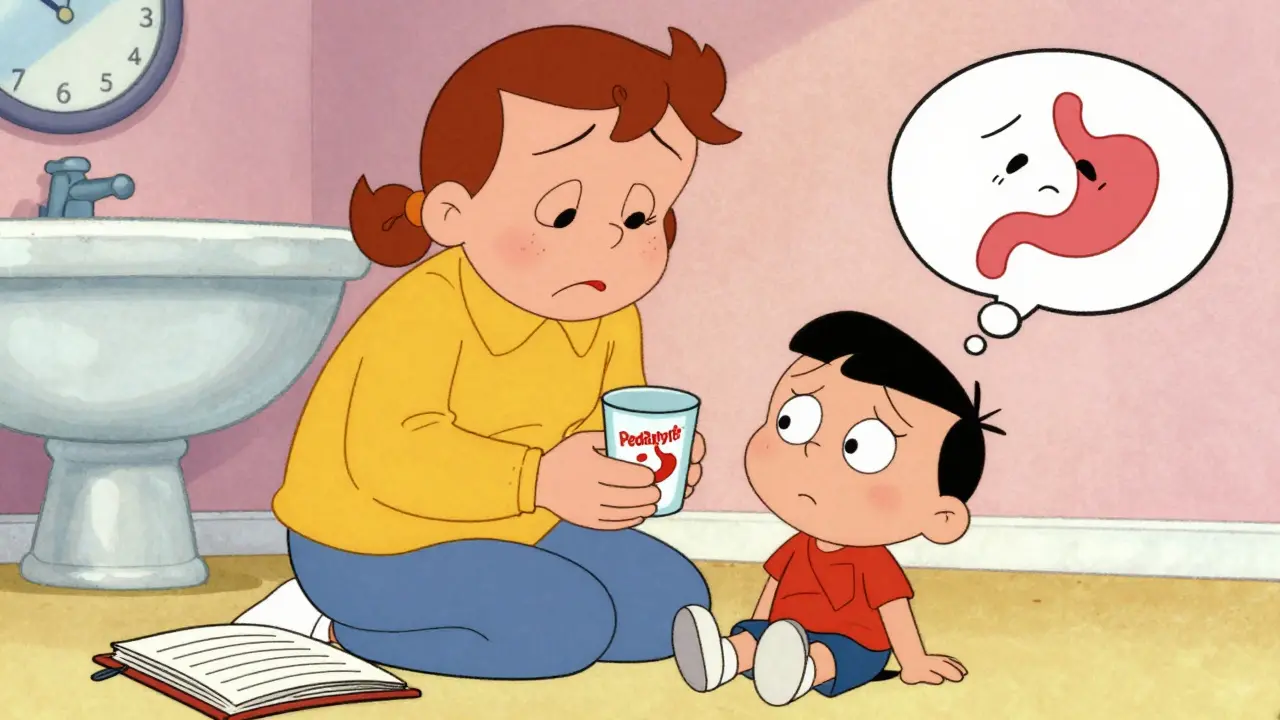
Stomach upset, nausea, and diarrhea are the most common reasons parents call their pediatrician. But you can handle most cases without leaving home.For vomiting: Don’t try to give fluids right away. Wait 30 to 60 minutes after the last episode. Then start small-5 to 10 milliliters (about 1-2 teaspoons) of oral rehydration solution (like Pedialyte) every 5 minutes. If your child keeps it down for an hour, slowly increase the amount. Avoid juice, soda, or milk until the vomiting stops. These can make things worse.
For diarrhea: Keep them hydrated the same way. Offer water or rehydration solution in small sips. Avoid sugary drinks. If they’re eating solids, stick to the BRAT diet: bananas, rice, applesauce, and toast. These are easy to digest and help firm up stool. Skip fried foods, dairy, and high-fiber veggies for a day or two.
Pro tip: Keep a log. Write down how many times they vomited or had diarrhea, what you gave them, and when. This helps your doctor decide if it’s just a side effect or something more serious.
Dealing with Drowsiness or Hyperactivity
Some medications make kids sleepy. Others? They turn them into little tornadoes. Diphenhydramine, commonly found in allergy meds, affects 15% of kids this way-making them hyper instead of calm. It’s not a mistake. It’s a known reaction.If your child is drowsy: Let them rest. Don’t force them to stay awake. Make sure they’re in a safe space. Avoid activities that could lead to falls or accidents.
If they’re hyper: Don’t try to punish or scold them. Their brain chemistry is temporarily altered. Instead:
- Remove overstimulation-turn off screens, lower lights, reduce noise
- Offer quiet activities: coloring, puzzles, listening to audiobooks
- Track the behavior: note how long it lasts, what time it started, and if it matches the medication’s timing
Write this down. Bring it to your next appointment. Your doctor might adjust the dose or switch meds if this keeps happening.

Rashes and Skin Reactions
A mild rash is common with antibiotics like amoxicillin. It doesn’t always mean an allergy. In fact, up to 90% of rashes from amoxicillin in kids are harmless and go away on their own.But you need to tell the difference:
- Non-allergic rash: Flat, pink spots, not itchy, spread slowly over 2-3 days. Often appears after day 5 of antibiotics. No other symptoms.
- Allergic reaction: Raised, red, itchy hives; swelling around the eyes or mouth; difficulty breathing. This needs emergency care.
If it’s mild and not spreading fast, keep the skin clean and dry. Use unscented moisturizer. Avoid hot baths. Call your pediatrician if it gets worse, spreads quickly, or if your child seems uncomfortable.
Storage and Safety: Preventing Accidents Before They Happen
Most pediatric medication accidents happen at home. The CDC says 60,000 kids end up in emergency rooms every year because of medication mistakes. And 72% of those are under age 5.Here’s how to keep your home safe:
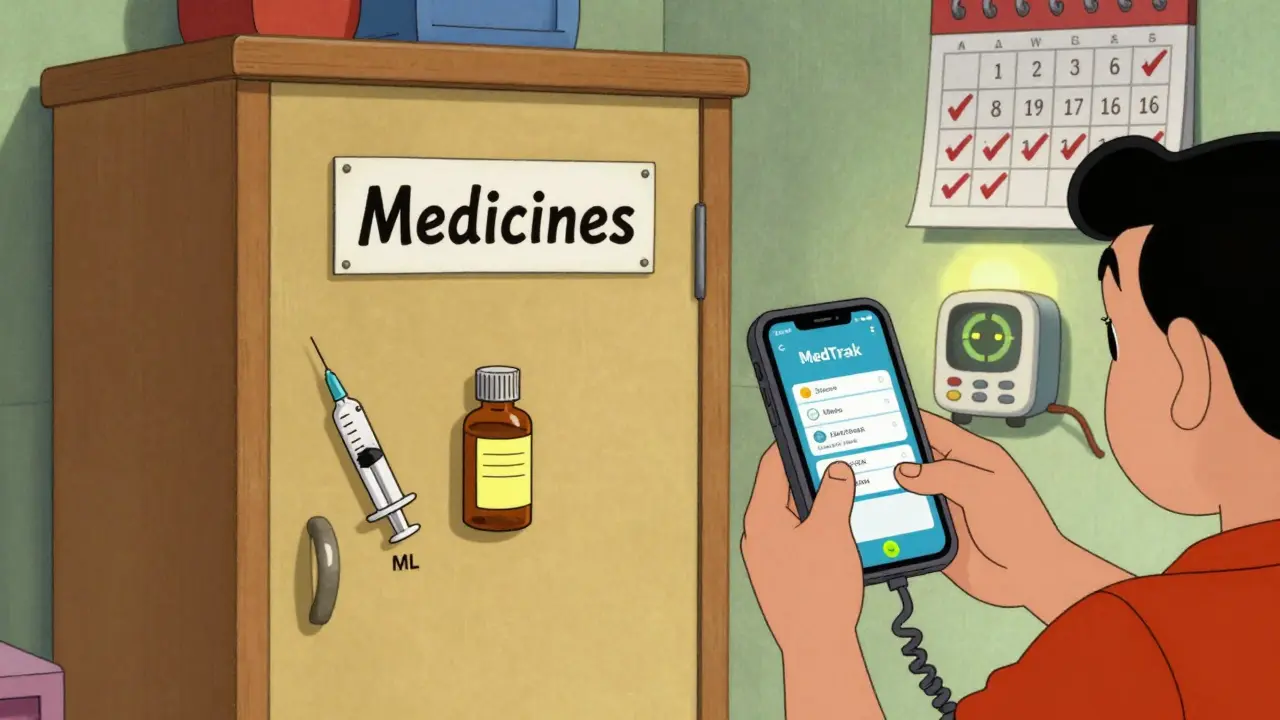
- Store all meds in a locked cabinet at least 5 feet high. Kids can climb. They can pull things down. Don’t rely on “high shelves.”
- Never transfer pills or liquids to different containers. A candy jar or water bottle might look harmless, but it’s a poisoning risk. The Poison Prevention Packaging Act requires child-resistant caps for a reason.
- Keep original packaging. The label has the name, dose, expiration date, and warnings. If your child accidentally swallows something, paramedics need that info fast.
- Use the right measuring tool. A kitchen spoon? Not accurate. Use the syringe or cup that came with the medicine. Look for ones marked in milliliters (mL), not teaspoons. A tablespoon is three times bigger than a teaspoon-and that’s how overdoses happen.
- Check storage temps. About 73% of liquid pediatric meds need refrigeration. Others must stay between 68°F and 77°F. If you’re not sure, check the label. Heat and moisture can break down the medicine.
Getting Dosing Right: The #1 Mistake Parents Make
Dr. Helen Arbogast’s research found that 78% of parents misunderstand dosing instructions. The biggest confusion? “Teaspoon” vs. “tablespoon.”One teaspoon = 5 mL. One tablespoon = 15 mL. That’s a 300% overdose difference. And it’s not rare. A 2023 study showed that 28% of parents think “take one teaspoon” means “take one spoon from the kitchen.”
How to fix it:
- Always use the measuring device that came with the medicine.
- Look for syringes with 0.1 mL markings. They’re more precise than cups.
- Take a photo of the label before you give the dose. It’s a simple habit, but it reduces wrong-medication errors by 44% according to a 2023 AAP study.
- Set phone alarms. If your child needs medicine every 8 hours, set reminders. Missing a dose or doubling up is easy when you’re tired.
Antibiotics: Why You Must Finish the Whole Course
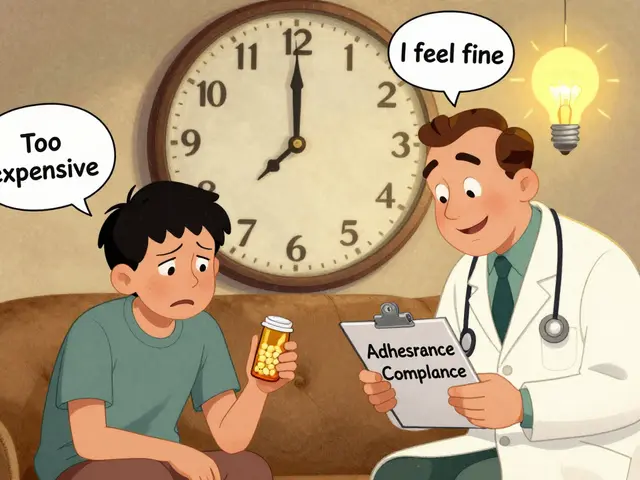
It’s tempting to stop antibiotics when your child starts feeling better. But 29% of bacterial infections come back because parents stopped early, according to Children’s Healthcare of Atlanta. Stopping early doesn’t just risk a relapse-it helps create superbugs.Here’s the rule: If the prescription says 10 days, give it for 10 days-even if they’re feeling fine on day 5. If side effects are making them sick, call the doctor. They might switch to a different antibiotic. Don’t quit on your own.
Tools That Actually Help
There are new tools now that make managing side effects easier:- MedTrak Pediatric (launched 2023): A phone app that scans the barcode on your child’s medicine. It checks the dose against their weight, reminds you when to give it, and logs side effects. In trials, it cut dosing errors by 68%.
- Picture-based dosing charts: Some clinics now give parents illustrated guides showing how much to give based on weight. No reading needed. Just match the picture.
- Telehealth visits: If you’re unsure about a side effect, many pediatricians now offer quick video check-ins. No waiting room. No exposure to other sick kids.
What to Do After the Side Effect Passes
Even after the medicine is done and the side effects are gone, keep one thing in mind: document it.Add it to your child’s medical record. Tell the pediatrician at the next checkup: “When they took X, they got Y side effect.” This helps avoid repeating the same mistake next time. Some kids are sensitive to certain drugs. Knowing that early can save a hospital trip later.
And if you ever feel unsure-call. Your pediatrician’s office has a nurse line. Use it. You’re not bothering them. You’re helping them help your child better.
Can I give my child over-the-counter medicine to treat side effects?
Only if your pediatrician says so. Giving extra medicine like antinausea drugs, anti-diarrheals, or pain relievers without approval can mask symptoms or cause new problems. For example, giving ibuprofen for a fever caused by a medication reaction might hide a sign of a more serious issue. Always check with your doctor first.
My child threw up right after taking the medicine. Should I give another dose?
Wait 30 minutes. If they vomited the full dose and it’s been less than 30 minutes since they took it, you can give another full dose. If it’s been longer than 30 minutes or they only spit out a little, don’t give more. The medicine was likely absorbed. Giving extra can lead to overdose. Call your doctor if vomiting continues.
Is it normal for my baby to be extra sleepy after antibiotics?
Yes, especially in infants. Their bodies are still learning how to process drugs. Drowsiness is common with antibiotics like amoxicillin or cefdinir. If they’re still awake and alert for feeding and respond to you normally, it’s likely fine. But if they’re hard to wake, not feeding well, or have a bluish tint to their lips, call your doctor immediately.
Can I use a regular kitchen spoon if I don’t have the measuring cup?
Never. Kitchen spoons vary in size. A teaspoon from your drawer might hold 3 mL or 7 mL. That’s a dangerous range. Always use the syringe or cup provided with the medication. If you lost it, call your pharmacy. They’ll give you a new one for free.
How long do side effects usually last?
Most mild side effects like nausea or drowsiness last 1-3 days as the body adjusts. Rashes from antibiotics can take up to a week to fade. If side effects get worse after 3 days, or if new ones appear, contact your pediatrician. Don’t wait for it to get worse.



Comments
Really appreciate this breakdown. I’ve been through the ‘Benadryl hyper kid’ phase twice now, and honestly? The tip about lowering lights and ditching screens was a game-changer. My son went from screaming in circles to napping on the couch in 20 minutes. Just needed to stop fighting his brain chemistry and let him chill.
side effects? sounds like overhyped drama. just give em the pill and move on.
So glad you mentioned the BRAT diet-I totally forgot about that when my daughter had diarrhea after amoxicillin. Bananas and rice saved us. Also, the log tip? Genius. I started writing down times and amounts and honestly, it made me feel way less panicked. Like, I could actually see patterns instead of just panicking every time she threw up.
man i never knew about the 5ft high locked cabinet thing. i thought just putting it up on the top shelf was enough. my 3 year old is a ninja climber. now i’m going to lock it up. also the syringe tip-i used to use a spoon and felt guilty every time. no more. thanks for the heads up.
As a mom from Nigeria who’s raised three kids on both traditional remedies and prescribed meds, I can say this: the cultural gap in pediatric care is real. In my village, we’d use ginger tea for nausea and neem leaves for rashes. But here? No one mentions that. I’m glad this guide is practical, but I wish it acknowledged that families blend traditions. For example, I give Pedialyte AND a spoon of honey in warm water for upset stomachs. It’s not a replacement, but it’s comfort. And comfort matters. Also, storage? We use hanging baskets outside the bedroom-cool, dry, and out of reach. No need for fancy cabinets when you’ve got ingenuity.
government overreach. next they’ll tell us how to breathe. just let parents decide.
As a Canadian dad who’s had his share of midnight pharmacy runs, I gotta say-the barcode scanner app (MedTrak) is a lifesaver. I scanned my kid’s antibiotic once and it yelled at me for trying to give 12 mL instead of 8.5. I almost cried from relief. Also, picture-based charts? My wife can’t read well, and those visual guides made her feel like a superhero. Seriously, someone at AAP deserves a medal.
sooo true about the measuring cup thing. i used a spoon once. my kid got sick. lesson learned. lol.
It’s interesting how we treat medicine like a magic wand, when really, it’s just another chemical interaction in a fragile, developing system. We’ve lost touch with the natural rhythm of healing. The body isn’t broken-it’s adapting. Maybe we should be asking: why are we introducing so many synthetic compounds into children so early? Is this really care… or control?
Oh, so now we’re tracking vomiting logs like it’s a NASA mission? And ‘picture charts’? Are we raising kids or training lab rats? Next they’ll install facial recognition on medicine bottles to make sure you’re ‘authorized’ to give the pill. This isn’t healthcare-it’s surveillance with a side of Pedialyte.
While the information presented is superficially accurate, it lacks rigorous scientific grounding. The claim that 90% of amoxicillin rashes are non-allergic is misleading; the actual data from the Journal of Allergy and Clinical Immunology (2021) indicates a range of 67–83%, depending on cohort. Furthermore, the assertion that kitchen spoons are inherently dangerous ignores the fact that standardized metric measuring devices are not universally accessible. The recommendation to use syringes with 0.1 mL markings is idealistic and economically exclusionary. This article is well-intentioned but dangerously oversimplified.