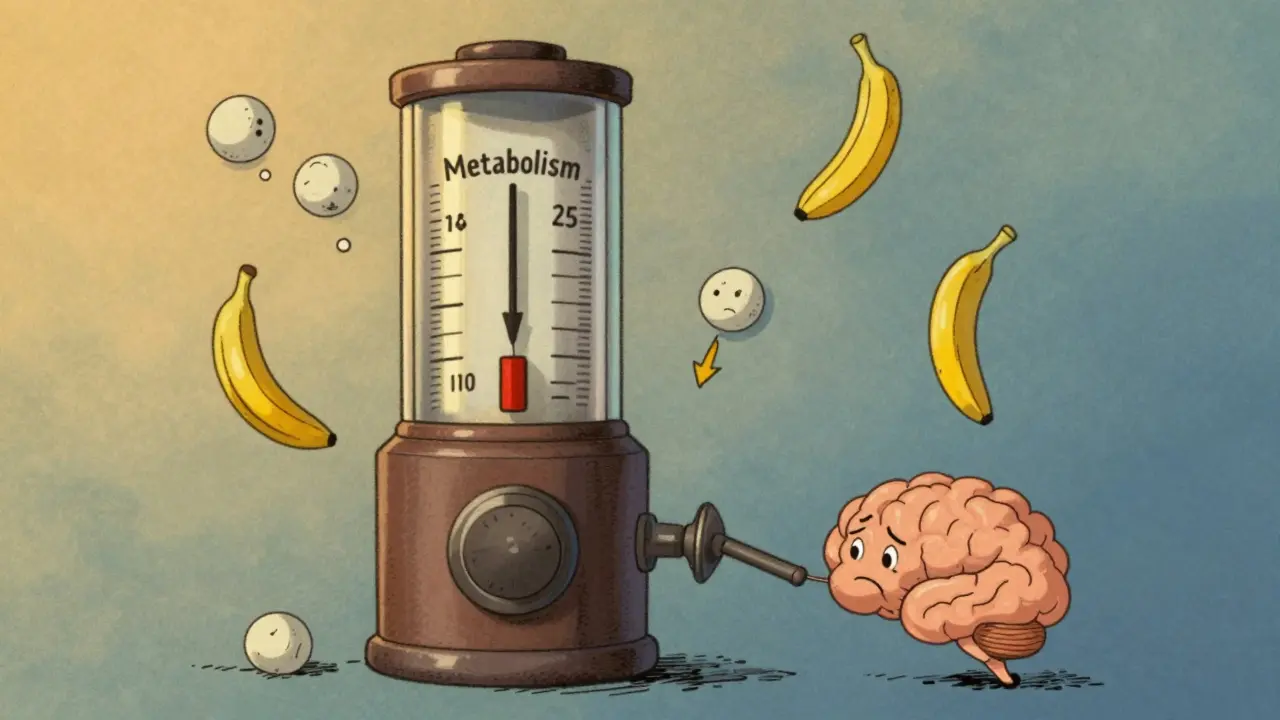
After losing weight, many people hit a wall. No matter how hard they try, the scale won’t budge. They eat less, exercise more, and still gain back what they lost. It’s not laziness. It’s not lack of willpower. It’s adaptive thermogenesis-a hidden biological process that fights to bring your weight back up.
Why Your Metabolism Slows Down After Weight Loss
When you cut calories to lose weight, your body doesn’t just burn fat. It goes into survival mode. Your resting metabolic rate (RMR)-the number of calories you burn just staying alive-drops more than it should based on how much weight you lost. This isn’t a glitch. It’s a feature. Research from 2016 showed that people who lost weight through dieting had a metabolic rate that was hundreds of calories lower than expected, even after accounting for lost muscle and fat. This drop isn’t temporary. In one study, participants who followed an 8-week very-low-calorie diet still had a suppressed metabolism 44 weeks later, even after maintaining their new weight. This is adaptive thermogenesis: your body actively reduces energy expenditure to prevent further weight loss. Think of it like a thermostat that turns down the heat when it senses the house is getting too cold. In your case, the house is your body, and the cold is low energy intake. The drop isn’t small. One study found that after just one week of dieting, people burned an average of 178 fewer calories per day. That’s like eating a small banana every day without realizing it. Over six weeks, that adds up to nearly 8,200 fewer calories burned-enough to lose half a kilogram less fat than expected.What’s Actually Happening Inside Your Body
Your body doesn’t just guess that you’re dieting. It measures changes in hormones, fat stores, and even brain signals. Leptin, the hormone made by fat cells, plummets when you lose weight. Your brain reads this as a starvation signal. In response, it:- Reduces thyroid hormone activity, slowing down your metabolism
- Increases cortisol and stress hormones, promoting fat storage
- Decreases sympathetic nervous system activity, lowering heat production
- Reduces activity in brown fat tissue, which normally burns calories to generate heat
The Biggest Loser Effect
The most famous example of adaptive thermogenesis came from the TV show The Biggest Loser. Contestants lost massive amounts of weight-sometimes over 100 pounds-in just a few months. At first, their metabolisms soared. But six years later, almost all of them had regained the weight. Their metabolisms had crashed so hard that they were burning up to 500 fewer calories per day than expected for their size. This isn’t rare. A 2022 survey of over 1,200 MyFitnessPal users found that 68% experienced a metabolic plateau after weight loss. And those who tried to reverse it by eating more? Many still regained weight. Why? Because they didn’t understand how to do it right.Reverse Dieting: The Real Strategy to Rebuild Your Metabolism
Reverse dieting isn’t about eating more to gain weight. It’s about slowly increasing calories to teach your body it’s safe to burn more again. Think of it as metabolic rehab. The goal? Gradually raise your daily calorie intake until you reach your true maintenance level-without gaining fat. Most people start by adding 50 to 100 calories per week. If your weight stays stable for two weeks, you add another 50-100. If you gain more than 0.5 kg, you hold at that level for another week or two before continuing. This process takes time. Most people need 3 to 6 months to complete a full reverse diet. Rushing it-adding more than 150 calories per week-often leads to fat gain, not metabolic recovery.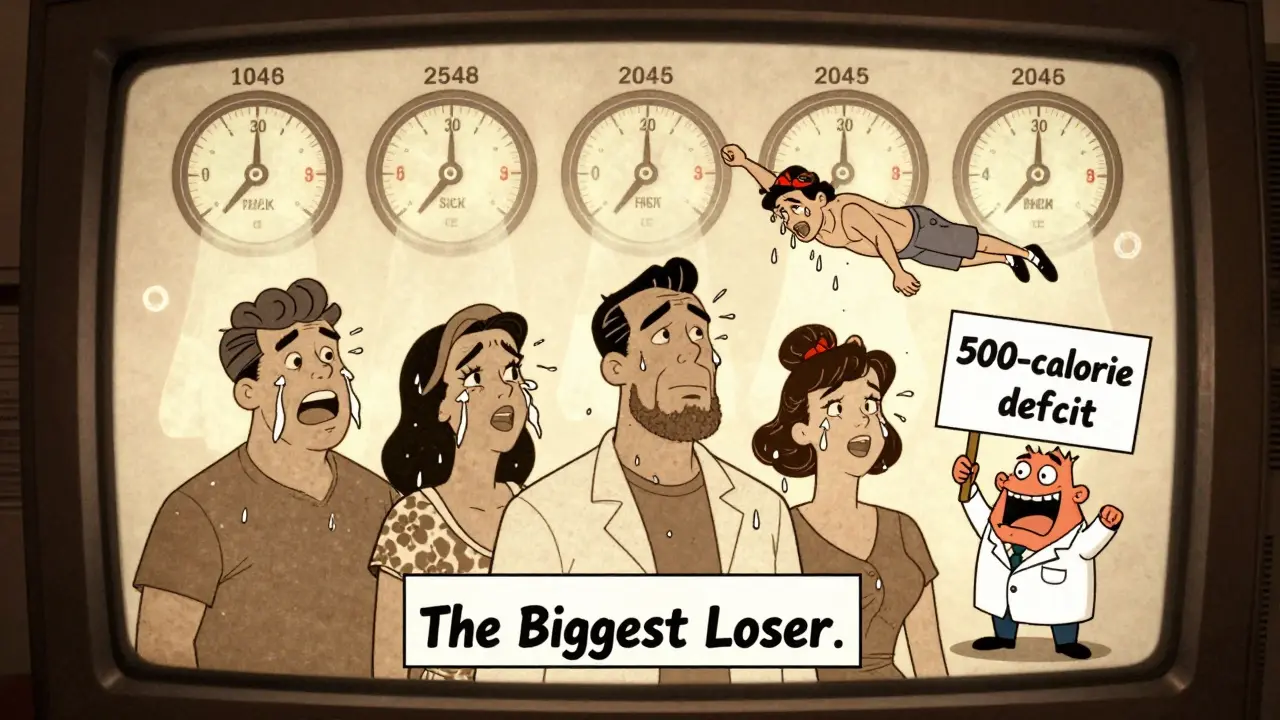
What Actually Works With Reverse Dieting
Reverse dieting alone isn’t magic. It works best when paired with three key practices:- High protein intake: Aim for 1.6 to 2.2 grams of protein per kilogram of body weight. This preserves muscle, which burns more calories at rest.
- Resistance training: Lift weights 2-3 times a week. Muscle tissue increases your metabolic rate. Studies show preserving muscle during weight loss reduces adaptive thermogenesis by up to 15%.
- Track indirect signs: Your resting heart rate and morning body temperature can hint at your metabolic state. A 5-10% drop in either may signal ongoing adaptation.
Why Most Reverse Dieting Plans Fail
The biggest mistake? Treating reverse dieting like a quick fix. Many apps and influencers promise a “metabolic reset” in 30 days. That’s not how biology works. Other common errors:- Adding too many calories too fast
- Ignoring protein and strength training
- Not adjusting calories as weight changes
- Expecting immediate results
What Science Says About the Future
Researchers are now exploring ways to fight adaptive thermogenesis beyond diet and exercise. Early trials of a drug that activates brown fat showed a 42% reduction in metabolic slowdown. Others are studying how gut bacteria influence metabolism-some people have microbiomes that make them more prone to AT. The NIH is running a multi-year study to see if high-protein reverse dieting (40% protein) helps preserve metabolism better than standard diets. Early results suggest it does-by 18%. But here’s the bottom line: no pill or supplement can replace the basics. Your metabolism responds to movement, protein, and time. The most effective strategy right now is simple, slow, and consistent.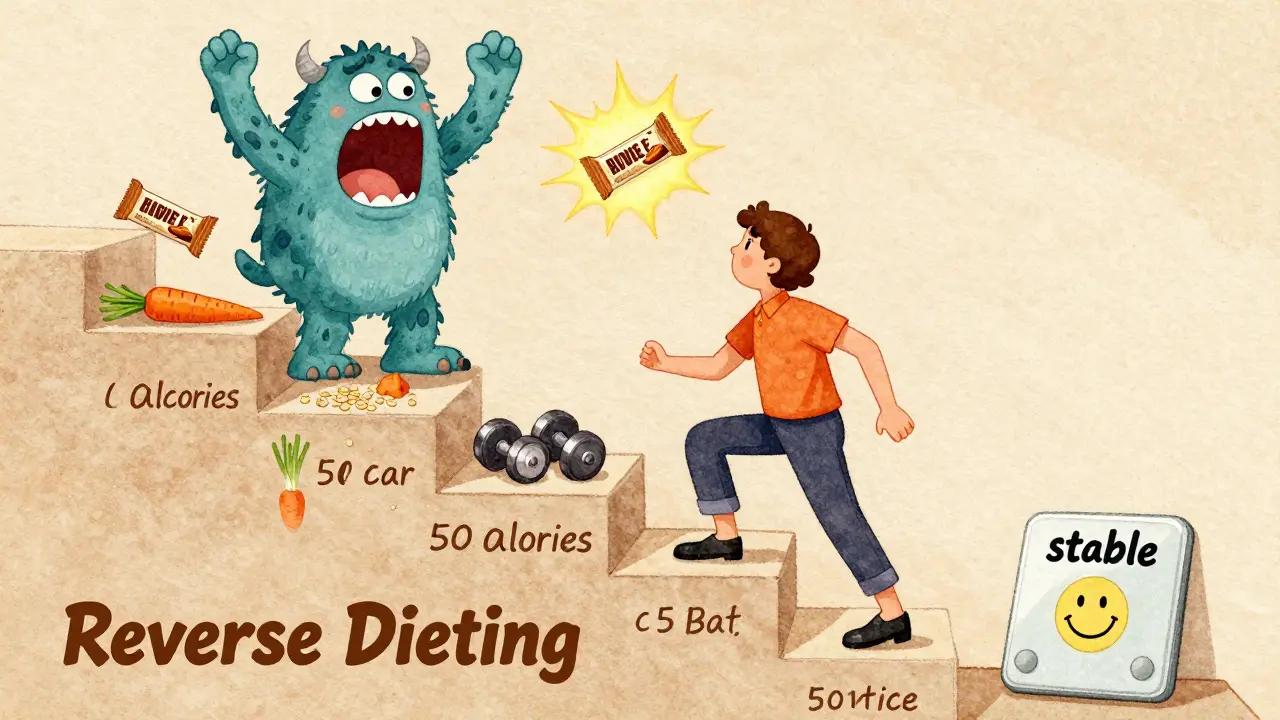
Who Should Try Reverse Dieting?
Reverse dieting isn’t for everyone. It’s best for people who:- Have lost a significant amount of weight (10% or more of body weight)
- Feel constantly tired, cold, or hungry
- Have hit a weight loss plateau for more than 8 weeks
- Are done with restriction and want to eat normally again
How to Start Reverse Dieting Right
Here’s a simple step-by-step plan:- Calculate your current daily calorie intake (use a food tracker for 3-5 days to get an average).
- Set your goal: increase calories by 50-100 per week.
- Add calories from carbs or fats-preferably whole foods like rice, oats, potatoes, nuts, or olive oil.
- Keep protein high: 1.6-2.2g per kg of body weight.
- Do resistance training 2-3 times per week.
- Weigh yourself once a week, at the same time, under the same conditions.
- If your weight stays stable for two weeks, add another 50-100 calories.
- If you gain more than 0.5 kg in a week, pause and hold at that level for another week.
- Continue until you reach your maintenance calories-usually 10-15% above your dieting intake.
Final Reality Check
Adaptive thermogenesis is real. It’s powerful. And it’s not your fault. The weight loss industry wants you to believe the answer is “just eat less and move more.” But science says otherwise. Your body fights to survive. That’s not weakness. It’s biology. Reverse dieting doesn’t promise a magic fix. But it gives you back control. It lets you eat without fear. It helps you rebuild a metabolism that’s been broken by restriction. It’s not about getting leaner. It’s about getting healthy-and staying there.Is adaptive thermogenesis the same as a slow metabolism?
No. A slow metabolism can be genetic or due to age, thyroid issues, or inactivity. Adaptive thermogenesis is a temporary, diet-induced drop in metabolic rate that happens specifically after weight loss. It’s your body’s survival response to low energy intake, not a fixed trait.
Can you reverse adaptive thermogenesis completely?
Most people can recover 80-90% of their original metabolic rate with proper reverse dieting, resistance training, and protein intake. But some metabolic suppression may persist long-term, especially after massive weight loss. The goal isn’t perfection-it’s enough to maintain your weight without extreme restriction.
Do I need to keep reverse dieting forever?
No. Reverse dieting is a transitional phase. Once you reach your maintenance calories and your weight stabilizes for 4-6 weeks, you can eat at that level without further increases. The key is to avoid falling back into severe restriction.
Why does reverse dieting sometimes cause weight gain?
If you increase calories too fast, your body doesn’t have time to adjust. It stores the extra energy as fat instead of using it to rebuild metabolism. Slow, controlled increases-50-100 kcal per week-are essential. Also, if you stop training, muscle loss can cause fat gain even at maintenance calories.
Does intermittent fasting make adaptive thermogenesis worse?
Not necessarily. But if you’re using fasting to restrict calories over long periods, it can contribute to metabolic adaptation. The issue isn’t fasting itself-it’s prolonged energy deficit. If you’re eating enough total calories during your eating window, fasting alone won’t trigger AT. But combining fasting with low-calorie intake increases the risk.





Comments
Okay but what if this is all just Big Pharma’s way to sell us reverse dieting supplements? I’ve seen ads for ‘MetaboBoost Pro’ that claim to ‘reset your thermostat’-like, bro, your body isn’t a thermostat, it’s a pissed-off lizard brain that remembers famine. They’re monetizing biology. I’m not eating more calories just because some influencer said so. I’m gonna eat my roti and chill.
Adaptive thermogenesis is such a legit concept, but the way it’s framed here is almost… clinical. Like, imagine your mitochondria throwing a sit-in because you stopped eating 1200 calories a day. It’s not just ‘calories in, calories out’-it’s ‘calories in, body screams in protest.’ The Biggest Loser study still haunts me. People don’t realize their metabolism isn’t broken-it’s traumatized.
Let me get this straight-after years of starving myself, I’m supposed to EAT MORE to fix my metabolism? And if I gain weight, it’s not fat, it’s ‘glycogen’? That’s what they told me when I gained 15 pounds after ‘reverse dieting’ and had to buy new jeans. This isn’t science. It’s emotional manipulation dressed up as biochemistry. Who even came up with this? Some guy who lost weight and then got greedy? I’m done.
Y’all… I did this. 🙌 Lost 80 lbs, hit a wall, cried in the grocery store because I was too tired to lift a bag of rice. Started reverse dieting with 75 extra cals/week, lifted 3x a week, ate chicken every damn meal. Took 8 months. Gained 3 lbs of muscle. Lost 2 lbs of water. My energy? Now I run up stairs without panting. My hunger? Gone. My mood? Better than ever. It’s not magic. It’s medicine. And yes, it’s slow. But it works. 💪❤️
I think what’s missing here is the emotional toll. People talk about metabolic rate like it’s a car engine, but it’s tied to sleep, stress, trauma, even childhood dieting. I lost weight after my mom died. I didn’t want to eat, so I ate less. Then I couldn’t eat more without feeling guilty. Reverse dieting felt like betraying my grief. It’s not just calories-it’s healing. Maybe we need therapists in the nutrition space too.
adaptive thermogenesis… hmm. reminds me of how trees shed leaves in winter. not weakness, but wisdom. body knows scarcity. we are not machines. we are evolved beings who survived ice ages by slowing down. maybe we should listen, not fight. add calories slowly, yes. but also… rest. breathe. stop chasing numbers. the body will find balance if we stop screaming at it.
As someone who has guided hundreds of patients through weight loss and maintenance, I can confirm this with clinical certainty. Adaptive thermogenesis is not myth-it’s measurable physiology. Reverse dieting, when done with protein targets and resistance training, restores lean mass and metabolic flexibility. The failure cases? They skipped the lifting. Protein was an afterthought. You cannot out-eat muscle loss. Discipline isn’t about restriction-it’s about strategic nourishment.
Oh look, another American wellness cult. You lost weight, your metabolism slowed-so now you need to pay for a 6-month ‘metabolic rehab’ program? In the UK, we just eat normal food and move our bodies. No apps. No tracking. No ‘reverse’ this or ‘reset’ that. You want to eat? Eat. You want to move? Move. Your body’s not a broken iPhone. It’s a 200,000-year-old survival machine. Stop overcomplicating it.
One thing I’ve noticed: people treat reverse dieting like a linear path. But biology doesn’t care about your calendar. I added 50 cals/week for 12 weeks, plateaued for 6 weeks, then added another 50. My weight didn’t budge. My sleep improved. My cravings vanished. That’s the real metric-not the scale. The scale lies. Your energy doesn’t.
I tried reverse dieting after losing 40 lbs. I was terrified. Every extra bite felt like failure. But I stuck with it-slowly, quietly. No drama. No posts. Just food. And after 5 months, I realized something: I wasn’t trying to ‘fix’ my metabolism. I was learning to trust it again. That’s the real win.
Okay, I need to say this because I’ve been there: reverse dieting isn’t about calories. It’s about rebuilding your relationship with food. I used to eat in secret. I’d binge on cereal at 2 a.m. because I felt like I ‘deserved’ it after being ‘good’ all day. When I started reverse dieting, I allowed myself crackers, cheese, ice cream-without guilt. And guess what? The binges stopped. The hunger vanished. The scale? It stabilized. It wasn’t the calories that healed me-it was the permission. I finally stopped fighting myself. And that? That’s the real metabolic reset.