
Imagine swallowing a powerful antibiotic to fight an infection, only to unknowingly neutralize the very supplement you took to protect your gut. It sounds counterintuitive, but taking probiotics is live microorganisms that confer health benefits when administered in adequate amounts at the wrong time relative to your medication can render them useless. In fact, studies show that simultaneous ingestion can reduce probiotic viability by up to 92%. You aren't just wasting money; you are missing out on critical protection against side effects like severe diarrhea and fungal overgrowth.
The goal isn't just to survive the antibiotic course-it's to emerge with your gut microbiome intact. Recent clinical data from the International Scientific Association for Probiotics and Prebiotics (ISAPP) confirms that precise timing is the single most important factor in preventing antibiotic-associated complications. This guide breaks down exactly how to space your doses, which strains work best, and why starting early matters more than you think.
Why Timing Is Everything
Antibiotics are blunt instruments. They don't distinguish between the bacteria causing your infection and the beneficial microbes living in your digestive tract. When you take an antibiotic, it floods your system, often reducing bacterial species richness by 25% to 40%. If you swallow a probiotic capsule at the exact same moment, the antibiotic kills those good bacteria before they can even reach the lower intestine where they do their work.
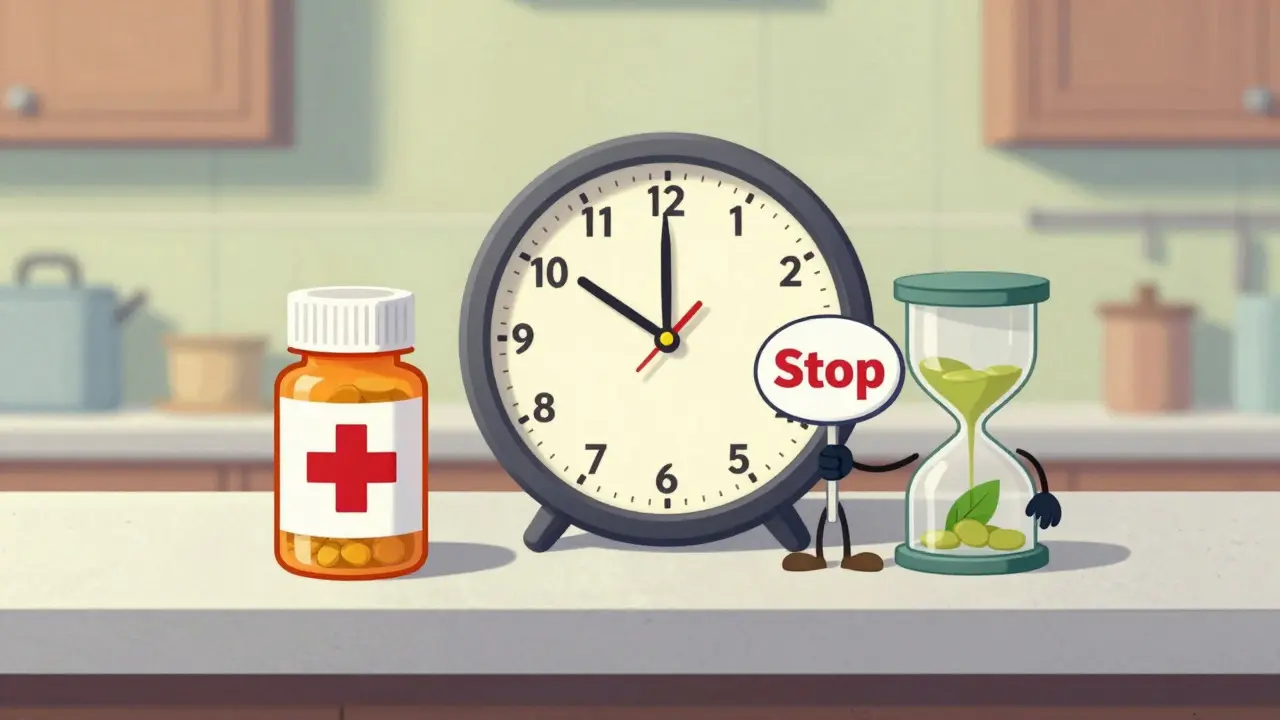
This is why the "two-hour rule" exists. Pharmacokinetic principles dictate that you need a buffer zone. By waiting at least two hours after taking your antibiotic before consuming your probiotic, you allow the medication to pass through the upper gastrointestinal tract. This window significantly increases the chances that the live cultures will survive the journey and colonize your gut effectively. Think of it as sending reinforcements into battle only after the initial artillery barrage has ceased.
| Dosing Strategy | Estimated Viability Loss | Clinical Outcome |
|---|---|---|
| Simultaneous Intake | 78% - 92% | Negligible benefit; high risk of AAD |
| 1-Hour Gap | 30% - 50% | Moderate benefit; inconsistent results |
| 2+ Hour Gap | <5% | Optimal colonization; significant AAD reduction |
The Golden Window: Starting Early
Many people make the mistake of waiting until they finish their antibiotics to start probiotics. This is too late. Research published in the Journal of the American Medical Association highlights that initiating probiotics within 48 hours of the first antibiotic dose reduces the risk of Clostridium difficile infection (CDI) by over 64%. The earlier you introduce these protective strains, the better equipped your body is to handle the microbial disruption.
You should ideally start your probiotic regimen either before or immediately when you begin your antibiotic prescription. Continuing this routine throughout the entire course of treatment-and for at least 14 days afterward-is crucial. Your gut doesn't bounce back overnight. The ISAPP’s 2024 clinician resource notes that 87% of effective study protocols included a post-treatment period of two weeks to support full microbiome recovery. Skipping this follow-up phase leaves your gut vulnerable to opportunistic pathogens.
Choosing the Right Strain Matters
Not all probiotics are created equal, especially when fighting alongside antibiotics. While multi-strain formulas are popular, evidence suggests they offer no significant advantage over single-strain products for preventing antibiotic-associated diarrhea (AAD). Instead, focus on strains with robust clinical backing.
Lactobacillus rhamnosus GG is a well-researched bacterial strain known for its stability and efficacy in preventing diarrhea stands out as a top choice. Clinical trials show it reduces AAD risk by 47% when dosed at 10-20 billion CFUs daily. Another powerhouse is Saccharomyces boulardii is a beneficial yeast-based probiotic that remains unaffected by antibacterial agents. Because it is a yeast, not a bacterium, it is immune to most antibiotics. This means you can take S. boulardii simultaneously with your medication without worrying about the two-hour spacing rule. For many patients, combining LGG (with proper spacing) and S. boulardii offers comprehensive protection.
Dosage Guidelines Based on Treatment Length
How much is enough? More isn't always better, but under-dosing is a common pitfall. The required Colony Forming Unit (CFU) count depends on the severity and duration of your antibiotic therapy. Here is a practical breakdown based on current medical consensus:
- Mild/Short Courses (3-5 days): Aim for 5-10 billion CFUs per day. This is sufficient for minor digestive disturbances.
- Standard/Moderate Courses (7-10 days): Increase to 10-20 billion CFUs per day. This tier is recommended if you have a history of gut sensitivity or are experiencing mild bloating.
- Prolonged/Severe Courses (14+ days): Target 20-40 billion CFUs per day. Patients on long-term therapy or those with pre-existing gastrointestinal conditions need higher doses to maintain microbial diversity.
If you experience severe gastrointestinal distress during treatment, consult your doctor about increasing your dosage while maintaining the strict spacing protocol. Consistency is key-skipping doses can reduce effectiveness by nearly 40%, according to recent adherence studies.

Building Your Daily Schedule
Let’s put this into practice. Suppose you are prescribed amoxicillin 500mg twice a day, at 8 AM and 8 PM. To adhere to the two-hour rule, you need to create buffers around these times. You could take your probiotic at 6 AM, 10 AM, 6 PM, and 10 PM. Alternatively, if you prefer fewer doses, taking it once daily at noon provides a safe four-hour distance from both morning and evening antibiotic doses.
For those using broad-spectrum antibiotics, some physicians recommend extending the gap to 4-6 hours to maximize survival rates. While this requires more planning, it ensures that the maximum number of live cultures reach your intestines. Use alarms or pill organizers to stay on track. Compliance drops significantly when schedules get complex, so keep it simple but consistent.
Recovery and Long-Term Gut Health
Your job isn't done when the last pill is swallowed. The final two weeks are critical for rebuilding your microbiome. During this phase, continue your probiotic regimen without antibiotics. Consider incorporating fermented foods like yogurt, kefir, or sauerkraut into your diet to provide natural sources of beneficial bacteria and prebiotics that feed them.
Be aware that some emerging research suggests certain probiotic strains might temporarily delay natural microbiome recovery in specific individuals. However, for the vast majority, the protective benefits outweigh this theoretical risk. As we move toward more personalized medicine, future treatments may involve customized probiotic blends based on individual microbiome profiles, but for now, sticking to proven strains like LGG and S. boulardii with correct timing is the safest bet.
Can I take probiotics at the same time as antibiotics?
Generally, no. Taking bacterial probiotics simultaneously with antibiotics can kill the beneficial bacteria before they work, reducing viability by up to 92%. You should wait at least two hours after taking your antibiotic before consuming your probiotic. The exception is yeast-based probiotics like Saccharomyces boulardii, which can be taken at the same time because they are not affected by antibacterial drugs.
When should I start taking probiotics during an antibiotic course?
You should start taking probiotics within 48 hours of your first antibiotic dose. Starting early helps prevent antibiotic-associated diarrhea and Clostridium difficile infections. Continue taking them throughout the entire course of antibiotics and for at least 14 days after finishing the medication to support full gut recovery.
What is the best probiotic strain to take with antibiotics?
Lactobacillus rhamnosus GG (LGG) and Saccharomyces boulardii are the most clinically validated strains for preventing antibiotic-related side effects. LGG requires the two-hour spacing rule, while S. boulardii does not. Multi-strain formulas do not necessarily perform better than these single, well-researched strains for this specific purpose.
How many CFUs should I take?
Dosage depends on the length of your antibiotic treatment. For short courses (3-5 days), 5-10 billion CFUs is sufficient. For standard courses (7-10 days), aim for 10-20 billion CFUs. For prolonged therapy (14+ days) or existing gut issues, 20-40 billion CFUs is recommended to maintain microbial diversity.
Does the type of antibiotic change how I should take probiotics?
Yes, slightly. Broad-spectrum antibiotics affect a wider range of bacteria, making the two-hour spacing rule even more critical for bacterial probiotics. Narrow-spectrum antibiotics target specific bacteria, which might be less disruptive to certain probiotic strains, though the two-hour gap remains the standard safety recommendation. Always check with your doctor if you are on specialized medications like vancomycin.