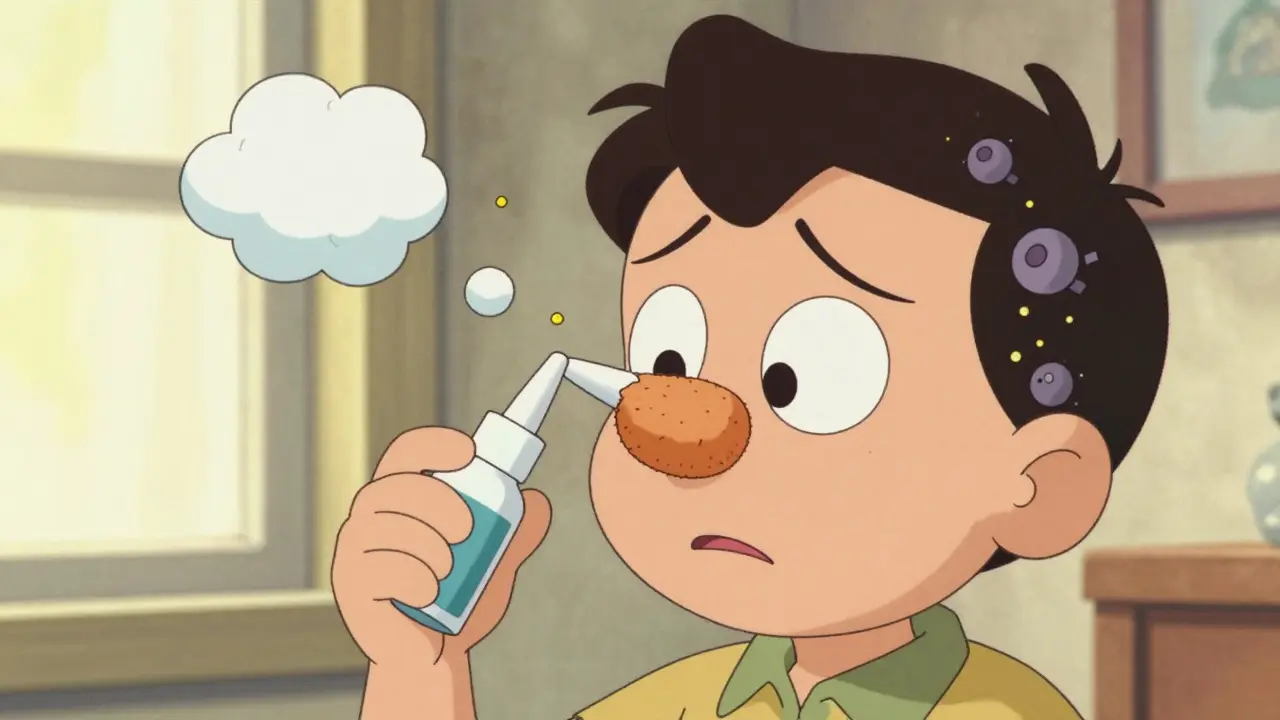
If you’ve ever woken up with a stuffed-up nose, constant sneezing, or watery eyes during pollen season, you know how miserable allergic rhinitis can be. Over-the-counter antihistamines might help a little, but if you’re still struggling after a few days, you’re not alone. The real solution for many people isn’t a pill-it’s a spray. Nasal steroid sprays are the most effective treatment for allergic inflammation in the nose, and they work in ways most people don’t expect.
How Nasal Steroid Sprays Actually Work
These sprays aren’t just decongestants. They’re called intranasal corticosteroids (INS), and they don’t just block one symptom-they calm the whole allergic storm inside your nose. When you breathe in pollen, dust, or pet dander, your immune system overreacts. It releases histamine, cytokines, leukotrienes, and other chemicals that make your nasal tissues swell, produce excess mucus, and trigger sneezing. Antihistamines only target histamine. Nasal steroid sprays hit all of them. They work locally, meaning they don’t travel through your bloodstream like oral meds. Instead, they sit right where the problem is: the lining of your nasal passages. There, they reduce swelling, dry up mucus, and stop immune cells like eosinophils and T cells from gathering in your nose. This is why they’re so effective for congestion-a symptom that antihistamines often fail to touch. Studies show these sprays are more effective than oral antihistamines, nasal antihistamines like azelastine, and even leukotriene blockers like montelukast. Even when you combine antihistamines with leukotriene blockers, nasal steroids still win. That’s why allergists and ENT specialists recommend them as the first-line treatment for moderate to severe allergic rhinitis.What Symptoms Do They Actually Help?
Not all allergy meds do the same thing. Here’s what nasal steroid sprays actually fix:- Nasal congestion - This is their strongest suit. Other sprays might make your nose feel less runny, but only steroids reduce the actual swelling blocking your airway.
- Runny nose - Less mucus production means fewer tissues used.
- Sneezing - By calming the nerve endings in your nose, they reduce the sneeze reflex triggered by allergens.
- Nasal itching - Less inflammation means less irritation.
- Itchy, watery eyes - Yes, even eye symptoms improve. That’s because the inflammation in your nose is connected to your sinuses and tear ducts. When your nose calms down, your eyes follow.
Why They Take Time to Work
Here’s the catch: they’re not fast. If you expect relief after one spray, you’ll be disappointed. Unlike decongestant sprays that unblock your nose in minutes-or antihistamines that kick in within an hour-nasal steroids need days, sometimes weeks, to build up their effect. This isn’t a flaw. It’s how they work. They don’t just mask symptoms. They slowly reverse the inflammation. Think of it like healing a bruise. You don’t see results right away, but if you keep treating it, the swelling fades and the pain goes away. Most people start noticing improvement after 3 to 5 days. Full benefits usually take 2 to 4 weeks of daily use. That’s why so many people give up too soon. They use it once, feel nothing, and stop. Then they wonder why it didn’t work. Consistency is everything.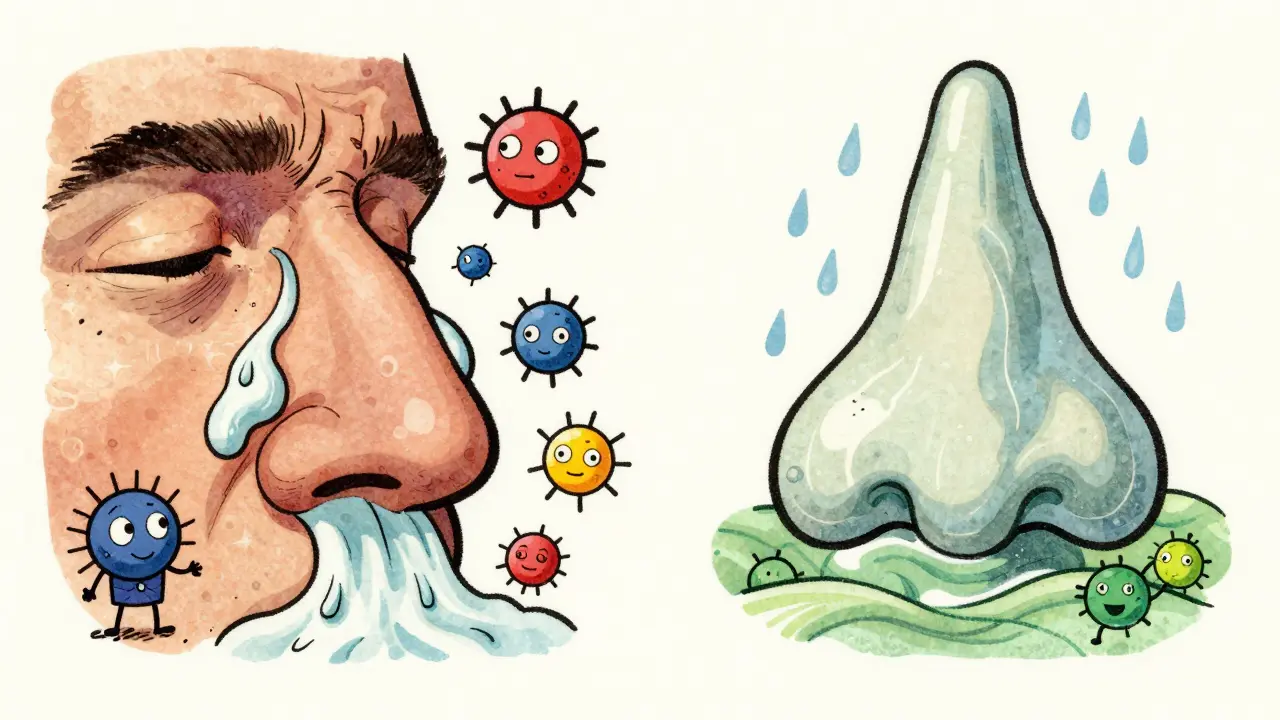
Over-the-Counter vs. Prescription
You don’t need a prescription anymore. Flonase (fluticasone propionate), Nasacort (triamcinolone acetonide), and others are available over-the-counter in most pharmacies. That’s a big change from 10 years ago. Back then, you had to see a doctor just to get a spray. The OTC versions are the same strength as the prescription ones. The only difference? Price. Brand-name Flonase can cost $30 for a bottle. Generic fluticasone? Around $12. Same active ingredient. Same results. There are a few other options too:- Mometasone (Nasonex)
- Budesonide (Rhinocort)
- Fluticasone furoate (Veramyst)
Side Effects: What to Expect
They’re safe for long-term use, but not perfect. The most common complaints:- Nasal dryness
- Burning or stinging when you spray
- Nosebleeds
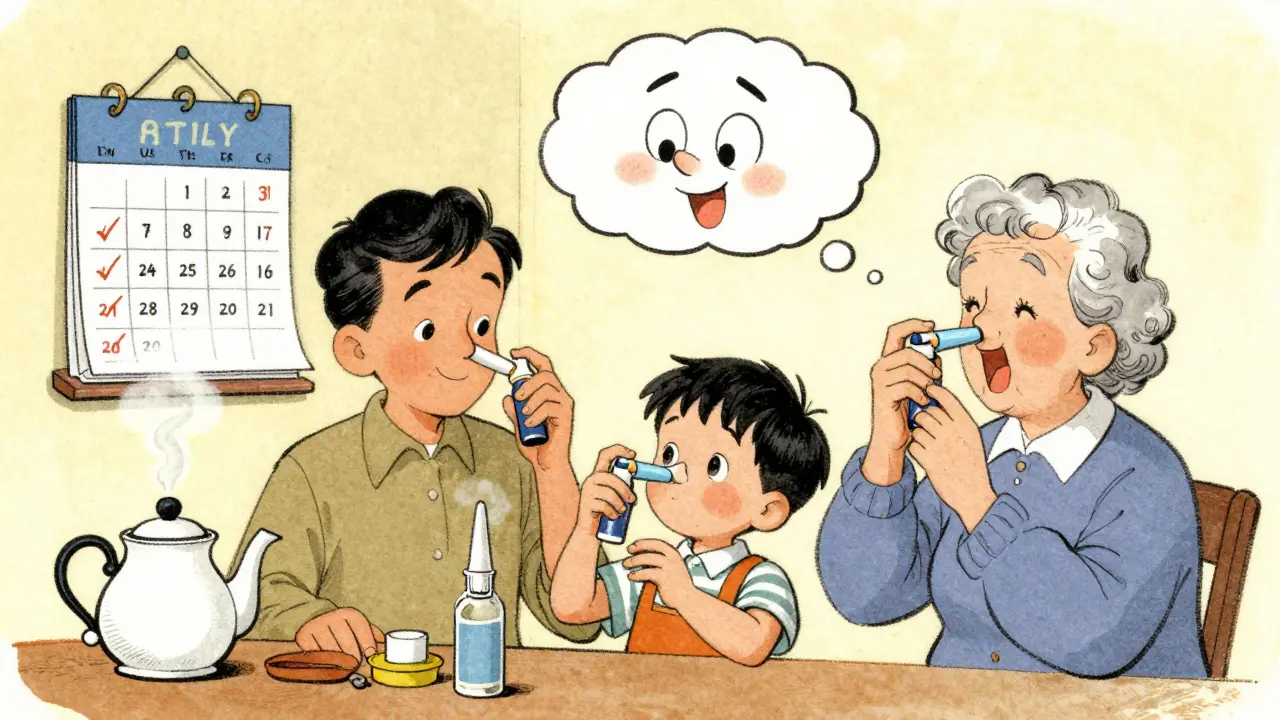
- Point the nozzle slightly away from your septum (the wall between your nostrils). Aim toward the outer wall of your nose, toward your ear.
- Breathe in gently as you spray. Don’t sniff hard-that sends the spray to your throat.
- Don’t blow your nose right after. Wait at least 15 minutes.
- Use the spray after a warm shower or hold your head over a steamy sink for a few minutes. Moist air helps reduce irritation.
Who Should Use Them?
These sprays are approved for children as young as 2 years old. That’s important. Many parents think allergy meds are only for adults. They’re not. They’re ideal for:- People with seasonal allergies (hay fever)
- Those with year-round allergies (dust mites, pets, mold)
- Anyone who has nasal congestion as a main symptom
- Patients who haven’t responded well to antihistamines
- People with untreated nasal infections
- Those who’ve had recent nasal surgery
- Anyone who can’t use them consistently
Dosing: How Much to Use
Dosing varies by age and product. Here’s the standard:- Children 2 to under 6 years: One spray in each nostril once daily
- Children 6 to under 12 years: Start with one spray per nostril daily. If no improvement after a week, increase to two sprays per nostril
- Adults and teens 12+: One to two sprays per nostril once daily. Most people do fine with one.
What to Do If It Doesn’t Work
If you’ve used the spray daily for 4 weeks and still feel congested, it’s time to reassess. Maybe:- You’re not using it right
- You’re still exposed to allergens (dust in your bedroom, pet dander on your couch)
- You have a different issue-like a deviated septum or chronic sinusitis




Comments
I used to think nasal sprays were just fancy nose decongestants until I actually read the science behind them. Turns out, they’re like a peace treaty between your immune system and allergens-no more war, just quiet coexistence. I started using Flonase last spring after years of relying on antihistamines that left me drowsy and still stuffed up. Within two weeks, I could breathe through my nose while sleeping. No more waking up with a dry throat or that weird post-nasal drip taste. It’s not magic, but it’s the closest thing we’ve got to a daily reset button for your sinuses.
And honestly? The technique matters more than the brand. I used to spray straight back and get that awful throat burn. Once I learned to aim toward my ear instead of my brain? Game changer. Now I even do it after my morning shower-steam helps the spray stick better. I tell all my allergy-stricken friends this: give it 3 weeks. Don’t bail at day 4.
Also, side note: my itchy eyes stopped too. I didn’t even know nasal inflammation could affect my tear ducts. Mind blown.
PS: Generic fluticasone is $11 at Walmart. Don’t pay $30 for the same stuff in a prettier bottle.
Thank you for writing this so clearly. I’ve been using Nasacort for two years now and never knew why it took so long to work-I thought I was doing something wrong. Your bruise analogy? Perfect. Healing isn’t instant. Your nose isn’t a light switch. It’s a garden. You can’t pull one weed and expect the whole yard to be perfect. You have to keep tending.
I also didn’t realize eye symptoms were connected. My daughter’s allergies used to make her eyes water nonstop. We started her on the spray at age 5, and within three weeks, she stopped rubbing them constantly. No more pink eyes during soccer season. I wish I’d known this sooner.
Look, I’ve read the studies. You’re all missing the bigger picture. Nasal steroids suppress the immune response locally, sure-but that’s just a Band-Aid on a systemic problem. The real issue is the hygiene hypothesis. We’ve sanitized ourselves into oblivion. Kids aren’t exposed to dirt, microbes, or real allergens early enough, so their Th2 pathways go haywire. Steroid sprays don’t fix that-they just let you live in your sanitized bubble longer.
Also, ‘over-the-counter’ doesn’t mean ‘safe for long-term use.’ The FDA approved them because pharma paid for the trials. Have you seen the data on adrenal suppression in chronic users? No? That’s because it’s buried in the appendix of the 2018 Cochrane review. I’ve got the PDF. Want it?
Why do we treat symptoms instead of the soul? Allergies are not just in the nose. They are in the mind. When we live in fear of dust, pollen, and air, we are living in illusion. The body knows truth. The spray is a weapon against nature. Nature does not make mistakes. If your nose runs, it is because your spirit is crying. Clean your heart, not your nose.
Also, I have used no medicine for 12 years. I eat turmeric. I chant. I walk barefoot. My allergies are gone. You do not need spray. You need awareness.
It is with profound regret that I must address the prevailing cultural misconception surrounding intranasal corticosteroids. While the pharmacological efficacy of these agents is empirically documented, their sociopolitical implications remain grossly underexamined. The normalization of daily nasal medication among the general populace reflects a broader societal pathology: the commodification of health, the erosion of bodily autonomy, and the institutionalized infantilization of patient agency.
One must ask: Are we treating rhinitis-or are we conditioning citizens to accept pharmaceutical dependency as a baseline state of existence? The fact that these sprays are now available over the counter without medical supervision suggests not merely regulatory failure, but a collapse of medical epistemology.
Moreover, the casual dismissal of alternative modalities-such as Ayurvedic nasya oil or traditional Chinese nasal acupressure-reveals a troubling ethnocentrism in Western medical discourse. One spray per nostril? How quaint. We have forgotten that the body is not a machine to be calibrated, but a temple to be harmonized.
Okay but have you considered the psychological impact of relying on a daily nasal spray? 🤔 I mean, think about it-every morning, you’re literally injecting a synthetic steroid into your body. That’s not ‘self-care.’ That’s medicalized anxiety. I used to use Flonase for three years. Then I did a 30-day detox. No sprays. No antihistamines. Just hydration, yoga, and cold showers. And guess what? My allergies didn’t vanish-but my confidence did. I stopped being a victim of my nasal passages. I became the master of my own immune system. 💪
Also, the fact that you’re using it daily means you’re probably still living in a moldy apartment. Go check your HVAC filter. That’s the real issue. Not your nose. Your environment. 🏠🚫
I just want to say thank you to everyone who’s shared their experiences here. I’ve been reading this thread while nursing my 3-year-old who’s had seasonal allergies since she was 18 months. I was terrified to use steroids on her. But after talking to her pediatric allergist and reading this post, I started her on Nasacort last month. She’s been sleeping through the night for the first time ever. No more snorting, no more rubbing her eyes raw.
I used to feel guilty for using ‘chemicals’ on her. Now I feel like I’m giving her the gift of normal childhood-playing outside, not sneezing through storytime.
To the people who say ‘just breathe through your nose’ or ‘eat local honey’-I get it. But if your kid is struggling to breathe, you do what works. And this works. Thank you for the science, not the noise.
In Nigeria, we call this ‘the silent war of the nose.’ Many of our people suffer from allergies but think it’s just ‘bad air’ or ‘spiritual disturbance.’ I’ve seen elders use crushed leaves and smoke therapy. Some swear by it. But when they finally try a steroid spray after years of misery? They cry. Not from pain-from relief.
What this post says is true: it’s not about speed. It’s about consistency. In my village, we say, ‘The river does not flood in one day.’ So too, healing comes with patience.
And yes-aiming the spray toward your ear? That’s not science. That’s wisdom passed down from nurses who’ve seen too many broken septums from people who sprayed like they were watering a plant. 🌱
Let’s spread this knowledge. Not just in the West. Everywhere.