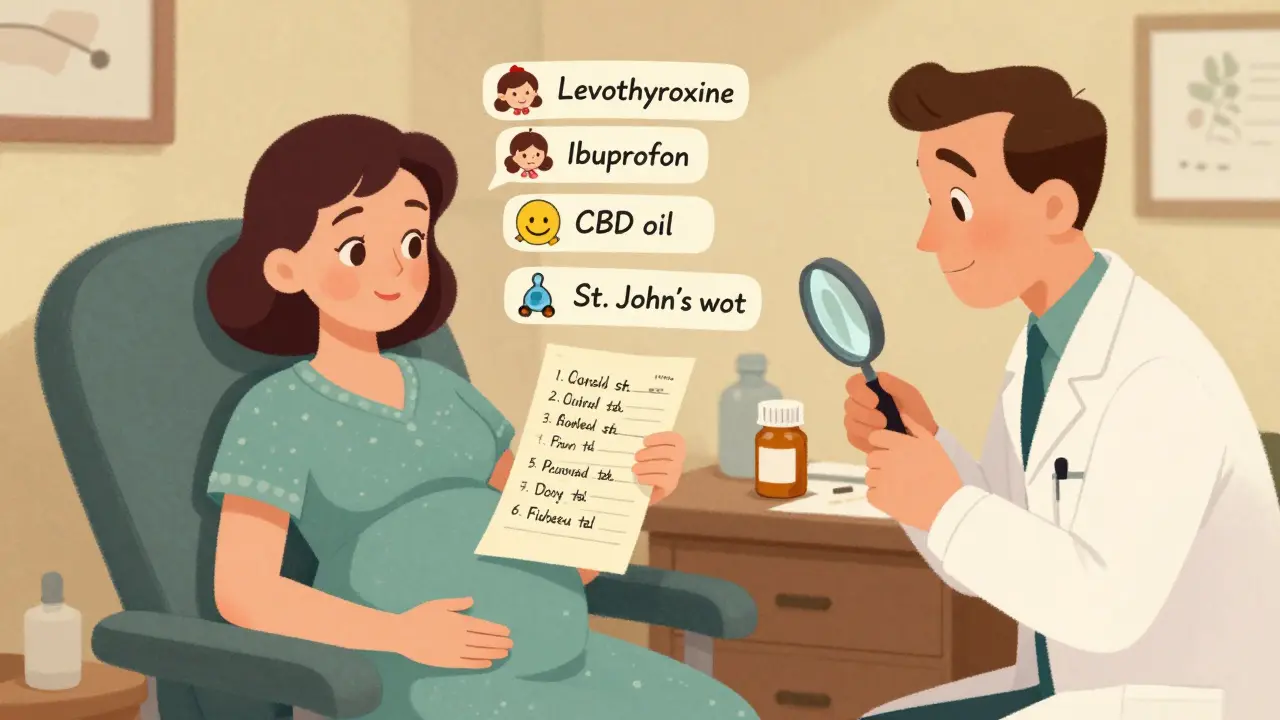
When you’re planning a pregnancy, already pregnant, or breastfeeding, the medications you take aren’t just part of your routine-they’re part of your baby’s development. That’s why talking openly and clearly with your OB/GYN about everything you’re taking isn’t optional. It’s essential. But many people walk into appointments feeling unsure what to say, afraid to sound silly, or just forgetting half the supplements they’re taking. The result? Missed risks, unsafe combinations, or worse-medications stopped abruptly without a safe alternative.
You don’t need to be a medical expert to have this conversation. You just need to be prepared. And you’re not alone. According to the CDC, about 90% of pregnant women take at least one medication during pregnancy. That includes prescription drugs, over-the-counter pain relievers, vitamins, herbal teas, and even CBD oils. But not all of them are safe-or even necessary-when you’re expecting or nursing.
Start with a Complete Medication List
Before your appointment, sit down with your medicine cabinet. Don’t guess. Don’t rely on memory. Write down every single thing you take, every day, every week. This includes:
- Prescription medications: Exact name, dosage, how often you take it, and why. For example: Levothyroxine 75 mcg, one tablet daily, for hypothyroidism.
- Over-the-counter drugs: Ibuprofen, acetaminophen, antacids, cold pills, sleep aids-even if you only use them occasionally.
- Supplements: Prenatal vitamins, iron, calcium, fish oil, magnesium. Also include any herbal products like ginger capsules, chamomile tea, or evening primrose oil.
- Topical treatments: Creams, patches, or eye drops you use regularly. Some ingredients absorb into your bloodstream.
- Recreational or alternative substances: Alcohol, nicotine, cannabis, or CBD. Yes, even if you think it’s "natural" or "just a little." Your provider needs to know.
Use your phone to take pictures of the bottles. That way, if you forget the exact dosage, you can show your provider the label. A study from Colorado Women’s Health found that patients who brought a written or digital list cut their appointment time by 15-20 minutes and increased the quality of their discussion by 40%.
Know What’s Safe-and What’s Not
Not all medications are created equal during pregnancy and breastfeeding. The FDA once used a letter system (A, B, C, D, X) to classify drug risks, but that’s mostly outdated now. Today, labels on prescriptions should include clear information about pregnancy and breastfeeding safety. Still, about 42% of commonly prescribed drugs don’t have enough data to say for sure whether they’re safe.
Here are some real-world examples:
- Safe to continue: Levothyroxine (for thyroid), insulin (for diabetes), certain blood pressure meds like labetalol and methyldopa.
- Stop before pregnancy: Accutane (for acne), warfarin (blood thinner), certain antidepressants like paroxetine.
- Use with caution: Ibuprofen (avoid after 20 weeks), aspirin (only if prescribed), some anxiety meds like benzodiazepines.
- Safe for breastfeeding: Most antibiotics, acetaminophen, SSRIs like sertraline, thyroid meds.
- Watch out for: St. John’s Wort (reduces birth control effectiveness by 50%), high-dose vitamin A (linked to birth defects), and unregulated herbal products.
Don’t assume something is safe because it’s "natural." Herbal supplements aren’t regulated like drugs, and many have unknown effects on fetal development. Evening primrose oil, for example, is often taken for PMS-but it can trigger contractions. One patient on Reddit shared she didn’t mention it until after her water broke early. Her OB was frustrated. She was terrified. It didn’t have to happen.
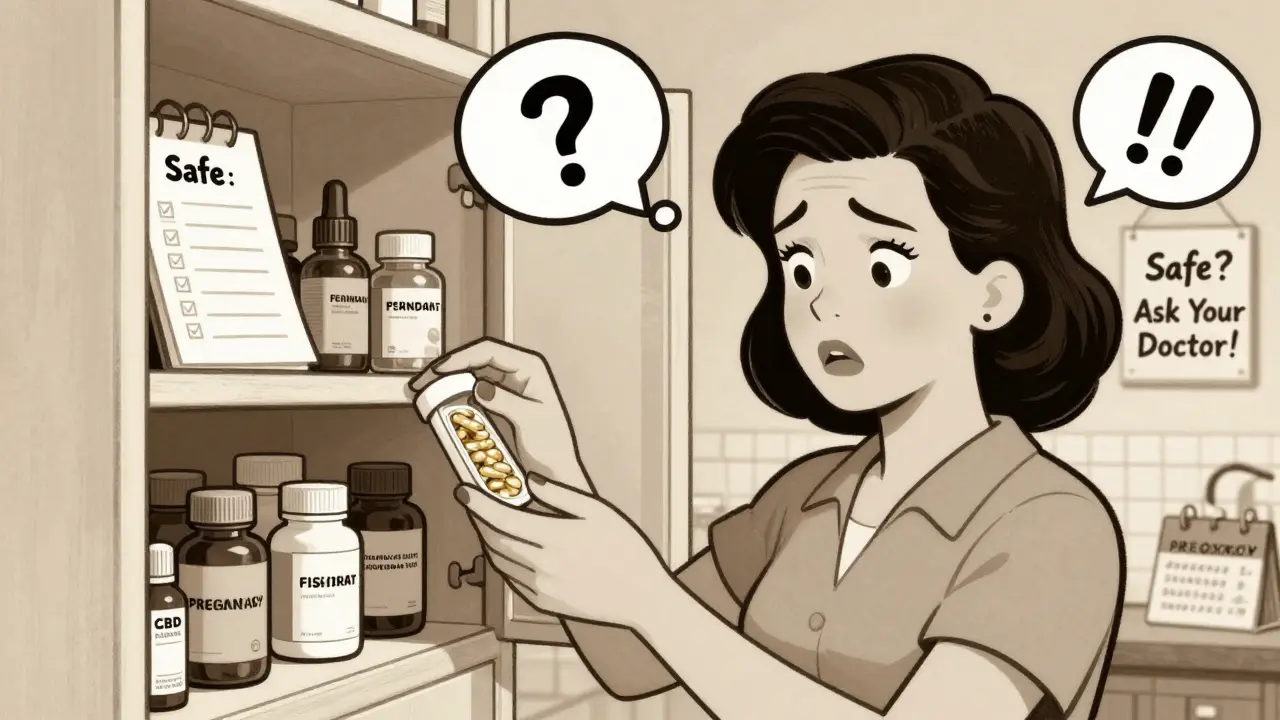
Prepare Your Questions
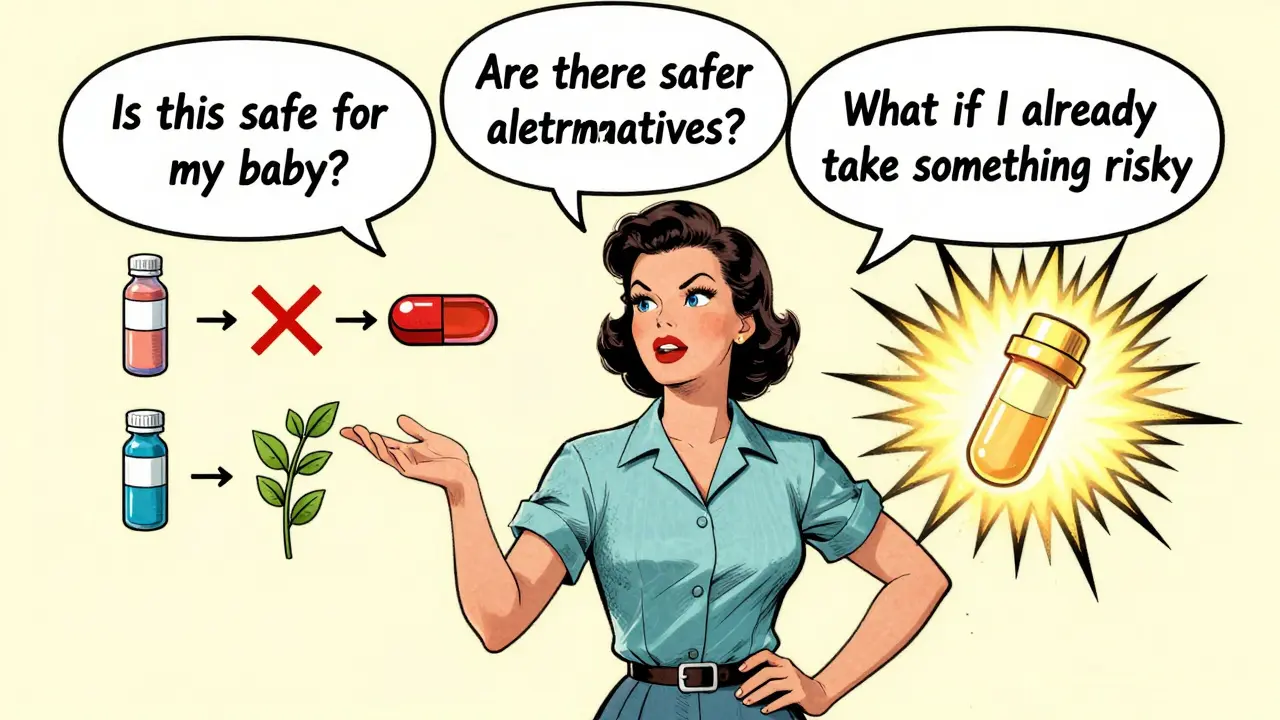
Doctors don’t always bring up every risk. You need to ask. Here are the most important questions to bring with you:
- "Is this medication safe for pregnancy or breastfeeding?" Don’t settle for "probably." Ask for the evidence.
- "Are there safer alternatives?" If you’re on a medication that’s risky, what else can you try? For example, instead of ibuprofen, acetaminophen is preferred during pregnancy.
- "Should I stop this before trying to conceive?" Some meds need to be cleared from your system weeks before conception.
- "Will this affect my fertility?" Certain antidepressants, blood pressure meds, and even high-dose zinc can lower sperm or egg quality.
- "Do I need to adjust my dose during pregnancy?" Your body changes. Thyroid meds, insulin, and seizure drugs often need dose increases.
- "What if I accidentally took something unsafe?" If you took ibuprofen at 30 weeks or used CBD oil before knowing you were pregnant, tell your provider immediately. Most cases don’t result in harm-but you need monitoring.
- "Is there a pregnancy registry for this medication?" Some drug manufacturers track outcomes in pregnant women. Joining can help future moms.
One patient brought a spreadsheet with every supplement she took-including brand names and doses. Her OB printed it and kept it in her chart. "It made me feel seen," she said. "Like I wasn’t just another patient rushing through."
What Your OB/GYN Won’t Always Tell You
OB/GYNs are experts in reproductive health-but not always in managing complex chronic conditions. If you’re on four or more medications for diabetes, lupus, depression, or asthma, your OB/GYN may refer you to a maternal-fetal medicine specialist or a pharmacist who focuses on women’s health. That’s not a bad thing. It’s teamwork.
Also, don’t assume your OB/GYN knows about every supplement you take. A 2021 study found that 78% of primary care doctors skip screening for herbal products during medication reviews. OB/GYNs are better at it-but they still miss things. St. John’s Wort, kava, and black cohosh are common culprits. They’re sold as "natural remedies," but they can interfere with fertility, cause bleeding, or affect your baby’s brain development.
And while cannabis use is rising among reproductive-aged women (18% according to the National Survey on Drug Use and Health), only 38% of OB/GYNs routinely ask about it. If you use medical marijuana for pain, anxiety, or nausea, say so. It can affect fetal growth and increase the risk of preterm birth.
What Happens After the Appointment
Your job doesn’t end when you leave the office. After your visit:
- Write down any changes your provider recommends. Don’t trust your memory.
- Check with your pharmacy about insurance coverage. About 62% of OB/GYN-prescribed meds require prior authorization.
- Set reminders to track any side effects or changes in how you feel.
- Update your list every time you start or stop something-even a new OTC pain reliever.
Many women report feeling more confident after their third OB/GYN visit. Why? Because by then, they’ve learned what matters, what to ask, and how to speak up. One study showed a 78% improvement in communication after patients started using structured preparation methods.
Why This Matters More Than Ever
More women are entering pregnancy with chronic conditions than ever before. In 2010, 44% did. By 2025, that number is projected to hit 58%. That means more people need complex medication plans during pregnancy. And with new tools like real-time monitoring apps (like Babyscripts) and upcoming FDA pregnancy risk scores, the system is getting better. But it still depends on you to speak up.
Medication safety isn’t about fear. It’s about control. You’re not just taking pills-you’re making decisions that affect two lives. And you deserve clear, honest, personalized advice.
Bring your list. Ask your questions. Don’t be embarrassed to say, "I’m not sure if this is important." It’s always important. Your provider’s job isn’t to judge-it’s to help you stay safe.
What if I forgot to mention a supplement before my appointment?
It’s never too late to bring it up. Call your OB/GYN’s office and ask to speak with a nurse or provider. Most clinics have a secure messaging system through their patient portal. Even if you’re already pregnant, telling them about a new supplement like fish oil, magnesium, or St. John’s Wort can prevent complications. Don’t wait until your next appointment-reach out now.
Can I keep taking my antidepressants while pregnant?
Some antidepressants are safer than others during pregnancy. Sertraline and citalopram are commonly used and have more safety data than others. Stopping abruptly can increase your risk of relapse, which is just as dangerous for you and your baby. Work with your OB/GYN and a psychiatrist to weigh risks and benefits. Never stop without medical guidance.
Is it safe to take ibuprofen while breastfeeding?
Yes, ibuprofen is considered safe for breastfeeding mothers in standard doses. Only tiny amounts pass into breast milk, and it’s not linked to side effects in babies. However, avoid it during pregnancy after 20 weeks-it can affect fetal kidney development and reduce amniotic fluid. Always check with your provider before using any pain reliever during pregnancy.
Why does my OB/GYN care about my birth control if I’m trying to get pregnant?
Because some birth control methods affect your body long after you stop. Hormonal IUDs and implants can take months to fully clear. Birth control pills can temporarily suppress ovulation. Your OB/GYN needs to know what you were on to predict when you’ll start ovulating again and to check for any lingering side effects like blood clots or hormonal imbalances.
Do I need to stop all supplements before getting pregnant?
No. In fact, you should start taking folic acid at least one month before conception to prevent neural tube defects. Most prenatal vitamins are safe and recommended. But avoid high-dose vitamin A, megadoses of vitamin E, and herbal supplements like black cohosh or dong quai, which may interfere with implantation or early development. Stick to evidence-based prenatal vitamins and ask about anything else.
What if my OB/GYN says a medication is fine, but I read online it’s dangerous?
Trust your instincts. Ask your provider where they got their information. Request the latest guidelines from ACOG or the FDA. Many websites spread fear without context. A medication labeled "Category C" doesn’t mean it’s unsafe-it means there’s limited data. Your provider should explain the actual risk level, not just a letter grade. If you’re still unsure, ask for a referral to a maternal-fetal medicine specialist or a clinical pharmacist who specializes in pregnancy.



Comments
Let’s be honest: the CDC’s 90% statistic is statistically meaningless without context. Who defines ‘medication’? Is chamomile tea a drug? Is caffeine? And why is CBD lumped with ibuprofen? The entire framework is a neoliberal construct designed to pathologize natural bodily autonomy. Also, ‘pregnancy registry’? That’s just corporate pharmacology surveillance dressed up as ‘science.’
omg i just realized my obgyn never asked about my gummies lol. i take like 5 diff ones for glow skin and sleep and she just nodded. what if they’re secretly making my baby a zombie?? also i heard the fda is hiding the truth bc big pharma owns them 😭
Y’all are overcomplicating this. 😎 Just take what your doc says and stop googling. I took ibuprofen at 28 weeks and my kid’s now a Harvard grad. 🤷♂️ Also, CBD? Totally fine. I’m a dad. I know these things. Your body’s a tank. Trust the process. 🚀
Interesting post. I am from India, and here, many women take traditional herbs during pregnancy without consulting anyone. It is not out of ignorance, but out of cultural trust. Perhaps the real issue is not the medications themselves, but the lack of culturally sensitive dialogue in Western medicine. We need bridges, not lists.
Why are we even talking about this? I took everything and my kid’s fine. My OB never asked about my fish oil or that tea I drank. If you’re stressing over this, you’re probably the reason you’re anxious in the first place. Just chill.
The entire premise of this article is built on flawed epidemiological assumptions. The 42% of drugs with insufficient data? That’s not a gap in knowledge-it’s a reflection of ethical constraints in human trials. The real danger is not medication use-it’s the commodification of maternal anxiety into a market for ‘preparedness’ products, apps, and overpriced prenatal vitamins. You’re being sold fear as a service.
Western medicine is a colonial project disguised as science. You think your ‘FDA-approved’ levothyroxine is safe? Who funded that study? Who owns the patent? The same corporations that profit from your fear of miscarriage, your guilt over taking CBD, your panic over St. John’s Wort. They don’t want you to know your body. They want you to pay for a prescription every month. In India, we’ve survived for millennia without your ‘medication lists.’ You are not broken. You are being programmed.
It’s frustrating how casually people dismiss the importance of accurate medication disclosure. There is no such thing as ‘just a little’ CBD during pregnancy. There is no such thing as ‘probably safe.’ If you’re going to be a parent, you owe it to your child to be precise, to document everything, to verify every claim-even if it feels tedious. This isn’t about fear; it’s about responsibility. And if you can’t be bothered to write down your supplements, you shouldn’t be surprised when things go wrong.
I love how this post doesn’t shame people for forgetting things. I took ibuprofen once at 18 weeks and panicked for weeks. When I told my OB, she said, ‘One dose won’t hurt, but let’s make sure you don’t do it again.’ No judgment. Just guidance. That’s the kind of care we need more of. You’re not failing if you didn’t know. You’re just learning. Keep showing up. That’s what matters.