For millions of low-income Americans on Medicaid, the difference between a generic drug and a brand-name one isn’t just about the label-it’s about whether they can afford to take their medicine at all. In 2023, generics made up 90% of all prescriptions filled through Medicaid, but they accounted for less than 18% of total drug spending. That’s the power of generics: they deliver the same clinical results as brand-name drugs at a fraction of the cost.
How Much Do Generics Actually Save Medicaid Patients?
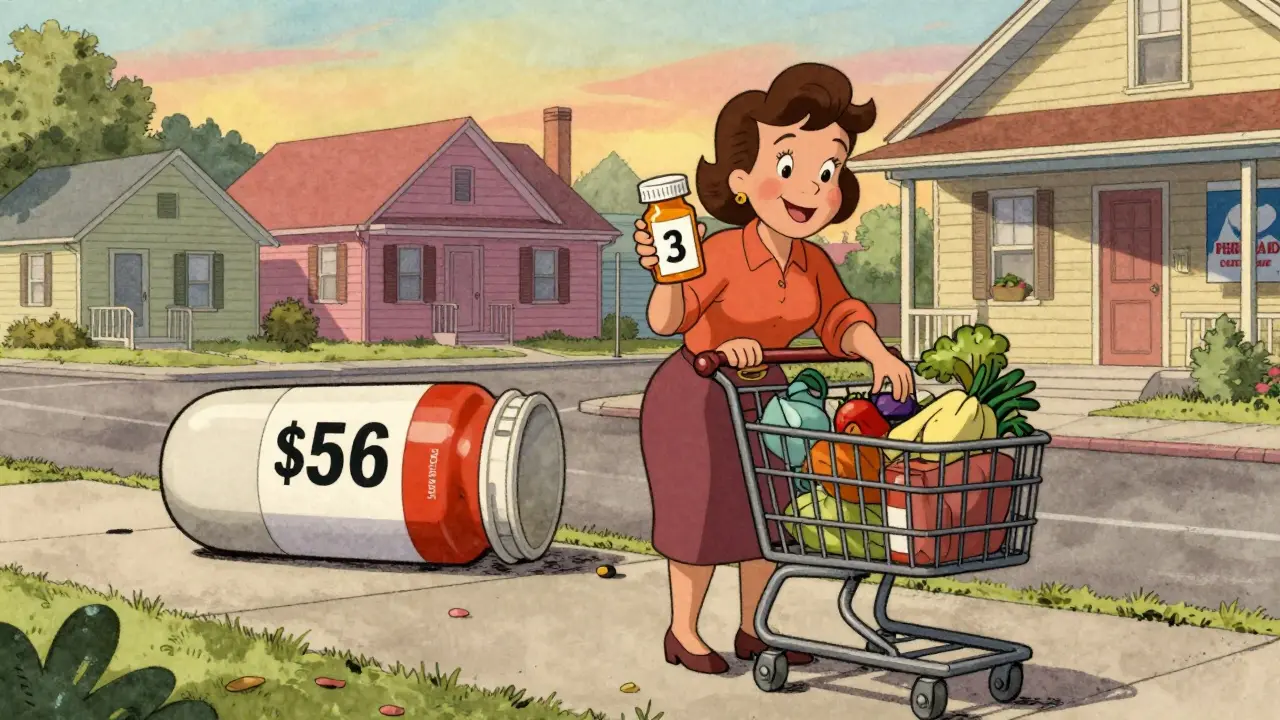
The numbers don’t lie. In 2023, the average copay for a generic prescription under Medicaid was $6.16. For a brand-name drug? $56.12. That’s nearly nine times more. For someone living paycheck to paycheck, that $50 difference isn’t just inconvenient-it can mean skipping a dose, delaying refills, or worse.
Most Medicaid beneficiaries get their generics with a $5 or $10 copay. In fact, 93% of generic prescriptions cost less than $20 at the pharmacy counter. Compare that to brand-name drugs, where only 59% fall under that threshold. For parents managing asthma inhalers, diabetes meds, or blood pressure pills, that low copay makes adherence possible. One mother in Ohio told her local Medicaid office that switching her daughter’s inhaler to a generic dropped her monthly cost from $25 to $3. She didn’t have to choose between groceries and medicine anymore.
How Medicaid Gets Such Low Prices
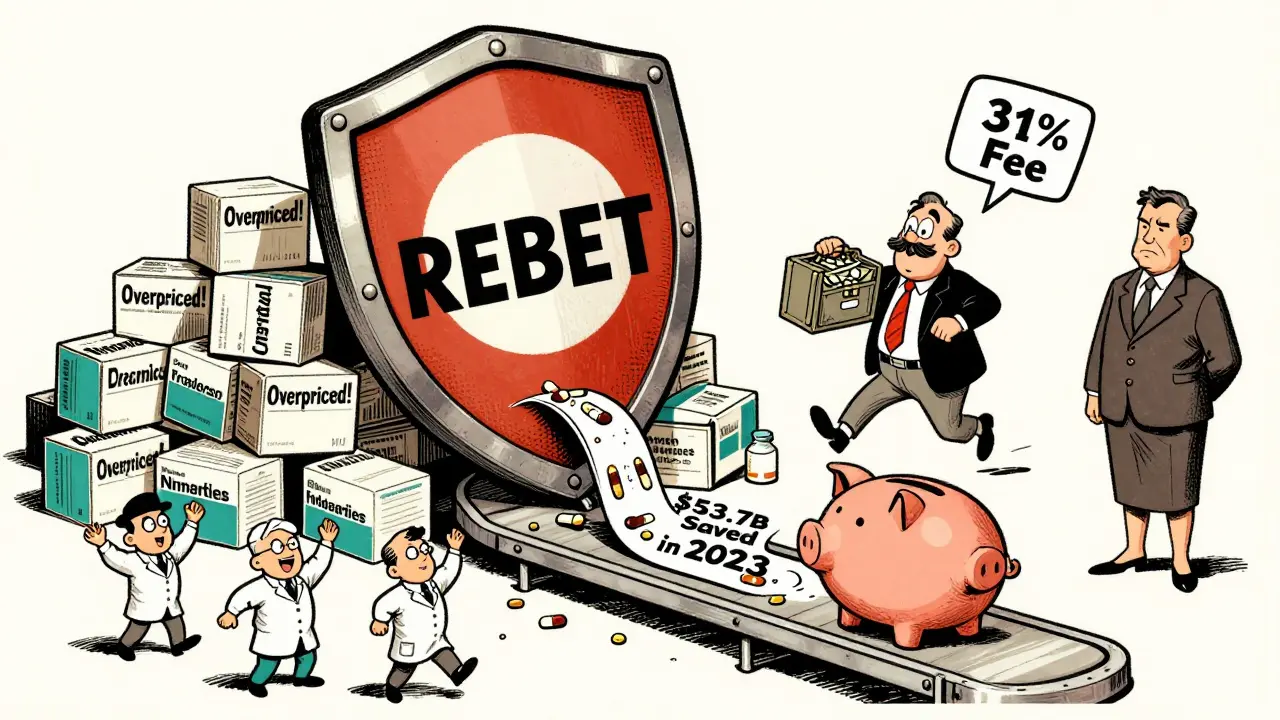
Medicaid doesn’t just rely on competition to drive down prices-it has a legal tool that forces manufacturers to give big discounts. The Medicaid Drug Rebate Program (MDRP), created in 1990, requires drug companies to pay rebates to state Medicaid programs in exchange for having their drugs covered. In 2023, those rebates saved Medicaid $53.7 billion, cutting gross spending by more than half.
For non-specialty generics, Medicaid gets rebates equal to 86% of the retail price. That means if a generic pill costs $10 at the pharmacy, Medicaid only pays about $1.40 after the rebate. No other federal program-not even the VA-gets prices this low. A 2021 Congressional Budget Office study confirmed Medicaid’s net prices are the lowest across all U.S. public health programs.
That’s why, even though generic drugs make up 90% of prescriptions, they only account for 17.5-18.2% of total Medicaid drug spending. The rest of the money goes to a small number of high-cost specialty drugs-less than 2% of prescriptions-that make up over half of all spending.
Who’s Making the Money? The Hidden Costs in the Supply Chain
It’s not all straightforward savings. Behind the scenes, Pharmacy Benefit Managers (PBMs) act as middlemen between drug makers, pharmacies, and Medicaid. They negotiate prices, handle rebates, and manage formularies. But they also take fees. A 2025 Ohio state audit found PBMs collected 31% of the value on $208 million in generic drug sales in just one year. That’s over $64 million in fees on drugs meant to save money.
That money doesn’t go back to patients or states. It stays in corporate pockets. And while Medicaid’s rebate system is strong, those PBM fees eat into the savings. Some states are starting to push back-requiring PBMs to disclose fees or even bypassing them altogether by creating state-run pharmacy networks. But nationwide, the system still favors intermediaries over patients.
Why Generics Are Better Than Alternatives Like Cost-Plus Pharmacies
You might have heard about companies like Mark Cuban Cost Plus Drug Company, which claims to sell drugs at near-wholesale prices. A 2023 study found that uninsured patients could save a median of $4.96 per generic prescription by buying directly from them. But here’s the catch: Medicaid patients already get better deals. The same study showed that only 11.8% of generic prescriptions were cheaper through Cost Plus than through Medicaid.
Why? Because Medicaid’s rebate system works at scale. It’s not about one person buying one pill-it’s about 20 million people getting the same drug at a deeply discounted rate. Cost Plus might help the uninsured, but for Medicaid enrollees, the system already delivers lower prices with far more reliability.
Plus, Cost Plus doesn’t carry most specialty generics. In May 2023, only 26% of expensive generic drugs were available through their platform. Medicaid covers nearly all FDA-approved drugs, including those needed for chronic conditions like epilepsy, rheumatoid arthritis, and HIV. That’s not something a small online pharmacy can match.
The Real Threat to Savings: High-Cost Specialty Drugs
Generics are working. But the system is under pressure-not because of generics, but because of what’s replacing them. While 90% of prescriptions are for generics, drugs costing more than $1,000 per claim made up over half of Medicaid’s total spending in 2021. These are rarely generics-they’re biologics, cancer drugs, or rare disease treatments.
Net Medicaid drug spending jumped from $30 billion in 2017 to $60 billion in 2024. That’s a 100% increase in just seven years. The reason? More patients are getting these expensive drugs, and manufacturers keep raising prices. Even with rebates, the cost is climbing.
In response, the Centers for Medicare & Medicaid Services (CMS) launched the GENEROUS Model in 2024. It’s a pilot program testing new ways to control spending-like limiting access to high-cost drugs unless they’re proven more effective than cheaper alternatives. It’s not about denying care. It’s about making sure every dollar spent delivers real health value.
What Patients Need to Know
If you’re on Medicaid, you don’t need to shop around for cheaper drugs. Your pharmacy will automatically fill your prescription with the generic version unless your doctor says otherwise. That’s the law. But there are two things to watch for:
- Prior authorization: Some generics-especially newer ones-require approval before they’re covered. This can cause delays. One Reddit user shared that her daughter’s generic asthma inhaler took three weeks to get approved, even though it was cheaper and just as effective.
- Copay increases: Some states have raised generic copays in recent years, even as drug prices dropped. If your copay goes up but your drug hasn’t changed, call your state Medicaid office. You might be eligible for a hardship exemption.
Every state runs its Medicaid program differently. Forty-eight states use managed care organizations to handle pharmacy benefits, which means rules can vary. Check your state’s Medicaid website or call their pharmacy help line. Don’t assume your copay is fixed-it can change.
The Bigger Picture: Generics Are the Backbone of Affordable Care
Since 2009, generic drugs have saved the U.S. healthcare system over $2.9 trillion. In 2022 alone, they saved $408 billion. That’s not just corporate profit-it’s people keeping their jobs, going to school, and staying out of hospitals.
For low-income patients, generics aren’t a second choice. They’re the only choice that makes sense. Without them, Medicaid would be bankrupt. And without Medicaid, millions of people wouldn’t have access to any drugs at all.
The goal isn’t to eliminate brand-name drugs. It’s to make sure the system rewards value, not brand names. Generics do that. They’re safe, effective, and affordable. And for people who can’t afford to pay more, they’re not just a cost-saving tool-they’re a lifeline.

Comments
My mom’s on Medicaid and she takes three generics every day. She used to cry at the pharmacy when they’d say the brand was $80. Now? $3. She says it’s the only thing keeping her alive. I’m just glad someone finally wrote this down.
Of course generics are cheap-because they’re literally just the same chemical soup with a different label. Big Pharma’s been fleecing us for decades, and now Medicaid’s just the latest sucker paying pennies while PBMs rake in millions. Wake up, people.
Let’s be real-this whole system is a beautiful mess. Generics save lives, sure, but the fact that a PBM can pocket $64M in fees on $208M in sales? That’s not capitalism, that’s feudalism with a pharmacy receipt. And yet, we still act surprised when someone skips their insulin because the copay went up from $5 to $10. We’ve normalized suffering as a cost of doing business.
Generics = life. 💊❤️ I work in a clinic in rural Texas. Last week, a 72-year-old veteran showed me his pill organizer-12 generics, zero brand names. He said, ‘Doc, I’d be dead if this wasn’t $3.’ No joke. This post made me cry. Thank you.
While the data presented is compelling and statistically robust, one must also acknowledge the structural inefficiencies inherent in the Medicaid Drug Rebate Program’s implementation at the state level. Disparities in formulary management, adjudication delays, and inconsistent prior authorization protocols significantly undermine the theoretical savings. A national standardization of pharmacy benefit administration would yield more equitable outcomes across jurisdictions.
If you’re on Medicaid and your copay went up, don’t just accept it. Call your state’s Medicaid pharmacy line. Ask for a hardship exemption. They have them for a reason. I’ve helped three people get their copays lowered just by making one call. It’s not hard. You’re not asking for a favor-you’re claiming your right.
Wait-so you’re saying that generics are ‘just as effective’? That’s not scientifically proven in all cases! The FDA allows up to 20% variation in bioequivalence! And PBMs? They’re not the villains-pharmacies are the ones who ‘switch’ your meds without telling you! You’re all being manipulated by corporate propaganda!
They say generics save money but who really wins? The state? The patient? Or the guy in a suit in New York who owns the PBM? I’ve seen people die waiting for approvals. This isn’t healthcare. It’s a spreadsheet with a stethoscope.
I read this whole thing and just thought about my cousin who had to choose between her asthma inhaler and her kid’s school supplies. She took the inhaler. Every month. I never knew how much that cost until now. Thank you for writing this.
My grandma’s on Medicaid. She’s 84. She takes 7 generics. She doesn’t know what a PBM is. She just knows her pills are cheap and she doesn’t have to beg for them. That’s all that matters. We’re not talking about economics here-we’re talking about people who can’t afford to be sick. Don’t overcomplicate it.
Generics? Yeah right. I know a guy who got a generic blood pressure med and his heart started fluttering. They didn’t even test it on real people! The FDA is in bed with Big Pharma and Medicaid’s just the front for the real scam. You think $6 copays are good? Wait till they start putting tracking chips in the pills.
Generics aren’t the solution. They’re the bare minimum. And we’re celebrating a band-aid like it’s a cure.
I’m so glad someone finally said this. 💖 I’ve been screaming about PBMs for years. And yes, the 86% rebate is insane-but it’s still not enough. We need to cut out the middlemen entirely. State-run pharmacies. No fees. Just drugs. For people. Not profits. 🤍
Oh, so now it’s okay that drug companies get away with charging $10,000 for a single vial of some ‘specialty’ drug, but we’re supposed to be grateful for $3 generics? You’re normalizing poverty. This isn’t healthcare-it’s triage dressed up like a public service.
Correction: The study you cite from the CBO is from 2021, not 2023. Also, ‘less than 18% of total drug spending’ is misleading-it’s 17.5% to 18.2%. Precision matters. And you didn’t mention that some generics are manufactured in China, where quality control is inconsistent. This article reads like a press release from a lobbying group.