Opioid Driving Risk Calculator
How Opioids Affect Your Driving
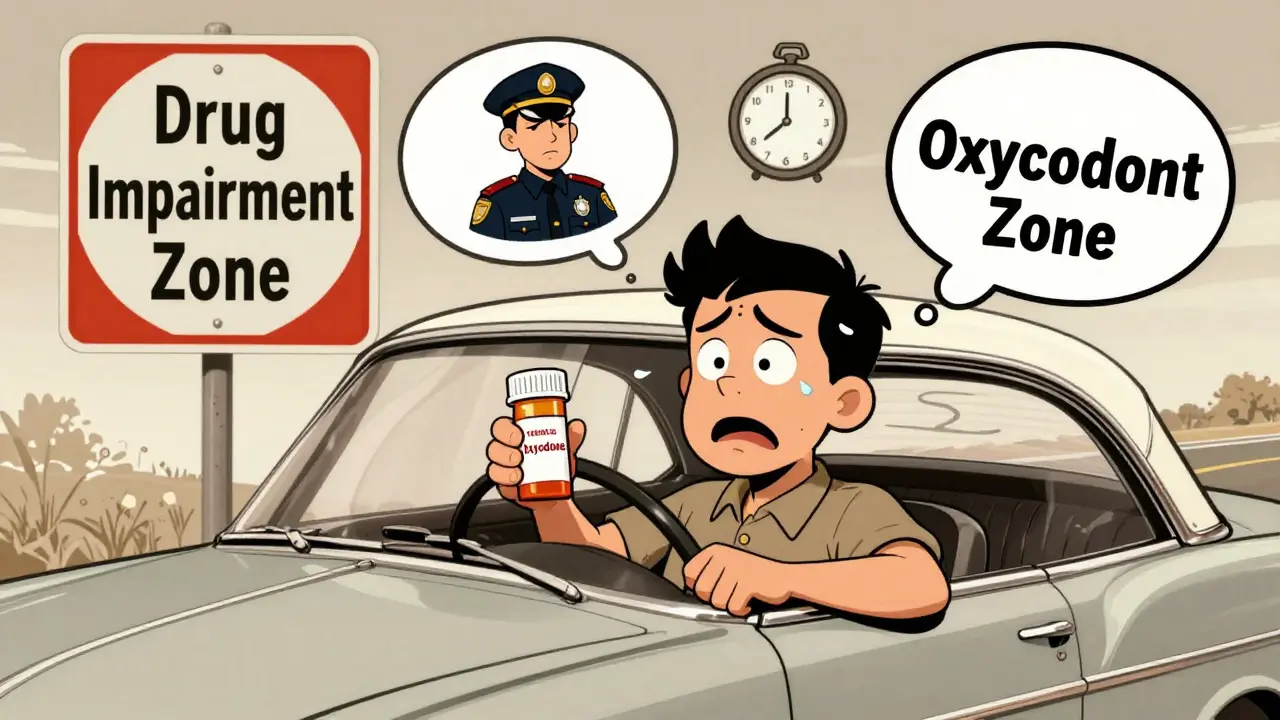
Opioids slow your reaction time, reduce focus, and impair judgment. Even at therapeutic doses, your crash risk doubles. Legal consequences include license suspension, fines, and jail time.
Calculate Your Safe Waiting Time
Your Safe Waiting Time
Legal Warning: In many regions, any detectable opioid in your system can lead to charges, even if you feel fine. Zero-tolerance laws apply in 16 U.S. states and Canadian provinces.
What You Should Do
- Ask your doctor: "Will this medication impair my driving ability? How long should I wait?"
- Check the label: Look for "Do not operate heavy machinery" or "May cause drowsiness."
- Wait at least: 3-4 hours for immediate-release opioids, 6-8 hours for extended-release.
- Never mix: Opioids with alcohol or sedatives.
- Arrange transport: Use public transit, rideshare, or a designated driver.
Driving while taking opioids isn’t just risky-it’s legally dangerous, even if you’re taking them exactly as prescribed. You might think, "My doctor said it’s fine," or "I feel fine after my dose," but the law doesn’t care how you feel. It cares about what’s in your system and how it affects your ability to drive safely. And the consequences aren’t just fines or points on your license-they can mean losing your job, your freedom, or even your life.
How Opioids Actually Affect Your Driving
Opioids-whether they’re oxycodone, hydrocodone, morphine, or fentanyl-slow down your brain’s ability to process information. They don’t just make you sleepy. They blur your focus, delay your reaction time, and mess with your judgment. You might not notice it, but your brain is working harder just to keep the car in its lane. Studies show that being under the influence of opioids can doubles your risk of crashing, even at therapeutic doses. The National Institute on Drug Abuse found that drivers on opioids have slower reaction times than those who’ve had a few drinks. Think about this: at 100 km/h, a half-second delay in braking means you travel another 14 meters before you even start to stop. That’s the length of a small car. Now imagine that delay when a child runs into the street or traffic ahead suddenly stops. Opioids don’t just make you drowsy-they make you less aware, less responsive, and less in control.It’s Illegal-Even With a Prescription
In Australia, Canada, and all 50 U.S. states, driving while impaired by any drug-including legally prescribed opioids-is against the law. You don’t need to be high or drunk to get charged. If the police believe your driving was affected by opioids, you can be arrested. In many places, they don’t even need to prove you were impaired. Some states and provinces have zero-tolerance laws: if any trace of an opioid is found in your blood or saliva, you’re guilty. In Canada, opioid-impaired driving carries the same penalties as drunk driving: license suspension, fines, criminal charges, and even jail time. In the U.S., 16 states have zero-tolerance laws for opioids and other drugs. Five states have per se laws, meaning any measurable amount of the drug in your system is illegal-no proof of impairment needed. Even if you’re following your doctor’s instructions, you’re still breaking the law if you drive while impaired.Why Doctors Don’t Always Warn You
Here’s the uncomfortable truth: most people prescribed opioids aren’t told about the driving risks. A 2022 survey of over 1,200 chronic pain patients found that 63% didn’t know driving on opioids could lead to a DUI. Many assume their doctor would warn them if it was dangerous. But doctors are busy. They focus on pain relief, not driving safety. And pharmacists? They often don’t mention it either. One Reddit user shared how their pharmacist told them it was fine to drive on oxycodone-then they failed a field sobriety test and lost their license. The FDA has required stronger warning labels on opioid prescriptions since 2020, but those labels are easy to miss. They’re small, buried in fine print, and often ignored. The real problem? There’s no universal rule for how long to wait after taking opioids before driving. Some people feel fine after an hour. Others are still groggy after six. It depends on the drug, the dose, your metabolism, and whether you’re mixing it with alcohol or other medications.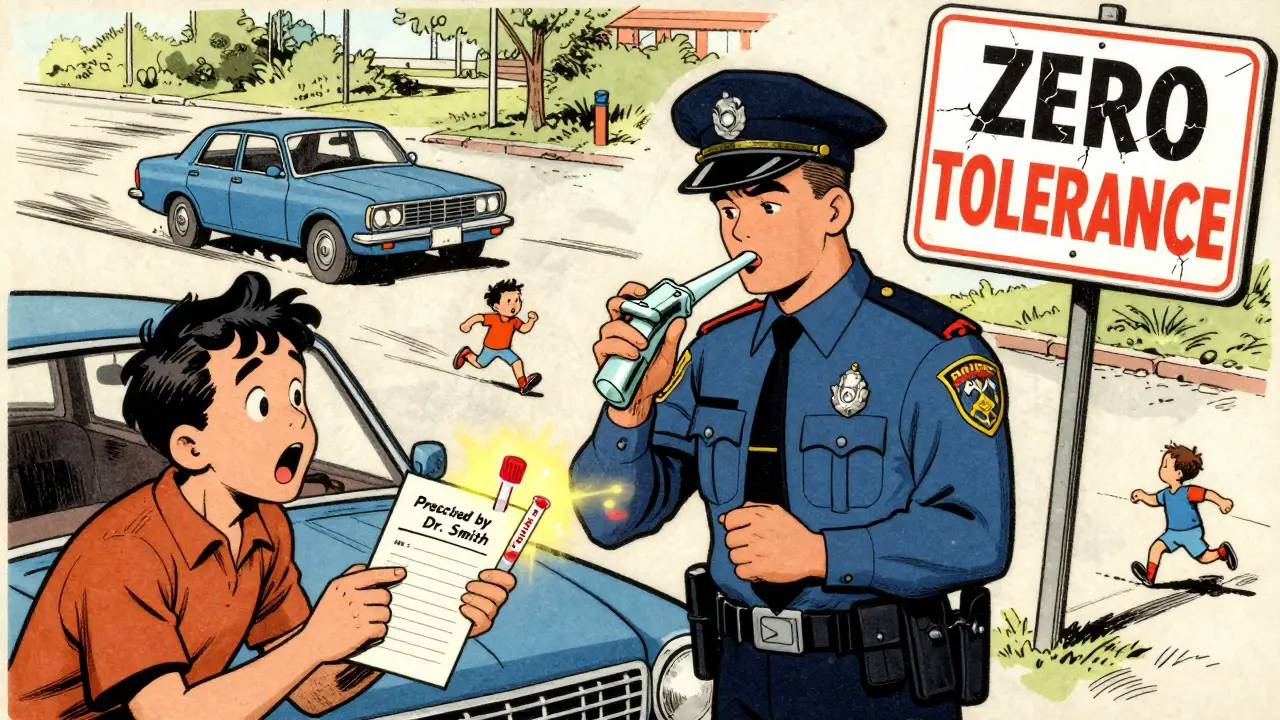
How Police Detect Opioid Impairment
Unlike alcohol, where a breathalyzer gives a clear number, opioids don’t have a simple test. There’s no universal “legal limit” like 0.05% BAC. Instead, police use a two-step process: Standardized Field Sobriety Tests (SFST) and Drug Recognition Expert (DRE) evaluations. They’ll ask you to walk in a straight line, stand on one foot, follow a pen with your eyes. If you struggle, they’ll likely take you to the station for a blood or oral fluid test. Since 2023, 47 U.S. states and many Canadian provinces use oral fluid testing devices like the Dräger DrugTest 5000, which can detect fentanyl, oxycodone, and other opioids in minutes. These devices are becoming standard in police cars. But here’s the catch: just because a drug is detected doesn’t mean you were impaired at the time of driving. That’s why some states still require proof of actual impairment, while others don’t care-any trace is enough.Real People, Real Consequences
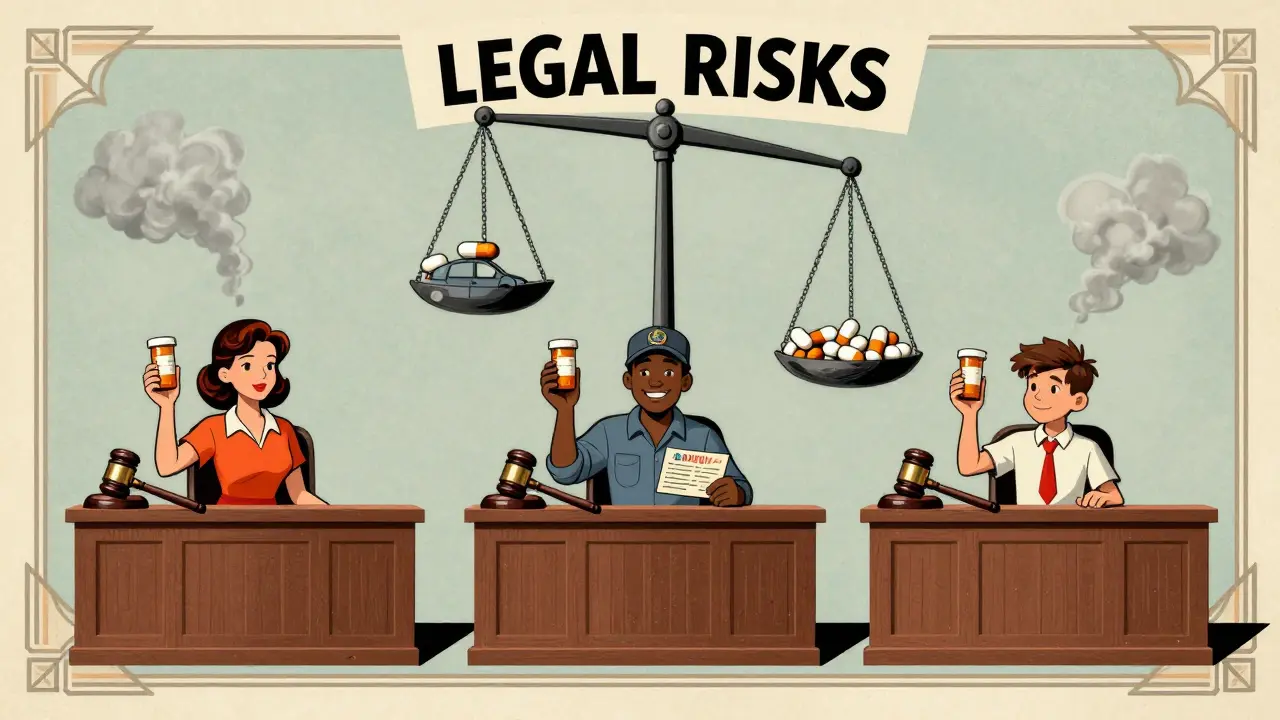
Stories like these aren’t rare:- A 32-year-old woman in Perth took her prescribed morphine for back pain, drove to the pharmacy, and was pulled over for swerving. Her blood test showed morphine. She lost her license for 12 months and paid $14,000 in legal fees.
- A truck driver in Queensland was fired after a routine drug screen picked up codeine. He had taken it for a toothache and hadn’t driven in 12 hours. His employer’s policy banned any opioid use, regardless of prescription.
- A teenager in Victoria was charged with drug-impaired driving after taking hydrocodone for a sports injury. He’d followed the label, but the court didn’t accept “I didn’t think it was a big deal” as a defense.
What You Should Do Instead
If you’re on opioids, here’s how to stay safe and legal:- Ask your doctor: “Will this affect my ability to drive? How long should I wait after taking it?” Don’t assume it’s safe.
- Check the label: Look for “Do not operate heavy machinery” or “May cause drowsiness.” If it’s there, it applies to driving too.
- Wait at least 3-4 hours after immediate-release opioids (like oxycodone or hydrocodone). For extended-release versions (like OxyContin), wait 6-8 hours or longer.
- Avoid alcohol and sedatives. Mixing opioids with alcohol, sleeping pills, or even some cold medicines can make impairment worse.
- Plan ahead: If you’re going to take opioids, arrange a ride. Use public transport, a taxi, or ask a friend. It’s not weak-it’s smart.
The Bigger Picture: Why This Matters
The opioid crisis isn’t just about overdoses. It’s on our roads. Between 2020 and 2023, fentanyl-related impaired driving cases jumped 262%. Synthetic opioids are stronger, more unpredictable, and harder to detect. Law enforcement is ramping up: the U.S. federal government spent $15.7 million in 2023 on drug-impaired driving programs. More officers are being trained. More roadside tests are being used. And more states are moving toward per se laws. If you’re driving on opioids, you’re not just risking your own life-you’re risking others’. And the legal system is catching up fast. What used to be a gray area is now a clear red line. The best way to avoid trouble isn’t to hope you’re not impaired. It’s to not drive at all.Need Help? Resources Are Available
You don’t have to figure this out alone. If you’re unsure whether it’s safe to drive on your medication:- Call your pharmacist-they’re trained to know drug interactions and side effects.
- Contact the National Drug and Alcohol Hotline (1-800-662-4357). They field over 12,000 calls a year about medication-related driving risks.
- Visit your doctor’s office and ask for a written summary of your medication’s side effects, including driving risks.
Can I drive if I’m taking opioids as prescribed?
No. Even if your doctor prescribed the opioid and you’re taking it exactly as directed, driving while impaired by any drug is illegal in Australia, Canada, and the U.S. You can still be charged with drug-impaired driving if your ability to operate a vehicle is affected. The law doesn’t distinguish between illegal drugs and legal prescriptions-it focuses on impairment.
How long should I wait after taking opioids before driving?
There’s no universal answer, but general guidelines suggest waiting at least 3-4 hours after taking immediate-release opioids like oxycodone or hydrocodone. For extended-release versions like OxyContin or MS Contin, wait 6-8 hours or longer. Individual factors like metabolism, age, and other medications can change how long the effects last. When in doubt, don’t drive.
Can I get a DUI from a legal painkiller?
Yes. Many people are arrested for DUIs after taking legally prescribed opioids. Police don’t care if the drug is legal-they care if it impaired your driving. In some states and provinces, any detectable amount of an opioid in your system is enough for a charge, regardless of whether you were impaired at the time.
Do all opioid medications affect driving the same way?
No. Different opioids have different durations and intensities. For example, fentanyl is extremely potent and can cause rapid, severe drowsiness. Codeine is weaker and may have less impact for some people. But even weaker opioids like tramadol or codeine can impair driving. The key isn’t the name of the drug-it’s whether it makes you drowsy, slow, or unfocused. If it’s on the label as a side effect, assume it affects driving.
What happens if I’m pulled over for suspected opioid impairment?
You’ll likely be asked to perform field sobriety tests. If the officer suspects drug impairment, they may request a blood, urine, or oral fluid sample. In zero-tolerance states, any trace of an opioid can lead to charges. In impairment-based states, prosecutors must prove your driving was affected. Either way, you’ll face legal consequences, including license suspension, fines, mandatory education, or even jail time.
Are there any legal defenses if I’m charged with driving on opioids?
In a few U.S. states like Utah and Wisconsin, you may be able to argue that you were using the medication as prescribed and were not impaired. But these defenses are rare and hard to prove. In most places, including Australia and Canada, having a prescription is not a defense. The only reliable protection is not driving while taking opioids.



Comments
Man I never realized how many people think their prescription is a free pass to drive like a zombie. I had a cousin who got pulled over on oxycodone after his back surgery - told the cop he felt fine, but his eyes were glazed like he’d been staring at a lava lamp for hours. Lost his job, his license, and his dignity all in one night. Don’t be that guy.
bro why are we criminalizing pain?? 😭💊🚗
They don’t care about your pain they care about your liability. The system doesn’t fix problems it just punishes people who are already suffering. Welcome to America where your medicine is a crime if it makes you breathe too slow while behind the wheel.
Let me guess - the same people who scream about drunk driving are the ones who never mention that opioids kill more people than alcohol every year. It’s not about safety it’s about control. They want you docile. They want you home. They don’t want you driving because then you might see too much.
I’m on tramadol for a herniated disc and I haven’t driven in 6 months. I just take the bus. It’s not hard. And honestly? I feel better knowing I’m not risking someone else’s life because I didn’t want to wait an extra hour.
My grandma takes hydrocodone and she calls me every time she takes it to ask if she should drive to the store. She’s 78 and smarter than half the people on this thread. Respect the meds. Don’t gamble with lives.
Here’s the thing - if your doctor doesn’t warn you, ask again. And again. And if they still shrug? Go to a pharmacist. They’re the real MVPs. I had my doc say ‘it’s fine’ until I read the FDA label myself and confronted him with it. He apologized and gave me a printed sheet. Doctors are humans too - they miss stuff. Don’t assume.
So we’re just supposed to suffer in silence now? No pain relief means no quality of life. This is just another way to punish the disabled. Next they’ll ban wheelchairs because they might ‘impair mobility’.
They’re putting chips in the pills. You think this is about safety? No. They’re tracking you. Every time you take it. Every time you drive. They know where you are. They know when you’re awake. They’re building the database. And soon? You won’t be allowed to drive unless you’re ‘cleared’ by the state. This is Step 1.
I live in India - we don’t have opioid prescriptions like this. But I’ve seen people drive after painkillers. It’s scary. One man crashed into a cow and broke his own leg. He said he didn’t feel anything. But the cow died. No one talks about the cows.
For immediate-release opioids like oxycodone, peak plasma concentration is at 1-2 hours. Sedation peaks around 2-3 hours. So 3-4 hours is a solid buffer. Extended-release? Wait 6-8 hours minimum. And if you’re over 65 or on benzos? Double that. Pharmacokinetics don’t lie. This isn’t opinion - it’s science.
Why are we letting foreign countries dictate our laws? In America we value freedom. If I want to drive while on my pills, that’s my right. The government doesn’t get to tell me how to live. This is tyranny wrapped in a safety blanket.
just had a 10mg oxycodone and drove to the shop lmao no probs