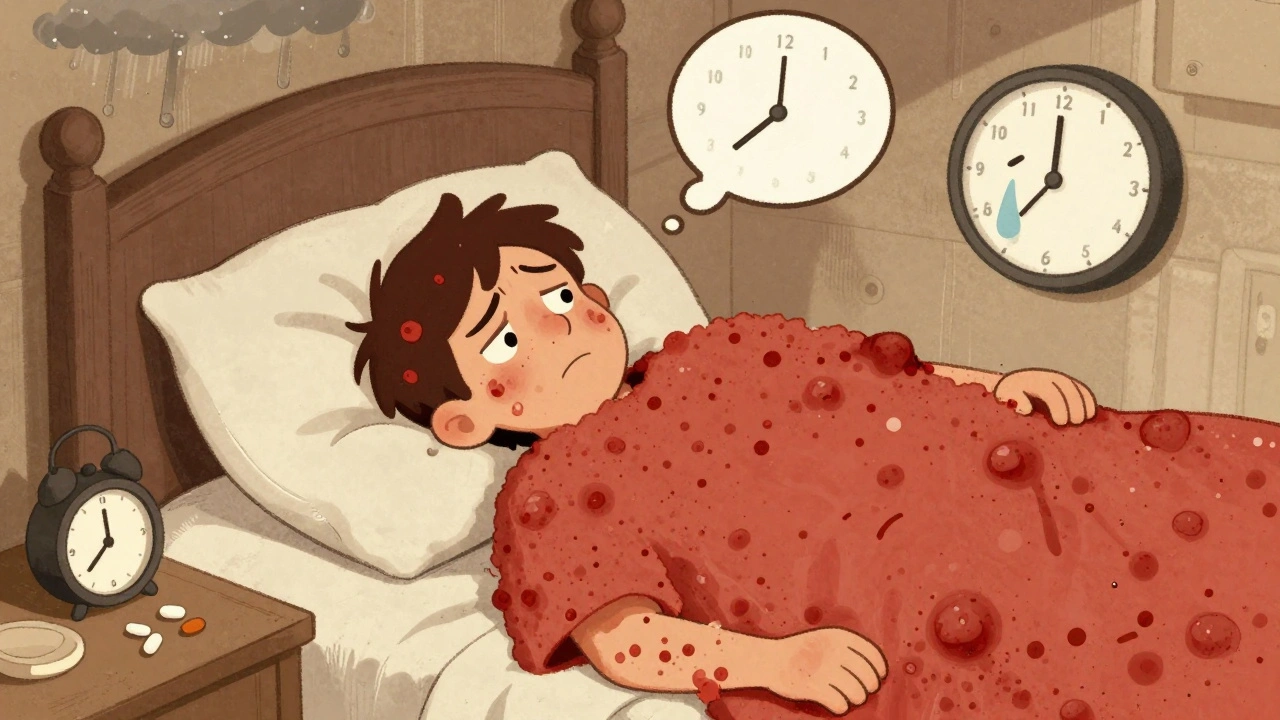
When hives won’t go away-no matter how many antihistamines you take-you’re not just dealing with itchy skin. You’re living with a disease that steals sleep, ruins confidence, and makes every day feel unpredictable. Chronic spontaneous urticaria (CSU) affects about 1 in 100 people, and for nearly two-thirds of them, the first-line drugs just don’t cut it. If you’ve tried standard doses of cetirizine, loratadine, or fexofenadine and still wake up covered in welts or swollen lips, you’re not alone. And you’re not out of options. There are real, proven second-line treatments that can turn things around.
Why First-Line Antihistamines Often Fail
Second-generation H1 antihistamines are the starting point for almost everyone with CSU. They’re safe, widely available, and work well for about 40% of patients. But for the other 60%, even doubling or quadrupling the dose doesn’t help much. Why? Because CSU isn’t always about histamine. In up to half of cases, the body attacks its own mast cells with autoantibodies-usually IgG-that trigger inflammation no matter how many antihistamines you take. That’s why antihistamines alone can’t fix it.Omalizumab: The Current Gold Standard
If antihistamines don’t work, omalizumab is the next step most doctors recommend. It’s not a steroid. It’s not an immunosuppressant. It’s a monoclonal antibody that binds to IgE-the protein that sets off allergic reactions-before it can activate mast cells. You get it as a monthly injection under the skin, usually 300 mg. It’s been approved for CSU since 2014 and is used by millions worldwide. The data shows it works for 30-70% of people who didn’t respond to antihistamines. But here’s the catch: about 70% of those who start omalizumab still don’t get complete symptom control. That means you might see fewer hives, but not zero. And if your CSU is driven by IgG autoantibodies (which happens in 30% or more of cases), omalizumab may barely help at all. It’s effective, but far from perfect.The New Contenders: Oral Options Are Coming
The biggest shift in CSU treatment isn’t happening in clinics-it’s happening in labs. Three new drugs are on the horizon, and they’re changing the game. First up: remibrutinib. This is a Bruton tyrosine kinase inhibitor (BTKi), taken as a daily pill. It doesn’t just block IgE. It stops both mast cells and basophils from releasing histamine and other inflammatory signals. It also reduces the production of those harmful IgG autoantibodies. In two large phase 3 trials (REMIX-1 and REMIX-2), 28-32% of patients achieved complete freedom from hives after 24 weeks. That’s comparable to omalizumab, but with a huge advantage: no needles. You just swallow a pill. For people tired of monthly injections, this could be life-changing. Then there’s dupilumab. You might know it from treating eczema or asthma. It blocks IL-4 and IL-13, two key inflammation drivers. In CSU trials, 30-31% of patients had complete symptom resolution at 24 weeks-slightly better than omalizumab in some studies. It’s not yet approved for CSU, but the data is strong enough that regulators are likely to greenlight it soon. If you’ve used dupilumab for another condition, your doctor might consider it off-label. And then there’s barzolvolimab, another promising candidate. Early phase 2 results showed 38-51% complete response rates in just 12 weeks. That’s the highest number seen so far. It’s still in development, but if it holds up in larger trials, it could become a top-tier option.
Why Fenebrutinib Failed-and What It Teaches Us
Not every new drug makes it. Fenebrutinib, another BTK inhibitor, showed promise early on. But during phase 3 trials, a subset of patients developed elevated liver enzymes-a sign of potential liver damage. The program was quietly shut down in 2023. This isn’t a failure of the science-it’s a reminder that safety matters more than speed. The CSU community has been burned before by drugs that looked great on paper but caused real harm. That’s why regulators now demand not just symptom reduction, but proof of long-term safety before approval.Cyclosporine: The Old Workhorse with Big Risks
Some doctors still turn to cyclosporine, a powerful immunosuppressant used for decades in organ transplants and severe psoriasis. It’s not approved for CSU, but it’s used off-label when other treatments fail-especially in patients with autoimmune CSU. Studies show 54-73% of patients improve significantly. That’s better than omalizumab in this subgroup. But the side effects are serious: high blood pressure, kidney damage, tremors, and increased infection risk. Most patients can’t stay on it for more than a few months. It’s a bridge-not a long-term solution. Use it only when other options aren’t available, and always under close medical supervision.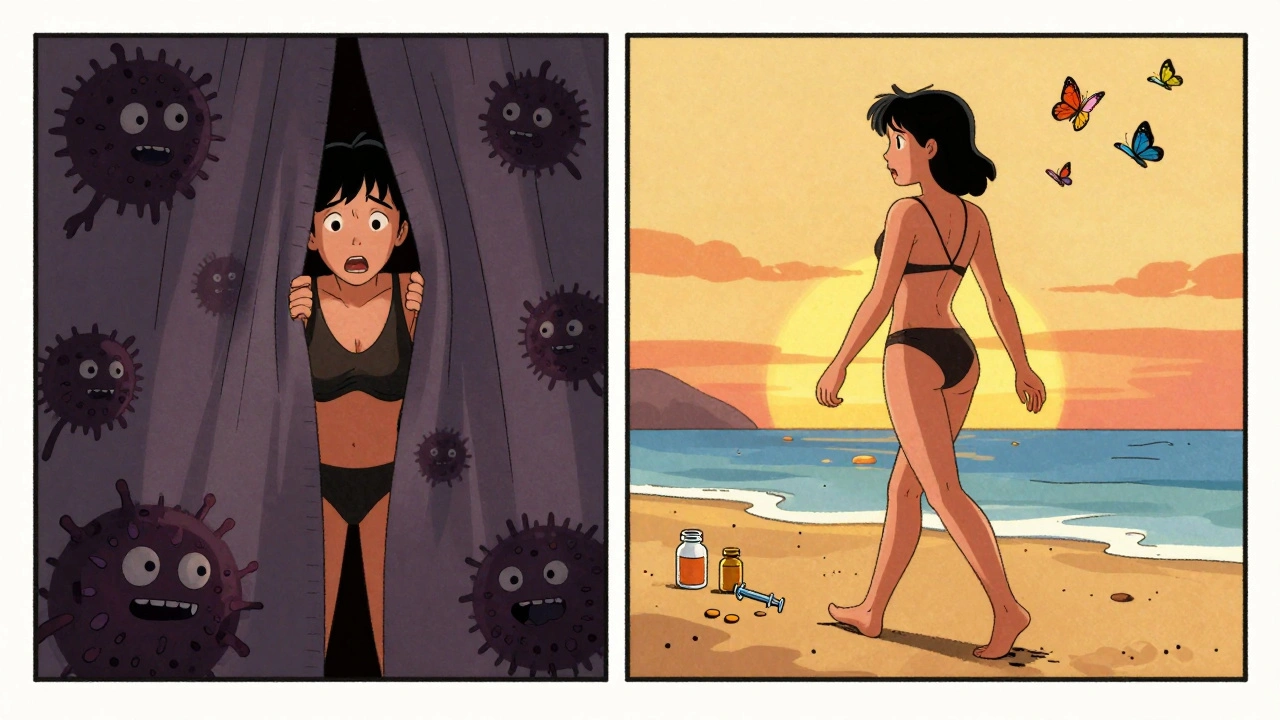
Choosing the Right Treatment for You
There’s no one-size-fits-all answer. Your best option depends on your body’s specific triggers.- If you have high IgE levels and no signs of autoimmunity, omalizumab is still your best bet.
- If you’re tired of injections and your CSU is likely autoimmune, remibrutinib (once approved) could be ideal.
- If you’ve already tried omalizumab and it didn’t work, dupilumab or cyclosporine (with caution) might be next.
- If you have severe, persistent swelling (angioedema), your doctor may prioritize drugs with stronger anti-inflammatory effects.
What’s Next for CSU Treatment?
The future of CSU care is personalization. Within the next 3-5 years, doctors will likely classify patients by endotype: IgE-driven, IgG-driven, or mixed. Treatment will match the cause, not just the symptoms. Remibrutinib and dupilumab aren’t just new drugs-they’re the first steps toward precision medicine for chronic hives. Right now, the goal isn’t just to reduce hives. It’s to get you to zero. To sleep through the night. To wear a swimsuit without fear. To stop checking your skin every morning. That’s what these new treatments are aiming for-and for many, they’re finally delivering it.When to Ask for a Referral
If you’ve been on second-generation antihistamines for 4-6 weeks at full or high dose and still have daily hives or swelling, it’s time to talk to an allergist or dermatologist who specializes in urticaria. Don’t wait until your quality of life is gone. Second-line treatments work best when started early. You don’t have to live like this.How long does it take for omalizumab to work for chronic spontaneous urticaria?
Most people start noticing fewer hives within 2-4 weeks after the first injection. Full benefit usually takes 12-16 weeks. Some patients need all three monthly doses before seeing major improvement. Don’t stop treatment early if you don’t see instant results.
Can I take remibrutinib if I’ve already tried omalizumab?
Yes. In clinical trials, patients who didn’t respond to omalizumab still had a good chance of responding to remibrutinib. This is especially true if your CSU is driven by IgG autoantibodies. Remibrutinib works differently than omalizumab, so it’s not a backup-it’s a different tool.
Is dupilumab approved for chronic spontaneous urticaria yet?
As of 2025, dupilumab is not yet officially approved for CSU in the U.S. or EU, but it’s under priority review. Many specialists are prescribing it off-label based on strong phase 3 trial data showing 30-31% complete response rates. Insurance coverage may be limited until formal approval.
What are the biggest side effects of remibrutinib?
In trials, the most common side effects were mild: headache, upper respiratory infections, and nausea. No serious safety signals emerged in over 900 patients. Unlike cyclosporine, it doesn’t affect kidney or liver function. It’s considered much safer than older immunosuppressants.
Why do some people still get hives even after treatment?
CSU is complex. Even with the best treatments, about 1 in 3 patients still have occasional flares. This doesn’t mean the treatment failed-it means the disease is still active. Many people reach a point where hives are rare, mild, and manageable. The goal isn’t always total silence-it’s peace of mind.
Should I try higher doses of antihistamines before moving to second-line?
Some doctors recommend increasing the dose to 2-4 times the standard amount before switching. But studies show this only helps about 20-30% of patients who didn’t respond to normal doses. If you’ve been on high-dose antihistamines for 6-8 weeks with no improvement, it’s time to move on. Waiting longer doesn’t improve outcomes-it just delays real relief.

Comments
Finally someone wrote this clearly. I’ve been on high-dose Zyrtec for 8 months and still woke up looking like I got into a fight with a nettle bush. Omalizumab cut my hives by 80% in 6 weeks. Not perfect, but I slept for the first time in years. Thank you.
You people are so naive. This is all Big Pharma pushing expensive biologics to replace cheap generics. Antihistamines work if you just take them right. Why are you all so quick to give up? It’s laziness disguised as science.
Okay but let’s be real - remibrutinib sounds like the MVP here. No needles, daily pill, and it actually targets the root cause? Sign me up. I’ve had 3 injections of omalizumab and still had hives during my niece’s birthday party. I’m not crying over a cake, I’m crying over my life. 😭
Wait so if I’m allergic to needles and I’ve tried everything, does that mean I’m just screwed? I hate shots. I hate pills. I hate checking my skin every morning. Can’t we just have a cream or something? Why is everything so complicated??
Broooooo… I’ve been living this nightmare since 2020!!! I thought it was stress!!! Then I thought it was gluten!!! Then I thought it was my cat!!! But no!!! It’s my own immune system turning on me like a traitor!!! And now you’re telling me there’s a pill that can silence it??? I’m not crying, I’m just… overwhelmed!!! 🌪️🙏
Ugh, another ‘miracle drug’ article. I’ve seen this exact same hype cycle with every new biologic. Remember when dupilumab was going to cure everything? Now it’s just another $20k/year pill. Real talk: if you’re not rich, you’re stuck with cyclosporine and hoping your kidneys hold out.
YOU ARE NOT ALONE. 🤗 I used to wear long sleeves in 95°F heat just to hide the welts. Now? I wore a tank top to the pool last week. And I didn’t check my skin once. That’s the real win. Remibrutinib might be the future, but YOU are the hero for making it this far. Keep going. 💪❤️
omlizumab? more like omg why am i still itchy?? i tried that for 6 months and my doc just shrugged. now im on cyclosporine and my kidneys are yelling but at least i can wear shorts again. also why is everyone talking about pills like its magic? its not. its just less needles. still toxic.
Thank you for including the IgG autoantibody note - that’s the missing piece for so many of us. My allergist just started testing for it last month. Turned out I’m IgG-driven, which explains why omalizumab did nothing. Now I’m on remibrutinib in a trial. First week: 40% fewer hives. I’m not jumping for joy yet… but I’m sleeping. And that’s everything.