Testosterone Treatment Cost Calculator
Current Treatment
Estimated Savings
Enter your current treatment details to see potential savings.
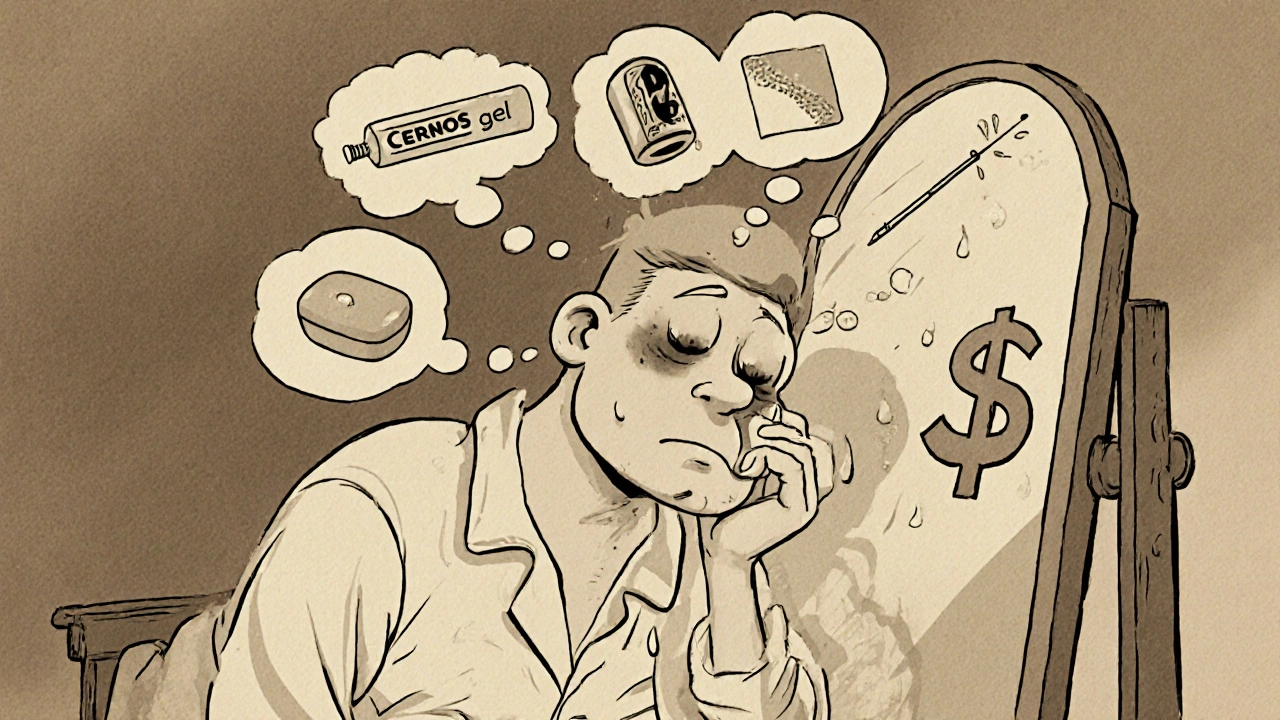
Low testosterone isn’t just about feeling tired. It’s about losing muscle, struggling to focus, dropping libido, and waking up feeling like you’ve been run over by a truck-even if you slept eight hours. If you’ve been prescribed Cernos Gel, you’re not alone. Thousands of men in Australia and beyond use it to bring testosterone levels back into range. But is it the best option? Are there cheaper, more effective, or easier alternatives? Let’s break down what’s actually out there.
What is Cernos Gel?
Cernos Gel is a topical testosterone replacement therapy. It’s a clear, odorless gel you rub onto your shoulders, upper arms, or abdomen every morning. Once absorbed, it slowly releases testosterone into your bloodstream over 24 hours. The standard dose is 1% concentration, with one pump delivering about 20 mg of testosterone. Most men start with one pump daily and adjust based on blood tests and symptoms.
It’s FDA-approved and TGA-listed in Australia. That means it’s been tested for safety and effectiveness. But it’s not cheap. A 60-gram tube costs around $120-$150 without a subsidy, and even with a PBS concession, you’re still paying $7-$10 per day. And you have to be careful: if someone else touches the area where you applied it, they could absorb testosterone too-especially women and kids. That’s a real risk.
Why Men Look for Alternatives
People switch from Cernos Gel for a few solid reasons:
- Cost: It adds up fast, especially if you’re on a fixed income.
- Inconvenience: You can’t shower, swim, or work out for hours after applying it. Some men forget or hate the sticky feeling.
- Side effects: Skin irritation, acne, or mood swings happen more often than doctors admit.
- Effectiveness: Some men just don’t feel better-even with normal blood levels.
That’s why alternatives aren’t just about saving money. They’re about finding a treatment that actually fits your life.
Testim Gel: The Closest Competitor
Testim Gel is almost identical to Cernos. Same concentration (1%), same application method, same absorption profile. The main difference? Branding and price.
Testim is slightly cheaper in Australia-about $10-$15 less per tube. It’s also been on the market longer, so more doctors are familiar with it. Some users report fewer skin reactions, but that’s anecdotal. In clinical trials, both deliver the same testosterone levels after 30 days.
Bottom line: If you’re looking for a direct swap, Testim is your best bet. It’s not better. Just cheaper.
Androgel: The OG of Testosterone Gels
Androgel was the first testosterone gel widely prescribed in the U.S. and Australia. It comes in two strengths: 1% and 1.62%. The 1.62% version lets you use less gel per day, which means fewer applications and potentially less mess.
But here’s the catch: Androgel isn’t subsidized under the PBS in Australia. That means you pay full price-up to $180 per tube. It’s also thicker than Cernos, which some men find harder to spread. On the plus side, it’s widely available through private prescriptions and has decades of real-world data backing its safety.
If you’re willing to pay more for a well-known brand with a long track record, Androgel is reliable. But for most Australians, it’s not worth the extra cost.
Testosterone Injections: Faster, Cheaper, More Control
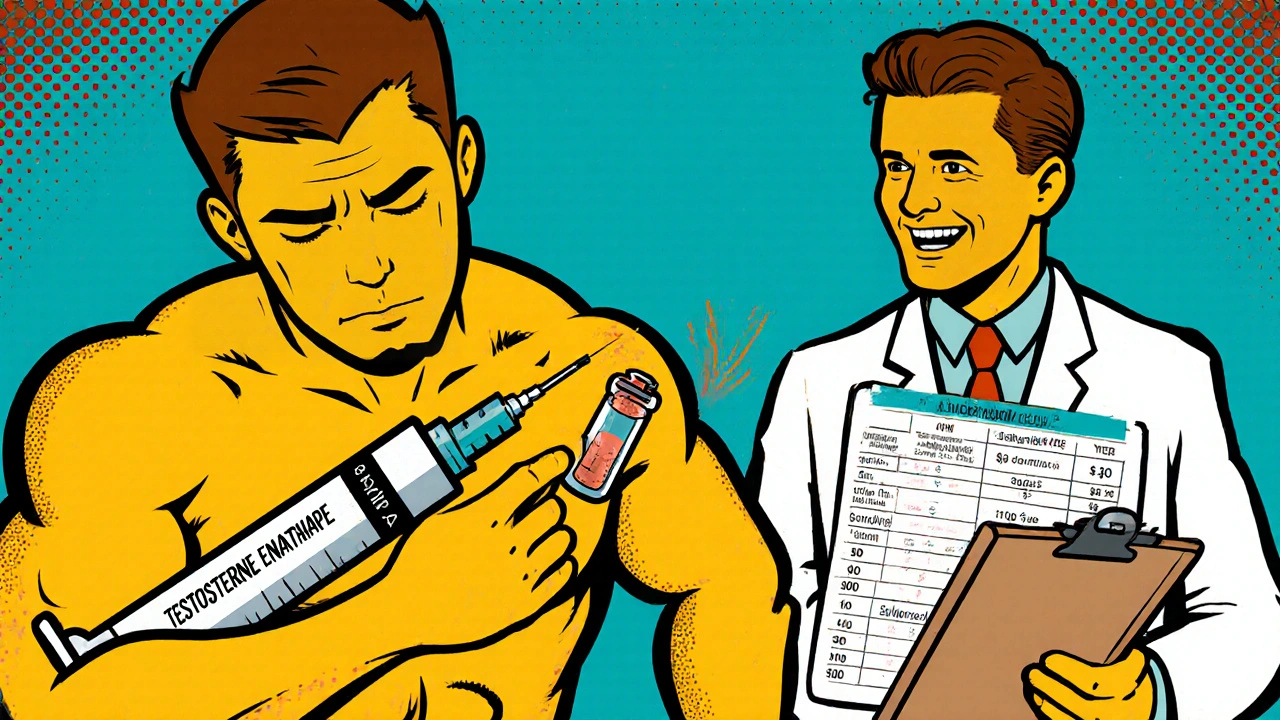
Testosterone cypionate or enanthate injections are the most common alternative to gels. You inject yourself once every 7-14 days, usually in the thigh or glute. A single vial costs $15-$25 and lasts 4-6 weeks. That’s less than $1 per day.
Studies show injections deliver more stable testosterone levels over time than gels-especially when given weekly. Gels can cause spikes and dips because absorption varies with sweat, showering, or skin type. Injections don’t have that problem.
But there’s a trade-off. You have to stick yourself. Some men hate needles. Others worry about infection or bruising. And if you’re on a weekly schedule, you need to plan ahead. No more forgetting because you’re in a rush.
Many endocrinologists now recommend injections as first-line therapy-not because they’re better, but because they’re more cost-effective and consistent. If you’re okay with a needle once a week, this might be the smartest move.
Testosterone Patches: Less Popular, But Still an Option
Testosterone patches (like Androderm) stick to your skin like a bandage and release hormone slowly over 24 hours. They’re applied nightly to the back, abdomen, arms, or thighs.
Pros: No mess. No risk of transferring gel to your partner. Consistent delivery.
Cons: Skin irritation is common-up to 30% of users report redness or itching. They can fall off during exercise or sweating. And they’re expensive, often costing more than gels.
In Australia, patches are rarely prescribed anymore. Most doctors see them as outdated. Unless you have severe skin sensitivity to gels or can’t tolerate injections, there’s little reason to choose this.
Oral Testosterone: Avoid It
There are oral testosterone pills on the market overseas, like Jatenzo or Tlando. They’re designed to bypass liver damage by using a special coating. But they’re not approved in Australia. Even if you could get them, they’re not safer.
Oral testosterone increases liver enzymes, raises bad cholesterol, and can damage your liver over time. The FDA has issued black box warnings for these pills. No reputable Australian doctor will prescribe them.
Stay away. The risks far outweigh any convenience.
Clomiphene Citrate: The Non-Testosterone Option
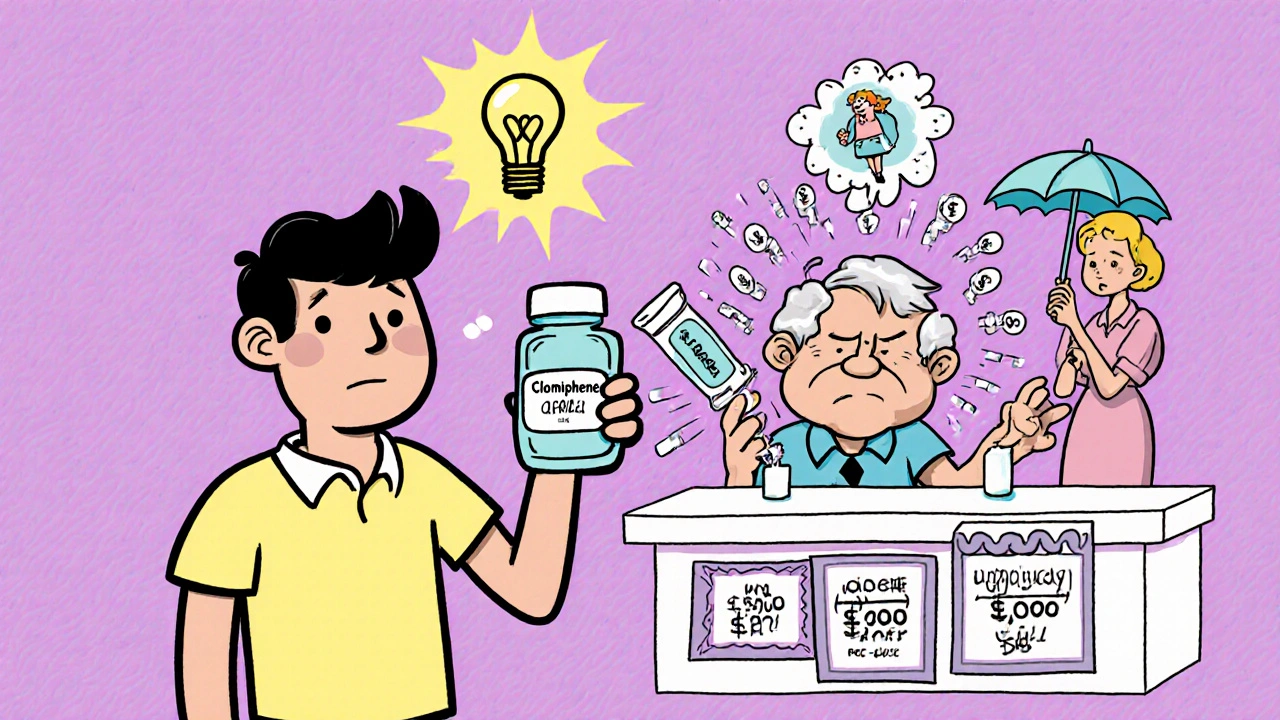
Clomiphene (Clomid) isn’t testosterone. It’s a fertility drug that tricks your brain into making more of your own testosterone. You take it as a pill-usually 25 mg every other day.
It’s not a replacement. It’s a stimulant. Your body still produces testosterone, just more of it. That means no dependency. No suppression of natural production. And if you stop, your levels usually bounce back.
It’s cheaper than Cernos-about $20-$30 per month. And it’s often used for younger men who want to preserve fertility or avoid long-term TRT.
Downsides? It doesn’t work for everyone. Some men feel anxious, moody, or get headaches. It’s not as reliable for severe low T. But if you’re in your 30s or 40s and your levels are just slightly low, this could be a game-changer.
Comparison Table: Cernos Gel vs Alternatives
| Method | Cost per Day (AUD) | Frequency | Pros | Cons |
|---|---|---|---|---|
| Cernos Gel | $7-$10 | Daily | Easy to use, non-invasive, steady release | Transfer risk, skin irritation, expensive |
| Testim Gel | $6-$9 | Daily | Similar to Cernos, slightly cheaper | Same transfer and skin risks |
| Testosterone Injections | $1-$2 | Every 7-14 days | Lowest cost, stable levels, no transfer risk | Needles, requires planning, possible mood swings |
| Androgel | $10-$12 | Daily | Proven track record, available in higher strength | Not PBS-subsidized, thicker texture |
| Clomiphene Citrate | $0.70-$1.00 | Every other day | Preserves natural production, cheap, oral | Not for severe low T, side effects possible |
| Testosterone Patches | $8-$11 | Daily | No mess, no transfer | High skin irritation rate, falls off easily |
Who Should Stick With Cernos Gel?
You should keep using Cernos if:
- You hate needles and won’t stick with injections.
- Your skin doesn’t react to it.
- You’re okay with the daily routine and cost.
- You’re on a PBS subsidy and can’t switch to a cheaper option.
If all those boxes are checked, there’s no reason to change. But if even one isn’t, you’re leaving money, comfort, or effectiveness on the table.
Who Should Try Something Else?
Switch if:
- You’re paying over $200/month out-of-pocket. Injections cut that by 80%.
- You’re under 45 and want to keep fertility intact. Try Clomiphene first.
- You’ve had skin reactions. Try injections or Clomiphene.
- You’re traveling often. Injections are easier to pack than gels.
There’s no one-size-fits-all. Your ideal treatment depends on your body, your budget, and your lifestyle.
What Doctors Don’t Always Tell You
Many GPs prescribe Cernos because it’s easy. They don’t have time to compare options. But endocrinologists know the data: injections are more effective and cheaper long-term. Clomiphene works wonders for younger men with mild low T.
Don’t be afraid to ask: “Is there a cheaper or more reliable option?” or “Could I try injections instead?” Most doctors will respect that. You’re not being difficult-you’re being informed.
Final Thought: It’s Not About the Brand. It’s About the Fit.
Cernos Gel isn’t bad. But it’s not the only option. And for many men, it’s not the best. Testosterone therapy isn’t a one-time decision. It’s a long-term plan. The right choice today might not be the right one in a year.
Track your symptoms. Get blood tests every 3-6 months. Talk to your doctor about what’s working-and what’s not. Your energy, mood, and libido matter more than the name on the tube.
Is Cernos Gel better than injections for low testosterone?
No, not necessarily. Injections deliver more stable testosterone levels over time and cost far less. Cernos Gel is easier for people who hate needles, but injections are more reliable and cost-effective for long-term use. Studies show weekly injections result in fewer fluctuations than daily gels.
Can I switch from Cernos Gel to testosterone injections?
Yes, and many men do. Your doctor will likely start you on a dose equivalent to your current gel-usually 100-150 mg of testosterone enanthate or cypionate every 7-10 days. Blood tests after 4-6 weeks will show if you need an adjustment. There’s no dangerous gap in treatment if you time it right.
Is Clomiphene safe for long-term use?
Yes, for most men under 50 with mild low testosterone. Clomiphene has been used for decades to treat infertility and low T. Side effects like mood swings or headaches are rare and usually mild. Long-term studies show it doesn’t damage the liver or cause cancer. But it’s not for everyone-especially men with severe deficiency or prostate issues.
Why is Cernos Gel so expensive in Australia?
Cernos Gel is a branded product, and brand-name medications cost more than generics-even if they’re identical. Testim Gel is chemically the same but cheaper because it’s marketed as a generic alternative. The PBS subsidizes both, but the patient co-payment for Cernos is still higher than for injections, which are often dispensed as bulk testosterone.
Do testosterone gels cause weight gain?
No, they don’t cause weight gain directly. In fact, testosterone therapy usually helps reduce body fat and increase muscle mass. If you’re gaining weight on Cernos Gel, it’s likely due to lifestyle factors-not the medication. Some men feel more energetic after starting treatment and eat more without realizing it. Track your diet and activity, not just the gel.
Can women use testosterone gel?
Women should never use testosterone gels like Cernos unless prescribed by a specialist for very specific conditions, like post-menopausal low libido. Even then, it’s used in microdoses. Accidental exposure from a man’s gel can cause acne, voice deepening, or hair growth in women. Always wash your hands after application and cover the area until dry.
Next Steps
Take action:
- Check your current cost per day. Multiply your monthly out-of-pocket expense by 30.
- Ask your doctor: “Can I switch to injections or Clomiphene?”
- Get a blood test if it’s been over 6 months. Your numbers might have changed.
- If you’re under 45 and want to have kids, ask about Clomiphene before starting long-term TRT.
Low testosterone is treatable. But the best treatment isn’t the most advertised one. It’s the one that fits your life-and your budget.



Comments
Of course Cernos is expensive-Big Pharma owns the T market, and they’re selling you a $150 tube of glorified hand lotion while your body’s screaming for real hormone balance. Meanwhile, your doctor gets a kickback every time they prescribe it. They don’t want you switching to injections because injections don’t come with a fancy brand name and a glossy pamphlet. Wake up. This isn’t medicine-it’s a subscription scam.
I’ve been on TRT for 7 years-first gels, then injections. I get why people cling to Cernos. It’s easy. No needles. No anxiety. But honestly? Once I switched to weekly enanthate, my mood stabilized, my energy didn’t spike and crash, and I saved over $200 a month. The fear of needles is real, but it fades after the first time. I started with a tiny 1mL syringe and a friend holding my hand. Now I do it while watching Netflix. You’re not weak for being scared-you’re just untrained. Give it a shot. Literally.
Let me tell you something real: testosterone therapy isn’t about finding the ‘best’ product-it’s about finding the one that lets you live without thinking about it every day. Gels? You’re washing your hands, avoiding hugs, waiting hours to shower. Injections? You do it once a week, forget about it, and get back to your life. I used to be the guy who swore he’d never stick himself. Then I hit 40, lost my drive, and my wife started asking if I was depressed. I tried injections. My libido came back. My focus returned. My wife smiled again. That’s the real win. Don’t let fear of a needle rob you of your vitality.
They want you to think Cernos is science-but it’s colonial capitalism dressed in lab coats. Why do you think this gel costs more than gold? Because they know you’re desperate. They know you’ll pay $10 a day to feel like a man again. Meanwhile, in India, we’ve been using Ayurvedic herbs like Ashwagandha and Shilajit for centuries to naturally boost testosterone-no needles, no gels, no corporate greed. They ban these in the West because they can’t patent them. Your body was made to heal itself-not to be monetized by pharmaceutical giants who profit from your weakness.
It is, in fact, a matter of empirical record that testosterone replacement therapy via transdermal gel exhibits significantly greater inter-individual variability in absorption kinetics compared to intramuscular injection. Furthermore, the cost differential, when adjusted for daily dosage equivalence and pharmaceutical subsidy structures, demonstrates a statistically significant economic advantage for injectable formulations. The persistence of gel-based regimens, despite this evidence, suggests a systemic failure in clinical education and patient counseling. One must conclude that the prevailing standard of care is suboptimal.
For anyone considering Clomiphene: it’s not magic, but it’s not a scam either. I was 38, had borderline low T, and wanted kids. My doctor said injections would shut down my natural production-so we tried Clomid. 25mg every other day. Within 6 weeks, my levels were in the mid-normal range. No needles. No skin irritation. And I got my wife pregnant. It’s not for everyone-if your T is below 200, it won’t cut it. But if you’re in the 250-350 range and still feel like crap? Give it a real shot. Don’t just assume TRT is your only option. Ask for the alternatives. You deserve to know them all.
And yet... nobody talks about how the gel makes you smell like a cheap cologne factory exploded. I used Cernos for 3 months. My girlfriend started avoiding me. My dog stopped licking my arm. My mom asked if I was ‘going through a phase.’ I felt like a walking chemical spill. Then I switched to injections. No smell. No sticky. No weird looks. Just me, back to normal. And yeah-I cried the first time I injected myself. But I didn’t cry after that. I just felt like a man again.
The FDA has issued black box warnings for oral testosterone agents due to hepatotoxicity, yet the pharmaceutical industry continues to market them in unregulated markets under misleading branding. It is alarming that consumers are encouraged to bypass evidence-based protocols in favor of convenience. The normalization of transdermal gels, despite their documented transfer risks and inconsistent absorption, reflects a dangerous commodification of medical care. One must question whether patient outcomes are being prioritized-or merely profit margins.
Look-I get it. You’re tired. You’re frustrated. You want to feel like yourself again. But here’s the thing: the ‘best’ treatment isn’t the cheapest or the easiest. It’s the one you’ll stick with. I tried injections, hated them, went back to gel. Then I tried patches. Got a rash. Then I tried Clomid. Felt weird. Took me two years to figure it out. Don’t rush. Don’t shame yourself for trying something and switching. Your body’s not a lab experiment. It’s your life. Take your time. Test. Adjust. Talk to your doctor. And if you’re feeling lost? You’re not alone. We’ve all been there.
There is a profound irony in how we treat testosterone: we pathologize low levels, then offer solutions that require constant vigilance, fear of contamination, and financial sacrifice. Yet we rarely ask: why are so many men deficient in the first place? Is it diet? Stress? Environmental toxins? Sleep deprivation? Or is it simply that modern life has severed us from the rhythms our biology evolved to thrive within? Perhaps the real question isn’t which gel to use-but whether we’ve forgotten how to live in a way that naturally supports our hormonal health.
Just wanted to say-I was skeptical about injections too. Thought I’d be one of those guys who flinches every time. But I did it. My buddy showed me how. Took 3 seconds. I cried after. Not from pain-from relief. I hadn’t felt this clear-headed in years. My wife hugged me for the first time in months. That’s the real win. You’re not just replacing a hormone. You’re reclaiming your life. And yeah, it’s scary. But you’re stronger than you think.
For anyone on the fence: don’t let cost scare you off. Talk to your pharmacist. Ask about bulk testosterone. Some compounding pharmacies can make injectable T for $10 a vial. That’s less than 50 cents a day. And if you’re worried about needles? YouTube has a hundred videos showing you how to do it safely. I did it for the first time with my phone propped up on the sink, watching a guy named Dave from Ohio explain it in his garage. I was terrified. Now I do it blindfolded. You’ve got this. And if you need someone to cheer you on-I’m here. We’re all in this together.
Anyone who says injections are better is just a shill for Big Pharma’s needle agenda-gels are the real solution, the government is hiding the truth about how injections cause depression and rage, and Clomid is a communist plot to destroy male identity. I’ve been on Cernos for 10 years and I’ve never felt better. The only reason people switch is because they’re weak and can’t handle responsibility. Don’t listen to the haters. Stick with what works. Your body knows. And if you’re still doubting? You’re probably just lazy.