Supplement Timing Calculator
How This Works
Enter your daily supplements and medications. We'll calculate optimal spacing to maximize absorption and prevent interference. Minimum 4 hours between iron and calcium is recommended.
Take your iron pill with breakfast. Take your calcium pill with dinner. Sounds simple - until you realize your antibiotic, thyroid med, or heartburn drug is in the mix. Suddenly, what you thought was helping your health might be quietly sabotaging it.
Why Calcium and Iron Fight Each Other
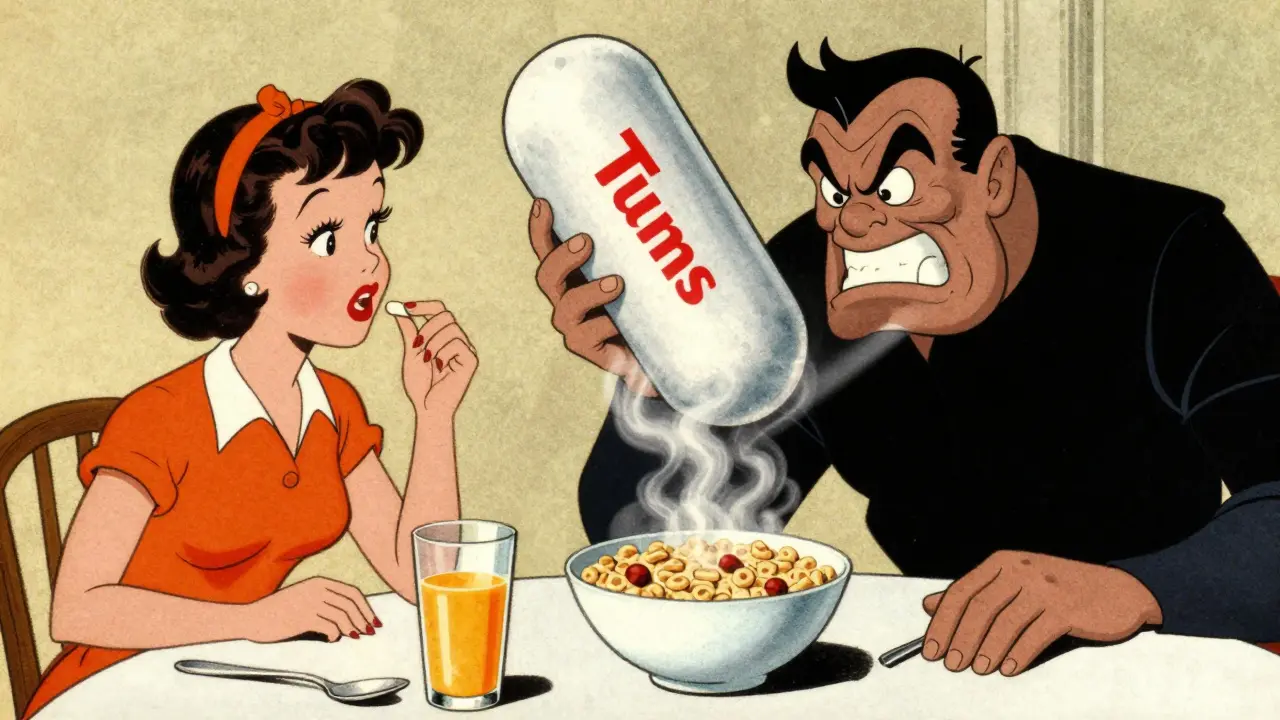
Calcium and iron don’t just coexist poorly - they actively block each other. Both are positively charged minerals (cations), and your gut uses the same tiny transporters to absorb them. When they’re in the same place at the same time, they compete. The winner? Usually calcium. Studies show that just 600 mg of calcium - about what’s in two Tums tablets - can cut iron absorption by nearly half. Even more startling: when calcium is taken with food, iron absorption drops by up to 62%.This isn’t just theory. A 1991 study from Kansas University Medical Center followed 61 healthy adults and found that women taking calcium supplements with meals struggled to meet their daily iron needs of 18 mg. That’s a big deal, because iron deficiency is already common in women of childbearing age. Add calcium on top, and you’re making it harder for your body to do what it’s designed to do.
It’s not just supplements. Calcium-rich foods like dairy, fortified plant milks, and leafy greens can do the same thing. A breakfast with fortified cereal, milk, and an iron pill? You might as well throw the iron pill away. The iron just passes through.
Calcium and Iron Also Block Your Medications
The problem doesn’t stop at iron and calcium fighting each other. Both can interfere with how well your body absorbs critical medications.Antibiotics like ciprofloxacin (Cipro) and doxycycline (a tetracycline) are especially vulnerable. These drugs need to be absorbed quickly in the upper intestine. But calcium, iron, and even aluminum in antacids bind to them like glue. The result? The antibiotic doesn’t get into your bloodstream. That means your infection doesn’t get treated - and could get worse.
It’s not just antibiotics. Iron can also reduce the effectiveness of:
- Levothyroxine (for hypothyroidism)
- Bisphosphonates like alendronate (for osteoporosis)
- Some seizure medications
And here’s the twist: medications meant to help you - like heartburn drugs - can make iron absorption worse. Proton pump inhibitors (omeprazole, pantoprazole) and H2 blockers (famotidine) reduce stomach acid. Iron needs acid to dissolve and become absorbable. Less acid? Less iron gets in. It’s a double hit: you’re taking a supplement, but your medication is preventing it from working.
Timing Is Everything
You can’t just skip supplements. You need to schedule them like appointments.Here’s what works based on clinical guidelines:
- Iron supplements: Take on an empty stomach - at least one hour before or two hours after food. That’s ideal for absorption. But if it gives you nausea or cramps (which happens to 30-50% of people), take it with a small amount of food - just not dairy, coffee, or calcium-rich foods.
- Calcium supplements: Take with food. Calcium is better absorbed when stomach acid is present. But keep it far away from iron.
- Antibiotics (tetracyclines or fluoroquinolones): Take at least 2 hours before or 4 hours after iron or calcium. If you take your antibiotic in the morning, don’t take your calcium until dinner - or later.
- Levothyroxine: Take first thing in the morning, on an empty stomach. Wait at least 4 hours before taking any calcium, iron, or magnesium.
- Heartburn meds: If you’re on a PPI or H2 blocker long-term, talk to your doctor about your iron levels. You might need a higher dose of iron or a different form.
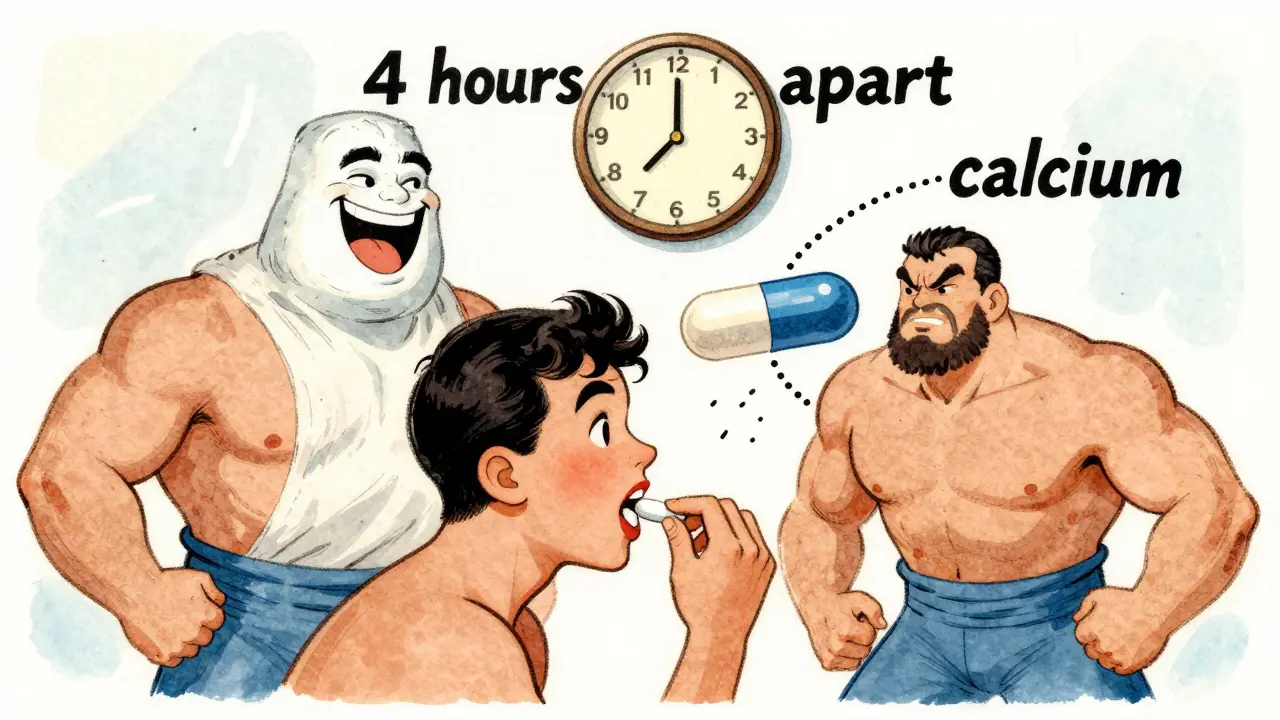
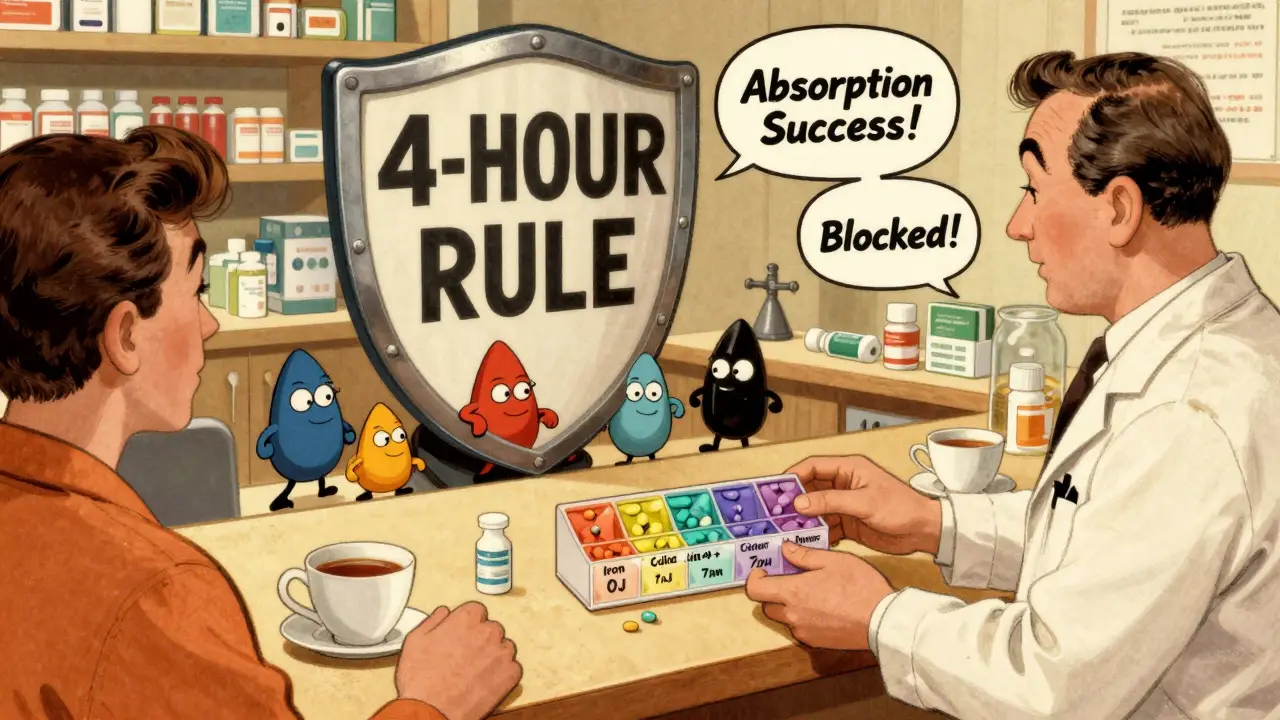
The best strategy? Space them out by at least 4 hours. Iron in the morning, calcium in the evening. That gives your body a clean window for each.
Make Iron Work Harder - Add Vitamin C
There’s a simple trick that boosts iron absorption by up to 300%: vitamin C. Take your iron pill with a glass of orange juice, a kiwi, or a vitamin C tablet. Vitamin C turns iron into a more soluble form your body can grab easily.This is especially helpful if you’re vegetarian or vegan, since plant-based iron (non-heme iron) is harder to absorb than the kind in meat. Even if you’re taking iron with food, vitamin C can help cut through the interference.
Don’t use tea or coffee with your iron. Tannins in both block absorption. Same with milk. Stick to water or orange juice.
Who’s at Highest Risk?
Some people are more likely to run into these problems:- Women of childbearing age: Higher iron needs + common calcium supplement use = perfect storm for deficiency.
- Older adults: More medications, more acid-reducing drugs, and often take multiple supplements daily.
- People with thyroid disease: Levothyroxine interactions are common and often missed.
- People with digestive issues: Low stomach acid, Crohn’s, or celiac disease already limit mineral absorption - adding supplements without timing can make it worse.
And here’s a hidden danger: black stools. Yes, they’re normal with iron pills. But if they’re tarry, streaked with red, or you feel dizzy or weak - that’s not normal. It could mean bleeding. Call your doctor.
What About Liquid Iron?
Liquid iron supplements are easier for kids or people who can’t swallow pills. But they stain teeth. To prevent it:- Use a straw.
- Rinse your mouth with water after taking it.
- Brush your teeth with baking soda or diluted hydrogen peroxide once a week to remove stains.
And never leave liquid iron where kids can reach it. Iron overdose is the #1 cause of fatal poisoning in children under 6 in the U.S. One pill can be deadly.
What to Do Today
If you take iron, calcium, or any of these medications, here’s your action list:- Check your supplement labels. Do they contain calcium, iron, magnesium, or aluminum?
- Check your prescriptions. Are you on antibiotics, thyroid meds, or acid reducers?
- Write down when you take each one. Use a simple chart.
- Space iron and calcium at least 4 hours apart.
- Take iron with vitamin C, on an empty stomach if possible.
- Ask your pharmacist or doctor: “Are any of my meds or supplements interfering with each other?”
You don’t need to stop taking your supplements. You just need to take them right.
What Happens If You Ignore This?
Ignoring timing doesn’t cause instant harm. But over weeks and months, it adds up:- Iron deficiency can lead to fatigue, brain fog, shortness of breath, and eventually anemia.
- Antibiotics that don’t absorb properly can lead to treatment failure - and antibiotic resistance.
- Thyroid meds that don’t work mean your metabolism stays slow, your energy stays low, and your cholesterol stays high.
These aren’t minor issues. They’re silent, slow-moving problems that get worse the longer you wait.
Can I take calcium and iron together if I space them 2 hours apart?
No. Even 2 hours isn’t enough. Studies show calcium can still interfere with iron absorption for several hours after ingestion. To be safe, wait at least 4 hours between iron and calcium. Take iron in the morning on an empty stomach, and calcium in the evening with dinner.
Is it okay to take iron with vitamin C and calcium at the same time?
No. Vitamin C helps iron absorb - but calcium blocks it. Even if vitamin C is present, calcium will still compete for the same transporters. Take vitamin C with your iron, and wait at least 4 hours before taking calcium.
Why do some doctors say to take iron with food?
Because iron on an empty stomach often causes nausea, cramps, or diarrhea - which affects 30-50% of users. If you can’t tolerate it, take it with a small amount of food - but avoid dairy, coffee, tea, or calcium-rich foods. Pair it with vitamin C anyway.
Do all forms of calcium block iron the same way?
Most do. Calcium carbonate (found in Tums) is the strongest blocker because it also raises stomach pH, making iron less soluble. Calcium citrate is slightly less interfering, but still reduces absorption by 18-27%. Don’t assume one form is safe - space them all away from iron.
Can I get enough iron from food if I avoid supplements?
It’s possible, but hard if you’re a woman, vegetarian, or have heavy periods. Heme iron from meat (beef, liver) absorbs well. Non-heme iron from beans, spinach, and fortified cereals absorbs poorly - especially with calcium or tea around. If your doctor says you’re low, food alone usually isn’t enough. You’ll still need a supplement - just take it right.
What if I forget and take iron with my calcium pill?
Don’t panic. One mistake won’t cause harm. But don’t make it a habit. Skip your next dose of one of them, and reset your schedule. For example, if you took them together at breakfast, wait until dinner to take calcium, and take iron tomorrow morning on an empty stomach.



Comments
OMG I JUST REALIZED I’VE BEEN TAKING MY CALCIUM WITH MY IRON FOR YEARS 😭 I’M SO SORRY MY BLOOD CELLS 😭
Just switched to morning iron + OJ and evening calcium with dinner 🍊✨ and my energy is already better. Also, I started using a straw for liquid iron-no more stained teeth! 🦷💖
Thanks for this. I’ve been on levothyroxine for 8 years and never knew calcium could mess with it. My doctor never mentioned it. I’ll be spacing things out now. No more 7 a.m. yogurt with my pill.
yo i take iron cause i’m vegan and i always drink tea with it… i think that’s why i’m always tired lmao. gonna try orange juice now. also i spelled ‘iron’ wrong in my notes like 3 times today 🤦♂️
This is such an important post. I’ve seen so many patients with low ferritin who are taking calcium supplements with their meals-no wonder they’re still anemic. The interaction with PPIs is especially under-discussed. Most doctors don’t think about nutrient-drug interactions unless it’s life-threatening. But fatigue, brain fog, and poor absorption? That’s a quiet crisis.
I wish more people knew that vitamin C isn’t just ‘good for immunity’-it’s a literal absorption booster. A simple orange or 200mg tab can make the difference between a supplement working and just passing through.
Also, the point about black stools being normal but tarry stools being dangerous? Huge. People panic or ignore it. Please, if you’re on iron and see tar-like poop, get it checked. Don’t wait.
And liquid iron? Yes, use a straw. And keep it locked up. I’ve seen toddlers die from one accidental dose. It’s terrifying how accessible it is.
Thank you for making this so clear. This should be in every pharmacy pamphlet.
Iron and calcium fight like siblings in the backseat of a car. One gets in the way, the other gets mad, nobody wins. Just give them space. 4 hours. Easy. Also vitamin C is like the peace treaty between them. Orange juice = hero.
Also stop taking iron with coffee. It’s not a latte. It’s a mineral murderer.
As someone who takes 7 supplements a day, this saved me. I was taking calcium at breakfast with my fortified oat milk and iron at lunch. No wonder I felt awful. Now I do iron at 7am with OJ, calcium at 8pm with dinner. Life changed. Also, if you’re tired all the time and on meds? Check this first. It’s not laziness. It’s chemistry.
This is a scientifically accurate and clinically relevant guide. I appreciate the emphasis on spacing and the distinction between calcium carbonate and citrate. Many patients assume all forms are equivalent. They are not. Additionally, the warning regarding pediatric iron toxicity is critical. Public health messaging around supplement safety remains inadequate.
I recommend this be shared with primary care clinics and pharmacist counseling protocols.
Wow. A post that doesn’t say ‘just take a vitamin!’ and actually explains the biochemistry. Shocking. I almost cried. Also, I’ve been taking my iron with my coffee since 2018. Guess I’m just a walking deficiency now. Congrats, me.
How is this even a question? 😒 You’re literally poisoning yourself if you mix them. I’ve been doing this right since 2015. You’re welcome. Also, if you’re taking calcium with dairy, you’re already failing. Use magnesium instead. It’s better. And stop using Tums like candy. You’re not a toddler.
Also, vitamin C? Obviously. Do you even science? 🙄
It is imperative to underscore, with unequivocal clarity, that the pharmacokinetic antagonism between divalent cations-specifically ferrous iron and calcium-exerts a statistically significant inhibitory effect on intestinal epithelial transport via the DMT-1 and CaT1 transporter pathways. Concurrent administration, even within a two-hour window, results in subtherapeutic serum concentrations of both agents, thereby compromising therapeutic efficacy and increasing the risk of iatrogenic deficiency states.
Therefore, a temporally segregated administration protocol, with a minimum interdose interval of four (4) hours, is not merely advisable-it is clinically mandatory. Furthermore, co-administration with ascorbic acid enhances non-heme iron solubility via reduction to the ferrous state, thereby facilitating optimal absorption.
Practitioners must routinely audit patient supplement regimens and consider pharmacogenomic variability in transporter expression. Failure to do so constitutes a breach in standard-of-care.