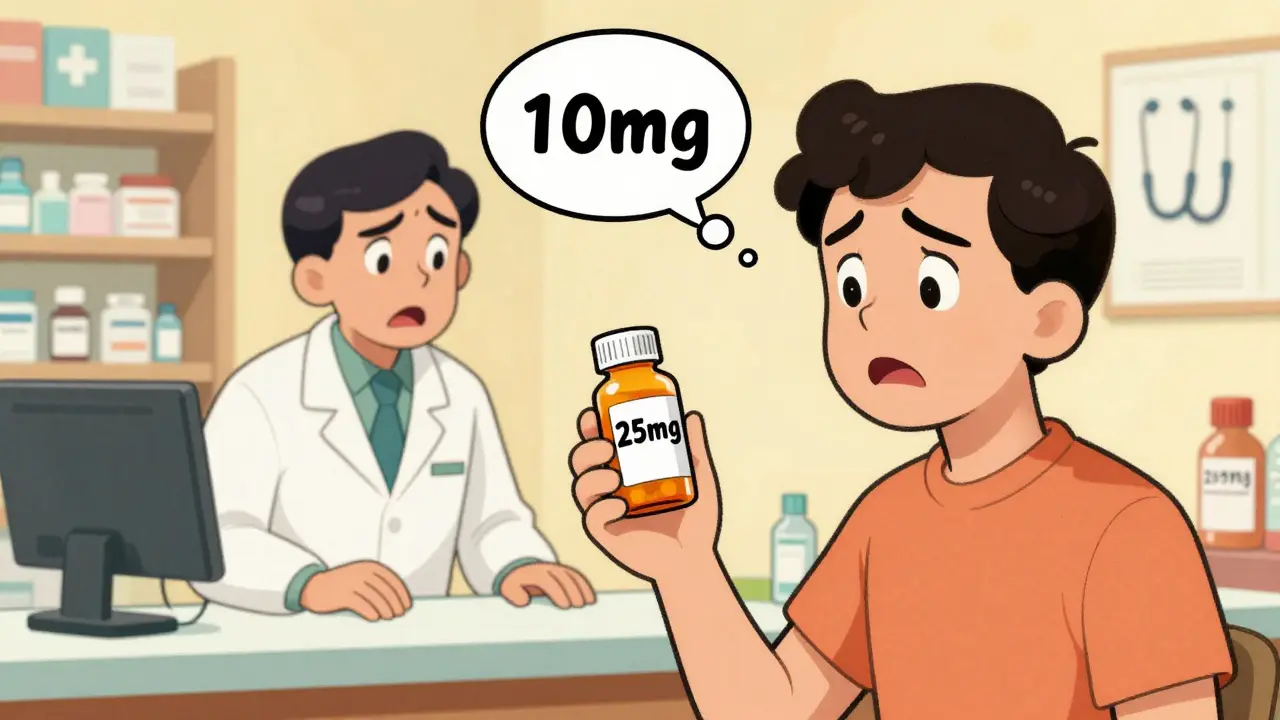
Getting the wrong medication, the wrong dose, or even the wrong drug entirely isn’t just a mistake-it’s a safety crisis. About 1.3 million people in the U.S. are injured every year because of medication errors, according to the Institute of Medicine. And while many of these happen in hospitals or pharmacies, a huge number start with something simple: a prescription error, a misread label, or a nurse giving the wrong pill. If you notice something off-whether it’s a pill that looks different, a side effect you’ve never had, or a dose that doesn’t match what your doctor said-you need to speak up. Not just for yourself, but to stop it from happening to someone else.
Recognize the Error First
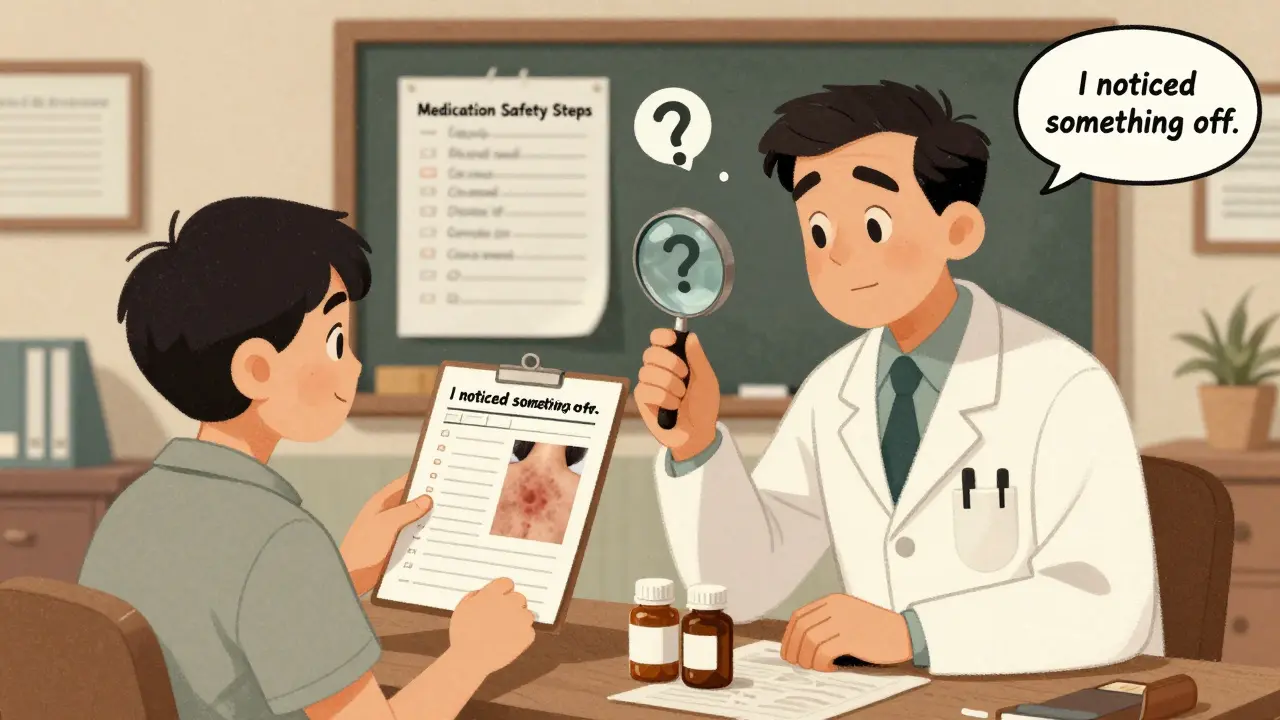
The first step is knowing when something’s wrong. Medication errors aren’t always obvious. Sometimes it’s a clear mistake: you were prescribed 10 mg, but the bottle says 25 mg. Other times, it’s subtle: you start feeling dizzy after taking your blood pressure pill, but your doctor says it’s just stress. Don’t brush it off. Keep a symptom log. Write down when you took the medication, what you felt, and how long it lasted. If you see a rash, swelling, or unusual bruising, take a photo. These details matter.Check your medication labels every time you pick up a prescription. Compare the name, dose, and instructions to what your doctor told you. If the pill looks different from last time-color, shape, markings-ask the pharmacist. Many errors happen because patients assume the pharmacy got it right. They didn’t always. In fact, 42% of medication errors reported to the FDA come from patients who noticed something off before taking the pill.
Gather the Evidence
You can’t report a mistake without proof. Start with what you have: the original prescription slip, the medication bottle, and any packaging. Keep the bottle-even if it’s empty. The label has the lot number, expiration date, and pharmacy info, all critical for tracing the error. If you’re on multiple meds, take photos of all your pill bottles side by side. Write down the name of the prescribing doctor, the pharmacy, and the date you got the prescription.If you experienced symptoms, document them. Did you have nausea? Headache? Chest tightness? Note the time they started and how long they lasted. If you went to an ER or called your provider, keep a copy of any notes or discharge papers. These aren’t just for your records-they’re the backbone of any serious report. A 2023 study found that patients who submitted photos of incorrect labels or symptom logs were 3 times more likely to get a response from their provider or the FDA.
Start With Your Provider
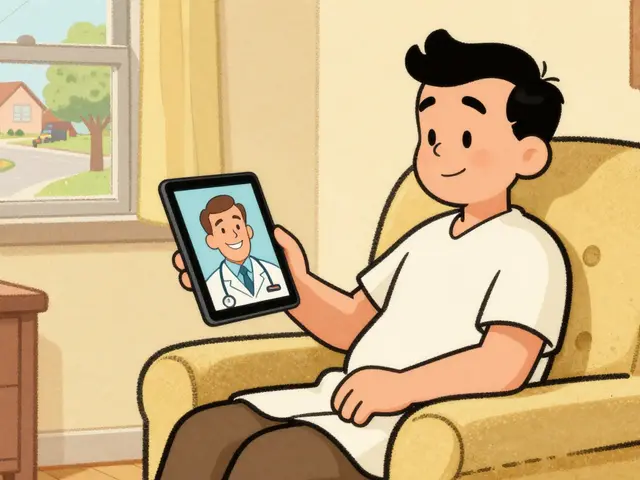
Your first call should be to your doctor’s office or clinic. Don’t wait. Call during business hours and ask to speak to the nurse or provider who prescribed the medication. Say clearly: “I believe there was a medication error. Here’s what happened.” Don’t soften it with “I might be wrong” or “I’m not sure.” You’re not guessing-you’re reporting a potential safety issue.Bring your evidence: the bottle, the prescription, your symptom log. If you’re seeing them in person, take a printed copy of your notes. Most providers will respond quickly if you’re calm and specific. If they dismiss you, don’t back down. Say: “I’m not here to blame anyone. I want to make sure this doesn’t happen to another patient.” Providers who follow a “just culture” approach-where mistakes are treated as system failures, not personal failures-are more likely to listen. A 2021 study showed that when patients used this language, response rates jumped from 38% to 87%.
Know Your Reporting Options
If your provider doesn’t act-or worse, tries to silence you-there are other paths. You have three main options:- Internal hospital or clinic reporting: Most clinics have a safety reporting system. Ask for the patient safety officer or quality improvement team. These reports go directly to the organization and can trigger immediate fixes, like changing how prescriptions are printed or how nurses verify doses.
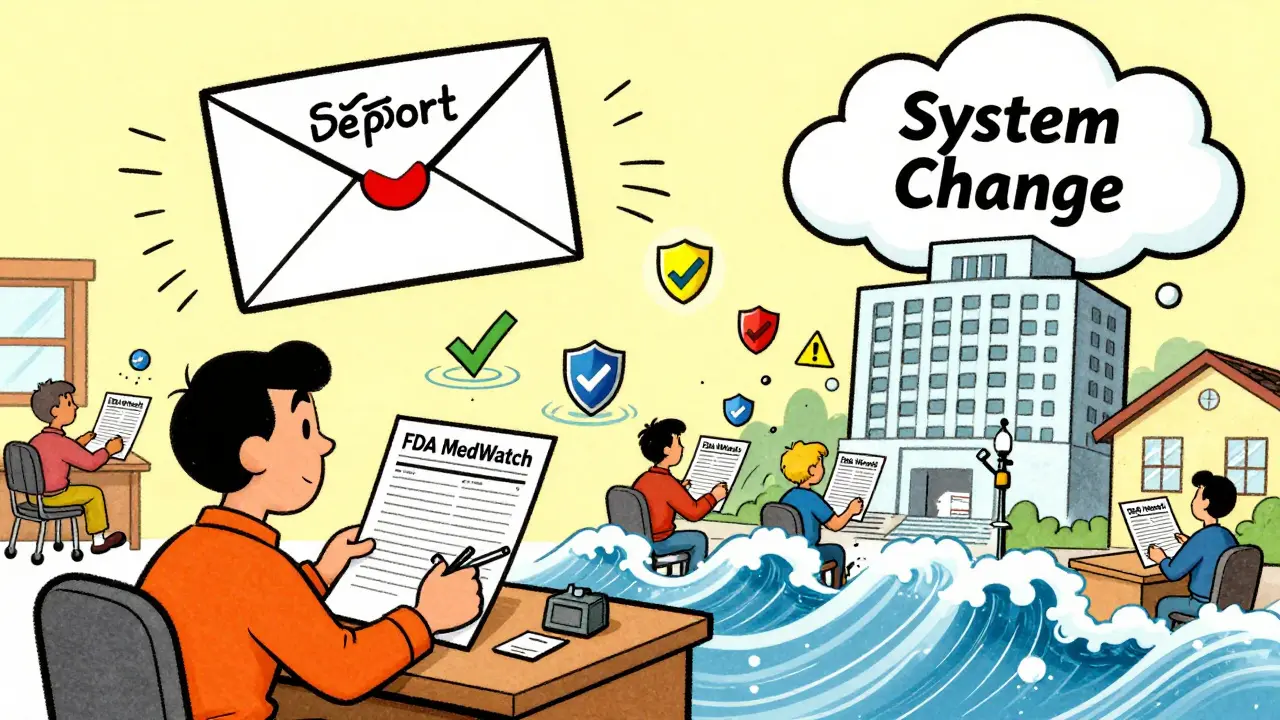
- FDA MedWatch: This is the federal system for reporting adverse events and medication errors. Anyone can file a report-patients, family members, caregivers. The FDA gets about 140,000 reports a year, and if enough people report the same error, they can issue a recall. The new online form takes less than 10 minutes to complete.
- ISMP (Institute for Safe Medication Practices): This nonprofit accepts confidential reports from patients and providers. They don’t punish individuals-they analyze patterns and publish safety alerts. In 2022, they issued 89 alerts based on patient reports that led to changes in labeling, packaging, or prescribing practices.
Don’t feel like you have to pick just one. Report to your provider first, then file with the FDA if you feel it’s not being taken seriously. Many patients who reported to both saw faster action and better follow-up.
What to Include in Your Report
Whether you’re talking to your doctor or filling out a form, your report needs these key details:- Type of error: Wrong drug? Wrong dose? Wrong patient? Wrong route (e.g., pill given as injection)?
- Medication details: Full name, dosage, form (tablet, liquid, injection), frequency.
- Patient info: Age, weight, allergies (no need for full medical history, but relevant conditions matter).
- When and where: Date you received the medication, pharmacy or clinic name.
- What happened: Symptoms, reactions, how long they lasted.
- Who was involved: Prescriber name, pharmacist name if known.
Don’t leave out the small stuff. One patient reported that her insulin pen looked different. She didn’t think it mattered-until she found out the label had been switched, and she’d been injecting a different type of insulin. That small detail saved her life.
What Happens After You Report
After you report, things can feel quiet. That’s normal. The FDA doesn’t respond to every report with a call. But here’s what usually happens:- Your provider may review your case internally and update their records.
- If it’s a serious error, they might contact the pharmacy or manufacturer.
- The FDA may review your report along with others. If multiple reports point to the same drug or batch, they can issue a warning or recall.
- ISMP may publish a safety alert that goes out to thousands of providers nationwide.
Don’t expect a phone call. But do expect a written acknowledgment-especially if you report through your provider. If you don’t get one within 10 days, follow up. A 2023 survey found that patients who followed up within 7 days were 5 times more likely to get a response.
Common Roadblocks and How to Overcome Them
You might run into resistance. Here’s what you’re likely to hear-and how to respond:- “It’s probably not a big deal.” Say: “I understand it might not be, but if it happened once, it can happen again. I want to make sure it’s checked.”
- “We don’t have time right now.” Say: “I’m not asking for an emergency meeting. I just need this documented. Can you send me the form to file a report?”
- “You’re overreacting.” Say: “I’m not overreacting-I’m protecting others. That’s why reporting systems exist.”
And if you’re told not to report? That’s a red flag. You have the right to report a medication error without fear of retaliation. The American Nurses Association and the Joint Commission both require facilities to protect patients who report safety concerns.
Special Cases: Schools and Caregivers
If the error happened in a school setting-your child was given the wrong asthma inhaler or ADHD medication-act fast. Schools are required to report medication errors within 24 hours in 48 U.S. states. Call the school nurse immediately. Ask for a written incident report. Demand to see what actions they’re taking to prevent it from happening again. If they don’t respond, contact your state’s department of education. Parents who followed up within 48 hours were 70% more likely to see changes in staff training or medication protocols.If you’re a caregiver for an elderly parent or someone with cognitive issues, keep a medication log. Use a pill organizer with labels. When you pick up prescriptions, double-check everything. If you spot an error, report it on their behalf. You’re not just helping them-you’re helping the system learn.
Why This Matters More Than You Think
Medication errors aren’t just about one person getting the wrong pill. They’re about broken systems. A 2023 analysis showed that when hospitals used patient reports to fix their processes, repeat errors dropped by 75%. That’s not luck-it’s data-driven change. Every report you file adds to a national picture. One report might not stop a bad batch. But 100 reports? That triggers a recall. 1,000? That changes how a drug is labeled across the country.You don’t need to be a doctor or a nurse to make a difference. You just need to speak up. The system only works if people use it. And right now, less than 1% of medication errors are ever reported. You can be part of the 1% that changes everything.
What should I do if my doctor ignores my medication error report?
If your provider doesn’t respond within 10 days, escalate. Ask to speak with the clinic’s patient safety officer or quality improvement manager. If that doesn’t work, file a report with the FDA’s MedWatch program or the Institute for Safe Medication Practices (ISMP). Both accept reports from patients directly and don’t require provider approval. You can also contact your state’s medical board if you feel your safety was neglected.
Can I report a medication error even if I didn’t get hurt?
Yes, absolutely. In fact, reporting near-misses-errors that were caught before causing harm-is even more valuable. These reports help identify systemic problems before someone gets injured. The Institute for Safe Medication Practices says that 80% of serious errors are preceded by earlier, unreported mistakes. Reporting a close call can prevent a tragedy.
Will reporting a medication error get me or my provider in trouble?
Reporting an error won’t get you in trouble. It might lead to a review of your provider’s practices, but under federal guidelines, providers are protected from punishment if they report errors in good faith. The goal is to fix the system, not blame individuals. In fact, non-punitive reporting cultures increase error reporting by 300-400%, according to the American Journal of Medical Quality. Your report helps improve safety for everyone.
How long does it take for a medication error report to lead to action?
Internal reports usually trigger a review within 3-5 business days. FDA reports take longer-often weeks or months-because they’re reviewed alongside thousands of others. But if multiple reports point to the same issue, the FDA can act quickly. For example, in 2023, three patient reports about mislabeled insulin pens led to a national recall within 12 days. Your report matters, even if you don’t see immediate results.
Do I need to provide my real name when reporting?
No, you don’t have to. Both the FDA’s MedWatch and ISMP allow anonymous reporting. However, providing your contact information increases the chance they can follow up for more details, which improves the accuracy of the report. If you’re concerned about privacy, you can use a pseudonym and a separate email address. Your identity won’t be shared with your provider unless you give permission.
Can I report a medication error that happened years ago?
Yes, you can. The FDA and ISMP accept reports regardless of when the error occurred. While recent reports are prioritized for analysis, historical reports still contribute to long-term safety trends. If you’re reporting an old error, include as much detail as you can remember-medication name, approximate date, symptoms, and where it happened. Even incomplete reports can help identify recurring patterns.
Reporting a medication error isn’t about pointing fingers. It’s about protecting lives-including your own. The system only works when patients speak up. Don’t wait for someone else to do it. Your voice is the most powerful tool you have.


Comments
yo this is so real. i once got a 50mg pill instead of 5mg and thought i was gonna die. turned out it was a mixup at the pharmacy. i didn’t say anything cause i was scared. big mistake. now i take pics of every bottle. you think you’re overreacting? no. you’re saving lives.
they don’t care until it’s too late. i had a cousin who got the wrong chemo dose. they blamed her for "not double-checking." like she’s a damn pharmacist. this system is broken. if you don’t report, you’re part of the problem.
as a nurse who’s seen this firsthand, i want to say: thank you for writing this. patients who come in with printed logs, photos of labels, and clear timelines? they get heard. the system *can* respond - but only when you show up with evidence. don’t be quiet. your documentation is power.
The institutional inertia surrounding medication error reporting is a systemic failure of accountability architecture. Patients are functionally disempowered by opaque reporting pathways, and the lack of real-time feedback loops renders the entire safety infrastructure performative rather than corrective. The FDA MedWatch portal is a black hole - unless you attach a documented, timestamped, multi-modal evidentiary chain - photos, prescription slips, symptom diaries - your report is statistically irrelevant. This isn't advocacy. It's forensic documentation. And if you're not doing it, you're complicit in the epistemic violence of the medical-industrial complex.
why do we even have to do this? shouldn't the system just work? i'm tired of being the one who has to catch their mistakes. someone should be fired for this. not me.
Stop being passive. If you see it, report it. No excuses.
I have seen too many elderly patients, especially those on five or more medications, get confused because the pills look different each time - and no one asks them if they notice. I always ask. I always check. And I always report. Because if I don’t, who will? It’s not just about safety - it’s about dignity.
So let me get this straight: the only way to prevent a preventable death is to become a medical detective, photograph every pill, log every symptom, and then beg a system that doesn’t want to hear you? And we call this healthcare? I’m starting to think the real medication error is trusting the system in the first place.
This is the bare minimum. Every pharmacy should have a QR code on the bottle that links to a one-click error report. Every doctor’s office should have a mandatory patient safety checklist signed at pickup. And every hospital should publish quarterly transparency reports on medication errors - by name, by location, by outcome. If we’re serious about safety, we stop treating patients like volunteers and start treating them like partners.
bro i just took my meds and they looked weird but i thought it was my eyes. now i’m paranoid. also i think my doctor is a robot. why do they always say "it’s normal"? it’s never normal. i’m gonna start recording my pill bottles on tiktok now.
this is just fearmongering. most errors are harmless. people just want attention.
I’m a caregiver for my mom, and I’ve learned to treat every pill like it’s a landmine. I write down everything - the time, the color, the smell. I’ve caught two errors already. One was a label swap on her blood thinner. That one? I called the pharmacy at 2 a.m. They apologized. They fixed it. And now they call me before they dispense anything. It’s not about being difficult. It’s about being the bridge between the system and the person who needs to survive it.
i’ve been to 3 different pharmacies and each one gave me a different pill for the same script. the first time i didn’t say anything. second time i got mad. third time i took a video and emailed the ceo of the chain. they sent me a $25 gift card. that’s it. they don’t care. they’re just trying to move the next customer. you think your report matters? it doesn’t. but at least you tried.
I’ve been reading this whole thing and honestly? It’s exhausting. I get it - errors happen. But you’re asking people to become full-time compliance officers for a broken system. You’re telling them to document, photograph, log, escalate, follow up, and then wait weeks for a form letter that says "your report has been received." Meanwhile, the same pharmacist is still mislabeling pills, the same doctor is still scribbling illegible scripts, and the same hospital is still understaffed. This isn’t empowerment. It’s emotional labor disguised as public service. And the people who need this info the most - elderly, disabled, non-English speakers - don’t have the bandwidth. So we’re just preaching to the choir. And the choir is tired.