Did you know that 9 out of 10 prescriptions filled in the U.S. are for generics? Yet, nearly one in seven people still believe brand-name drugs work better. This disconnect between reality and perception isn't just a minor inconvenience-it affects health outcomes and healthcare costs.
The Science Behind Generics
The U.S. Food and Drug Administration (FDA)the federal agency responsible for protecting public health through regulation of food, drugs, and medical devices requires generic drugs to have the exact same active ingredient, strength, dosage form, and intended use as the brand-name version. But the key requirement is bioequivalence. This means generics must deliver the same amount of active ingredient into your bloodstream within the same timeframe as the brand-name drug. The FDA allows a small variation-80% to 125% of the brand's performance-which is scientifically proven to be clinically insignificant for most drugs.
This standard was created by the Hatch-Waxman Actthe Drug Price Competition and Patent Term Restoration Act of 1984, which established the framework for generic drug approval in the U.S. of 1984. All manufacturing facilities, whether making brand-name or generic drugs, must follow the same strict Current Good Manufacturing Practices (cGMP) rules. In fact, many brand-name companies actually produce generic versions of their own drugs under different names. For example, the maker of Lipitor (atorvastatin) also makes the generic version.
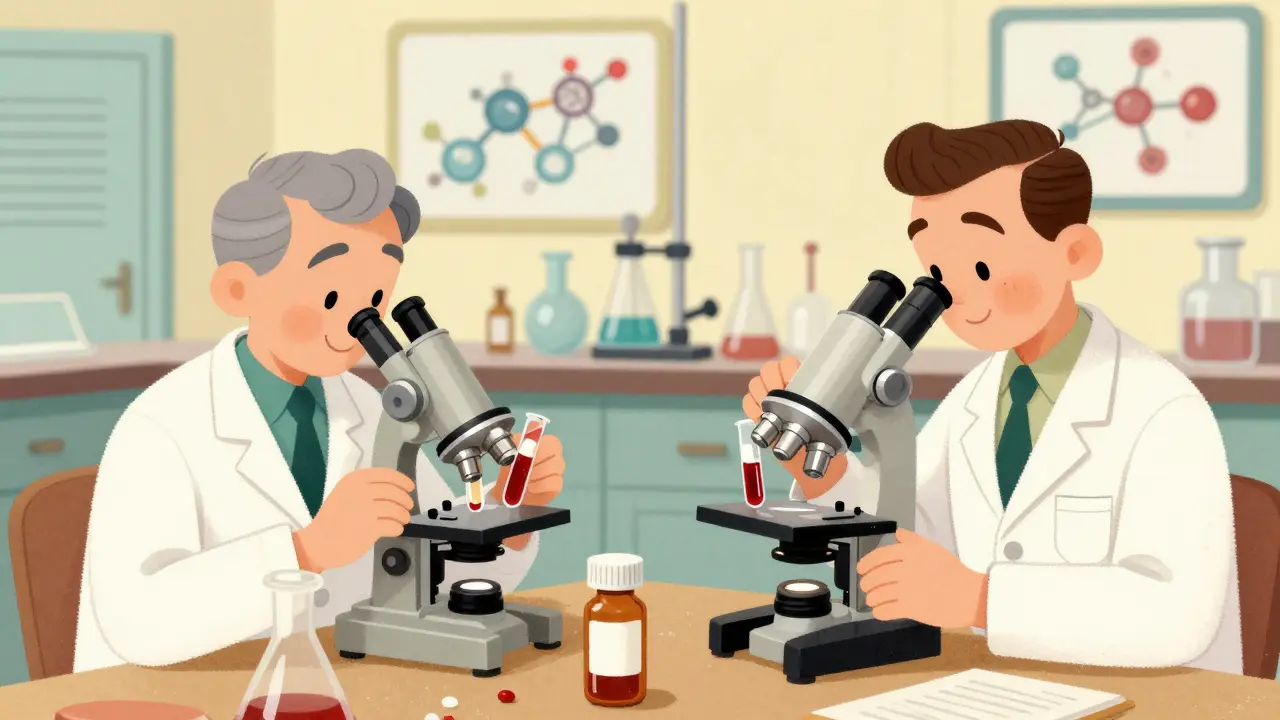
Testing bioequivalence typically involves 24-36 healthy volunteers who take both the brand and generic versions. Researchers measure blood concentration levels over time to ensure they match. The FDA has approved over 1,200 generic drugs in 2022 alone, all meeting these exacting standards.
The Perception Gap
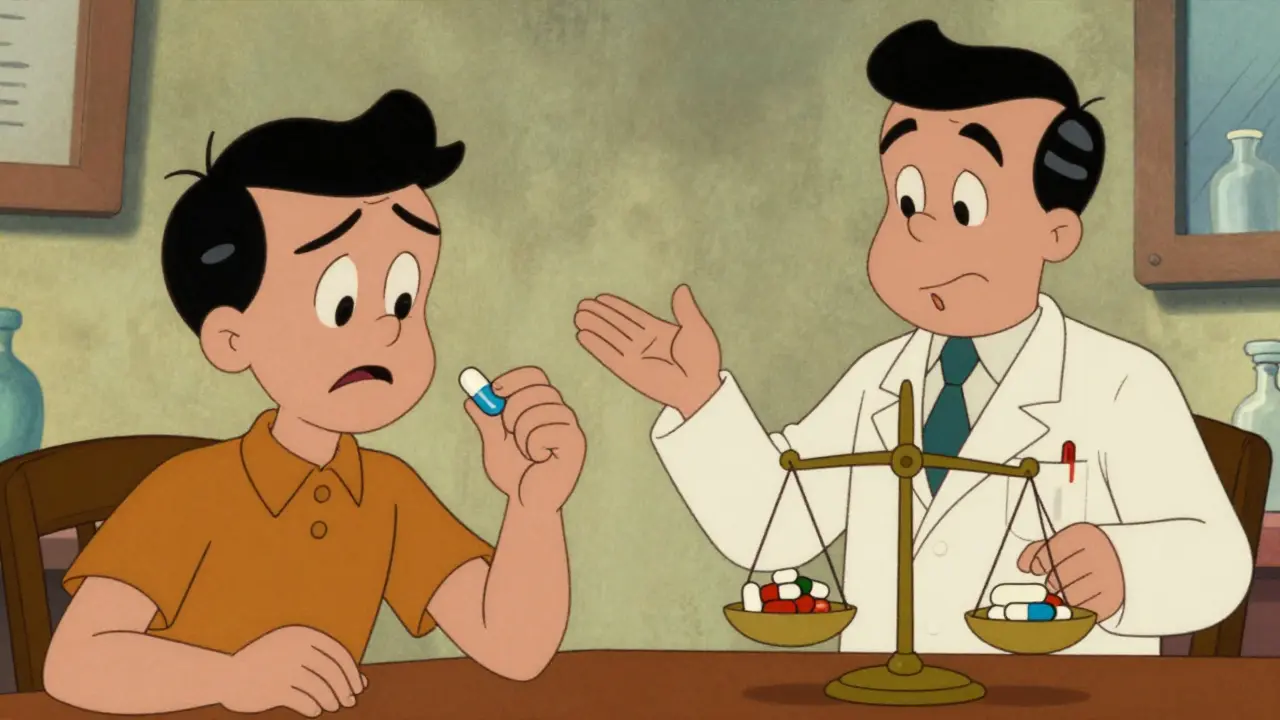
Despite the science, many people still think generics are inferior. A 2016 national survey found 13% of respondents believed brand drugs are more effective than generics. Another 20% thought generics have different side effects. Even doctors aren't immune-11% of physicians expressed negative views on generic efficacy, and 27% believed generics cause more adverse effects.
These numbers get worse in certain groups. A 2015 study in the Journal of General Internal Medicine found non-Caucasian patients were significantly more skeptical than Caucasian patients (43% vs. 29% expressing skepticism about clinical equivalence). In Alabama's Black Belt region, people have beliefs like generics are "less potent," "require higher doses," or "are for poor people." But none of these beliefs match reality. The FDA states all approved medications, including generics, are safe and effective.
On platforms like Reddit's r/Pharmacy community, pharmacists share stories of patients who refuse generics despite years of stable management. One pharmacist reported a patient who "stopped her levothyroxine after switching to generic, claiming it 'didn't work,' despite identical active ingredients." Trustpilot reviews of major pharmacy chains show 17% of 4,218 reviews mention concerns about generic effectiveness.
Real-World Consequences
When people believe generics don't work, they often stop taking them. A 2019 study in Research in Social and Administrative Pharmacy documented that 22% of patients who perceived generics as inferior discontinued medication prematurely, compared to just 8% of those with neutral perceptions. This isn't just about belief-it's about health outcomes. Non-adherence leads to worse health conditions and higher healthcare costs.
Generics save about $1.7 trillion in healthcare costs from 2009-2019 according to the Generic Pharmaceutical Association. If perception barriers were eliminated, an extra $5.9 billion in annual savings could be achieved. However, brand-name manufacturers spend $1.8 billion annually on "product differentiation" campaigns that subtly undermine generic confidence without making false claims.
How to Address Misconceptions
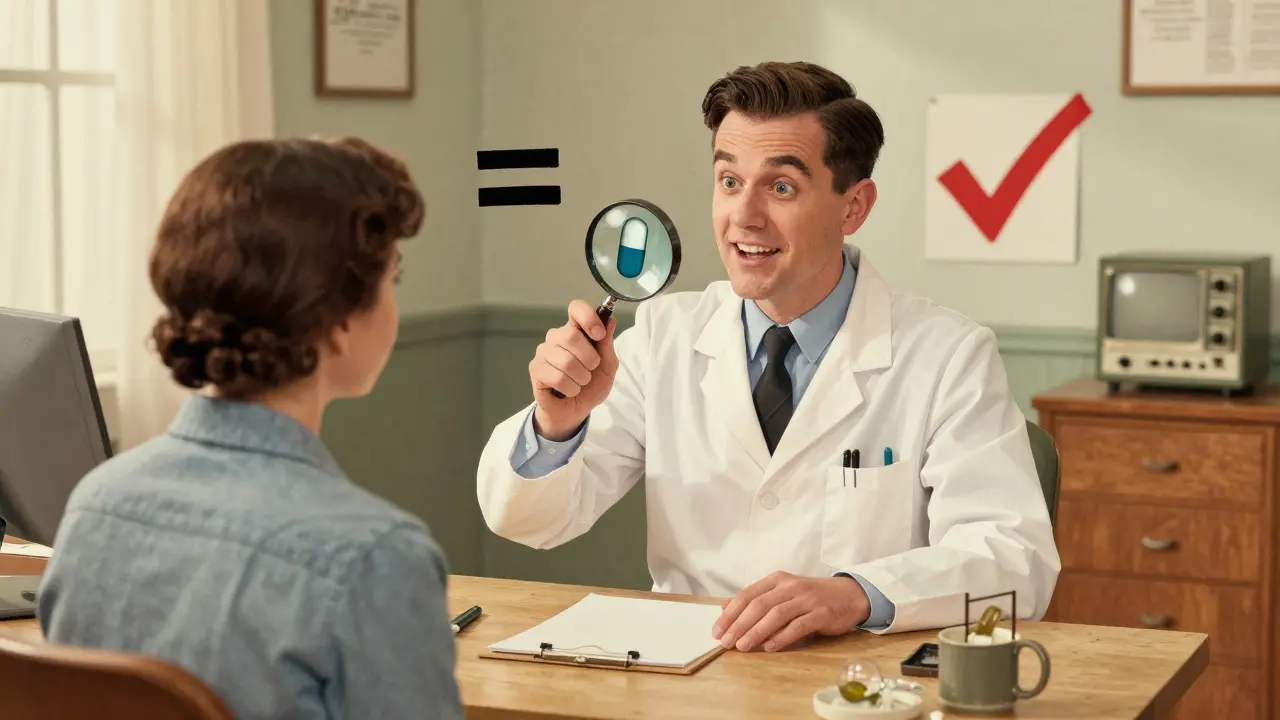
Healthcare providers play a key role in bridging this gap. A 2022 meta-analysis in Annals of Pharmacotherapy found that when doctors explain the generic has the same active ingredient, patient acceptance jumps by 87%. Providing FDA equivalence documentation improves acceptance by 76%. Addressing the nocebo effect directly-explaining that expecting a drug to work poorly can make you feel worse-is also effective (68% improvement).
For example, a 2023 JAMA Network Opena peer-reviewed medical journal published by the American Medical Association study showed patients told generics were "equally effective" had 34% better adherence than those receiving standard substitution. Those told generics were "less effective" had 41% worse adherence-proving perception directly impacts outcomes regardless of actual drug performance.
Doctors spend an average of 3.2 minutes per prescription addressing patient concerns about generics, according to a 2020 American Medical Association survey. In low-income areas, this can take up to 15% of consultation time. Clear communication is crucial-especially since the FDA's "Generic Drugs" webpage scored only 58/100 on readability, making it hard for patients with limited health literacy to understand.
The Future of Generic Medications
Regulators are taking action. The FDA's 2022 Generic Drug User Fee Amendments (GDUFA III) allocates $28 million specifically for "patient and provider education on generic medicines." The agency also introduced "Therapeutic Equivalence Ratings" on all generic packaging to address perception issues.
Looking ahead, the FDA's "Equivalence Explorer" tool, launching in 2024, will help patients compare therapeutic equivalence data for specific drug switches. The American Medical Association now requires generic perception training in continuing medical education. However, challenges remain. A 2023 Health Affairs analysis projects it will take 12.7 years for non-Caucasian patient skepticism to reach Caucasian levels at current improvement rates.
Global comparisons show progress is possible. In Canada and the UK, 93% and 89% of patients respectively accept generics without concern (2022 Commonwealth Fund survey), partly due to robust public education campaigns and provider incentives. These countries demonstrate that clear communication and transparency can close the perception gap.
Are generic drugs really the same as brand-name drugs?
Yes. Generic drugs must contain the exact same active ingredient, strength, dosage form, and route of administration as the brand-name version. The FDA requires them to be bioequivalent, meaning they deliver the same amount of medicine into your bloodstream within the same timeframe. While there's a small allowable variation (80-125%), this is clinically insignificant for most medications. The FDA states all approved medications, including generics, are safe and effective.
Why do some people think generics are less effective?
Several factors contribute to this belief. Marketing by brand-name companies often emphasizes differences, even when they don't exist. Some patients experience the nocebo effect-where expecting a drug to work poorly makes them feel worse. Others see cheaper generics and assume lower quality. Cultural beliefs also play a role; for example, in some communities, generics are seen as "medicine for the poor." Despite these perceptions, scientific evidence consistently shows generics are equivalent to brand-name drugs for most conditions.
Do generics have different side effects?
No. Generic drugs must have the same active ingredient as the brand-name version, so their side effect profile is identical. Any differences in reported side effects usually stem from the nocebo effect or unrelated factors like lifestyle changes. The FDA monitors adverse events for all medications and has found no evidence that generics cause more side effects than brand-name drugs.
Can generics be used for all medications?
Most medications have generic versions available, but some require special considerations. For drugs with a narrow therapeutic index (like warfarin or levothyroxine), the FDA has stricter bioequivalence requirements. However, studies show generics for these drugs are still therapeutically equivalent. Your doctor can help determine if a generic is appropriate for your specific situation. Always consult your healthcare provider before switching medications.
How can I trust a generic drug?
All generics must meet the same rigorous quality standards as brand-name drugs. The FDA inspects manufacturing facilities worldwide, and generics undergo the same testing for safety and effectiveness. Look for the FDA's "Therapeutic Equivalence" rating on the label. When your doctor prescribes a generic, they're confident in its performance. If you have concerns, ask your pharmacist or doctor for FDA documentation-this often helps alleviate doubts.