QT Prolongation Risk Estimator
Select all applicable factors to assess cumulative risk profile.
Risk Assessment
Select factors above to see estimated risk level. Remember, this is a qualitative estimator based on clinical guidelines, not a diagnostic tool.
Disclaimer: This interactive tool is for educational purposes only and does not constitute medical advice. It simplifies complex pharmacological interactions. Always consult a healthcare professional before making changes to medication regimens. If you experience fainting, palpitations, or severe dizziness, seek immediate medical attention.
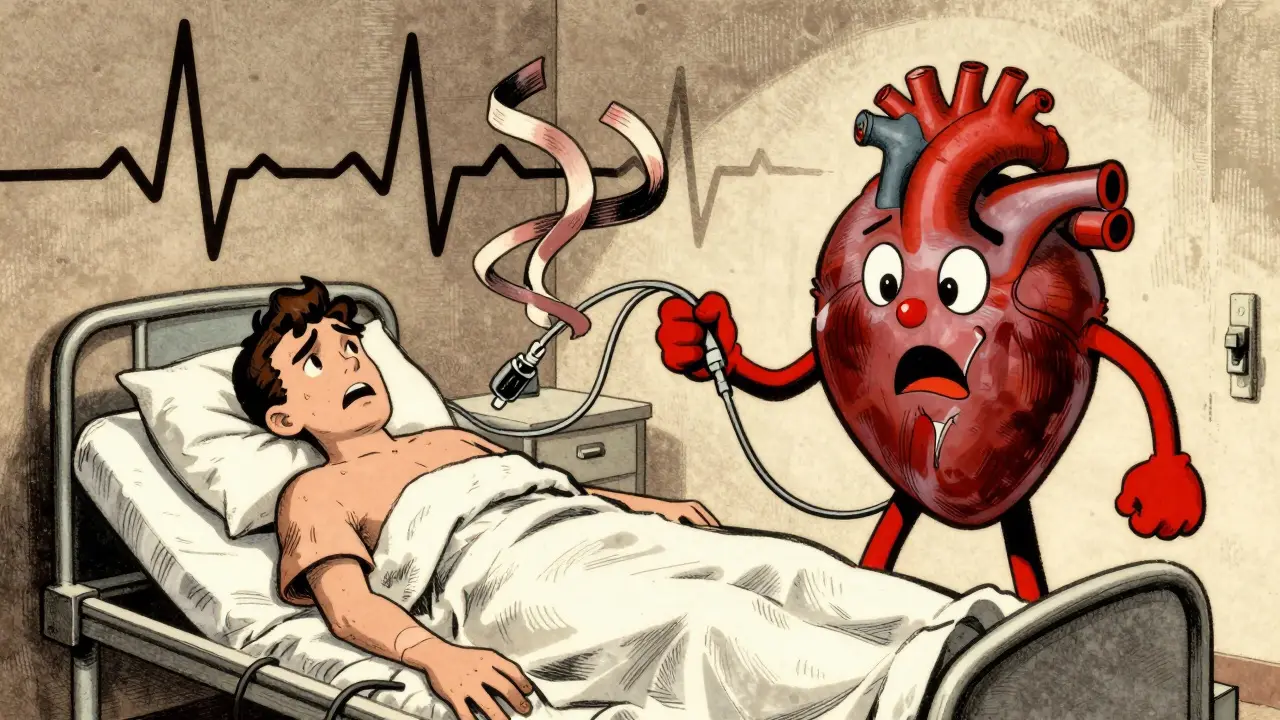
It happens in seconds. You take a pill for an infection, depression, or nausea, and your heart rhythm stumbles into chaos. This isn't a rare movie plot; it is a real medical emergency known as drug-induced QT prolongation, which can trigger life-threatening arrhythmias like Torsades de Pointes and sudden cardiac death. While most people take medications without incident, specific drugs interact with the electrical system of the heart to delay repolarization-the process where heart muscle cells reset after beating. When this reset takes too long, the heart becomes electrically unstable. Understanding the risk factors isn't just academic; it is the difference between safe treatment and a fatal event.
Understanding the Mechanism: What Is QT Prolongation?
To understand the danger, you need to look at the electrocardiogram (ECG). The QT interval represents the time it takes for the ventricles to contract and then recover. Think of it like a spring compressing and then snapping back. If the snap-back is delayed, the next beat might arrive while the heart is still resetting. This mismatch creates an electrical storm.
Clinicians measure this using the corrected QT interval (QTc), which adjusts for heart rate. A QTc greater than 450 milliseconds in men or 470 milliseconds in women is considered prolonged. When that number hits 500 milliseconds, or increases by more than 60 milliseconds from your baseline, the risk of Torsades de Pointes (TdP) spikes dramatically. TdP is a specific type of ventricular tachycardia that looks like a twisting ribbon on the ECG monitor. It often degenerates into ventricular fibrillation, causing immediate cardiac arrest if not treated instantly with defibrillation.
The history of this condition is stark. In the late 1990s, two popular allergy medications, terfenadine and astemizole, were pulled from the US market after causing fatal QT-related events. These withdrawals saved lives but also taught regulators that even common drugs could be lethal under the right-or wrong-conditions. Today, over 100 commonly prescribed medications carry some level of QT risk.
High-Risk Medications: Who Are the Culprits?
Not all drugs are created equal when it comes to cardiac risk. Some medications block potassium channels in the heart, directly delaying repolarization. Others do so indirectly through metabolic interactions. Here is how the major classes stack up:
- Class III Antiarrhythmics: Ironically, drugs used to treat irregular heartbeats can cause them. Dofetilide carries a 3.3% incidence of TdP at standard dosing. Sotalol and ibutilide are also high-risk, especially because they exhibit "reverse use dependence," meaning they prolong the QT interval more at slower heart rates.
- Antibiotics: Macrolides like erythromycin and fluoroquinolones like moxifloxacin are significant offenders. Moxifloxacin can prolong QTc by 6-15 milliseconds. A massive study of 1.2 million Medicaid patients found that erythromycin doubled the risk of sudden cardiac death. If you combine erythromycin with a CYP3A inhibitor, that risk jumps five-fold.
- Antidepressants: Selective serotonin reuptake inhibitors (SSRIs) vary widely. Citalopram at 40mg daily prolongs QTc by an average of 8.5 milliseconds, leading to strict FDA dosage caps. Escitalopram is safer, causing only about 4.2 milliseconds of prolongation at equivalent doses.
- Antipsychotics: Drugs like haloperidol and ziprasidone carry notable risks, particularly when given intravenously or in high doses.
| Drug Class | Example Agents | Risk Level | Key Mechanism |
|---|---|---|---|
| Antiarrhythmics | Dofetilide, Sotalol | Very High | Direct potassium channel blockade |
| Macrolide Antibiotics | Erythromycin | High | K+ channel inhibition + CYP3A interaction |
| Fluoroquinolones | Moxifloxacin | Moderate-High | Direct K+ channel inhibition |
| SSRIs | Citalopram | Moderate | Dose-dependent K+ channel effect |
| Antiemetics | Ondansetron | Low-Moderate | HERG channel blockade at high doses |
The Perfect Storm: Modifiable Risk Factors
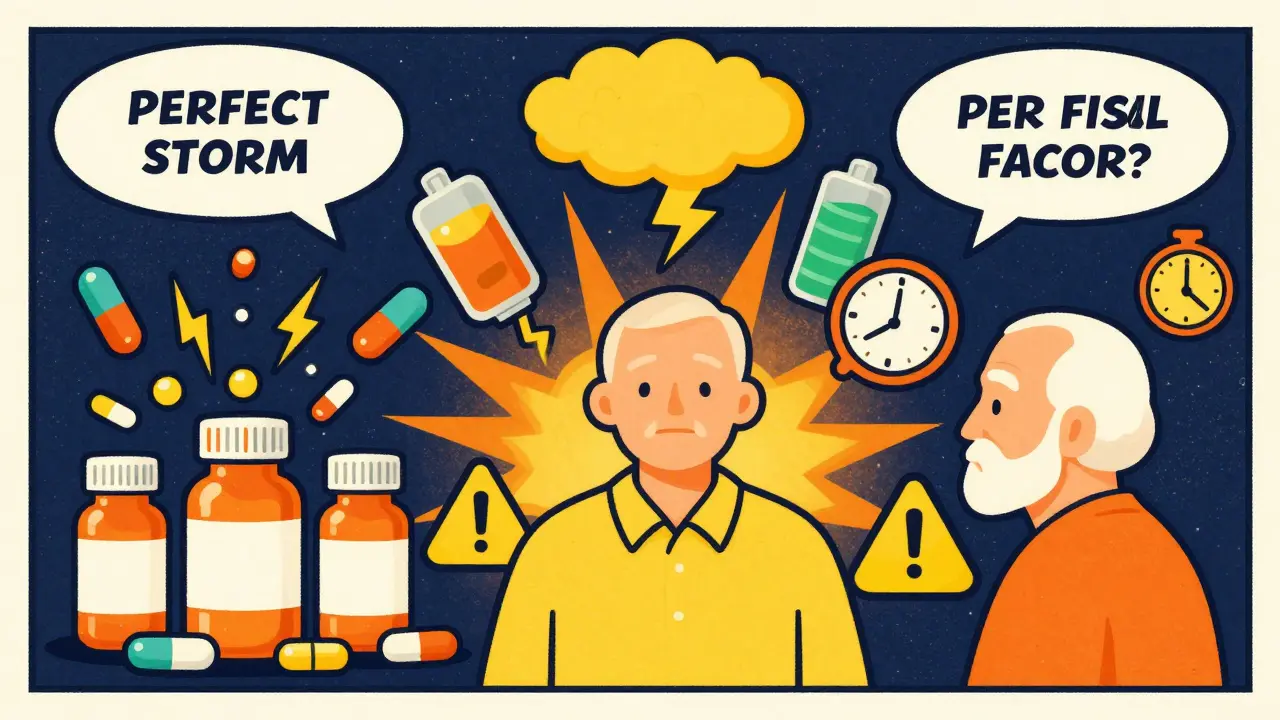
A medication alone rarely causes sudden death in a healthy person with a normal heart. The tragedy usually occurs when a drug meets a vulnerable physiological state. These modifiable risk factors turn a manageable side effect into a catastrophe.
Electrolyte Imbalances are the biggest silent killers here. Hypokalemia (low potassium) and hypomagnesemia (low magnesium) destabilize the heart's electrical membrane. The University of Michigan’s QT Clinician Toolkit reports that correcting hypokalemia to a target above 4.0 mEq/L reduces QT prolongation risk by 62%. Diuretics, diarrhea, and vomiting can rapidly deplete these electrolytes, making patients on antibiotics or antiemetics particularly susceptible.
Bradycardia (slow heart rate) is another critical factor. Because the heart has less time to repolarize between beats, slow rhythms exacerbate the effects of QT-prolonging drugs. This is why reverse use dependence matters: sotalol becomes more dangerous as the heart slows down, such as during sleep or in athletes.
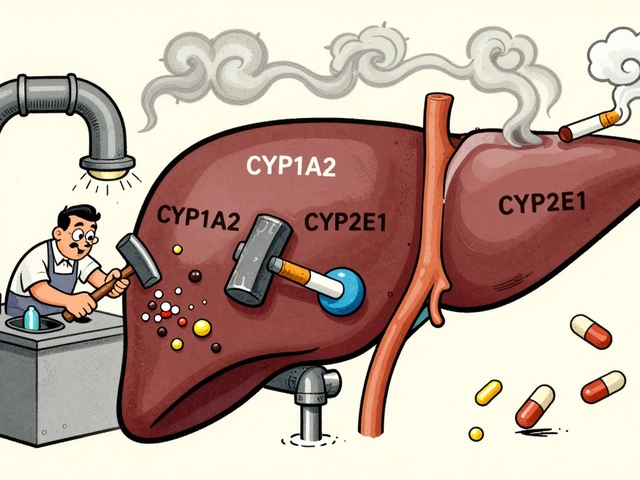
Drug Interactions via Cytochrome P450 enzymes create toxic levels of the primary drug. If you take a QT-prolonging antibiotic alongside a strong CYP3A4 inhibitor like ketoconazole or clarithromycin, the body cannot clear the antibiotic fast enough. Serum concentrations rise, blocking more potassium channels and pushing the QTc past the safety threshold.
Patient-Specific Vulnerabilities
Beyond temporary physiological states, certain patient profiles carry inherent higher risks. Age and gender play substantial roles. Women naturally have longer QT intervals than men, putting them at a higher baseline risk for drug-induced arrhythmias. Elderly patients face compounded dangers due to polypharmacy. According to the 2022 National Ambulatory Medical Care Survey, patients over 65 take an average of 7.8 medications. Thirty-four percent of geriatric patients are on at least one QT-prolonging agent. The likelihood of a dangerous interaction rises exponentially with each added pill.
Structural Heart Disease modifies risk significantly. The American Heart Association notes that structural abnormalities increase drug-induced arrhythmia risk by 10 to 100 times compared to structurally normal hearts. Conditions like left ventricular hypertrophy, heart failure, or prior myocardial infarction create heterogeneous repolarization, providing a substrate for re-entrant circuits to form.
Genetic Susceptibility is the hidden variable. Congenital Long QT Syndrome (LQTS) affects approximately 1 in 2,000 people, many of whom are undiagnosed until a drug triggers their first event. Variants in genes like KCNQ1, KCNH2, and SCN5A make the heart exquisitely sensitive to potassium channel blockers. The NIH’s All of Us Research Program aims to identify these genetic markers to personalize risk assessment, moving us away from one-size-fits-all warnings.
Clinical Assessment and Monitoring Strategies
How do clinicians navigate this minefield? The Medicines and Healthcare products Regulatory Agency (MHRA) recommends a three-step screening process before prescribing high-risk agents:
- Baseline ECG: Screen for existing QTc >450ms (men) or >470ms (women). If the baseline is already borderline, avoid QT-prolonging drugs entirely.
- Electrolyte Check: Ensure potassium is >4.0 mEq/L and magnesium is >2.0 mg/dL. Correct deficiencies before starting therapy.
- Interaction Review: Use databases like AZCERT.org, which categorizes 212 medications by risk level. Check for concomitant CYP3A4 inhibitors.
Technology is helping, but it has flaws. Electronic health records now generate automatic QTc alerts. Mayo Clinic implemented such a system in 2015, reducing high-risk medication administration by 37%. However, alarm fatigue is real. A 2022 JAMIA study found that 78% of these alerts were false positives, leading to clinician desensitization. Newer AI-based systems, like Verily Life Sciences' QTguard, use machine learning to analyze T-wave morphology, reducing false alarms by 53%. The International Council for Harmonisation now requires assessing T-wave shape changes rather than just QTc duration, recognizing that morphology is a stronger predictor of arrhythmia risk.
Navigating the Gray Area: When to Worry
Not every QT prolongation leads to death. In fact, the POST SCD study revealed that 78% of sudden cardiac deaths involving QT-prolonging medications had non-arrhythmic causes at autopsy. This nuance is crucial. Dr. Dan M. Roden from Vanderbilt University emphasizes that the association is complex. Over-reaction can be harmful too; the European Heart Rhythm Association warns that unnecessary discontinuation of QT-prolonging drugs occurs in 15-20% of heart failure patients, potentially increasing mortality from the underlying condition.
The goal is balanced vigilance. For low-risk drugs like ondansetron at standard doses, routine ECG monitoring is often unnecessary and creates workflow bottlenecks. Reserve intensive monitoring for high-risk combinations: elderly patients on multiple QT-prolonging agents with electrolyte disturbances or structural heart disease.
What symptoms should I watch for if I am taking a QT-prolonging medication?
Most cases are asymptomatic until a serious event occurs. However, warning signs include dizziness (reported in 63% of adverse events), palpitations (41%), lightheadedness, or fainting (syncope, 29%). If you experience unexplained fainting or a sensation of your heart skipping beats or racing irregularly, seek immediate medical attention. Do not wait for the next scheduled appointment.
Can I take citalopram if I have a history of heart disease?
Citalopram carries a dose-dependent QT risk. The FDA limits the maximum dose to 40mg daily for most adults and 20mg daily for those over 60 or with hepatic impairment. If you have structural heart disease, your doctor may prefer escitalopram, which has a lower impact on the QT interval, or switch to a different class of antidepressant entirely. Always disclose your full cardiac history before starting SSRIs.
Does drinking alcohol affect QT prolongation risk?
Yes, indirectly. Alcohol can cause dehydration and electrolyte imbalances, particularly low magnesium and potassium, which are key risk factors for Torsades de Pointes. Binge drinking can also lead to bradycardia during recovery. If you are on high-risk medications like macrolide antibiotics or antipsychotics, avoiding alcohol helps maintain stable electrolyte levels and reduces overall cardiac stress.
How accurate are home ECG devices for detecting QT issues?
Most consumer-grade smartwatches and patches provide single-lead ECGs, which are excellent for detecting atrial fibrillation but poor for measuring QT intervals accurately. QT measurement requires a 12-lead ECG to assess spatial dispersion of repolarization and calculate precise QTc values using Bazett’s or Fridericia’s formula. Home devices should not be relied upon to rule out QT prolongation. Always consult a clinical ECG for definitive assessment.
What should I do if I accidentally miss a dose of my electrolyte supplements?
If you are prescribed potassium or magnesium supplements specifically to mitigate QT risk, missing a dose can temporarily elevate your risk profile, especially if you are concurrently taking QT-prolonging drugs. Take the missed dose as soon as you remember, unless it is close to the time for your next dose. Do not double up. Inform your pharmacist or doctor if you frequently miss doses, as they may adjust your regimen to ensure consistent protection.


Comments
The section on electrolyte imbalances is critical but often overlooked in primary care settings. Hypokalemia and hypomagnesemia are not just minor lab abnormalities; they are the substrate upon which Torsades de Pointes thrives. The data from the University of Michigan toolkit regarding potassium targets above 4.0 mEq/L is a standard that should be enforced more rigorously, especially for patients on diuretics or those with gastrointestinal losses. It is not enough to simply prescribe the antibiotic; the clinician must actively manage the metabolic environment of the patient to prevent this specific type of electrical instability.
people really need to stop taking these meds without reading the labels lol. it is so obvious that if you have heart issues you cant just pop pills like candy. why do doctors keep prescribing citalopram when everyone knows about the qt risk? its stupid. i bet most people dont even know what an ekg is until its too late. typical medical negligence. they should just ban all these drugs instead of making warnings no one reads.
You are ignoring the systemic failure here. The FDA’s reliance on QTc thresholds is a red herring designed to protect pharmaceutical liability rather than patient safety. The morphological changes in the T-wave, as mentioned by the ICH guidelines, are being suppressed by big tech EHR systems that prioritize billing codes over physiological reality. The 'alarm fatigue' isn't a bug; it's a feature to desensitize clinicians to the actual toxicity profiles of these HERG channel blockers. We are seeing a deliberate obfuscation of the true incidence rates of drug-induced arrhythmias through selective reporting in clinical trials.
This is a very informative post 👏👏. The table comparing high-risk medication classes is extremely helpful for quick reference. I always forget which antibiotics are safe and which ones are dangerous for my father who has mild heart issues. Thanks for breaking down the mechanism of potassium channels 🧠⚡. It is scary how common these drugs are in our daily lives. Please share more such detailed guides 🙏❤️.
Oh, look at us, playing doctor again! 🙄
It is fascinating how we think a few milliseconds on a graph can predict the end of the world. Because let’s face it, life is fragile, isn’t it? You take a pill, your heart does a little tap dance, and suddenly we are all experts in electrophysiology. How thrilling.
I suppose we should all just sit in corners and wait for the other shoe to drop while we analyze our ECGs. What a waste of potential energy. Truly, the human condition is nothing if not dramatic. 🎭
Wake up sheeple! This is exactly what they want you to believe. That your heart stops because of a 'pill'. No. It stops because the system is rigged against you. The pharmaceutical companies are pushing these drugs knowing full well the risks because they need the revenue. They don't care about your QT interval. They care about their stock prices. Stop trusting the FDA. Start trusting your instincts. If you feel weird, get off the meds. Don't let them control your biology.
I appreciate the detailed breakdown of the risk factors, particularly the emphasis on modifiable conditions like electrolyte levels. It provides a sense of agency for patients who might otherwise feel helpless against these statistical probabilities. Supporting better education on this topic could genuinely save lives, especially among older adults who are often prescribed multiple medications without thorough interaction checks. Let's encourage more open dialogue between patients and providers about these specific risks.
The epistemological framework presented herein relies heavily on quantitative metrics, specifically the QTc interval, which serves as a proxy for cardiac repolarization stability. However, one must consider the ontological status of the 'risk' itself. Is the risk inherent in the pharmacological agent, or is it emergent from the complex interplay of genetic predisposition and environmental stressors? The reductionist approach to categorizing drugs into 'high' or 'low' risk categories may obscure the nuanced reality of individual patient physiology. Thus, while the data is compelling, it should be viewed as a heuristic rather than an absolute truth.
Let's delve deeper into the mechanistic aspects of reverse use dependence observed in Class III antiarrhythmics like sotalol. This phenomenon underscores the importance of heart rate variability in determining the efficacy and safety profile of these agents. For individuals with bradycardia, the prolonged action potential duration exacerbates the dispersion of repolarization across the ventricular myocardium. This creates a heterogeneous substrate that is highly susceptible to re-entrant circuits. Understanding this biophysical principle is crucial for optimizing therapeutic strategies in patients with concomitant conduction abnormalities.
I find it interesting how much fear surrounds these medications, yet they are often necessary for treating serious conditions like depression or infections. It is important to balance caution with compassion. Not every person will experience these side effects, and stopping medication abruptly can sometimes cause more harm than good. Open communication with healthcare providers is key. We should support each other in navigating these health challenges without unnecessary panic.
boring stuff :/ i dont get why people read this. just take the pill and hope for the best. nobody cares about milliseconds anyway. whatever.
LISTEN UP! This information is LIFE SAVING and you better pay attention! If you ignore these signs, you are playing Russian Roulette with your own heart! Do not be lazy about your health! Check your electrolytes! Know your medications! Fight for your life by being informed! Ignorance is not bliss, it is a death sentence! Get out there and demand better care from your doctors! Do not let them treat you like a number! Your heart matters! ACT NOW!