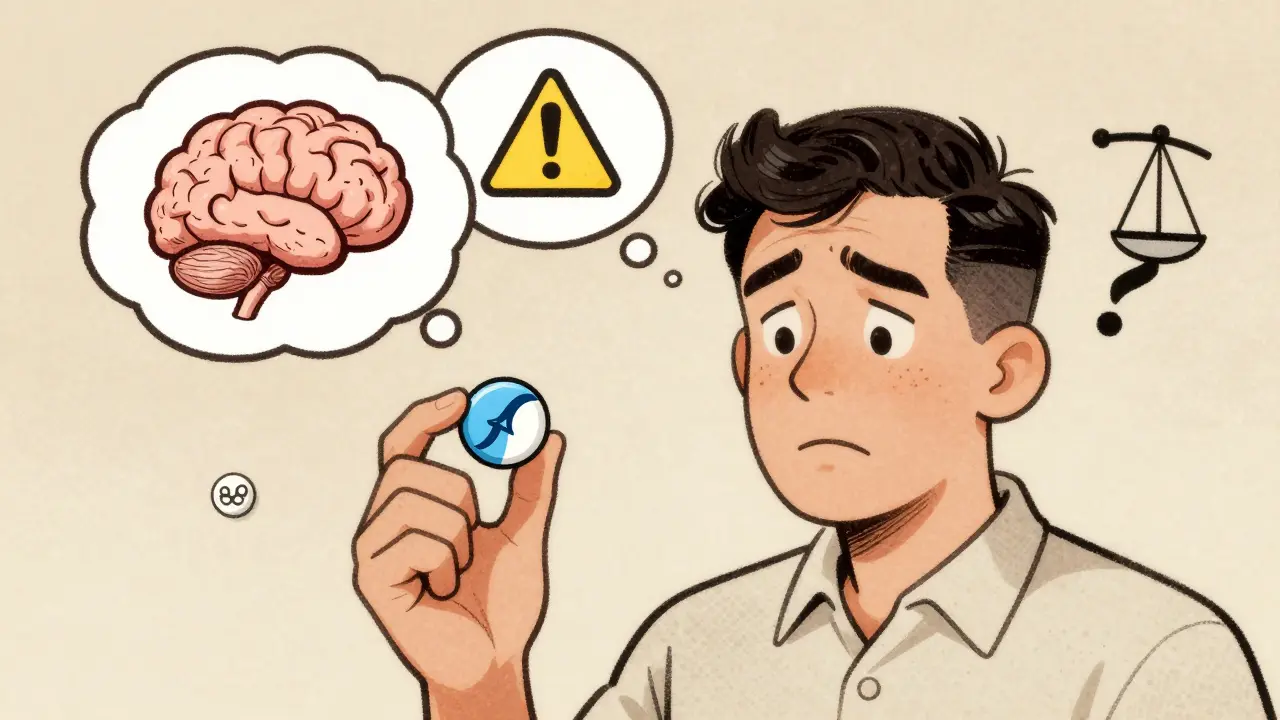
It’s 2026. You’ve been taking your blood pressure medication for years. Your doctor switches you to a generic version. You pick up the bottle. The pills look different. Smaller. A different color. Maybe even a weird logo on the side. You swallow it. And then… you start to feel off. Your head feels heavier. Your anxiety creeps back in. You think: "This generic isn’t working like the brand did."
You’re not alone. Millions of people feel this way. But here’s the truth: the generic drug you’re taking has the exact same active ingredient as the brand-name version. Same chemistry. Same dose. Same way it works in your body. So why does it feel different? Why does it seem less effective? The answer isn’t in the pill. It’s in your mind.
The Science Says They’re the Same
The U.S. Food and Drug Administration (FDA) doesn’t approve a generic drug unless it meets the same strict standards as the brand-name version. That means:
- Same active ingredient
- Same strength
- Same dosage form (pill, liquid, injection)
- Same route of administration (taken by mouth, injected, etc.)
- Same intended use
But there’s one more thing: bioequivalence. This is where most people get confused. The FDA requires generic manufacturers to prove their drug delivers the same amount of medicine into your bloodstream within the same time frame as the brand. The acceptable range? 80% to 125% of the brand’s performance. That sounds wide - until you realize that’s the same variation you’d see if you took the same brand-name pill twice on two different days. Your body absorbs it differently based on what you ate, how much water you drank, even your stress level that morning. The 20% swing is scientifically proven to have no real impact on how well the drug works.
And here’s something most people don’t know: the same factories that make brand-name drugs often make the generics. The same equipment. The same quality checks. The same Current Good Manufacturing Practices (cGMP). The FDA inspects them all. Even if a generic is made overseas - and many are - it still has to meet the same standards. The FDA found more inspection issues at foreign facilities, but that doesn’t mean the final product is any less safe. It means the inspection process caught a minor paperwork error, not a dangerous flaw.
Why It Feels Like It’s Not Working
Let’s be honest: the pill looks different. That’s the first clue your brain picks up on. Your brain doesn’t process medicine like a lab report. It processes it like a story. And the story you’ve been told - maybe by a friend, a TV ad, or even a well-meaning doctor - is that brand-name drugs are "better," "stronger," or "more reliable."
This isn’t just about marketing. It’s psychology. The placebo effect works both ways. When you expect something to work, your body responds better. When you expect it to fail? That’s called the nocebo effect. A 2023 study in JAMA Network Open showed this clearly: patients told their generic was "just as good" had 34% better adherence. Those told it was "less effective" had 41% worse adherence. The drug didn’t change. The belief did.
And it gets worse. When you switch from a brand-name drug you’ve taken for years - the one with the familiar shape, color, and packaging - to a generic, your body might react to the change itself. Not because the medicine is different, but because your nervous system is used to the old routine. You feel a little off. You don’t know why. So you blame the pill. And then you stop taking it.
The Real Cost of Perception
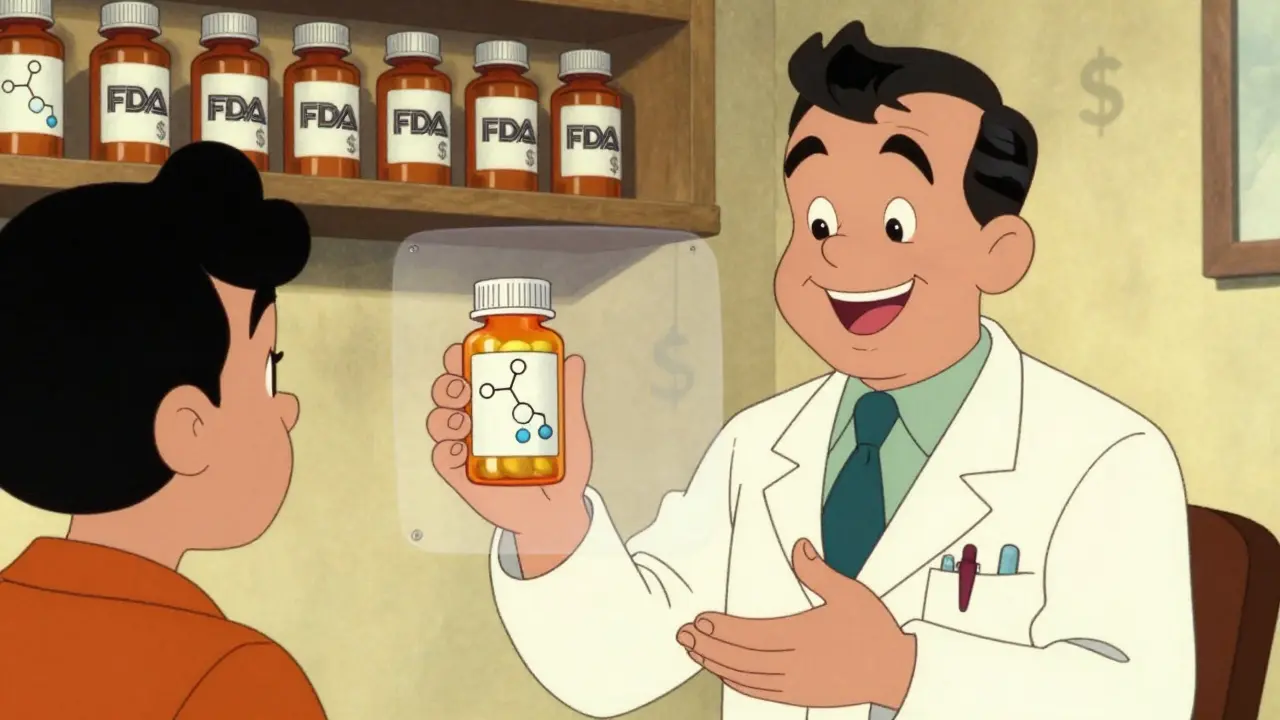
Generics save money. A lot of it. In the U.S., they account for 90% of all prescriptions filled. But they cost 80-85% less than brand-name versions. Between 2009 and 2019, generics saved the healthcare system $1.7 trillion. That’s not a number. That’s millions of people who could afford their meds because of it.
But perception is costing us more than money. A 2019 study found that 22% of patients who believed generics were inferior stopped taking them altogether. That’s more than double the rate of those who had no strong opinion. And what happens when someone stops taking their blood pressure, diabetes, or antidepressant medication? Hospital visits. Emergency care. Worse health. Higher costs. The cycle repeats.
And it’s not random. People of color, rural communities, and those with lower income are more likely to believe generics are "not real medicine" or "for poor people." A 2015 study found 43% of non-Caucasian patients were skeptical about generics - compared to 29% of Caucasian patients. That’s not about intelligence. It’s about access, messaging, and decades of unequal healthcare experiences. When you’ve been told your care is "second-tier," it’s easy to believe your medicine is too.
What Doctors and Pharmacists See
Pharmacists hear it every day. "My anxiety got worse after they switched me to generic sertraline." "My thyroid meds don’t work anymore." "I used to feel fine on the brand. Now I’m tired all the time."
Many of these patients had stable control for years - until the switch. And guess what? When researchers studied these exact cases - like with levothyroxine or warfarin - they found no consistent difference in outcomes. The FDA even has special rules for these "narrow therapeutic index" drugs, requiring extra testing. But patients still report problems.
Why? Because when you switch from a brand you’ve trusted for a decade to a generic with a new name and unfamiliar look, your brain doesn’t wait for data. It jumps to conclusions. And if you’re already stressed about your health, your body amplifies any small change - a slight shift in sleep, a new headache, a mood dip - and blames the pill.
Doctors spend an average of 3.2 minutes per prescription just explaining why generics are safe. In low-income clinics, that time can jump to 15% of the whole visit. That’s time taken from discussing diet, exercise, or mental health. Time that could be spent saving lives.
How to Tell If It’s Really Working
Here’s what you can do:
- Check the active ingredient. Look at the label. Does it say the same thing as your old brand? If yes, it’s the same medicine.
- Give it time. Your body adjusts to changes. Give the generic at least 2-4 weeks before deciding it’s not working.
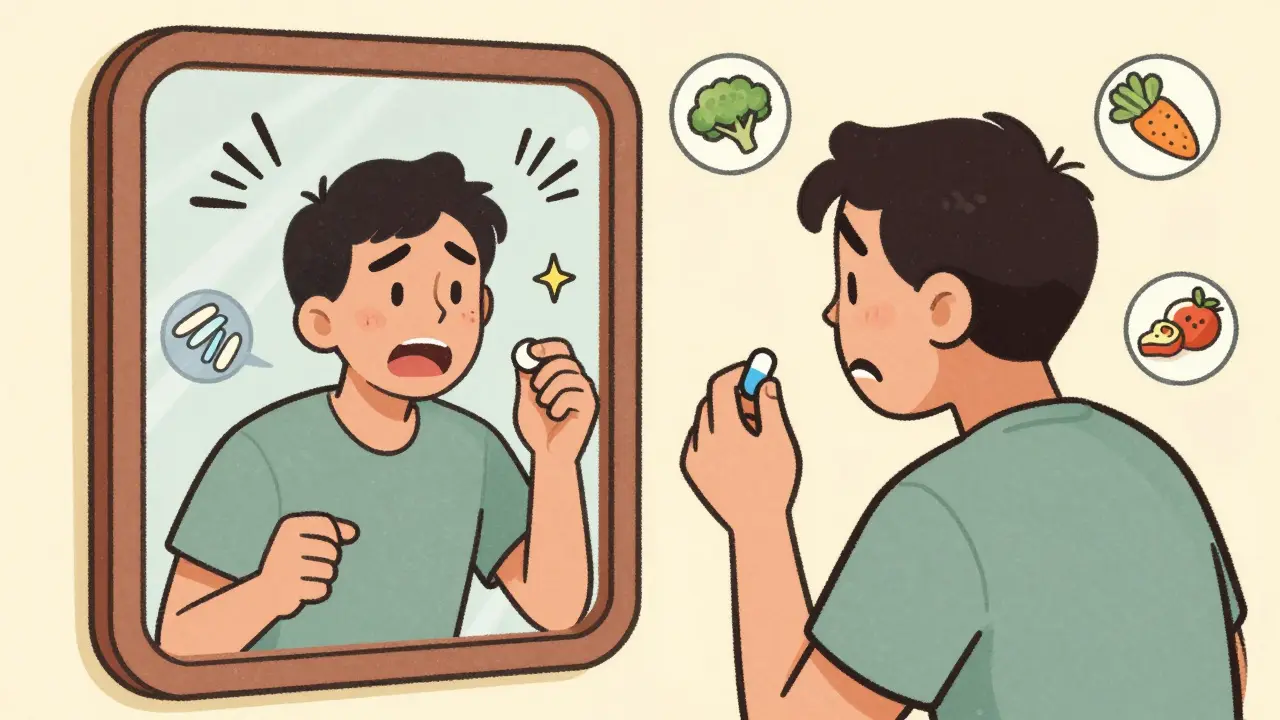
- Don’t blame the pill. If you feel different, ask yourself: Did I sleep worse? Eat differently? Start a new stressor? Sometimes the change isn’t the drug - it’s your life.
- Ask for documentation. Pharmacists can show you the FDA’s bioequivalence data. Seeing the numbers helps.
- Track your symptoms. Keep a simple log: "Day 1: Headache. Day 5: Less tired. Day 10: Back to normal." Patterns matter more than one bad day.
And if you’re still unsure? Talk to your doctor. Don’t stop the medication. Don’t assume it’s broken. Ask: "Can we try going back to the brand for a month?" Then compare. Most of the time, the difference disappears.
The Bigger Picture
Brand-name drug companies spend $1.8 billion a year on marketing that subtly undermines confidence in generics - without ever saying they’re unsafe. They use ads that say "New and Improved!" or "Trusted for decades." They don’t say "Generics are inferior." But they don’t have to. The message gets through anyway.
Meanwhile, the FDA’s "It’s the Same Medicine" campaign has reached 27 million people since 2019. But only 19% of them remembered it. Why? Because it was too clinical. Too dry. Too full of jargon. The message didn’t connect.
The real solution isn’t more studies. It’s better communication. It’s doctors saying: "This generic has the same medicine as your old pill. The only difference is the price. And I’ve prescribed it to hundreds of patients. None of them lost control of their condition." It’s pharmacists handing you a printed sheet that says: "This is the same active ingredient. Here’s the proof."
Generics aren’t "second choice." They’re the standard. The science is clear. The savings are real. And the perception? That’s the only thing holding us back.


Comments
I switched to generic sertraline last year and thought I was losing it at first. Head fog, weird mood swings. Gave it 3 weeks. Turned out I was just stressed from work. The pill didn’t change. My life did. Same medicine. Same me. Just needed time.
People who say generics don’t work are just lazy and don’t want to take responsibility for their own health. If you can’t handle a different pill shape you probably shouldn’t be in charge of your own meds.
I’ve been a pharmacist for 12 years. I’ve seen this over and over. Same active ingredient. Same results. The only thing different is the price tag and the panic in people’s eyes when they see a new label. It’s not the drug. It’s the fear.
The nocebo effect is wild man. Like when you swear your phone battery drains faster after a software update… but it’s the same damn phone. Our brains are storytelling machines. We don’t need facts. We need stories. And the story we got is 'brand = better'. So that’s what we believe. Even when the science says otherwise. 🤷♂️
I used to be skeptical too. Then I started tracking my BP with a home monitor. Before generic: 138/88. After 4 weeks on generic: 136/87. No change. Just a different logo. Turns out my brain was the problem. Not the pill. Funny how that works.
I switched to generic levothyroxine and felt like a zombie for two weeks. My doctor said 'give it time'. I didn’t believe him. Then I read the FDA bioequivalence data. 80-125% range. That’s like saying your coffee tastes different if you drink it at 7:05 vs 7:15. Same beans. Same pot. Just your mood. I’m not mad anymore. Just embarrassed.
India makes 60% of the world’s generics and we don’t have a single FDA violation in the last 5 years. Meanwhile, your fancy brand-name drugs? Made in the same factories. Same machines. Same inspectors. But you pay 10x because you believe in the packaging. Sad. Very sad. 🤦♂️
Westerners always think their medicine is superior. We have been making life-saving generics since the 1970s. Your country can’t even afford to feed its people but you cry because your pill looks different? Pathetic. You need to grow up. India doesn’t need your approval.
LMAO this whole post is just pharma propaganda. You think people are dumb for noticing a difference? Try switching from a blue pill to a yellow one and then tell me your anxiety didn’t spike. It’s not in your head. It’s in the fillers. The binders. The coatings. They’re not regulated the same way. You’re gaslighting us.
I gave my mom generic lisinopril. She swore it didn’t work. We went back to brand. Same BP. Same symptoms. She cried and said 'I just feel better knowing it’s the one I’ve always taken'. Turns out comfort matters more than chemistry.
America’s a joke. We pay $200 for a pill that costs $2 to make. And then we get mad when we switch to the $5 version? Stop being soft. Take the generic. Or don’t take it at all. But stop whining.
I’m British. We’ve been using generics for decades. No one here cares what colour the pill is. We just want it to work. Funny how the US turns medicine into a brand loyalty contest. Like it’s a sneaker drop. 'I only wear Nike, bro.'
My grandma refused generics for years. Said they were 'for poor people'. Then she got hit with a $1200 bill for her heart med. Switched to generic. Paid $8. Said 'I feel fine. Just cheaper now.' She didn’t need a lecture. Just a lower price.
The FDA’s 80-125% range is a joke. That’s a 45% swing. If your car got 20 mpg one day and 30 the next, you’d take it to the shop. But for medicine? We just shrug? That’s not science. That’s gambling.
It is imperative to underscore that the regulatory framework governing pharmaceutical bioequivalence is predicated upon rigorous, peer-reviewed, and statistically validated methodologies. The notion that psychological factors supersede pharmacokinetic integrity is not only scientifically untenable but also dangerously reductionist. We must not conflate subjective perception with objective clinical efficacy.