What Is GERD, Really?
GERD isn’t just occasional heartburn. It’s when stomach acid keeps creeping up into your esophagus, usually more than twice a week. Over time, that acid burns the lining, causes pain, and can even lead to serious problems like Barrett’s esophagus - a condition that slightly raises your risk of esophageal cancer. About 1 in 5 people in the U.S. deal with this daily. And it’s not just older adults; younger people, especially those carrying extra weight or eating late at night, are seeing more cases.
Why Your Diet Matters More Than You Think
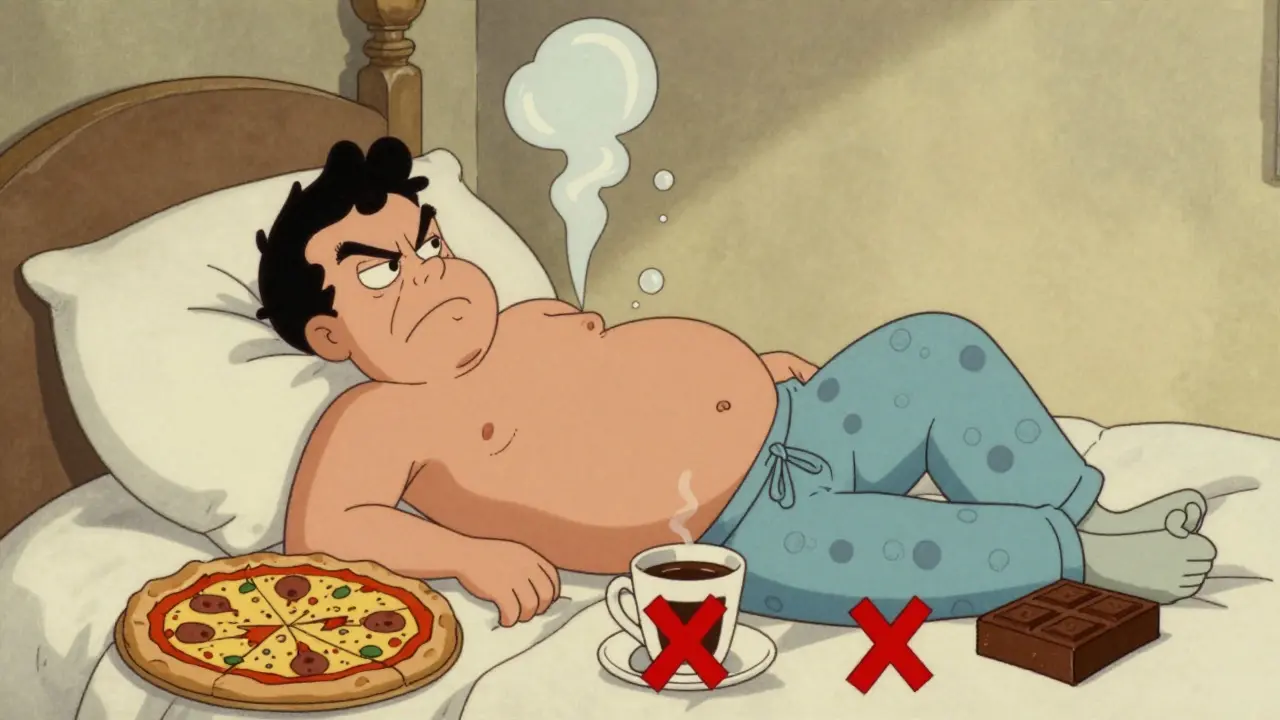
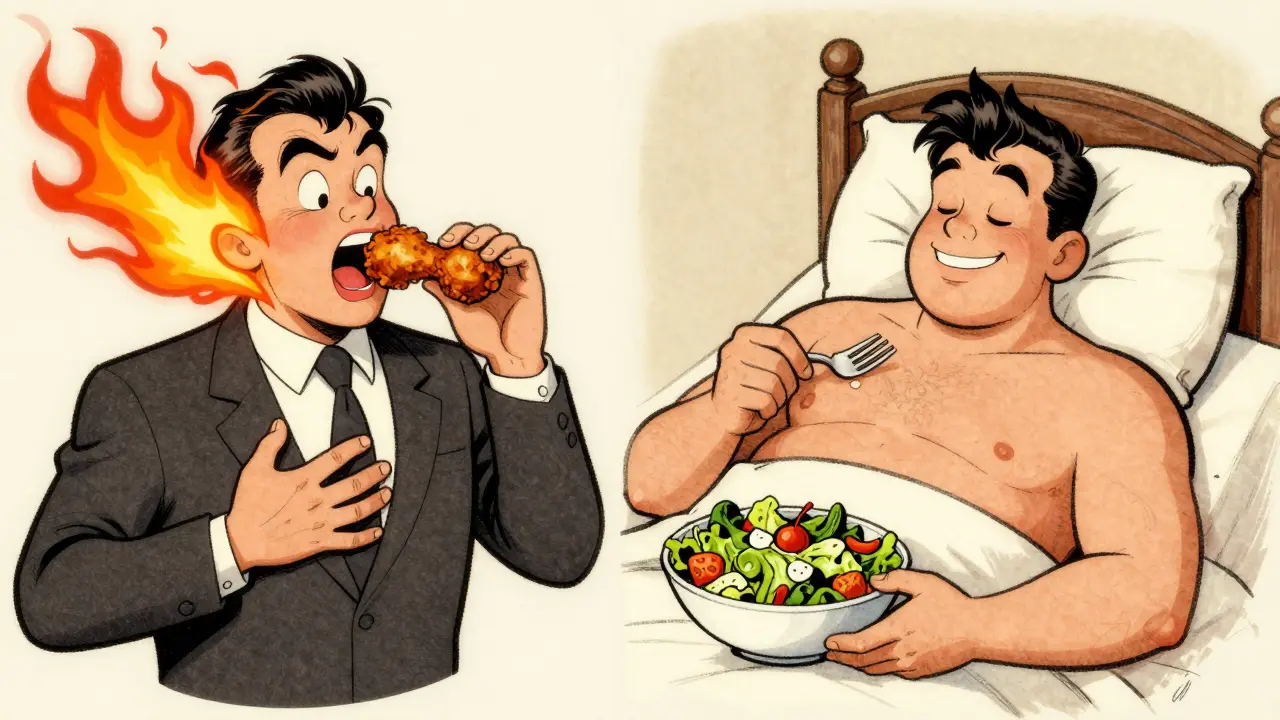
Food doesn’t cause GERD, but it can turn a quiet flare-up into a full-blown storm. Certain foods relax the lower esophageal sphincter - the muscle that’s supposed to keep acid down. Fat is one of the biggest offenders. Meals with more than 30 grams of fat can delay stomach emptying by up to an hour, giving acid more time to creep up. That’s why greasy pizza or fried chicken often leaves you feeling worse later.
Caffeine is another silent trigger. Coffee, tea, energy drinks - they don’t just wake you up. They boost stomach acid production by 23% within 30 minutes. Chocolate? It’s not just a treat. The methylxanthine in it loosens that sphincter muscle. Peppermint, even in tea, does the same thing. And citrus? Oranges, lemons, tomatoes - their low pH directly irritates the esophagus. Carbonated drinks puff up your stomach, increasing pressure and forcing acid upward.
But here’s the thing: triggers aren’t one-size-fits-all. One person might be fine with tomatoes, while another breaks out in flames from a single bite. That’s why keeping a food diary for at least two weeks is the most practical step you can take. Write down what you eat, when you eat it, and how you feel two hours later. You’ll likely find 2 or 3 specific foods that are your personal triggers.
Lifestyle Tweaks That Actually Work
Medication helps, but if you don’t fix the habits, you’re just putting a bandage on a broken bone. The biggest lifestyle wins are simple - and free.
First, stop eating within three hours of bedtime. Lying down within an hour of eating increases reflux episodes by 50%. Your body needs gravity to help keep acid where it belongs. Elevating the head of your bed by six inches - not just propping up with pillows - makes a measurable difference. This isn’t about comfort; it’s physics.
Smoking isn’t just bad for your lungs. It knocks 30-40% off the pressure in your lower esophageal sphincter within 20 minutes of lighting up. Alcohol does something similar, reducing sphincter tone by 25%. Cutting back to less than two drinks a day isn’t a suggestion - it’s a medical necessity.
Weight loss is the most powerful non-drug tool. Studies show that losing just 10% of your body weight cuts GERD symptoms by 40%. That’s not a vague promise - it’s backed by data. Even if you don’t reach your ideal weight, every pound lost helps.
And don’t overlook breathing. Simple diaphragmatic breathing - inhaling slowly through your nose, letting your belly rise, then exhaling through your mouth - can reduce symptoms by 35% when done for 15 minutes after meals. It’s not magic. It’s about reducing pressure on your stomach and calming your nervous system.
Medications: What Works, What Doesn’t
When diet and lifestyle aren’t enough, medications step in. They’re not a cure, but they’re often essential for healing and control.
Antacids like Tums (calcium carbonate) give quick relief - they neutralize acid right away. But their effect lasts only 30 to 60 minutes. They’re great for occasional heartburn, not daily GERD.
H2 blockers like famotidine (Pepcid) reduce acid production by 60-70%. They kick in about an hour after taking them and last 10-12 hours. Good for nighttime symptoms or mild cases.
But for moderate to severe GERD, proton pump inhibitors (PPIs) are the gold standard. Drugs like omeprazole, esomeprazole (Nexium), lansoprazole, and pantoprazole shut down 90-98% of acid production. They work best when taken 30-60 minutes before your first meal of the day. If you take them after eating, they’re far less effective. A 2023 Mayo Clinic study found that 40% of people who didn’t improve were simply taking them at the wrong time.
Here’s the catch: long-term PPI use has risks. The FDA warns of increased chances of pneumonia, C. diff infection, kidney problems, and low magnesium. If you’ve been on them for over a year, ask your doctor about checking your magnesium levels every six months.
Enter vonoprazan (Voquezna), the newest player. Approved in late 2023 and expanded for long-term use in May 2024, it blocks acid faster and more completely than PPIs. In studies, 95% of patients maintained a stomach pH above 4 for 24 hours - compared to just 65% on PPIs. It’s especially helpful for people who still get nighttime symptoms on PPIs.
Surgery: When Medications Aren’t Enough
If you’ve tried everything - diet, weight loss, medications - and you’re still struggling, surgery might be the next step. About 10-15% of people end up here.
The most common procedure is laparoscopic Nissen fundoplication. Surgeons wrap the top of your stomach around the lower esophagus to reinforce the sphincter. Success rates are high - 90-95% at five years. But about 1 in 10 people develop trouble swallowing, and 15-20% get gas-bloat syndrome - where swallowing air becomes painful because the new wrap doesn’t let you burp easily.
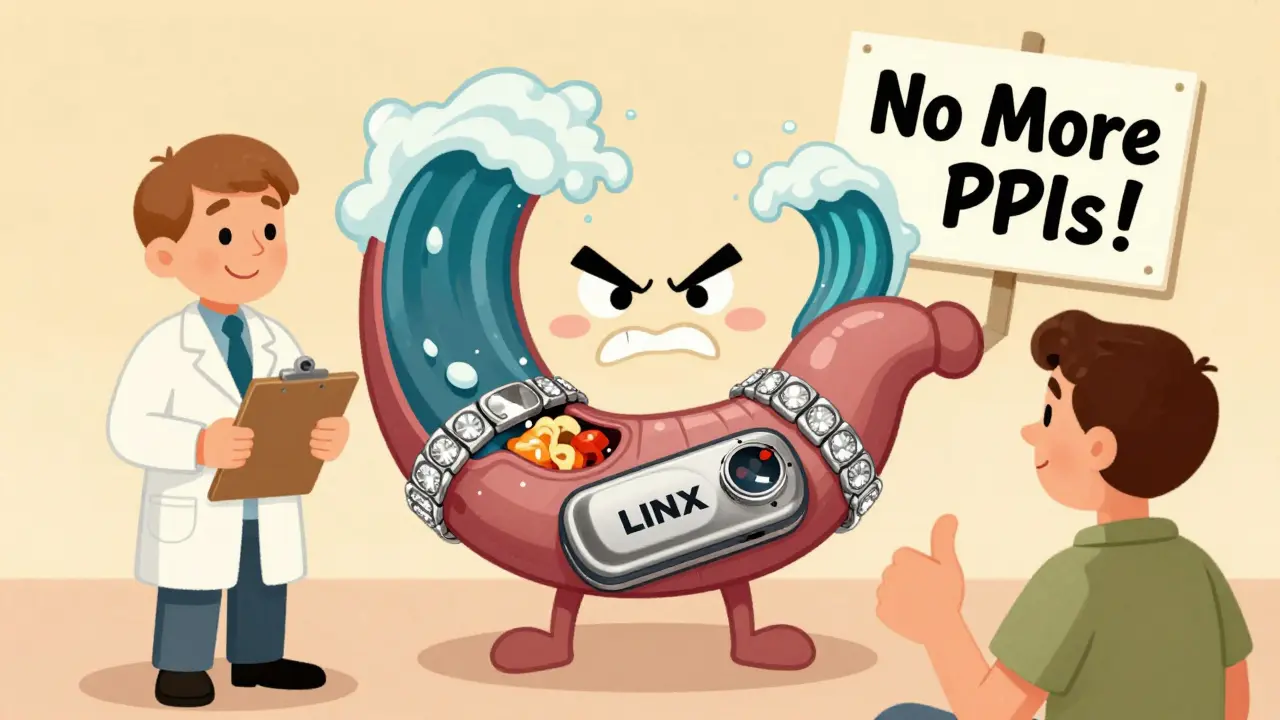
The LINX device is a newer option. It’s a small bracelet of titanium beads implanted around the esophagus. It lets food pass through but snaps shut to block acid. Eighty-five percent of patients stop needing daily PPIs after five years. The downside? You can’t have an MRI after getting it. And it’s not for people who’ve had prior stomach surgery.
There’s also TIF - transoral incisionless fundoplication. It’s done through the mouth with no cuts. It’s less invasive, but success rates are lower (70-75% at three years), and only about 127 doctors in the U.S. are trained to do it.
Some patients report life-changing results. One Reddit user said LINX gave him two years without symptoms after five years of PPIs that stopped working. Others describe the post-op adjustments as harder than expected. Surgery isn’t a magic fix - it’s a trade-off.
What Experts Are Saying Now
The American College of Gastroenterology says start with lifestyle changes, then step up to medications based on severity. But not everyone agrees. Some doctors, like Dr. Lauren Gerson from Stanford, argue that for patients with confirmed acid reflux, surgery should be considered earlier. Her research shows 85% of surgical patients stay symptom-free after 10 years, compared to just 45% on long-term meds.
Meanwhile, the next wave of guidelines, due in late 2025, will focus more on non-acid reflux - cases where the problem isn’t acid at all, but bile or nerve sensitivity. That means future treatments might target different causes, not just acid suppression.
Real Talk: What Patients Actually Experience
On Reddit’s GERD community, people share stories that textbooks don’t. One user lost 40 pounds, cut fat to under 20 grams a day, and stopped all meds - and hasn’t had a flare-up in a year. Another switched from PPIs to vonoprazan and finally got relief after years of frustration.
But side effects are real. On Amazon, nearly 30% of omeprazole reviews mention headaches. Almost 20% talk about diarrhea. A few mention numbness or tingling - signs of B12 deficiency, which long-term PPI users are at risk for.
Trustpilot reviews for the LINX device show 78% positive ratings. People love being off daily pills. But 22% say swallowing pills got harder after surgery - not because of the device, but because their esophagus was already irritated from years of reflux.
What to Do Next
Start here: pick one thing. Either cut out your biggest trigger food, or stop eating after 7 p.m. or start sleeping with your head elevated. Don’t try to overhaul everything at once.
Track your symptoms for two weeks. Write down meals, timing, and how you feel. You’ll spot patterns.
If you’re on PPIs and still having symptoms, ask your doctor if timing is the issue. Take them before breakfast - not after.
If you’ve been on meds for over a year, ask about magnesium levels. And if lifestyle changes and meds aren’t enough, don’t be afraid to ask about surgery options. LINX, fundoplication, TIF - they’re not last resorts. They’re valid tools.
GERD isn’t something you just live with. With the right mix of diet, habits, and medical support, most people can get their life back - without constant burning or midnight trips to the bathroom for antacids.
Can GERD be cured without medication?
Yes, for some people. Lifestyle changes - especially weight loss, avoiding trigger foods, not eating before bed, and quitting smoking - can eliminate symptoms entirely. Studies show up to 70% of patients achieve good control with these changes alone. But if there’s already esophageal damage or severe reflux, medication is often needed to heal and prevent complications.
How long does it take for PPIs to work?
You might feel some relief within a day or two, but PPIs need 2 to 5 days of daily use to reach full effect. That’s because they work by blocking the acid-producing pumps in your stomach, and those pumps regenerate over time. Taking them inconsistently or at the wrong time (like after meals) will make them less effective.
Is vonoprazan better than omeprazole?
In direct comparisons, yes - for many people. Vonoprazan blocks acid faster and keeps stomach pH higher for longer. Studies show 95% of patients on vonoprazan maintain a pH above 4 for 24 hours, compared to 65% on standard PPIs like omeprazole. It’s especially effective for nighttime symptoms and people who don’t respond well to PPIs. But it’s newer, more expensive, and not yet available everywhere.
Can I stop taking PPIs cold turkey?
No. Stopping suddenly can cause rebound acid hypersecretion - your stomach overcompensates by making even more acid, making symptoms worse than before. If you want to stop, work with your doctor to taper slowly, often by switching to an H2 blocker first or using antacids as needed during the transition.
Does drinking water help with acid reflux?
Drinking water during or right after meals can help dilute stomach acid and wash it back down, especially if you’ve eaten something triggering. But chugging large amounts right before lying down can increase pressure and cause reflux. Sipping water throughout the day is better than gulping it at once. Avoid carbonated water - the bubbles expand your stomach and push acid up.
What foods should I avoid with GERD?
Common triggers include fatty or fried foods, chocolate, peppermint, citrus fruits, tomatoes, spicy foods, coffee, tea, alcohol, and carbonated drinks. But triggers vary by person. The best way to know is to keep a food diary for two weeks. Eliminate the top 3 suspected triggers, then reintroduce them one at a time to see what causes symptoms.
Can stress make GERD worse?
Stress doesn’t cause GERD, but it can make symptoms feel worse. It increases your sensitivity to acid and may slow digestion. Managing stress through breathing exercises, walking, or mindfulness can reduce symptom severity - even if the acid levels don’t change. Diaphragmatic breathing, in particular, has been shown to reduce symptoms by 35% in mild cases.
Is the LINX device safe for everyone?
No. LINX isn’t for people who’ve had prior stomach surgery, those with a BMI over 40 (though new approvals now allow up to 40 in some countries), or anyone who might need an MRI in the future. The titanium beads can interfere with MRI scans. It’s also not recommended if you have severe esophageal motility disorders. A specialist must evaluate your anatomy and history before deciding.


Comments
Look, I get it-GERD isn’t just ‘heartburn’ like your grandma says it is. It’s a slow, creeping betrayal of your own digestive system. Fat? It’s not just greasy-it’s a silent saboteur. I used to eat pizza at midnight like it was a spiritual ritual, and then wonder why I felt like my chest was being carved out with a rusty spoon. The science here? It’s not hype. It’s biology. And yet, we treat it like a nuisance we can outdrink or out-sleep. We don’t. We need to listen. The body doesn’t lie. It just screams until you finally shut up and pay attention.
So… PPIs are the gold standard? 😐 I mean, sure, if you’re into long-term pharmacological dependency disguised as ‘management.’ The FDA warnings are basically the medical equivalent of ‘this product may cause existential dread.’ And yet, we’re still prescribing them like they’re vitamin C. Vonoprazan? Sounds like a Marvel villain. But hey, if it keeps me off omeprazole, I’m all for it. Still… I’d rather just stop eating everything ever. 🤷♂️
Let’s be real-no one’s going to stop eating fried chicken or drinking coffee. People don’t change. They just get better at hiding their symptoms. I’ve been on PPIs for 7 years. I don’t care about magnesium levels. I care about not feeling like I swallowed a lit match. If you’re not willing to give up your life for your esophagus, then just take the pill. End of story.
OMG YES!! I lost 35 lbs and stopped eating after 6pm and my GERD just… vanished?? Like, poof!! No more midnight antacid runs!! I used to cry in the bathroom from the burning!! Now I sleep like a baby and eat tacos at 9pm (okay, fine, sometimes) and I’m not dying!! You guys need to try this!! It’s not magic, it’s just… you know… not being an idiot?? 😭❤️
One thing I didn’t see mentioned: chewing gum after meals. It boosts saliva, which neutralizes acid. Simple. Free. And it works. I started doing it after lunch and dinner-no more afternoon flare-ups. Also, wear loose pants. Seriously. Tight belts = pressure on stomach = acid party in your esophagus.
Anyone else notice how every ‘expert’ says ‘lifestyle changes’ but never mentions how impossible that is if you’re working two jobs, living in a studio apartment, and your only ‘meal prep’ is a gas station burrito? I get the science. But real life? It’s not a wellness blog. It’s survival. And sometimes, the pill is the only thing keeping you from crying into your keyboard at 3 a.m.
I tried the head-elevation thing. Used a wooden block under my bed frame. Didn’t use pillows. Honestly? It felt like sleeping on a ramp. But guess what? No more waking up choking on acid. I didn’t believe it either. But physics doesn’t care if you think it’s weird. It just works. 🙏
It’s fascinating how we’ve medicalized discomfort into a hierarchy of solutions-diet, then drugs, then surgery-as if the body is a machine that needs increasingly invasive repairs. But what if the real issue isn’t acid, but our relationship with food? We eat fast. We eat stressed. We eat while scrolling. We treat meals like fuel, not nourishment. Maybe the cure isn’t more drugs… but more presence. Just a thought.
Sheryl nailed it. I’ve been on PPIs for 8 years. Last year, I started diaphragmatic breathing after meals-15 minutes, no phone, just breath. Not a miracle, but a game-changer. My symptoms dropped 40%. I still take a low-dose PPI, but now it’s a backup, not a crutch. And I finally stopped feeling like my body was working against me. It’s not about perfection. It’s about consistency. Small things, done daily, add up.
India here. We don’t have vonoprazan. We have ginger tea, ajwain seeds, and ‘don’t eat spicy food after 7pm’ advice from your auntie. Guess what? It works. Not because it’s ‘alternative’-but because it’s simple. No pills. No surgery. Just listening. Maybe the West overcomplicates everything. Sometimes, the answer isn’t a new drug… it’s a pause.