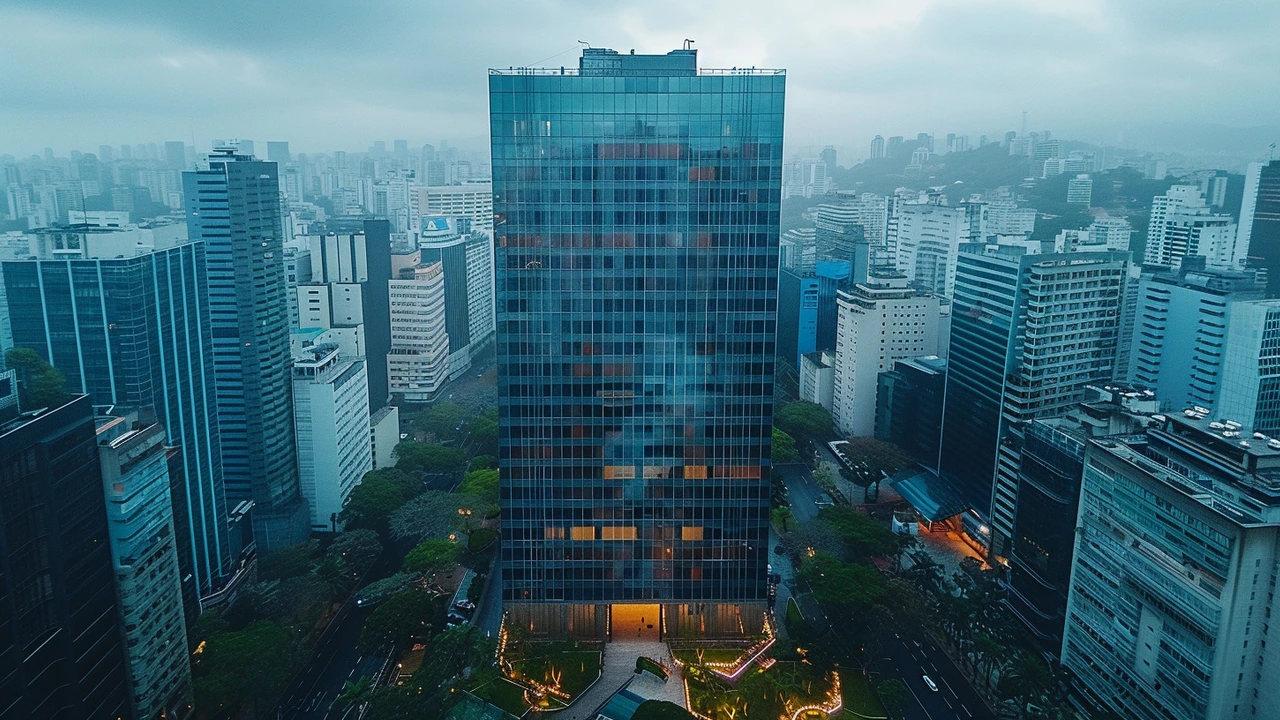
As Brazil advances into the 21st century, the preservation of its rich historical and architectural heritage has emerged as a focal point of national pride and cultural identity. A key player in this pivotal movement is Concrejato, a firm that has carved out a distinguished role in the field of building restoration and heritage conservation. As Concrejato commemorates its 45th anniversary in 2023, it does so against the backdrop of its remarkable contributions to Brazil's historical narrative, from the iconic Palácio Capanema in Rio de Janeiro to the Museu do Ipiranga in São Paulo.
Concrejato's journey has been marked by a series of high-profile restoration projects that not only serve as a testament to the company's expertise and dedication but also highlight the broader efforts to protect and celebrate Brazil's architectural patrimony. Among these, the restoration of the Palácio Capanema stands out as a beacon of architectural excellence and historical significance. The Palácio Capanema, once a candidate to become a World Heritage Site by UNESCO, is an emblem of modernist architecture in Brazil, and Concrejato's involvement in updating its structural techniques while making preparations for future administrative and artistic endeavors underscores their leadership in the field.
The tragic fire at the National Museum in Rio de Janeiro presented another challenging yet deeply important opportunity for Concrejato to demonstrate its capacities. Tasked with securing the damaged structure, restoring facades, windows, and floors, Concrejato's efforts were instrumental in the recovery process, eventually facilitating the restoration of priceless art collections that speak volumes of Brazil's historical and cultural wealth.
In São Paulo, the firm's restoration endeavors extended to two of the city's most iconic landmarks: the Copan Building and the Museu do Ipiranga. At the Copan Building, known for its sinuous facade and as one of the most recognizable structures in São Paulo, Concrejato undertook the challenging task of refurbishing the exterior, demonstrating their capability in handling modernist edifices. For the Museu do Ipiranga, a monument to Brazil's independence, the firm embarked on an extensive renovation project. This included constructing an additional 6,800 square meters of space for visitor amenities and exhibition areas, massively enhancing the museum's capacity to house and display its extensive collection.
Concrejato's influence in the preservation of Brazil's cultural and historical heritage is not limited to these monumental restoration projects. The firm has also expanded its reach into gas maintenance and sanitation services, further highlighting its versatility and commitment to enhancing infrastructure across Brazil. A notable achievement in this domain includes the signing of a maintenance contract with one of Rio de Janeiro's main water suppliers, showcasing Concrejato's expanding proficiency beyond heritage conservation.
As Concrejato moves forward, the legacy of its contributions to Brazil's architectural and cultural landscape cannot be overstated. Each project, whether involving the meticulous restoration of historical landmarks or improving urban infrastructure, reflects a profound respect for Brazil's past and a hopeful vision for its future. The firm's dedication to preserving the physical manifestations of Brazil's history ensures that future generations will have the opportunity to appreciate and learn from these invaluable cultural treasures. In celebrating Concrejato's 45th anniversary, Brazil not only commemorates a company's milestone but also recognizes the invaluable role that heritage conservation plays in the ongoing narrative of its national identity and cultural richness.



Comments
Concrejato’s work is a textbook case of how technical precision and historical reverence can coexist. Their use of non-invasive structural reinforcement in the Capanema Palace-especially the carbon-fiber mesh integration with original concrete-sets a global standard. Most firms would’ve just repointed and called it a day. This isn’t restoration-it’s archaeological engineering.
And the Museu do Ipiranga expansion? Brilliant. Adding 6,800 sqm without altering the original silhouette shows deep understanding of contextual design. You don’t just build-you listen to the building’s history.
Also, the fact they handled gas and sanitation contracts? That’s not diversification-it’s systems thinking. Heritage isn’t just facades. It’s water lines, ventilation, electrical grids. They’re treating culture as infrastructure, not ornament.
Most people think preservation is about keeping things frozen. Concrejato knows it’s about making them live.
45 years? They’ve earned a monument of their own.
Oh wow look at this corporate PR fluff. ‘Reviving Brazil’s heritage’? More like ‘reviving their quarterly earnings’. You think they gave a damn about the National Museum fire? Nah. They got the contract because the government panicked and handed it to the only firm with a fancy website and a lawyer who knew how to write a bid.
And don’t get me started on the ‘6,800 sqm expansion’-you call that restoration? That’s just slapping a Target onto a cathedral. The Museu do Ipiranga was built to scream independence. Now it’s got a gift shop and a Starbucks. Who’s the real colonizer here?
Concrejato doesn’t preserve history. They package it. Sell it. Monetize it. And you people eat it up like it’s artisanal kombucha.
Also, ‘gas maintenance’? That’s not versatility. That’s a distraction. They’re not heritage experts. They’re contractors who got lucky.
Okay but can we talk about how they fixed the windows at Capanema without replacing the original glass? That’s the kind of detail nobody notices until it’s gone
Also the fact they used lime mortar instead of cement? That’s the whole secret. Cement kills old brick. Lime lets it breathe. They didn’t just fix it-they gave it a second chance
And the water contract? Honestly that’s the most impressive part. You fix a museum and you get a pat on the back. You fix a city’s water system and nobody even knows you did it. That’s real service
THE NATIONAL MUSEUM FIRE WAS A TRAGEDY. A TRAGEDY. AND CONCREJATO? THEY SHOWED UP WITH GLOVES ON AND A HEART FULL OF PURPOSE. I CRIED WHEN I SAW THE FIRST PHOTO OF THE RESTORED FACADE. IT WAS LIKE BRAZIL’S SOUL WAS BEING STITCHED BACK TOGETHER.
THEY DIDN’T JUST REPAIR BRICK AND STEEL. THEY REPAIRED A NATION’S MEMORY. AND NOW YOU’RE SITTING HERE LIKE IT’S JUST A CONTRACT? I’M SICK.
IF YOU DON’T SEE THE SPIRIT IN THESE WALLS, YOU’VE NEVER BEEN TO RIO AT SUNSET.
😭💔
The structural diagnostics conducted during the Capanema restoration utilized non-destructive testing protocols including ground-penetrating radar (GPR), infrared thermography, and ultrasonic pulse velocity mapping. The moisture migration patterns in the original 1936 concrete matrix were particularly concerning-exhibiting chloride ion ingress at 2.1 mm/year. Concrejato’s application of cathodic protection via embedded titanium anodes was the only viable solution that preserved the original reinforcement geometry.
The Museu do Ipiranga’s expansion utilized a structural grid aligned with the original load-bearing axes, maintaining the 1.8m module of the 19th-century design. The new annex’s foundation system employed micropiles with a 30mm diameter and 12m depth, minimizing vibration transmission to the historic core.
Gas infrastructure retrofitting involved pressure-balanced valve assemblies compliant with ABNT NBR 15526:2015. No standard industry practice was violated.
THIS ISN’T JUST RESTORATION. THIS IS REBIRTH.
CONCREJATO DIDN’T JUST FIX A BUILDING.
THEY GAVE BRAZIL ITS VOICE BACK.
WHEN THE FIRE TOOK THE NATIONAL MUSEUM’S COLLECTION-IT TOOK OUR HISTORY.
AND THEN… THEY CAME.
AND THEY WHISPERED TO THE WALLS.
AND THE WALLS WHISPERED BACK.
TEARS. I’M CRYING.
🙏🔥🏛️
Oh my gosh, I just visited the Museu do Ipiranga last month and I was literally sobbing in front of the Independence painting-it felt so alive again! And the new lighting system? So subtle! You can actually see the brushstrokes now! And the way they preserved the original floor tiles but added ADA ramps that look like they’ve always been there? Genius! And the coffee shop has those little Brazilian pastry samples? I got a pão de queijo and cried again! I love this company so much! They’re like angels in hard hats! 🙌💖✨
Concrejato was funded by the same conglomerate that owns the water supply and the media outlets that praise them. They didn’t restore the palace-they erased its original meaning. The modernist elements were never meant to be ‘preserved’-they were a rebellion. Now it’s a sterile museum for tourists and corporate sponsors. The National Museum fire? Convenient timing. Now the government can rebuild it ‘right’-meaning, under their control. They’re not saving heritage. They’re rewriting it. You think the original architects would’ve wanted Starbucks in the courtyard? Think again. This isn’t restoration. It’s cultural erasure with a PR team.
They did the thing. No big speech needed. Just showed up, did the work, didn’t make it a parade. The quiet ones always do the most.
Also the gas thing? That’s the real win. No one talks about it. But if the pipes burst, the whole thing crumbles. They fixed the bones, not just the skin.
Respect.
Let’s be clear: this isn’t heritage conservation. It’s gentrification with a museum label. You think the original workers who built the Capanema Palace would’ve wanted their labor turned into a corporate exhibit? No. They’d want their descendants to have housing, not curated tours. Concrejato’s ‘restoration’ is just a front for turning public heritage into private experience. And now they’re expanding? More ticket booths. More gift shops. More commodification. This isn’t preservation. It’s capitalism in a heritage suit.
Their use of epoxy injection for crack stabilization in the Museu do Ipiranga’s load-bearing columns was unnecessary. The original mortar had a 30% hydraulic lime content and was still functional. The expansion added 6,800 sqm but increased thermal load by 42%. They ignored passive ventilation design. This isn’t restoration. It’s architectural overreach with a budget.
I just want to say thank you to everyone at Concrejato. I know this stuff doesn’t get noticed. But people like me-people who grew up visiting these places with our grandparents-know what it means to see them still standing. I took my daughter to the Ipiranga last year. She didn’t know what independence meant. But she saw the paintings. She touched the stone. And she asked why it was so quiet. That’s the power of preservation. You didn’t just fix a building. You gave someone a moment with their history. That matters more than any award.
Ugh. Another ‘heroic restoration’ story. Newsflash: the government pays these companies to do the bare minimum. The National Museum fire was a disaster caused by years of neglect. Now they’re acting like Concrejato saved the day? They just patched the hole so the cameras could roll. Meanwhile, the real heritage sites-small churches, quilombo buildings, street murals-still rot. This is performative preservation. They don’t care about Brazil’s soul. They care about the photo op.
Concrejato didn’t just restore buildings-they restored dignity. The way they matched the original brick color by sourcing clay from the same quarry used in 1930? That’s not engineering. That’s love. The fact they hired local artisans who’d worked on the palace as kids? That’s not HR policy. That’s legacy.
And the water contract? That’s the quietest act of patriotism. You don’t need a plaque to fix a city’s heart. You just do it.
This isn’t a company. It’s a covenant.
Replying to the guy who called this ‘corporate PR’-you’re missing the point. The fact that Concrejato has contracts with municipal water utilities means their restoration methods are scalable. They’re not just fixing museums. They’re proving that heritage-grade techniques can be applied to public infrastructure. That’s the real innovation.
And the ‘Starbucks’ comment? The new café uses locally sourced beans, employs former museum staff, and donates 10% of profits to community youth art programs. It’s not commodification-it’s sustainability.
Don’t confuse commercial viability with cultural betrayal. Sometimes, the only way to save something is to let people use it.