
Imagine you are finally feeling good. Your Inflammatory Bowel Disease (IBD) is in remission, your energy is back, and you are ready to start a family. Then comes the panic. You sit down with your gastroenterologist and ask the question that keeps many patients up at night: "Will my medications hurt my baby?" For decades, the answer was murky because pregnant women were largely excluded from clinical trials. But today, thanks to massive global registries like the PIANO Registry, we have clearer answers than ever before.
The hard truth is that uncontrolled IBD poses a far greater risk to your pregnancy than most medications do. Active disease increases the risk of preterm birth by more than double and raises the chances of low birth weight significantly. The goal isn't just to survive the pregnancy; it is to thrive through it, which usually means staying on your current treatment plan. Let’s break down exactly what the latest 2023-2024 global guidelines say about keeping both you and your baby safe.
Why Remission Is the Best Medicine
Before looking at specific drugs, we need to address the biggest misconception: that stopping medication is safer. It is not. When IBD flares during pregnancy, inflammation affects blood flow to the placenta and can trigger early labor. Studies cited by the European Crohn's and Colitis Organisation (ECCO) show that active disease at conception leads to a 2.3 times higher risk of preterm birth compared to being in remission.
The Helmsley PIANO Global Consensus, published in August 2023, brings together 42 experts from 15 countries. Their message is unified: achieve clinical and endoscopic remission on a steroid-free regimen for at least three months before trying to conceive. This buffer period ensures that your body is stable and reduces the likelihood of a flare-up during those critical first trimester weeks when organ formation occurs.
Think of it this way: if you are already healthy, your baby has the best possible start. If you stop meds to "be safe," you might inadvertently create a high-risk environment due to inflammation. The consensus is clear-the greatest threat to mother and baby is active, uncontrolled IBD, which carries a 3.1 times higher risk of adverse outcomes than medication exposure.
Safety of Aminosalicylates (5-ASAs)
Aminosalicylates, such as Mesalamine and Sulfasalazine, are often the first line of defense for mild to moderate IBD. For years, doctors have considered these safe during pregnancy, but there is a crucial detail regarding formulations that many patients miss.
Mesalamine is generally recommended to be continued without modification. However, not all mesalamine pills are created equal. Some older formulations, specifically Asacol HD, use a coating called dibutyl phthalate (DBP). Animal studies showed that high doses of DBP could cause urogenital malformations in male offspring. Because of this, major guidelines advise avoiding DBP-containing formulations. Instead, opt for DBP-free versions like Lialda or Apriso. These provide the same anti-inflammatory benefits without the theoretical chemical risk.
If you are taking sulfasalazine, you should continue it, but with one important adjustment. Sulfasalazine blocks the absorption of folic acid, which is vital for preventing neural tube defects in the developing fetus. Therefore, you will need to take supplemental folate-usually a higher dose than the standard prenatal vitamin-to counteract this effect. Always check with your doctor for the exact dosage, but do not stop the drug itself unless advised.
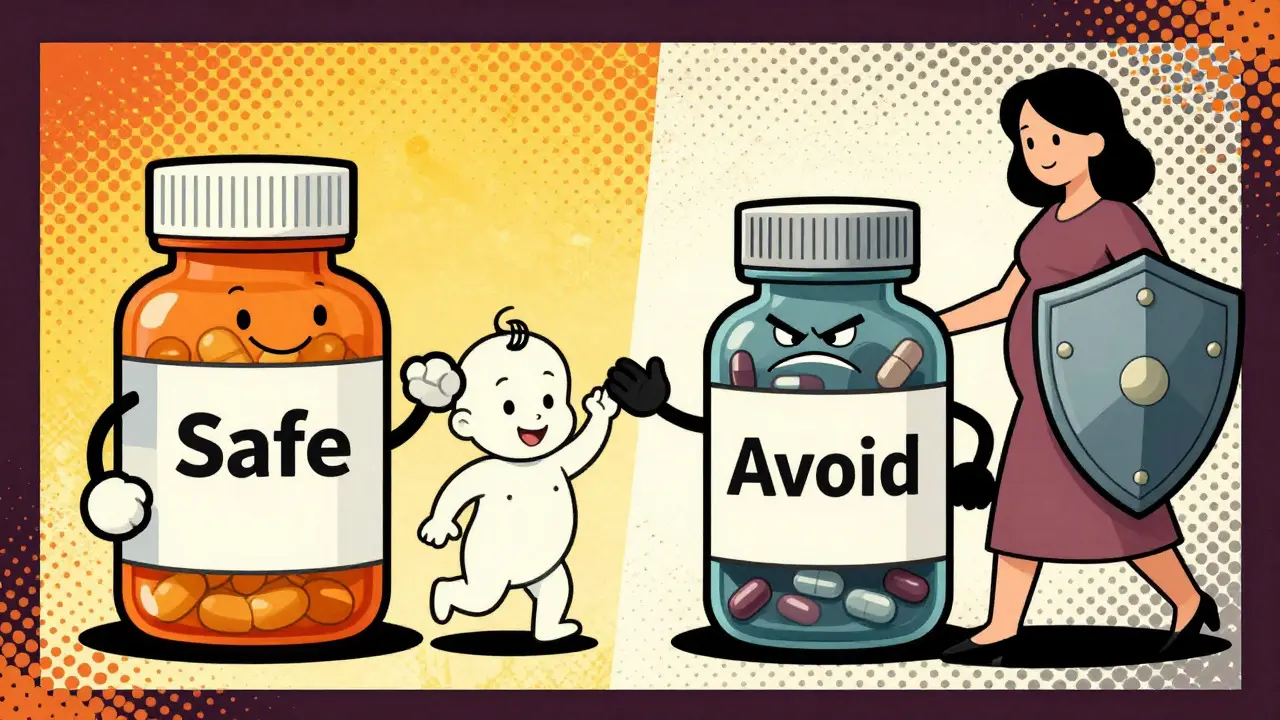
Biologics: Anti-TNF Agents and Gut-Selective Drugs
For moderate to severe IBD, biologics are the workhorse of treatment. The data here is robust, largely thanks to the PIANO registry, which has tracked over 1,500 pregnancies since 2007. The results are reassuring for patients on Anti-TNF agents like infliximab (Remicade) and adalimumab (Humira).
Prospective data shows no increased risk of congenital malformations for babies exposed to anti-TNFs in utero (2.6% vs 2.8% in the general population). Preterm birth rates are also comparable to the general public. While some doctors previously suggested stopping anti-TNFs in the third trimester to reduce drug levels in the newborn's blood, recent guidelines suggest continuing them through delivery to maintain maternal remission. The small amount of drug passed to the infant rarely causes issues, and it does not contraindicate standard live vaccines, though timing may be adjusted based on blood tests after birth.
What about newer options? Vedolizumab (Entyvio) is gut-selective, meaning it stays mostly in the intestines rather than circulating systemically. Early retrospective data from the CONCEIVE study raised concerns about lower live birth rates, but further analysis revealed this was linked to active disease, not the drug itself. When women were in remission, vedolizumab proved safe. Similarly, Ustekinumab (Stelara) has expanded safety data showing adverse outcome rates similar to the general US population. Both are now classified as having limited but reassuring data, making them viable options for maintaining remission.
| Medication Class | Examples | Safety Category | Key Considerations |
|---|---|---|---|
| 5-ASAs | Mesalamine (Lialda), Sulfasalazine | Safe (Category A) | Avoid DBP-coated Mesalamine; add folate for Sulfasalazine |
| Anti-TNFs | Infliximab, Adalimumab | Safe (Category A) | Continue throughout pregnancy; monitor infant vaccine schedule |
| Gut-Selective Biologics | Vedolizumab | Reassuring Data (Category B) | Safe if in remission; ongoing long-term studies |
| IL-12/23 Inhibitors | Ustekinumab | Reassuring Data (Category B) | Comparable risks to general population |
| JAK Inhibitors | Tofacitinib, Upadacitinib | Discontinue (Category C) | Stop 1-6 weeks prior to conception due to limited data |
| Immunomodulators | Methotrexate | Contraindicated (Category X) | Known teratogen; stop 3+ months before conception |
Medications to Avoid or Modify
Not all IBD treatments are created equal when it comes to pregnancy planning. There are clear red flags that require immediate action if you are thinking of getting pregnant.
Methotrexate is an absolute contraindication. It is a known teratogen, meaning it causes birth defects, with a major malformation risk ranging from 17% to 27%. If you are on methotrexate, you must stop it at least three months before trying to conceive to allow it to clear your system completely. Thalidomide is similarly prohibited.
Then there are the JAK inhibitors, such as Tofacitinib (Xeljanz) and Upadacitinib (Rinvoq). While small studies haven't shown obvious harm yet, the data is simply too limited. The precautionary principle applies here. Guidelines recommend discontinuing tofacitinib at least one week before conception and upadacitinib four to six weeks prior, switching to a safer alternative like a biologic if needed to maintain control.
Corticosteroids, like prednisone, are another area of caution. They are not teratogenic in the same way methotrexate is, but they are associated with a slightly increased risk of oral clefts (cleft lip/palate) if used in the first trimester. The goal is to get off steroids entirely before conceiving. If you need a short burst for a flare, discuss the timing carefully with your obstetrician and gastroenterologist.

Planning Ahead: The Pre-Conception Window
Pregnancy planning for IBD patients shouldn't happen overnight. The ideal window is three to six months before you try to conceive. This gives you time to optimize your medication regimen, switch from unsafe drugs to safe ones, and ensure you are in deep remission.
You need a coordinated care team. This means your gastroenterologist and your obstetrician (preferably a maternal-fetal medicine specialist if you have complications) are talking to each other. Don't assume they know your full history. Bring a list of all your medications, including supplements, to every appointment.
Also, consider your mental health. Anxiety about medication safety is real, affecting nearly 70% of pregnant IBD patients according to recent surveys. This stress can exacerbate symptoms. Knowing the facts-that your medications are likely safer than the disease itself-can help alleviate some of that burden. Joining support groups like the IBD Parenthood community can also provide peer validation and practical tips.
Postpartum Care and Breastfeeding
Your journey doesn't end at delivery. Most IBD medications, including biologics and aminosalicylates, are compatible with breastfeeding. In fact, breastfeeding may offer protective immune benefits to your infant. Sulfasalazine excretes small amounts into breast milk, but toxicity is unlikely; however, monitoring your baby for any unusual rash or diarrhea is prudent.
Be aware that the postpartum period is a high-risk time for IBD flares due to hormonal shifts and sleep deprivation. Do not stop your maintenance therapy after giving birth. Continue your biologics and 5-ASAs as prescribed. If you had to hold anti-TNFs in the third trimester, restart them immediately postpartum to prevent a rebound flare.
Vaccinations for your newborn are generally safe. Live vaccines, such as the rotavirus vaccine, are not contraindicated solely because of maternal IBD medication exposure, though your pediatrician may check drug levels in the baby's blood to determine the optimal timing. Keep open lines of communication between your GI doctor and your child's pediatrician.
Can I stay on Humira or Remicade while pregnant?
Yes. Infliximab (Remicade) and adalimumab (Humira) are considered safe during pregnancy. Large registry data shows no increased risk of birth defects. Many doctors now recommend continuing these drugs through the entire pregnancy to keep your IBD in remission, rather than stopping them in the third trimester.
Is Mesalamine safe for my baby?
Most forms of Mesalamine are safe. However, you should avoid formulations containing dibutyl phthalate (DBP), such as Asacol HD, due to potential developmental risks. Ask your doctor to switch you to a DBP-free version like Lialda or Apriso before you conceive.
When should I stop Methotrexate if I want to get pregnant?
You must stop Methotrexate at least three months before trying to conceive. It is a known teratogen and can cause serious birth defects. Ensure it is fully cleared from your system before ovulation begins.
Does active IBD affect my pregnancy more than medications?
Yes. Uncontrolled IBD poses a significantly higher risk to pregnancy outcomes, including preterm birth and low birth weight, than most IBD medications. Maintaining remission is the priority for a healthy pregnancy.
Can I breastfeed if I am on biologics?
Yes, breastfeeding is generally encouraged for mothers on biologics like anti-TNFs, ustekinumab, and vedolizumab. The amount of drug transferred to breast milk is minimal and considered safe for the infant.