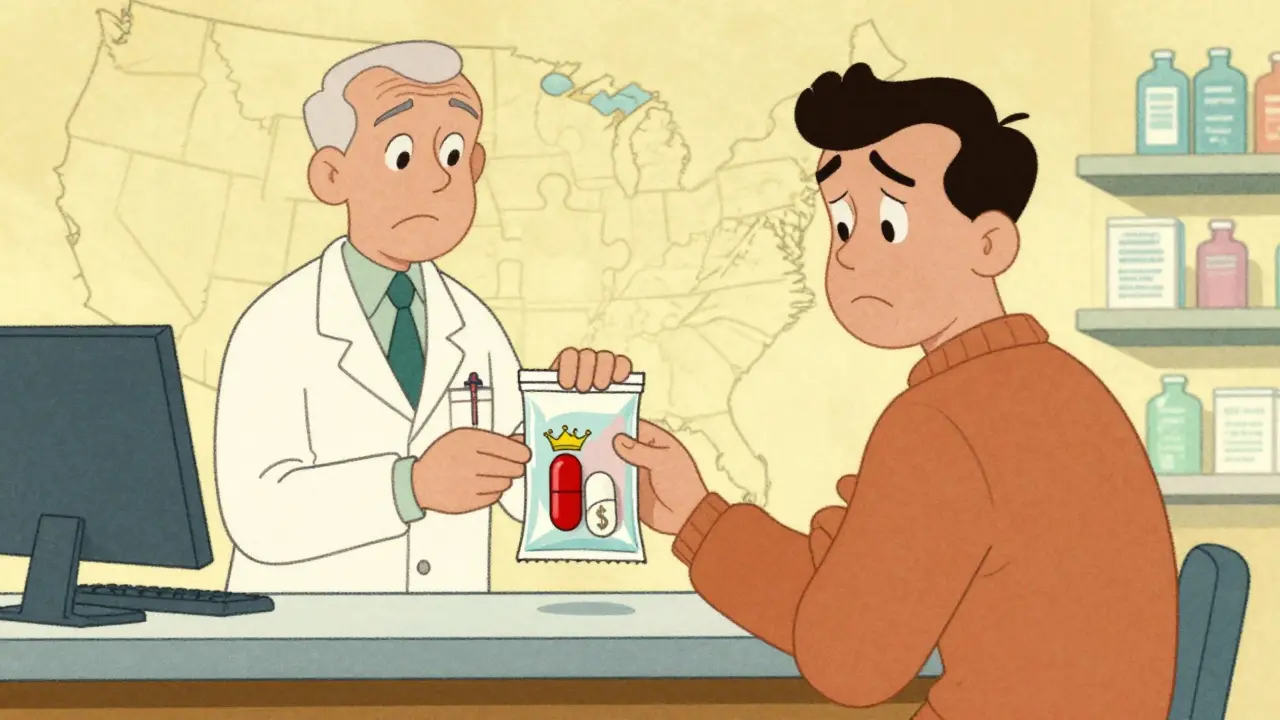
Imagine picking up your prescription, only to find the pharmacist has swapped your prescribed brand-name medication for a different-looking pill. You might wonder if this is safe, legal, or even allowed. This scenario plays out millions of times across the United States, governed by a complex patchwork of state regulations known as drug product selection laws. These laws determine when pharmacists can substitute generic drugs or biosimilars for brand-name medications without asking you first.
If you are confused about why your medication changed, who decides that change, and what rights you have, you are not alone. With every state having its own rules, navigating pharmacy substitution feels like solving a puzzle with missing pieces. The good news is that understanding these laws can help you save money-often significantly-while ensuring you stay safe and informed about the medicine you take.
Understanding the Basics of Drug Substitution
To understand how substitution works, we first need to define the key players. Generic drugs are copies of brand-name medications that contain the same active ingredients, dosage form, strength, and route of administration. They must meet strict FDA standards for bioequivalence, meaning they work in the body the same way as the brand-name version. Because generics don't carry the massive research and development costs of the original drug, they typically cost 80-85% less than their brand-name counterparts.
Biosimilars, on the other hand, are biological products highly similar to an existing FDA-approved reference product. Unlike small-molecule generics, biologics are large, complex molecules made from living cells. This complexity means biosimilars cannot be identical copies; they are "similar" within tight regulatory limits. For a biosimilar to be substituted, it often needs an additional FDA designation called "interchangeable," which indicates it can be swapped back and forth with the reference product without increasing safety risks.
The core principle behind all substitution laws is balancing two goals: reducing healthcare costs and maintaining patient safety. According to data from the Association for Accessible Medicines, generic drugs account for 90% of prescriptions dispensed but only 23% of total drug spending, saving billions annually. However, because individual states regulate this process, the rules vary wildly depending on where you live.
Mandatory vs. Permissive States: What Does It Mean for You?
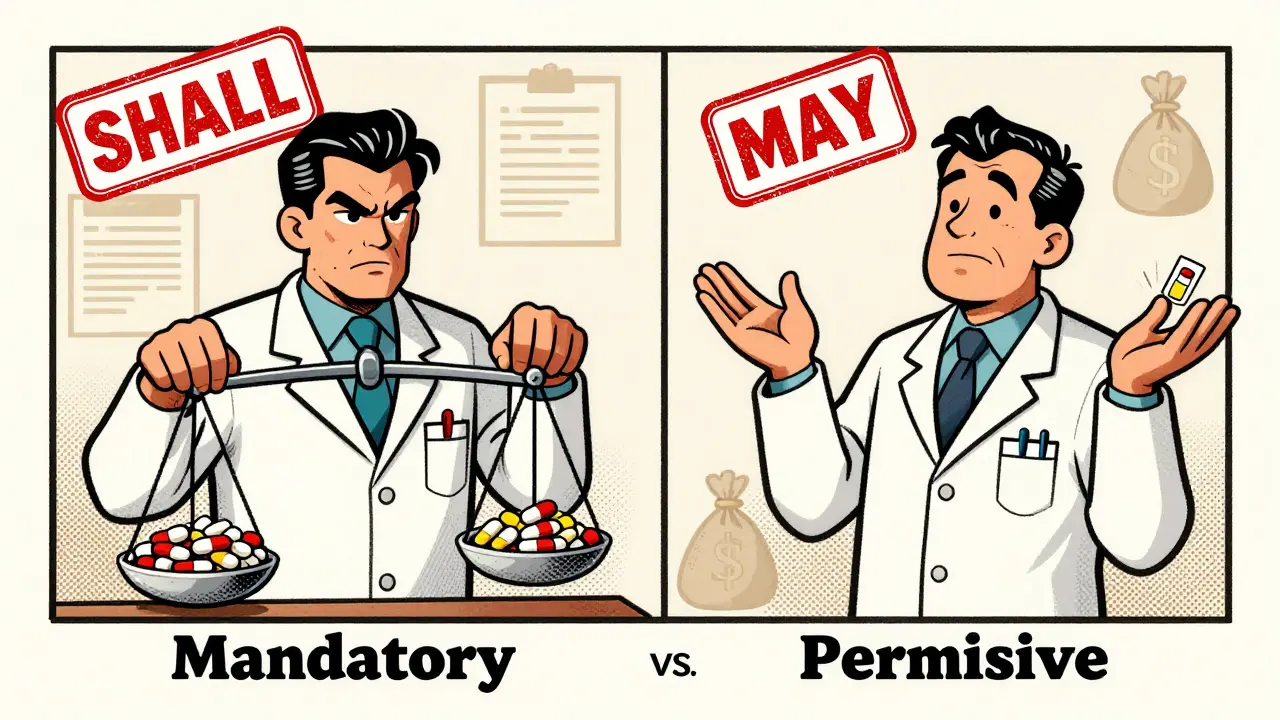
When looking at state-specific pharmacy laws, the biggest distinction is whether your state mandates substitution or merely permits it. This difference changes how likely you are to receive a generic instead of the brand-name drug your doctor wrote.
| Feature | Mandatory States (19) | Permissive States (31 + DC) |
|---|---|---|
| Legal Language | Pharmacist shall substitute | Pharmacist may substitute |
| Default Action | Dispense generic unless restricted | Can choose to dispense brand or generic |
| Patient Consent | Often required or strongly encouraged | Varies; some require notification only |
| Cost Impact | Higher savings due to higher generic use | Variable savings depending on pharmacy policy |
In mandatory states, such as California, New York, and Texas, the law requires pharmacists to dispense a generic equivalent if one is available, unless the prescriber explicitly blocks it. This approach drives high generic utilization rates. In permissive states, the decision rests more heavily on the pharmacist’s judgment or the pharmacy chain’s internal policies. While this offers flexibility, it can lead to inconsistent experiences for patients moving between pharmacies or states.
It is also crucial to note that even in permissive states, many insurance plans and Medicaid programs incentivize generic use through lower copays. So, while the law might not force substitution, financial pressure often does.
Biologics and Biosimilars: A More Complex Landscape
Navigating substitution for biologic medications is significantly more complicated than for traditional pills. Biologics treat serious conditions like rheumatoid arthritis, Crohn's disease, and certain cancers. Because these drugs are so potent and complex, states have imposed stricter rules on substituting biosimilars.
As of recent analyses, all 50 states and Washington, D.C., have laws governing biologic substitution. However, 45 states (90%) impose more stringent requirements for interchangeable biologics compared to small-molecule generics. The most common hurdle is physician notification. In 37 states, pharmacists must notify the prescribing doctor within a specific timeframe-ranging from immediately to seven days-after substituting an interchangeable biologic. In 12 states, prior authorization from the prescriber is required before any substitution can occur.
This creates a bottleneck for adoption. Despite potential cost savings of up to 35%, biosimilars represent only about 4% of biologic prescriptions. Part of this lag stems from confusion among providers and patients about the difference between "biosimilar" and "interchangeable." Only a fraction of approved biosimilars currently hold the interchangeable designation, limiting automatic substitution opportunities.
Your Rights: Consent, Notification, and Refusal
One of the most important aspects of pharmacy substitution laws is your right as a patient to know what you are taking. Transparency varies by state, but here is what you generally need to know:
- Explicit Consent: Seven states plus D.C. require explicit patient consent before a pharmacist can substitute a generic or biosimilar. If you live in one of these jurisdictions, you should expect a conversation at the counter before the swap happens.
- Notification Requirements: In 31 states plus D.C., pharmacists must notify you after substitution, regardless of packaging. This might happen via a label sticker, a verbal explanation, or a receipt note.
- Right to Refuse: You can refuse substitution in all 50 states. However, 24 states do not explicitly require pharmacists to inform you of this right before filling the prescription. This means you may need to speak up proactively if you prefer the brand-name drug.
If you have a condition requiring precise dosing, such as epilepsy or thyroid disorders, you may be particularly sensitive to formulation changes. Some states maintain "negative formularies"-lists of drugs that cannot be substituted without prescriber approval. For example, Hawaii prohibits substitution of antiepileptic drugs without both practitioner and patient consent. Kentucky maintains a specific list of narrow therapeutic index (NTI) drugs that are off-limits for routine substitution.
How Prescribers Control Substitution
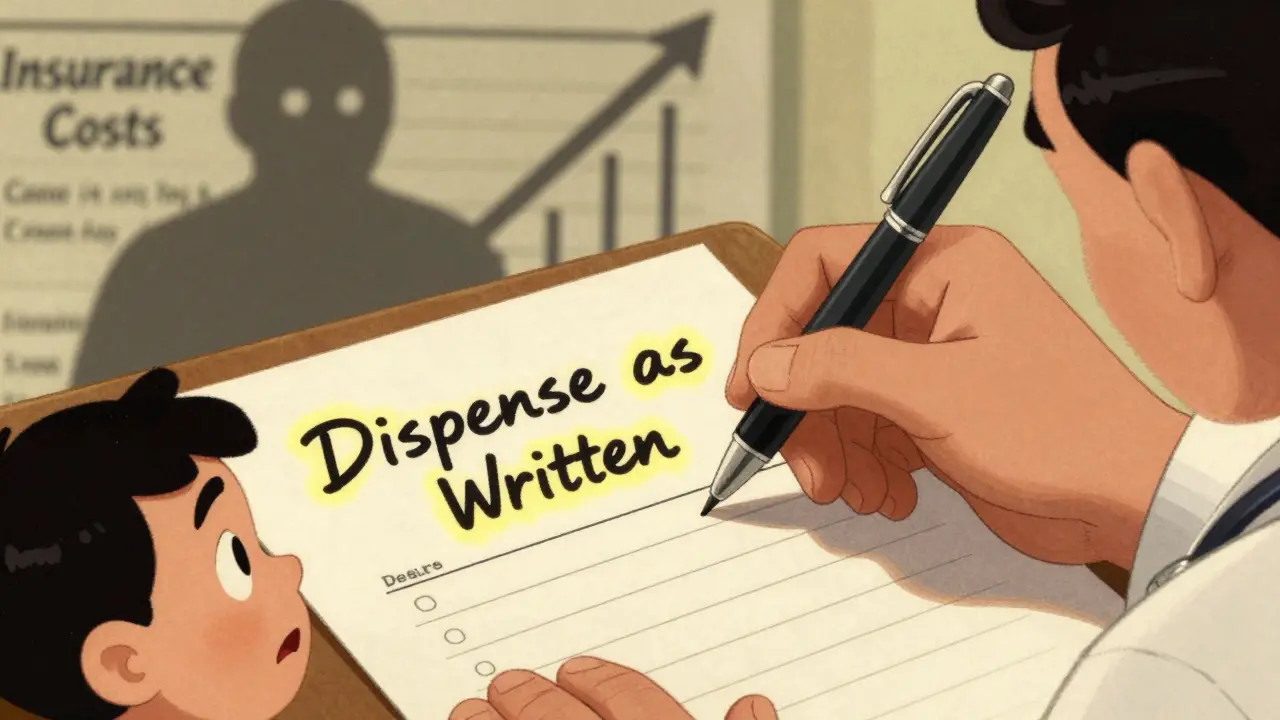
Your doctor plays a pivotal role in this process. In every state, prescribers can prevent substitution by writing "dispense as written" (DAW) or "brand medically necessary" on the prescription. This notation legally binds the pharmacist to fill the exact brand-name drug specified.
However, using this option isn't always straightforward. Twenty-eight states (56%) require prescribers to provide justification for restricting substitution. This might involve checking a box indicating medical necessity or documenting why the generic failed in previous trials. This administrative step aims to prevent unnecessary brand-name fills when generics would suffice, but it adds friction for doctors who genuinely need to protect patient outcomes.
If you feel your current generic is causing side effects or isn't working as well as the brand, talk to your doctor. They can issue a DAW code, though your insurance may still charge you the higher brand-name copay. Always check with your insurer first to understand the financial impact.
Practical Steps to Navigate Substitution Laws
So, how do you actually navigate these laws in your daily life? Here is a step-by-step guide to staying in control of your medication:
- Know Your State’s Category: Check if your state is mandatory or permissive. Resources like the Cardinal Health interactive map or your state board of pharmacy website provide detailed guides. Understanding the baseline rule helps set expectations.
- Ask Questions at Pickup: Never assume the pill in the bag is exactly what was prescribed. Ask the pharmacist, "Is this a generic substitution?" and "Has my doctor been notified?" Especially for biologics, this verification is critical.
- Review Your Insurance Formulary: Your insurance plan often dictates substitution more than state law. If the generic is tiered lower, your copay will be much cheaper. If you insist on the brand, be prepared for a significant price hike.
- Document Preferences: If you have a strong preference for brand-name due to past adverse reactions with generics, discuss this with your primary care provider. Having a documented medical reason strengthens your case for a DAW order.
- Monitor for Changes: Laws evolve. For instance, California strengthened patient notification requirements for biosimilars in 2023. Stay updated by subscribing to alerts from reputable health organizations or checking with your local pharmacy.
Common Pitfalls and How to Avoid Them
Even informed patients can stumble over hidden complexities. One major pitfall is confusing "biosimilar" with "interchangeable." Just because a drug is labeled biosimilar doesn't mean it can be automatically swapped. Only those with the specific interchangeable designation meet the highest standard for substitution. Pharmacists sometimes face confusion here too; a 2022 survey found that 67% reported initial uncertainty about these distinctions.
Another issue arises with narrow therapeutic index (NTI) drugs. These include medications like warfarin (blood thinner), phenytoin (seizure control), and levothyroxine (thyroid hormone). Small differences in inactive ingredients or manufacturing processes can affect how these drugs behave in the body. Studies show that states with strict NTI restrictions see fewer adverse events. If you take an NTI drug, never agree to a substitution without consulting your specialist first.
Finally, beware of cost-contingent laws. Fifteen states prohibit biosimilar substitution if the biosimilar costs more than the reference product, even if it is technically interchangeable. This seems counterintuitive, but payer contracts and rebates can create pricing anomalies. Always verify the out-of-pocket cost before accepting a new medication.
Future Trends and Standardization Efforts
The landscape of pharmacy substitution is shifting toward greater standardization. The National Association of Boards of Pharmacy (NABP) has developed model legislation that 22 states have partially adopted since 2020. These models focus on consistent notification timelines and documentation requirements, aiming to reduce the confusion faced by multi-state pharmacy chains and mobile patients.
Looking ahead, biosimilar adoption is expected to surge. Projections suggest biosimilars could capture 70% of the $119 billion U.S. biologics market by 2030. As more products gain interchangeable status, substitution will become more common. Patients should prepare for this shift by educating themselves on their rights and building open communication channels with their healthcare providers.
Ultimately, pharmacy substitution laws exist to make healthcare more affordable without compromising safety. By understanding the rules in your state, you can leverage these systems to save money while maintaining confidence in the quality of your care. Don't hesitate to advocate for yourself-your health is worth the conversation.
Can I refuse a generic substitution if my doctor prescribed a brand-name drug?
Yes, you can refuse substitution in all 50 states. However, in 24 states, pharmacists are not explicitly required to inform you of this right before filling the prescription. To ensure you get the brand-name drug, ask your doctor to write "dispense as written" on the prescription, or verbally request the brand at the pharmacy counter. Be aware that your insurance may charge a higher copay for the brand-name version.
What is the difference between a biosimilar and an interchangeable biologic?
A biosimilar is a biological product highly similar to an existing FDA-approved reference product. An interchangeable biologic is a biosimilar that meets additional FDA requirements demonstrating it can be substituted for the reference product without expecting a different safety or efficacy profile. Not all biosimilars are interchangeable; only those with the specific "interchangeable" designation can be automatically substituted in many states.
Do I need to tell my doctor if my pharmacist substitutes my medication?
For small-molecule generics, notification requirements vary by state, but it is always good practice to keep your doctor informed. For interchangeable biologics, 37 states require the pharmacist to notify the prescriber within a specific timeframe (up to 7 days). You should also monitor your response to the new medication and report any changes to your doctor immediately.
Are generic drugs as effective as brand-name drugs?
Yes, generic drugs must be bioequivalent to their brand-name counterparts, meaning they deliver the same amount of active ingredient into your bloodstream in the same amount of time. They undergo rigorous FDA testing to ensure safety and efficacy. The main differences lie in inactive ingredients, color, or shape, which rarely affect performance but can occasionally cause sensitivities in rare cases.
Why do some states mandate generic substitution while others only permit it?
States mandate substitution to maximize cost savings for public programs like Medicaid and private insurers. Mandatory states (19) use "shall" language, requiring pharmacists to dispense generics when available. Permissive states (31) use "may" language, leaving the decision to the pharmacist or pharmacy policy. Mandatory states generally see higher generic utilization rates and greater overall healthcare savings.
What should I do if I experience side effects after switching to a generic?
Contact your doctor immediately. While rare, some patients react differently to inactive ingredients in generics. Your doctor can evaluate whether the side effect is related to the switch and may prescribe the brand-name drug with a "dispense as written" notation. Document the reaction and inform your pharmacist to update your profile for future reference.
How can I find out the specific substitution laws in my state?
You can check your state board of pharmacy’s website for official regulations. Additionally, resources like the Cardinal Health Biosimilar Substitution Map or the National Association of Boards of Pharmacy (NABP) provide state-by-state summaries. Your local pharmacist is also a valuable resource for explaining how these laws apply to your specific prescription.