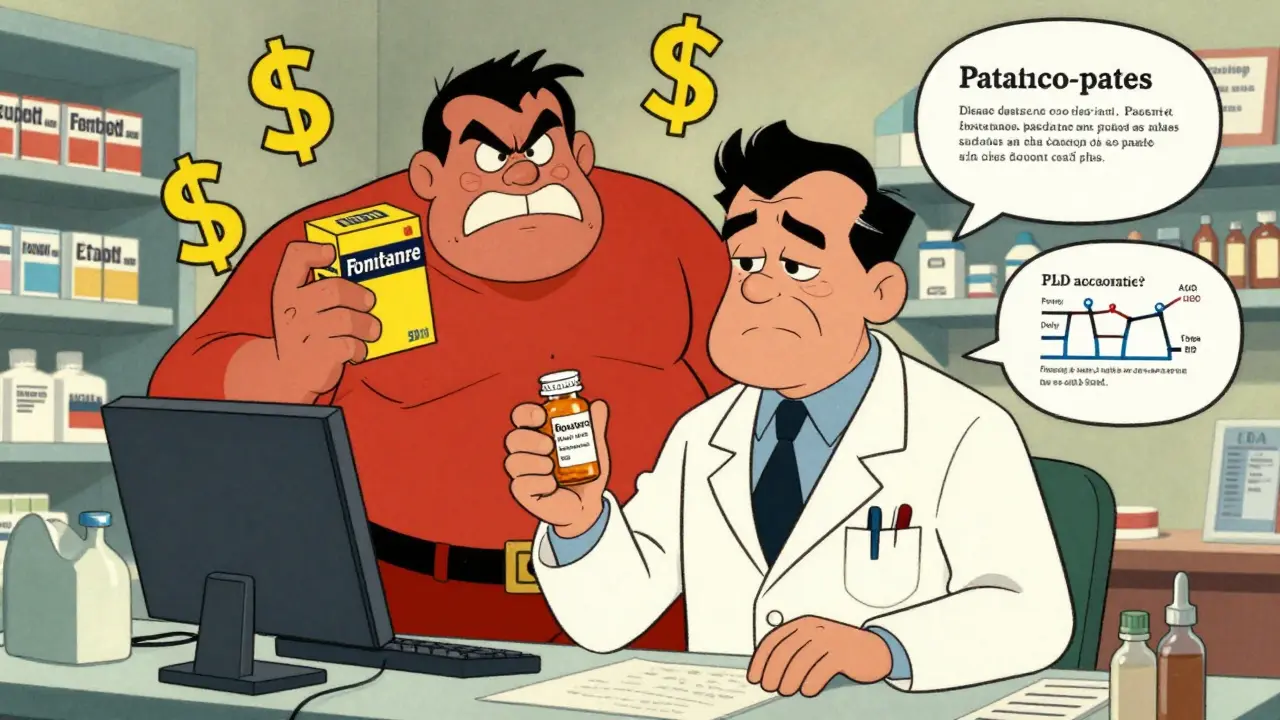
When you pick up a prescription at the pharmacy, you might not think twice about whether it’s a brand-name drug or a generic. But behind that decision are years of policy, cultural attitudes, and economic realities - and they look completely different depending on which country you’re in.
Europe: Generics as Policy, Not Choice
In Germany, France, and the UK, doctors don’t just accept generics - they’re trained to prescribe them first. Government rules make it easy: pharmacists can swap a brand-name drug for a generic unless the doctor specifically says no. It’s not about trust in the drug - it’s about keeping healthcare costs from drowning the system.
European providers see generics as a tool to stretch limited budgets. With aging populations and rising chronic disease rates, every euro saved on a blood pressure pill or diabetes med adds up. The result? Generics make up 70-80% of prescriptions across the EU. But here’s the twist: even though they’re used constantly, they only account for about 20% of total drug spending. Why? Because the price difference between brand and generic is huge in Europe - often 80% cheaper.
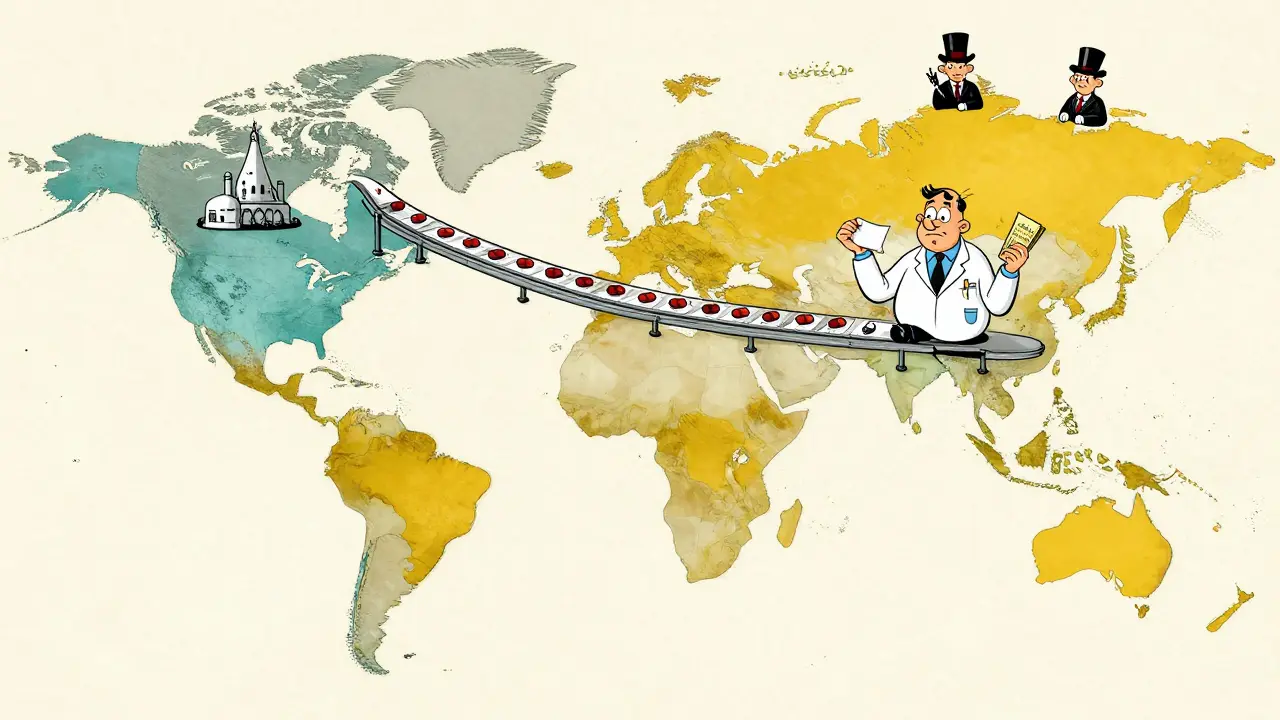
There’s no big debate about safety. Regulatory agencies like the EMA have strict standards. If a generic gets approved, doctors know it works the same. The real challenge? Supply chain gaps. When a factory in India or China has a quality issue, European pharmacies run short. That’s when providers get frustrated - not because they doubt generics, but because their patients go without.
Asia-Pacific: Generics as Lifelines
In India and China, generics aren’t just affordable - they’re the backbone of healthcare. Millions of people can’t afford brand-name drugs. So doctors prescribe generics by default. It’s not a cost-saving tactic; it’s the only way to treat diabetes, hypertension, or cancer at scale.
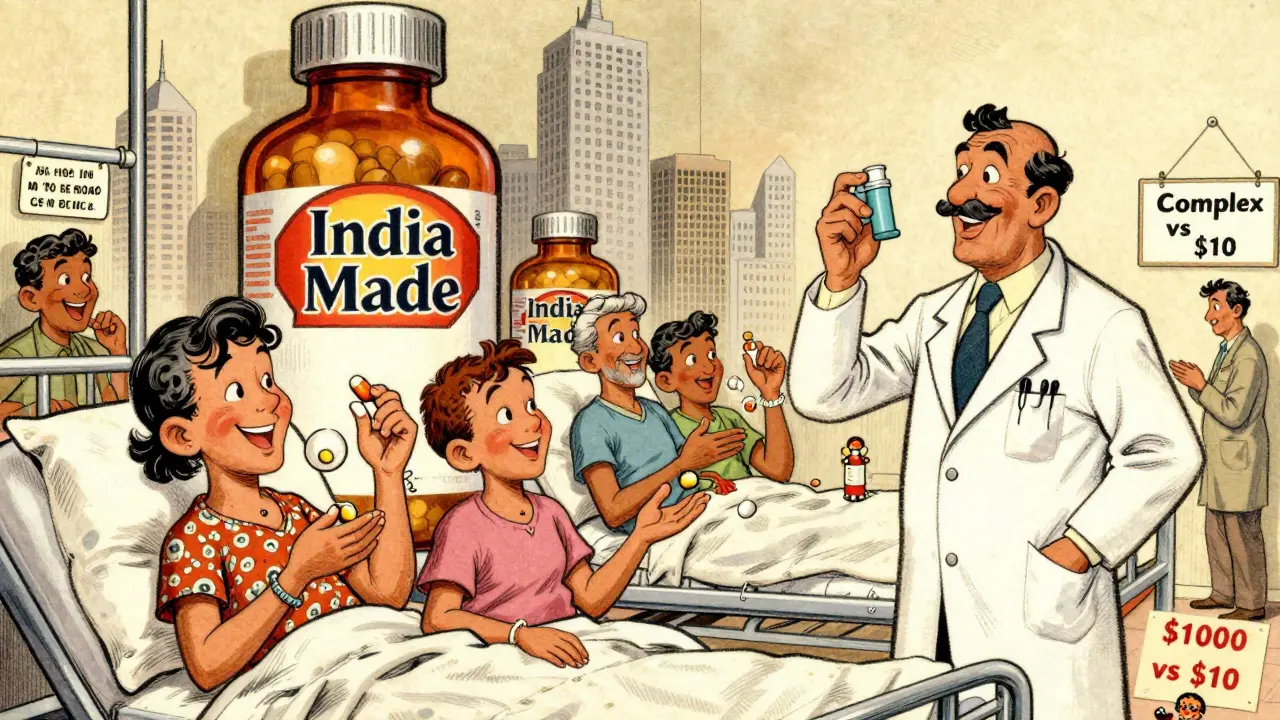
India alone supplies 40% of all generic drugs used in the U.S. That’s not luck. It’s a system built over decades: low labor costs, strong chemical manufacturing, and government support for export-focused pharma. Indian doctors don’t ask, “Should I use a generic?” They ask, “Which generic do I choose?”
China’s approach is similar, but more controlled. The government sets price caps on generics and pushes hospitals to use them. In rural clinics, a patient might get a generic version of a cancer drug that costs $10 instead of $1,000. That’s not a compromise - it’s survival.
Providers in Asia-Pacific don’t just accept generics - they depend on them. And because of that, they’re also leading the charge in complex generics: injectables, inhalers, and specialty formulations. Hospitals in India and China are now stocking these advanced generics because they’re the only way to treat serious conditions without bankrupting families.
United States: Trust, But With Doubts
In the U.S., 90% of prescriptions are filled with generics. That sounds like total acceptance - and in volume, it is. But in value? Generics make up less than 20% of total drug spending. Why? Because brand-name drugs are still priced like luxury goods.
Doctors here know generics work. They’ve seen the data. But they also know the system is broken. A patient might get a generic for cholesterol - but if the brand-name version is $500 a month and the generic is $10, the patient still can’t afford the co-pay. Insurance doesn’t always cover the cheapest option. So providers end up playing a game: “Which generic has the lowest copay?” instead of “Which one is best?”
Then there’s the supply chain. When a U.S. hospital runs out of a generic antibiotic, it’s often because the only factory making it is in China - and that factory had an FDA inspection failure. Providers have seen this happen too many times. A patient with pneumonia waits days for meds because the generic was pulled off shelves. That erodes trust, even if the drug itself is fine.
And now, with $200+ billion in brand-name drugs losing patent protection between 2025 and 2030, the pressure is on. Doctors are watching closely. Will new biosimilars for drugs like ustekinumab (used for psoriasis and Crohn’s) be priced fairly? Or will manufacturers find ways to keep prices high? Providers want affordable access - but they’re not sure the system will deliver it.
Emerging Markets: Generics as the New Standard
In Brazil, Turkey, and parts of Africa, the story is simpler: if you can’t pay for a brand, you get a generic. There’s no debate. Health systems in these countries are underfunded, and generics are the only realistic option.
Providers in these regions don’t have the luxury of choosing between brand and generic. They have one choice: treat or don’t treat. So they use generics - and they’ve become experts at it. A doctor in Nairobi might prescribe a generic antiretroviral for HIV that costs $10 a month, knowing it’s just as effective as the $1,000 brand. They’ve seen the outcomes. They’ve watched patients live.
These countries are also investing in local generic manufacturing. Instead of relying on imports, governments are building factories. That’s not just about cost - it’s about sovereignty. When a country can make its own insulin or antibiotics, it’s no longer at the mercy of global supply chains.
The Rise of Complex Generics
Generics aren’t just pills anymore. The fastest-growing part of the market is complex generics: injectables, inhalers, eye drops, and topical creams. These aren’t easy to copy. They require advanced tech, sterile environments, and deep scientific know-how.
But providers are embracing them. In U.S. hospitals, oncology units are switching from brand-name chemotherapy infusions to generic versions. In India, generic inhalers for asthma are now common in public clinics. In Europe, hospitals are using generic biosimilars for autoimmune diseases.
This shift is changing how doctors think. Generics used to mean “cheap oral pills.” Now, they mean “advanced, life-saving treatments at a fraction of the cost.” Providers who once avoided complex generics because they were “too risky” are now prescribing them confidently. The data has caught up with the reality.
What’s Next for Global Provider Views?
The future of generics isn’t about whether they work. It’s about whether the system lets them be used.
In rich countries, the challenge is pricing. If generics stay cheap, providers will use them more. But if manufacturers find ways to protect profits - through evergreen patents, pay-for-delay deals, or inflated co-pays - then adoption will stall.
In poorer countries, the challenge is access. Even if a generic exists, will it reach the clinic? Will it be stocked? Will the supply chain hold up?
One thing is clear: providers everywhere are moving toward generics - not because they’re forced to, but because they see them as essential. They’re no longer the second choice. They’re the first, and often the only, option for millions.
The next decade will show whether the world can build a system where generics aren’t just affordable - but reliable, available, and trusted everywhere.

Comments
OMG I just realized how wild it is that we pay $500 for a pill in the US while India makes it for $10 and ships it here 😭😭😭 Generics are literally life-saving and we’re still acting like they’re sketchy??
The data consistently demonstrates that bioequivalence standards for generic pharmaceuticals, as enforced by the FDA and EMA, are rigorously maintained. Clinical outcomes are statistically indistinguishable from branded counterparts in over 90% of cases. The remaining variance is attributable to formulation excipients, not active pharmaceutical ingredients.
Wow. A whole article about how generics aren't magic fairy dust. Groundbreaking.
Why are we letting foreign factories make our medicine? This isn't just about cost-it's national security. If China shuts off supply, we're all dead. And don't even get me started on India.
Let me get this straight-Americans are too lazy to fight for affordable meds, but somehow think they're too good for generics? 🤡 We're paying for brand-name marketing, not medicine. Meanwhile, a kid in Nairobi gets her HIV treatment for less than a Starbucks latte. And we're still crying about $10 co-pays? 😭
I’ve been on generics for years. My blood pressure is stable. My cholesterol? Perfect. But every time I pick it up, I feel like I’m taking something ‘less than.’ It’s not the drug-it’s the stigma. And it’s killing us emotionally, not just financially.
It is imperative to recognize that the pharmacoeconomic model underpinning generic drug utilization is predicated upon the principle of marginal cost reduction, which, when aggregated across public health systems, yields significant fiscal sustainability. However, this must be balanced against the potential for supply-chain fragility, which introduces systemic risk.
Stop being weak. If you can't afford your meds, you're part of the problem. Demand change. Protest. Don't just sit there taking your $10 pill like it's a consolation prize. Generics aren't a compromise-they're a revolution. Fight for them.
I’m curious-how many doctors actually tell patients the truth about why they’re switching to generics? Do they say ‘it’s cheaper’ or ‘it’s the same’? I’ve had both, and the tone changes everything. Maybe the issue isn’t the drug-it’s the conversation.
generics are just medicine. people make them complicated. if it works, use it. no need to overthink it.