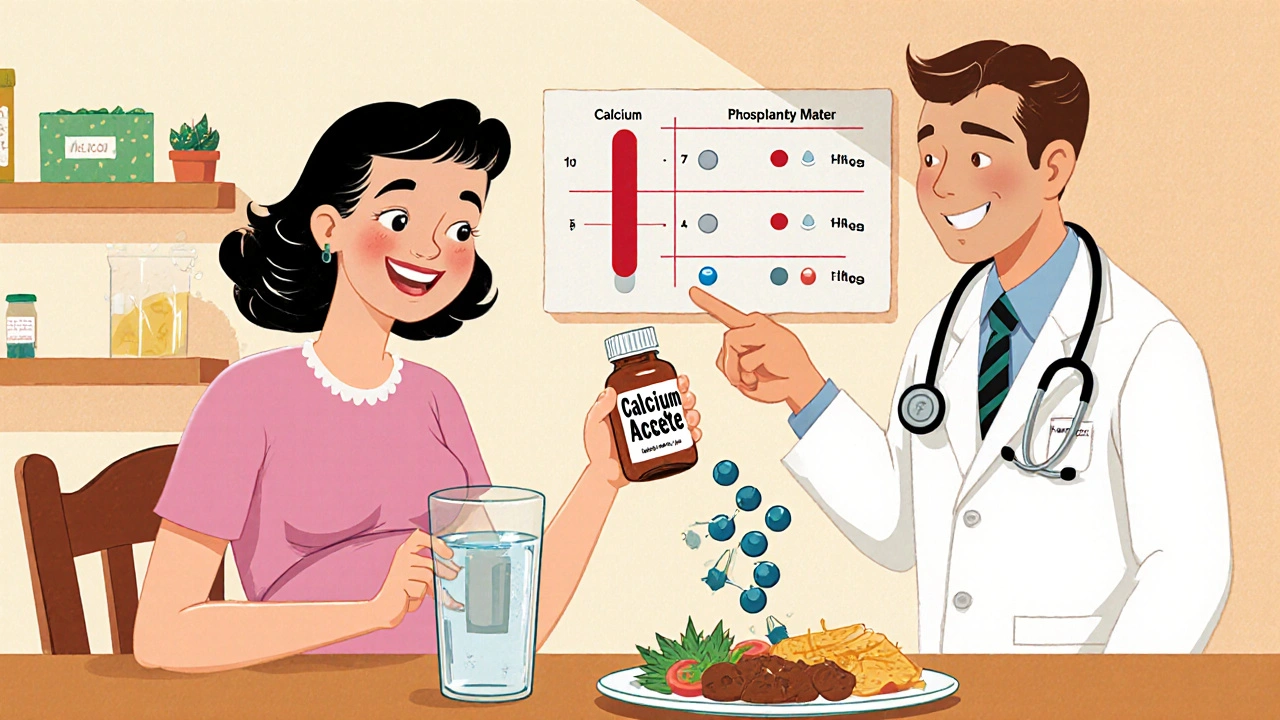
When you're pregnant and have kidney disease, managing your diet and medications becomes more complicated. One medication you might hear about is calcium acetate. It’s not a typical prenatal vitamin, but for some pregnant women, it’s essential. If you’ve been prescribed it, you’re probably wondering: Is it safe? Why do I need it? What does it actually do? This isn’t about guessing - it’s about understanding how calcium acetate works in your body during pregnancy and what you need to watch for.
What is calcium acetate, really?
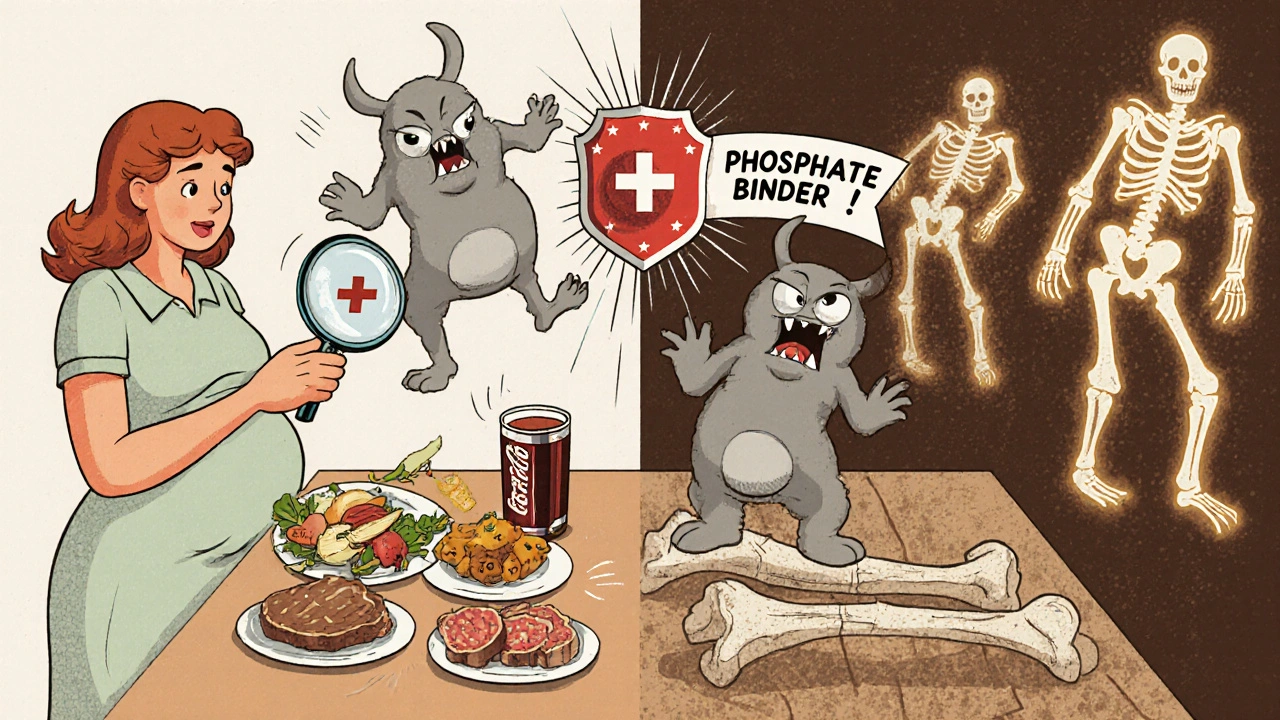
Calcium acetate is a phosphate binder. That means it doesn’t give you more calcium to build bones - at least, not primarily. Instead, it grabs onto the phosphorus in your food before your body can absorb it. When your kidneys aren’t working well, they can’t remove extra phosphorus from your blood. That buildup can lead to weak bones, itchy skin, heart problems, and even calcification in your blood vessels. Calcium acetate sticks to phosphorus in your stomach and intestines, so your body passes it out in your stool instead of letting it enter your bloodstream.
It’s often prescribed to people with chronic kidney disease (CKD), including those on dialysis. During pregnancy, kidney function can change, and if you already have CKD, your phosphorus levels may rise faster. That’s where calcium acetate comes in - it helps keep those levels in check.
Why is phosphorus control so important during pregnancy?
Your growing baby needs calcium and phosphorus to build bones and teeth. But if your body has too much phosphorus in the blood, your body starts pulling calcium from your own bones to balance it out. That puts you at risk for osteoporosis, even if you’re young and pregnant. High phosphorus also affects how your body uses vitamin D, which is critical for fetal development.
Studies show that pregnant women with kidney disease who don’t manage phosphorus levels have higher rates of preterm birth, low birth weight, and preeclampsia. Calcium acetate helps lower phosphorus, which reduces those risks. It’s not a magic fix, but it’s a key tool in keeping both you and your baby safer.
Is calcium acetate safe during pregnancy?
Yes - when used correctly. The FDA classifies calcium acetate as Pregnancy Category C, which means animal studies have shown some risk, but there aren’t enough human studies to confirm it. However, in clinical practice, it’s been used safely for decades in pregnant women with kidney disease. Doctors don’t prescribe it lightly. They only recommend it when the benefit of controlling phosphorus outweighs any potential risk.
Unlike some other phosphate binders, calcium acetate adds calcium to your system. That’s actually helpful in pregnancy because your body’s demand for calcium increases. Most prenatal vitamins give you 200-300 mg of calcium. Calcium acetate can add another 500-1,000 mg daily, depending on your dose. That means you might not need extra calcium supplements - your doctor will check your levels to make sure you’re not getting too much.
How do you take it correctly?
You take calcium acetate with meals. Not before. Not after. Right when you eat. That’s because it needs to be in your stomach at the same time as the phosphorus from your food. If you take it on an empty stomach, it won’t work. If you take it after eating, it’s too late.
Typical doses range from 667 mg to 2,000 mg per meal, depending on your phosphorus levels and how much you eat. Most women take it three times a day - with breakfast, lunch, and dinner. Your doctor will start you low and adjust based on blood tests. Don’t change the dose yourself. Too little won’t help. Too much can raise your calcium levels too high, which can cause nausea, confusion, or even kidney stones.
Here’s what to do:
- Take it exactly with your meals - no skipping meals, no skipping doses.
- Swallow the tablet whole with water. Don’t crush or chew unless your doctor says to.
- Keep a food diary. Note what you ate and when you took your dose. This helps your doctor adjust your treatment.
- Get your blood tested regularly - phosphorus, calcium, and parathyroid hormone levels need monitoring every 2-4 weeks during pregnancy.
What side effects should you watch for?
Most women tolerate calcium acetate well. But some common side effects include:
- Upset stomach or nausea
- Constipation
- Increased thirst or frequent urination
- Metallic taste in the mouth
These are usually mild. If you get severe nausea, vomiting, or feel unusually tired, it could be a sign your calcium levels are too high. High calcium during pregnancy can affect your baby’s development and increase the risk of neonatal hypocalcemia (low calcium in the newborn). That’s why regular blood tests are non-negotiable.
Also, calcium acetate can interact with other medications. If you’re taking iron supplements, antibiotics like tetracycline, or thyroid medicine, take them at least 2 hours before or after calcium acetate. Otherwise, your body won’t absorb them properly.
What if you can’t take calcium acetate?
Some women can’t tolerate it - maybe because of nausea, constipation, or high calcium levels. In those cases, your doctor might switch you to another phosphate binder. Non-calcium options include:
- Sevelamer - doesn’t add calcium, but you need to take more pills (up to 8 per day).
- Lanthanum carbonate - effective, but expensive and less studied in pregnancy.
- Aluminum-based binders - rarely used because of toxicity risks, especially in pregnancy.
Sevelamer is the most common alternative. It doesn’t raise calcium levels, which makes it safer if you’re already getting enough calcium from your diet or prenatal vitamins. But it’s not always covered by insurance, and the pill burden can be tough during pregnancy nausea.
What about diet?
Medication alone isn’t enough. You still need to watch what you eat. Foods high in phosphorus include:
- Dairy products (milk, cheese, yogurt)
- Processed meats and deli meats
- Cola drinks and sodas with phosphate additives
- Nuts, seeds, and whole grains
- Dark colas and energy drinks
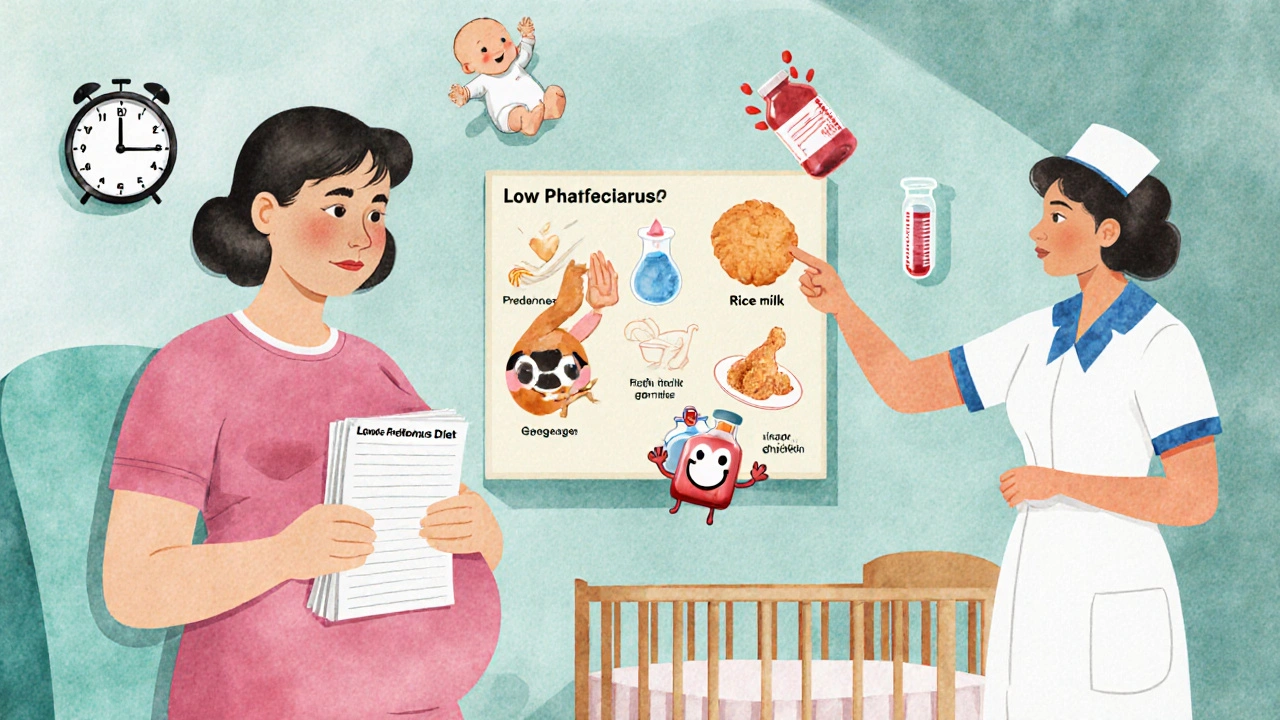
You don’t need to cut these out completely. But you might need to limit portions. For example, swap regular milk for rice milk (check labels - some are fortified with phosphorus). Choose fresh chicken over processed chicken nuggets. Avoid soda entirely - even one can a day can spike your phosphorus.
Work with a renal dietitian. They’ll help you build a meal plan that gives you enough protein for your baby, enough calcium for your bones, and low enough phosphorus to keep your meds working.
What happens after the baby is born?
After delivery, your kidneys will slowly return to their pre-pregnancy state - if they were healthy before. But if you have chronic kidney disease, your phosphorus levels may still need managing. Your doctor will keep monitoring your calcium and phosphorus for at least 6-12 weeks postpartum.
If you’re breastfeeding, calcium acetate is generally considered safe. Only tiny amounts pass into breast milk, and it’s not known to affect the baby. But if you’re taking other medications, check with your doctor before restarting them.
When to call your doctor
Call your OB or nephrologist right away if you experience:
- Confusion, dizziness, or extreme fatigue
- Severe constipation or abdominal pain
- Muscle cramps or tingling in your hands or feet
- Signs of preterm labor (regular contractions, pelvic pressure, fluid leakage)
These could signal high calcium, low calcium, or other complications. Don’t wait. Early intervention makes a big difference.
Bottom line
Calcium acetate isn’t a supplement you take because you’re pregnant. It’s a treatment for kidney disease - and pregnancy makes that condition harder to manage. But with the right care, many women take it safely and have healthy babies. The key is consistency: take it with every meal, get your blood tested, follow your diet plan, and communicate with your care team. It’s not easy, but it’s doable. And for many, it’s the difference between a high-risk pregnancy and a healthy one.
Can calcium acetate cause birth defects?
There’s no evidence that calcium acetate causes birth defects when used as directed. It’s been used safely in pregnant women with kidney disease for years. The main concern is keeping calcium and phosphorus levels balanced - not the medication itself. Always follow your doctor’s dosing instructions and get regular blood tests.
Does calcium acetate replace prenatal vitamins?
No. Calcium acetate is not a prenatal vitamin. It doesn’t contain folic acid, iron, or other nutrients essential for fetal development. You still need to take your prenatal vitamin as prescribed. Calcium acetate only controls phosphorus and adds extra calcium. Your doctor will check your overall nutrient levels and adjust supplements accordingly.
Can I take calcium acetate with my other medications?
You can, but timing matters. Take calcium acetate at least 2 hours before or after iron pills, antibiotics like tetracycline, thyroid medicine, or bisphosphonates. Otherwise, it can block absorption. Always tell your pharmacist and doctor about every medication and supplement you’re taking.
How long will I need to take calcium acetate during pregnancy?
You’ll take it for as long as your phosphorus levels stay high - usually throughout your entire pregnancy. After delivery, your doctor will retest your kidney function and may adjust or stop the medication. Some women with chronic kidney disease need to continue it long-term, even after pregnancy.
Is there a natural way to lower phosphorus without calcium acetate?
Diet can help, but it’s rarely enough on its own for women with kidney disease. Even with strict limits on high-phosphorus foods, your body still absorbs more phosphorus than your kidneys can remove. Medication like calcium acetate is often necessary to prevent dangerous buildup. Natural methods alone won’t replace medical treatment in this case.



Comments
i swear if this is another pharma scam to sell us calcium like its magic dust... my cousin took this and ended up in the er with kidney stones and no one told her it could do that. they just said 'take it with food' like its a cereal box. what about the long term effects on the baby?? no one talks about that.
so let me get this straight… the government lets you take a calcium supplement that’s technically a poison binder… but won’t let you drink raw milk? lol. next they’ll say sunlight is dangerous because it causes vitamin D overdose. classic. 🤡
The pharmacokinetic profile of calcium acetate in pregnant patients with chronic kidney disease demonstrates a relatively predictable absorption curve, provided that gastrointestinal motility remains stable. Clinical guidelines from the National Kidney Foundation’s Kidney Disease Outcomes Quality Initiative (KDOQI) support its use in pregnancy when serum phosphorus exceeds 4.5 mg/dL. However, concurrent monitoring of ionized calcium is imperative to avoid hypercalcemic complications.
phosphorus overload in CKD pregnancies is a well-documented pathophysiological cascade. calcium acetate functions as a non-absorbable phosphate chelator, reducing intestinal P absorption via formation of insoluble calcium phosphate complexes. this lowers serum P, mitigating secondary hyperparathyroidism and vascular calcification. however, the calcium load may suppress PTH further, risking adynamic bone disease. baseline and serial monitoring of Ca, P, PTH, and alkaline phosphatase is non-negotiable.
It’s funny how we treat pregnancy like a medical emergency that needs constant intervention. But the body’s been doing this for millennia. Maybe the real problem isn’t phosphorus-it’s that we’ve broken our food system. Processed food, fake dairy, soda with phosphate additives… we’re poisoning ourselves and then medicating the symptoms. Calcium acetate isn’t the villain. Our diet is.
they say its safe but what about the 3% of babies born with low calcium?? nobody talks about that because the hospital gets paid for the meds and the tests and the follow ups and the ultrasounds and the neonatal ICU stays if something goes wrong and its all just a money machine and you think you're being careful but you're just feeding the beast and your baby pays the price
I get why people are scared. We’ve been told for decades that calcium is good, then bad, then good again. It’s exhausting. But here’s the thing: your kidneys are already struggling. You’re not just pregnant-you’re fighting two battles at once. Calcium acetate isn’t about being perfect. It’s about surviving. It’s about giving your baby a chance. And sometimes, survival isn’t pretty.
i took this for my second pregnancy and honestly it was a game changer. i used to get so itchy at night like my skin was crawling. stopped after 2 weeks on it. also stopped drinking soda. no more nausea. just take it with food. dont overthink it. your body knows what to do if you just let it work
You know what’s wild? We’re okay with giving pregnant women a dozen pills a day but we won’t let them eat cheese. It’s like we’re trying to turn pregnancy into a science experiment where you have to follow a 12-step protocol just to survive breakfast. And the worst part? The doctors don’t even know why it works-they just know it does. So we trust them. And that’s the real miracle.
americans think they can medicate their way out of everything. in india we just eat homegrown food and drink water from the tap and our babies are fine. you don’t need calcium acetate. you need to stop eating processed crap. why do you think they sell this here but not in 80% of the world? because profit. not science.
If you’re reading this and you’re scared-please know you’re not alone. I was diagnosed with stage 3 CKD at 24 and got pregnant at 27. I took calcium acetate. I had two healthy kids. I cried every time I swallowed the pill because I was terrified. But I also did the bloodwork. I tracked my meals. I talked to my dietitian. It wasn’t easy, but it was worth it. You’re doing better than you think.
Listen. I’ve been a renal nurse for 18 years. I’ve seen women on dialysis give birth. I’ve seen babies born with calcified arteries because their moms couldn’t control phosphorus. Calcium acetate isn’t glamorous. It’s not trendy. But it’s one of the few things that actually works. Don’t let fear stop you from taking it. Talk to your team. Ask questions. But don’t quit. Your baby needs you to be strong.
I tried sevelamer and it was a nightmare. 8 pills a day? during morning sickness? no thanks. calcium acetate was way easier. yeah i got constipated but i just drank more water and ate prunes. no big deal. also my baby was 8lbs 3oz and had perfect labs at birth. so maybe the docs know what theyre doing after all
I'm from India and my sister had CKD and was pregnant. She took calcium acetate and it worked great. We didn't have fancy clinics but we had a good doctor who told her exactly what to do. She ate less dairy, drank water, took her meds with meals. Baby was born healthy. It's not magic. It's just smart.
lol i took this and my kid had a rash. coincidence? maybe. but i also took prenatal vitamins and ate salmon and drank coffee and slept 4 hours a night so who knows. 🤷♀️💊👶 #pregnancyisagamble