
If you're managing a medical practice or handling healthcare billing, you know that biologics are some of the most expensive items on your ledger. But when a biosimilars reimbursement option hits the market, the billing doesn't just magically follow the price drop. In fact, the way you code these drugs can be the difference between a clean claim and a frustrating denial. The transition from a single "blended" rate to product-specific coding has changed the game, making precision more important than ever.
The core challenge is that biosimilars aren't exactly like generic drugs. While a generic is a chemical copy, a biosimilar is a highly similar biological product. Because of this, the Centers for Medicare & Medicaid Services (CMS) is the federal agency that administers Medicare and sets the reimbursement rates for physician-administered drugs. They've had to evolve their billing rules to keep up with the market, moving away from grouping all similar drugs together to giving each one its own identity in the system.
The Shift to Product-Specific Coding
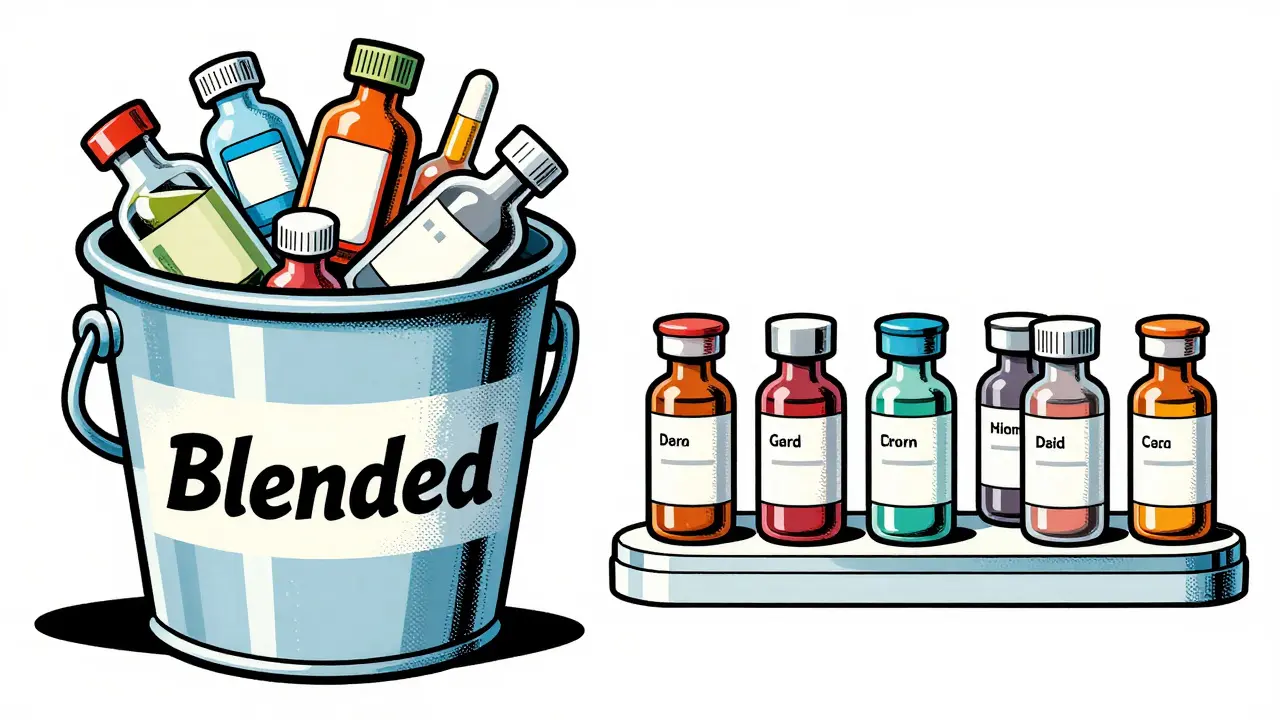
Back in 2016, CMS used a "blended" model. If you had three different biosimilars for the same reference product, they all shared one code. The payment was a weighted average of all of them. This created a "free rider" problem: if one manufacturer dropped their price significantly, it dragged down the reimbursement for everyone else, even those who weren't discounting. It basically killed the incentive for new companies to enter the market.
Everything changed on January 1, 2018. CMS shifted to product-specific codes. Now, every FDA-approved biosimilar gets its own unique HCPCS code is a standardized set of codes used for billing healthcare services and supplies, particularly for Medicare. These are usually temporary Q-codes or permanent J-codes. This means the payment you receive is based on the Average Selling Price (ASP) of that specific drug, not a confusing average of its competitors.
| Feature | Pre-2018 Blended Model | Current Product-Specific Model |
|---|---|---|
| Coding Structure | Shared HCPCS code for all biosimilars | Unique Q or J code per biosimilar |
| Payment Calculation | Weighted average ASP of all biosimilars | 100% of specific biosimilar ASP + 6% add-on |
| Modifier Need | Required modifiers to identify product | No product-identifying modifiers needed |
| Market Incentive | Low (Competitors penalized by low ASPs) | Higher (Payment reflects individual pricing) |
How the Payment Math Actually Works
Understanding the "106% rule" is vital for your bottom line. In Medicare Part B is the part of Medicare that covers outpatient services, including physician-administered drugs, the standard reimbursement formula is: 100% of the drug's ASP + 6% of the reference product's ASP.
Wait, why is the 6% based on the reference product and not the biosimilar itself? This is a quirk of the system that critics argue actually slows down biosimilar adoption. For example, if the reference product (like Remicade) is $2,500 and a biosimilar (like Inflectra) is $2,000, the 6% add-on is calculated on the $2,500. This means providers actually earn more add-on revenue by using the more expensive reference product. It creates a financial "cushion" that makes switching to cheaper options less attractive for the clinic.
There is also a "startup" phase for the first biosimilar to enter a market. Since there is no ASP data for a brand-new drug, CMS typically pays 106% of the Wholesale Acquisition Cost (WAC) is the manufacturer's list price for a drug to wholesalers, before any discounts. This usually lasts about six months until enough sales data exists to establish a real ASP.
Avoiding Claim Denials and the JZ Modifier
Coding errors are the fastest way to freeze your cash flow. A survey by the Community Oncology Alliance found that nearly 42% of practices saw an increase in denials during the transition to specific codes. Most of these weren't due to medical errors, but simply using an outdated code from a previous quarter.
One of the biggest recent hurdles is the JZ modifier is a billing code used to indicate that no drug amount was discarded when administering a medication. Implemented on July 1, 2023, this modifier is mandatory for certain drugs, including infliximab and its biosimilars. If you didn't waste any of the drug during the injection, you must attach the JZ modifier. If you forget it, or if you use it when you actually did discard some of the product, CMS will likely deny the claim.
To keep your error rate low, don't rely on a static cheat sheet. CMS updates payment rates quarterly. A successful workflow usually involves a "dual verification" system: the nurse confirms the drug administered, and the billing specialist cross-checks that specific lot/product against the latest CMS Physician Fee Schedule before hitting submit.

The Financial Reality: Medicare vs. Private Payers
It's a mistake to assume that the Medicare ASP+6% formula applies everywhere. While Medicare Part B is the gold standard for these rules, Medicare Advantage is private health insurance plans that contract with Medicare to provide Part A and Part B benefits plans often have different reimbursement ceilings, sometimes only paying 100-103% of ASP. Commercial payers are even more unpredictable; they may use a "buy-and-bill" model with a fixed markup or require a specific prior authorization for the biosimilar version specifically.
This variability means your office needs to track the "net profit" per dose across different payers. You might find that while a biosimilar is cheaper to buy, the reimbursement gap from a commercial payer makes the reference product more profitable-or vice versa. This is why many practices are now using specialized billing guides provided by manufacturers to navigate these nuances.
What's Next for Biosimilar Billing?
The system is still evolving. There is a strong push from groups like MedPAC to move toward "consolidated billing." This would be a Least Costly Alternative (LCA) policy. In a world with LCA, CMS wouldn't care which specific biosimilar you used; they would pay 106% of the volume-weighted average price of all biosimilars in that class. This would effectively force providers to choose the cheapest option to maintain their margins.
Until that happens, the focus remains on the quarterly updates and the strict application of modifiers. With the US biosimilars market growing-reaching over $12 billion in 2022-the volume of these claims is only going up. Keeping your staff trained on the distinction between J-codes and Q-codes is no longer a "nice to have"; it's a financial necessity.
What is the difference between a J-code and a Q-code for biosimilars?
Both are HCPCS codes used for billing. Q-codes are typically temporary codes assigned by CMS to new drugs to allow for immediate billing while a permanent code is developed. J-codes are permanent codes. For the provider, the billing process is the same, but you must ensure you are using the one currently active in the CMS Physician Fee Schedule.
Why does the 6% add-on use the reference product's price?
CMS designed the system to provide a consistent add-on for the administration and handling of biologics. By basing the 6% on the reference product's ASP, they ensured a baseline level of reimbursement. However, this is widely criticized because it means providers earn more total revenue when using the more expensive reference product than when using a cheaper biosimilar.
When should I use the JZ modifier?
You use the JZ modifier when you administer a drug (such as an infliximab biosimilar) and there is zero amount of the drug discarded. If any amount of the drug is wasted, you do not use the JZ modifier; instead, you use other modifiers (like JW) to report the amount wasted.
How often do biosimilar reimbursement rates change?
CMS updates the Average Selling Price (ASP) and the resulting payment rates on a quarterly basis. It is critical to check the Medicare Physician Fee Schedule every three months to ensure your billing software is updated with the most current rates.
Will Medicare eventually pay the same amount for all biosimilars in a class?
It's possible. MedPAC has recommended "consolidated billing" or Least Costly Alternative (LCA) payments. If implemented, this would mean all biosimilars of a specific reference product would share a single reimbursement rate based on the average price of the group, rather than having individual product-specific codes.




Comments
It is absolutely abhorrent that the system is designed to reward providers for using more expensive reference products. We are talking about human health, yet the financial incentives are skewed to favor corporate greed over patient affordability. It's a moral failure of the highest order to maintain a 6% add-on based on the reference price instead of the actual drug used. This isn't just a billing quirk; it's a systemic exploitation of the sick by a bureaucratic machine that values the status quo over genuine progress. We should be demanding a complete overhaul of the ASP model to ensure that the cheapest, most effective option is always the most attractive for the clinic. Anything less is just complicity in a broken system that prioritizes profit margins over the well-being of the populace.
cms just wants more data to track us everything is a trap
From a revenue cycle management perspective, the transition to product-specific HCPCS codes helps mitigate the risks associated with the previous blended ASP model. However, the lack of interoperability between different commercial payers' prior authorization workflows and the Medicare Part B framework often creates a bottleneck in the claims pipeline.
Precision in coding is paramount. Compliance must be the priority.
Imagine thinking this system is efficient 🙄 Only in the US lol my country handles healthcare with way more dignity 🇮🇳💅 Stay broke with your J-codes 💸
OMG I literally cannot believe how boring this is but I NEED to know if you've ever personally been denied a claim because of this! Like, tell me the drama of the denial! Did the insurance company actually call and scream or was it just a cold email?! I'm obsessed with the chaos of medical billing!
It's interesting to think about how these rules shape the behavior of doctors. We like to think medicine is purely about the patient, but these little coding tweaks are basically nudging the entire healthcare ecosystem in a certain direction. It's a good reminder to stay mindful of the systems we operate within.
This is such a lifesaver for those of us trying to keep the office organized! 🌟 Let's all stay focused and crush these billing errors together! 🚀✨ WE GOT THIS!
Just take it one quarter at a time. No need to stress too much as long as you've got a good system in place. Keep it chill and just double check the codes.