
Every year, millions of fake pills, injected solutions, and counterfeit vaccines slip into the global drug supply. Some look identical to the real thing. Others have the wrong active ingredient-or none at all. And if you’re a pharmacist, you’re often the last line of defense before these dangerous products reach a patient’s hands.
Why This Training Isn’t Optional Anymore
In 2024, law enforcement agencies worldwide reported over 6,400 incidents of pharmaceutical counterfeiting, theft, and illegal diversion. These weren’t isolated cases. They involved more than 2,400 different medicines-from antibiotics to cancer drugs-and touched 136 countries. The numbers don’t lie: counterfeit drugs are a growing, global threat. It’s not just about bad actors. It’s about systems. Criminals now sell fake insulin on Instagram. They ship counterfeit heart medications through fake online pharmacies. They even repack expired pills and label them as new. And if a pharmacist doesn’t know how to spot the signs, the consequences can be deadly. The U.S. passed the Drug Supply Chain Security Act (DSCSA) in 2013 to track prescription drugs from manufacturer to pharmacy. But even with that system, counterfeiters adapt faster than regulations can keep up. That’s why training isn’t just a nice-to-have anymore-it’s a core part of pharmacy practice.What Pharmacists Need to Learn
Modern counterfeit detection training isn’t just about checking packaging. It’s about understanding how these drugs move through the system-and how to question everything. Here’s what effective training covers today:- Price red flags: If a drug is being sold at 70% below the wholesale acquisition cost, it’s almost certainly fake. Real distributors don’t operate that way.
- Channel verification: Specialty drugs like biologics or oncology treatments are only distributed through authorized channels. Pharmacists must check the manufacturer’s official website to confirm their supplier is legitimate.
- Physical inspection: Even with advanced tech, visual cues still matter. Mismatched fonts, blurry barcodes, or inconsistent seal colors can signal fraud.
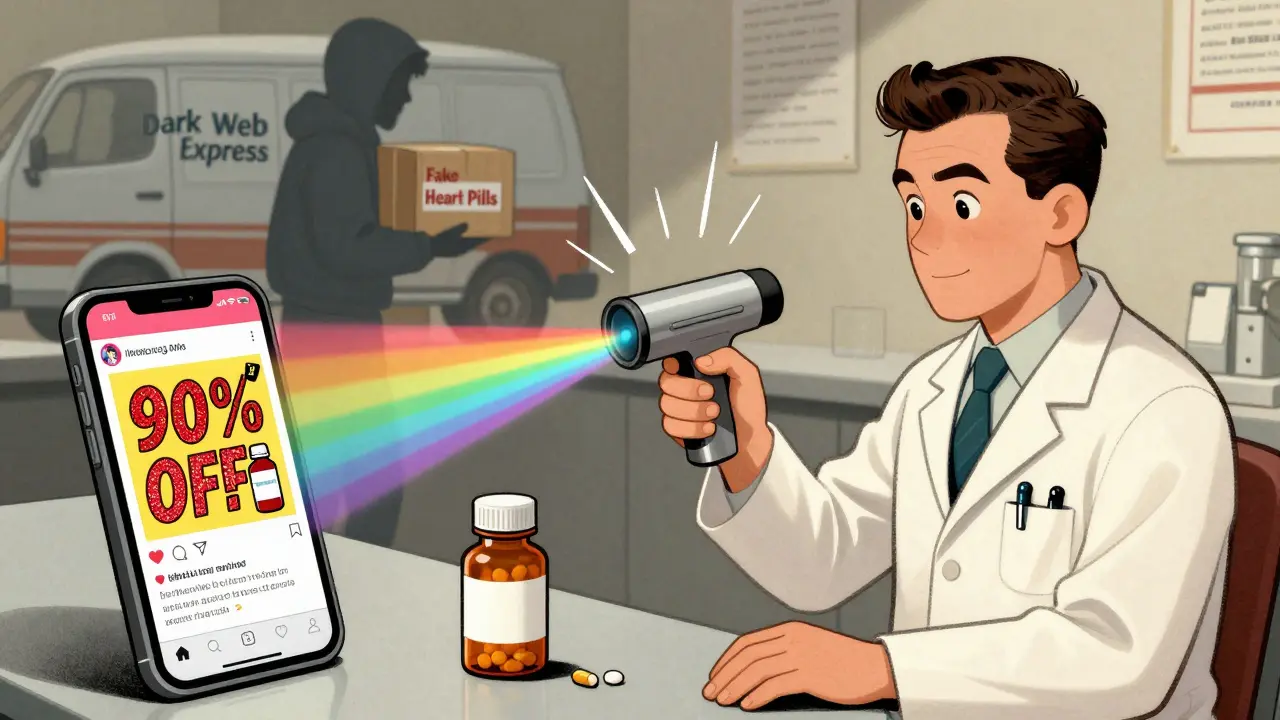
- Online sales awareness: The WHO’s 2024 update to its global toolkit specifically targets counterfeit sales on social media and dark web marketplaces. Pharmacists need to recognize how patients are being lured into buying fake drugs online-and how to warn them.
- Reporting protocols: Knowing who to call when you suspect a fake drug matters. Is it the FDA? The local health department? The Pharmaceutical Security Institute? Training must include clear steps.
How Training Is Changing
Ten years ago, pharmacists checked lot numbers by calling a manufacturer’s hotline. Today, that’s obsolete. New tools are changing the game:- RxAll’s handheld devices: These use spectral analysis and AI to scan a pill or vial in seconds. They detect chemical differences invisible to the naked eye. Pharmacists in pilot programs say verification time dropped from 15 minutes to 10 seconds-and confidence jumped.
- Mobile learning platforms: Courses like TrainingNow.com’s 45-minute Medicare FWA certification let pharmacists train on their phone during breaks. It’s not just about compliance-it’s about building habits.
- Global competency curricula: The FIP and WHO developed a bilingual (English/French) training program piloted in Cameroon, Senegal, and Tanzania. After training, students showed a 42% increase in accurate counterfeit identification. That model is now being rolled out worldwide.
Where Training Falls Short
Not every pharmacy has access to these tools. In many low-resource settings, pharmacists still rely on paper records and phone calls. Even in the U.S., small independent pharmacies often can’t afford handheld scanners. There’s also a gap in awareness. Many pharmacists know counterfeit drugs exist-but don’t realize how common they’ve become. A 2023 survey found that 68% of community pharmacists had never received formal training on counterfeit detection. That’s not because they’re careless. It’s because the training hasn’t been widely available-or mandatory. And while the U.S. has the most advanced drug tracking system in the world, other countries don’t. That creates blind spots. A fake drug might enter the U.S. supply chain through a distributor in a country with weak oversight. Pharmacists need to think globally-even if they’re working locally.Real-World Scenarios That Save Lives
One pharmacist in Ohio noticed a batch of metformin had a slightly different smell. The packaging looked fine. The barcode scanned. But something felt off. She pulled the batch, contacted the manufacturer, and found out it was a counterfeit. The real metformin had a unique crystalline structure. The fake didn’t. She didn’t have a scanner. She had training-and instinct. Another case in Texas involved a patient who bought what they thought was insulin from a Facebook ad. The pharmacist noticed the bottle had no lot number and the label was printed on cheap paper. She called the manufacturer, confirmed it was fake, and reported it to the FDA. The patient was spared a life-threatening reaction. These aren’t rare stories. They’re happening every week.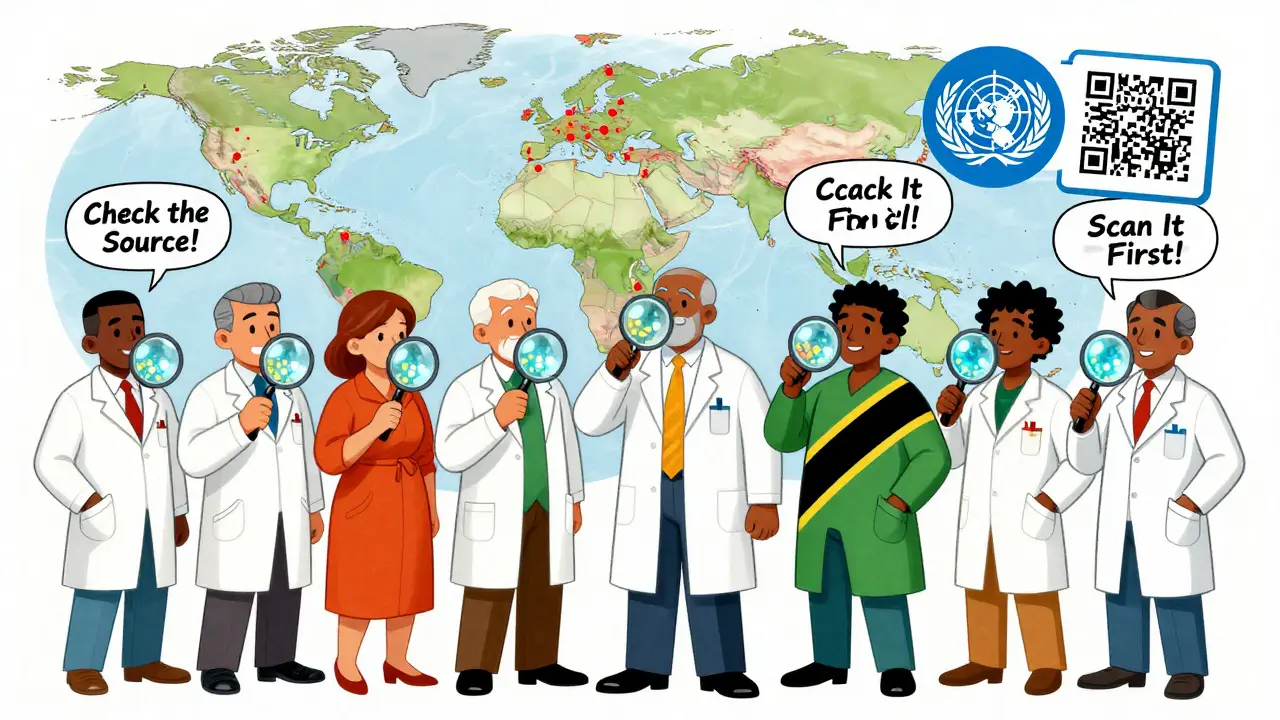
What’s Next for Pharmacist Training
The future of counterfeit detection is smarter, faster, and more connected.- AI-powered detection: Algorithms are learning to spot subtle differences in pill coatings, ink composition, and even the way light reflects off a label. These tools will soon be built into pharmacy management systems.
- Blockchain integration: Some manufacturers are testing blockchain-based tracking. Pharmacists will need to understand how to verify digital ledgers.
- Patient education tools: RxAll and others are now giving pharmacists handouts and QR codes patients can scan to verify their own meds. That turns pharmacists into educators-not just gatekeepers.
- Global standardization: The WHO’s updated toolkit, set for release in late 2024, will include templates for national training programs. This could finally create consistency across borders.
Where to Start
If you’re a pharmacist wondering where to begin:- Check with your state board of pharmacy. Some now require counterfeit detection training as part of continuing education.
- Enroll in a free course from the WHO or FIP. Their materials are available online in English and French.
- Ask your employer if they offer access to RxAll or similar verification tools. If not, advocate for it.
- Join a pharmacist forum like RxAll’s community network. Real stories from real pharmacists are the best teachers.
- Start asking questions: Where did this come from? Is this price normal? Who’s the authorized distributor?
How common are counterfeit drugs in the U.S.?
While the U.S. has the most secure drug supply chain in the world thanks to the DSCSA, counterfeit drugs still appear-especially through online pharmacies and illegal imports. The Pharmaceutical Security Institute recorded over 6,400 incidents of pharmaceutical crime in 2024, including counterfeiting and theft. Most cases involve drugs imported from outside the U.S. or sold through unregulated websites.
Can I really tell a fake drug just by looking at it?
Sometimes, but not always. Counterfeiters have gotten very good at copying packaging. Subtle clues include mismatched fonts, uneven printing, or a seal that doesn’t match the manufacturer’s description. But many fakes are indistinguishable without technology. That’s why tools like spectral scanners and AI verification are becoming essential-not optional.
Do I need to buy expensive equipment to detect counterfeits?
No. Many effective detection methods cost nothing. Always verify the distributor through the manufacturer’s official website. Question prices that seem too good to be true. Check for missing lot numbers or expiration dates. These are free, high-impact steps. Technology helps, but awareness and skepticism are your first line of defense.
What should I do if I suspect a drug is fake?
Stop dispensing it. Isolate the batch. Contact the manufacturer’s anti-counterfeiting hotline-most have one. Then report it to the FDA’s MedWatch program or your state pharmacy board. Document everything: the lot number, where it came from, and any odd details. Your report could prevent harm to others.
Are there free training resources available?
Yes. The World Health Organization and the International Pharmaceutical Federation offer a free, bilingual (English/French) competency-based curriculum developed from a pilot program in Africa. It’s available online and includes case studies, quizzes, and real-world scenarios. Many state pharmacy associations also offer free CE courses on counterfeit detection.
How often should pharmacists get trained on this topic?
At least once a year. Counterfeit methods evolve quickly-new fakes appear every few months. Training should be ongoing, not a one-time checkbox. Even small updates, like new online scams or changes in distribution channels, require refreshers. Some employers require annual training as part of compliance.
Comments
Let me guess - the FDA’s ‘secure supply chain’ is just a fancy word for ‘we let this happen until someone dies.’ You think a barcode scan stops fake insulin? Please. The same people who sold you this lie are the ones who approved the opioid crisis. This isn’t training - it’s damage control with a PowerPoint.
And don’t get me started on ‘free WHO courses.’ You think a pharmacist in rural Ohio has time to watch a 45-minute video while their third patient waits? This system is rigged. They don’t want you to catch fakes - they want you to sign a compliance checkbox so they can sleep at night.
Hey - I just want to say this is one of the most important posts I’ve read all year. As a pharmacist who’s been on the front lines for 18 years, I’ve seen the shift from ‘maybe it’s fake’ to ‘this is definitely killing someone.’
Training isn’t optional anymore - it’s survival. I started using RxAll last year. Took me 3 days to get used to it. Now I won’t touch a bottle without scanning it. And yeah, it’s expensive - but my hospital covered it. If your boss says no, show them the cost of one lawsuit. One patient. One death. It’s not theoretical anymore.
Keep pushing. We’ve got your back.
OMG YES 😭 I just had a patient come in last week with a ‘generic’ metformin bottle that looked like it was printed on a 2003 HP printer. No lot number. Smelled like burnt plastic. I called the manufacturer - turns out it was shipped from a ‘pharmacy’ in Bulgaria that doesn’t exist. They’ve been targeting elderly patients on Facebook ads.
Also - WHO’s free training? I did it during my lunch break. 45 minutes. Zero cost. I cried after. Not because it was sad - because I realized I’ve been this close to killing someone for YEARS without knowing how to check. 🙏
Also - if your pharmacy doesn’t have a scanner, beg. Borrow. Steal. (Okay, don’t steal. But beg HARD.)
Just want to add - you don’t need tech to start. Start with the basics: ask where the drug came from. Verify the distributor on the manufacturer’s site. Check for expiration dates that don’t match the batch. Look at the seal - if it’s not perfectly aligned, that’s a red flag.
I’ve caught 3 counterfeits this year just by asking questions. One guy thought he was saving money buying ‘cheap’ antibiotics online. He almost gave his kid a fatal reaction.
Training isn’t about fancy gadgets. It’s about training your brain to say ‘wait… that doesn’t feel right.’ And then acting on it.
THIS IS A SETUP. They’re using ‘fake drugs’ as an excuse to push mandatory surveillance tech into every pharmacy. RxAll? That device tracks your inventory, your patient data, your prescribing habits. And who owns it? Big Pharma. Who controls the algorithm? A corporation that profits when drugs are expensive.
They want you to think you’re saving lives. But you’re just becoming another node in their control grid. The real counterfeiters? The ones who make the drugs you’re forced to buy at 400% markup. The ones who lobby to keep DSCSA weak. You’re being manipulated to fight a ghost while the real predators laugh.
Wake up. This isn’t safety. It’s consolidation.
There’s a reason we’re seeing this surge now - because capitalism failed. When you treat medicine like a commodity, not a human right, you get fake insulin sold on Instagram. You get pharmacists in rural towns choosing between buying a scanner and paying their rent.
This isn’t about training. It’s about justice. We need universal access to detection tools. We need mandatory, funded training. We need to stop pretending this is an individual pharmacist’s problem. It’s a systemic collapse.
I’ve watched patients die because they couldn’t afford the real drug - and then bought the fake one because they had no choice. That’s not negligence. That’s murder by policy.
Stop telling pharmacists to ‘be more careful.’ Start telling Congress to fund this properly.
I read this whole thing. Twice. And I still don’t understand why everyone’s so dramatic. I’ve been a pharmacist for 22 years. I’ve never seen a counterfeit drug in my pharmacy. Not once. Maybe they’re exaggerating the numbers.
Also - why are we talking about Instagram? No one I know buys meds online. And if they do, they deserve what they get.
My store doesn’t have a scanner. We use a magnifying glass and a flashlight. Works fine. Maybe the problem isn’t the drugs - it’s the panic.
Also, the WHO? They’re a UN agency. Do we really trust them with our drug supply? I mean… really?
You people are so naive. You think the real danger is ‘fake pills’? No. The real danger is that you’re being conditioned to accept surveillance as ‘safety.’
Every time you scan a pill with RxAll, you’re feeding data to a corporate database that will one day be used to deny you coverage, raise your premiums, or even flag you as ‘high risk’ based on your medication history.
And don’t even get me started on ‘global standardization.’ That’s code for ‘we’re exporting American corporate control to the Global South.’
Stop glorifying compliance. Start asking who benefits.
And yes - I’ve read the WHO documents. They’re written by people who get paid by pharmaceutical conglomerates. I know. I used to be one of them.
Just wanted to share a quick win - I started doing a 5-minute ‘fake drug check’ during morning huddles. We go over one suspicious case from last week. No tech needed. Just eyes, questions, and a checklist.
Two weeks in - we caught a batch of fake gabapentin. Lot number didn’t match the manufacturer’s database. Simple. Free. Effective.
Training doesn’t have to be expensive. It just has to be consistent. And it has to be part of your culture - not an HR checkbox.
Start small. Talk about it. Make it normal to ask, ‘Where did this come from?’
You don’t need a scanner to be vigilant. You just need to care enough to look.
Thank you for writing this. I’m a pharmacy student, and this was the first time I felt like my future actually matters. I’ve been terrified of entering a system that treats patients like numbers.
But reading about that Ohio pharmacist who smelled the metformin? That gave me chills. Not because it was scary - because it was brave.
I’m going to ask my school to include counterfeit detection in our core curriculum. I’m going to push for access to free WHO training. And I’m going to remind every preceptor I work with: we’re not just dispensing pills. We’re the last line of defense.
And if we fail? Someone dies. Not ‘maybe.’ Not ‘potentially.’
Someone dies.
Oh honey. You think fake drugs are bad? Wait till you see what’s really happening. The government is injecting microchips into vaccines through the same supply chain. The barcodes? They’re tracking your DNA. The WHO? Controlled by the Illuminati. I’ve seen the documents - they’re in a hidden folder on the FDA server called ‘Project Phoenix.’
And don’t get me started on how they’re using fake insulin to lower birth rates in the Global South. It’s all connected. The DSCSA? A cover. The scanners? Surveillance. The training? Brainwashing.
They want you to think you’re fighting fakes. But you’re just helping them sterilize the poor. Wake up. The real counterfeit is the system itself.
Also - I’ve been researching this for 7 years. I have 14 binders. I’ll send you the files.
You know what’s ironic? We’re spending all this time and money trying to detect fake drugs - while the real problem is that we’ve turned healthcare into a marketplace where profit dictates access. If people could afford real insulin, they wouldn’t be buying it off Instagram. If pharmacies in rural India had funding, they wouldn’t need to rely on a handheld scanner that costs more than their monthly rent.
So yes - training is important. And yes - technology helps. But let’s be real: this isn’t a detection problem. It’s a poverty problem. A systemic failure. A moral collapse.
And until we fix that, no amount of spectral analysis or blockchain will save us. We’re putting band-aids on a hemorrhage.
And while we’re at it - why is the WHO’s training only in English and French? What about Swahili? Hindi? Tagalog? The people most affected can’t even access the solutions. That’s not inclusion. That’s colonialism with a QR code.