Medication Safety & Symptom Alert System
Use this checklist to evaluate your current health status against known risk patterns. Select options below to receive an automated guidance recommendation.
Step 1: Medication History
Step 2: Current Symptoms
Start selecting symptoms above
To receive a safety assessment, please complete Step 1 and Step 2.
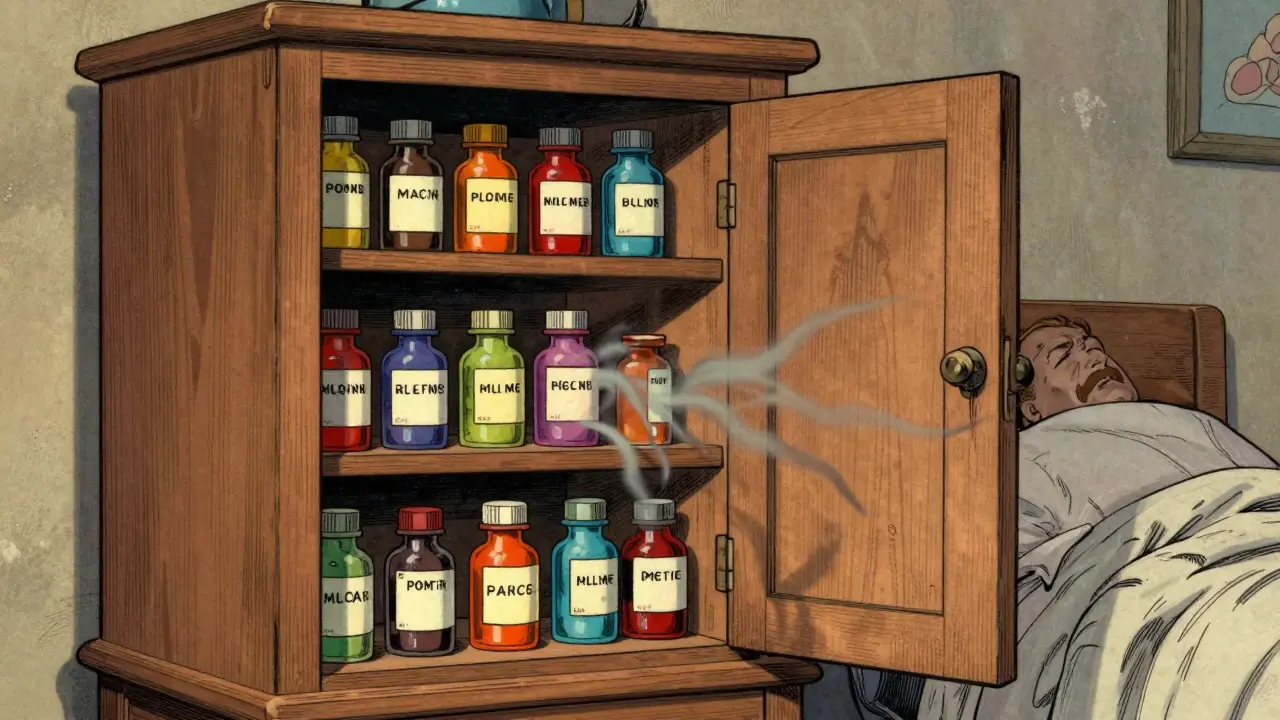
The Hidden Danger Behind Your Medicine Cabinet
Imagine taking a prescription exactly as directed, feeling better about the original problem, but unknowingly setting off an internal alarm. For most people, medicine heals. But in rare cases, specific drugs can trigger a life-threatening chain reaction called Aplastic Anemia. It is a severe condition where the bone marrow stops producing enough blood cells. The term refers to drug-induced bone marrow failure, which happens when pharmaceutical agents damage hematopoietic stem cells. This leads to pancytopenia, a dangerous reduction in all three blood cell lines. While this sounds technical, the reality is straightforward: your body loses the ability to fight infection, stop bleeding, or carry oxygen efficiently. The National Institute of Diabetes and Digestive and Kidney Diseases notes that medication-induced cases represent a significant subset of acquired aplastic anemia. Understanding the early signs isn't just academic; it is a matter of survival.
How Your Blood Factory Shuts Down
To understand the risk, you need to visualize your bone marrow as a factory. Inside your bones, specialized workers called hematopoietic stem cells manufacture red blood cells, white blood cells, and platelets daily. These components keep you alive by carrying oxygen, fighting bacteria, and clotting wounds. When certain chemicals enter your system, they can attack these stem cells directly or trick your immune system into destroying them.
According to the Children's Hospital of Philadelphia, medication-related cases account for approximately 5% to 10% of acquired aplastic anemia cases. The onset typically occurs within weeks to months after exposure to the causative agent. Unlike typical side effects like a rash or nausea, this damage is silent until blood counts crash. The Colorado Blood Cancer Institute specifies that medication-induced cases often show rapid progression, with blood counts declining by 30% to 50% within 2 to 4 weeks of exposure. This speed makes early detection your single greatest advantage.
The Culprit List: Which Medications Carry Risk?
Not every pill carries this weight, but ignoring the specific high-risk class is a mistake. We need to name the players involved because awareness reduces delay. Medical literature identifies several classes of drugs linked to this failure. Here are the primary offenders documented in major health reviews:
| Medication Class | Specific Agents | Risk Context |
|---|---|---|
| Antibiotics | Chloramphenicol, Sulfonamides | Historical highest risk; idiosyncratic reactions |
| Anticonvulsants | Carbamazepine, Phenytoin | Immune-mediated destruction of stem cells |
| Pain Relief | NSAIDs, Gold Compounds | Suspected role in rheumatoid arthritis treatment |
| Cancer Therapy | Chemotherapy Agents | Predictable suppression vs persistent failure |
Harvard Health Publishing reports that Chloramphenicol carries the highest risk, with relative risk increased by 30 to 60 times compared to non-users. However, modern cases frequently involve newer agents like carbamazepine, which increases risk by approximately 15 times. It is important to distinguish between dose-dependent suppression (common with chemotherapy) and true aplastic anemia. The latter persists even after the drug is removed. The American Society of Hematology warns that restarting a suspected causative medication after initial recovery carries a 90% risk of more severe relapse.

Reading the Body's Warning Signs
Fatigue is the universal villain in many health scares, but here it is a specific flag. If you feel run down, it could be stress, viral illness, or something critical. The difference lies in duration and combination. The Aplastic Anemia and MDS International Foundation found that 68% of cases experienced symptom onset 4 to 6 weeks before diagnosis. Patients often dismiss these early symptoms as 'just feeling run down.' Do not let fatigue pass unnoticed if it appears alongside other systemic signs.
- Unexplained Bruising: Easy bruising without trauma is a critical warning. If multiple bruises appear simultaneously, especially on areas protected from impact, seek attention.
- Recurrent Fevers: Low-grade fevers ranging from 99°F to 101°F that linger suggest your white blood cells aren't fighting back effectively.
- Weight Loss: Unexplained loss of 5 to 10 pounds over 2 to 3 weeks signals metabolic stress.
- Bleeding Issues: Nosebleeds, bleeding gums, or petechiae (tiny red spots under the skin) indicate low platelet levels.
MedlinePlus details that early hematological changes often precede clinical symptoms, with laboratory abnormalities typically appearing 1 to 3 weeks before significant symptoms emerge. This means your blood test might show trouble before your mirror does.
The Lab Evidence: Numbers That Matter
You might wonder what doctors look for to confirm suspicion. They rely on the Complete Blood Count (CBC). MedlinePlus states diagnostic criteria include hemoglobin levels below 10 g/dL, absolute neutrophil count below 1,500/μL, and platelet count below 150,000/μL. If you see numbers dropping in this range, time becomes the enemy.
The Mayo Clinic reports that approximately 70% of medication-induced cases are classified as severe aplastic anemia. Severe criteria require two of the following: reticulocyte count less than 40,000/μL, absolute neutrophil count less than 500/μL, or platelet count less than 20,000/μL. Bone marrow biopsy remains the gold standard diagnostic tool, with hypocellularity (less than 25% cellularity for age) confirming the diagnosis. In practical terms, if your primary care physician notices a dip in your CBC trends, request a specialist review immediately.

Immediate Actions: What To Do Today
If you suspect your medication is causing harm, hesitation costs days. CHOP's 2023 guidelines mandate immediate discontinuation of the suspected medication as the first critical step. Data shows 85% of mild cases show hematological improvement within 4 weeks of cessation. However, stopping powerful drugs requires professional oversight; sudden withdrawal can cause seizures or other withdrawal syndromes depending on the agent.
Follow this emergency hierarchy:
- Stop the Drug (if safe): Consult your prescriber immediately regarding cessation.
- Request CBC: Demand blood work within 24 hours if you have high-risk symptoms.
- Hospital Trigger: If neutrophil counts fall below 500/μL, hospitalization is necessary for infection prophylaxis.
- ER Criteria: Fever above 100.4°F (38°C) in a patient with suspected bone marrow failure constitutes a medical emergency requiring evaluation within 1 hour.
The American Society of Clinical Oncology warns against self-managing high-risk situations. Patients with platelet counts below 50,000/μL require immediate referral to a hematologist. Transfusions may be indicated when counts fall below 10,000/μL. Dr. Neal Young of the National Institutes of Health states that early recognition represents the single most important factor determining survival, with mortality rates below 10% when identified and treated within 2 weeks.
Looking Ahead: Recovery and Prevention
The future for medication-induced cases is improving. Long-term viability assessments indicate that with prompt recognition and treatment, 5-year survival rates now exceed 85%. Newer treatments emphasize early immunosuppressive therapy with horse anti-thymocyte globulin plus cyclosporine. The European Society for Blood and Marrow Transplantation announced updated treatment guidelines in January 2024 emphasizing these protocols for medication-induced cases, reporting 78% response rates in their 2023 registry data.
Prevention focuses on vigilance. If starting high-risk medications, providers should receive baseline CBC testing followed by weekly monitoring for the first 4 weeks. Recent research priorities include developing pharmacogenomic testing to identify patients at highest risk before initiating potentially harmful medications. Community discussions consistently emphasize maintaining medication records, with patients reporting that having a complete history reduced diagnostic delays by an average of 6.2 days.
Can natural remedies treat aplastic anemia?
No. Once the bone marrow fails to produce blood cells, natural remedies cannot regenerate the stem cells quickly enough. Conventional treatment involving immunosuppression or transplantation is required to prevent fatal infections or bleeding.
How soon do symptoms appear after taking medication?
Onset typically occurs within weeks to months after exposure. However, lab abnormalities often appear 1 to 3 weeks before physical symptoms become obvious to the patient.
Is bone marrow transplant always necessary?
It depends on severity. Mild cases may recover simply by stopping the offending drug. Severe cases often require immunosuppressive therapy or stem cell transplantation if a matched donor is available.
Which doctor should I see for diagnosis?
Start with your primary care provider for a Complete Blood Count (CBC). If results show low counts, ask for an immediate referral to a hematologist specializing in bone marrow failure.
Can I return to the medication that caused the issue?
Generally no. Restarting a suspected causative medication carries a 90% risk of more severe relapse. Avoid re-exposure permanently to protect long-term health.




Comments
They want us dependent on their chemical cocktails while we quietly bleed out internally. Big Pharma profits from chronic sickness so they bury these statistics deep in obscure reports nobody reads. The narrative pushes compliance instead of questioning why bone marrow suddenly fails after weeks of obedience. Corporate interests prioritize shareholder returns over patient viability every single time. Silence is the tool used to normalize dangerous side effects as acceptable risks. We are essentially guinea pigs testing longevity against profit margins. The data suggests negligence rather than mere oversight in monitoring these compounds. Trusting a prescription blindly is gambling with your own biological infrastructure. Every pill carries a shadow cost that insurance won’t cover when the system collapses. Vigilance is the only defense against a medical industrial complex designed to sell cures for problems they create.
the body is a temple yet we fill it with poisons under guise of healing. modern medicine treats symptoms while ignoring the spirit of cellular balance. we consume these pills without understanding the metaphysical weight of the transaction. silence follows the ingestion then the scream arrives later. awareness is rare in a society addicted to convenience over truth. the soul rejects what the mind accepts for survival. this cycle repeats until the factory stops completely. we forget the biology beneath the bureaucracy of healthcare. true health requires respect for internal systems not external chemicals imposed from outside. ignorance is the disease more prevalent than any blood count anomaly.
I think it is important to look at the facts simply. While the philosophy is interesting the medical reality is straightforward. People need to track their labs closely when starting new drugs. Symptoms like bruising or fever are key indicators that doctors use. Checking blood counts weekly offers protection against serious drops in cells. Early detection really does change the outcome significantly.
You clearly don't understand how our healthcare system works here. American standards are far better than whatever you are reading about online. These protocols exist specifically to protect citizens from foreign medical ideas. If you live in the USA you follow FDA guidelines period. Ignoring established rules puts everyone at risk during outbreaks. Patriotism means trusting our local institutions over internet rumors. Stay informed through official channels only please.
How can anyone speak so casually about life threatening conditions! It is irresponsible to dismiss clinical data for philosophical musings! You must prioritize scientific consensus over abstract theories! The consequences of failure are absolute and permanent! Medical professionals train for years to interpret these markers correctly! Do not attempt to replace expertise with intuition!
Guess my morning ibuprofen is basically a death warrant now.
Just down here in Oz we see similar cases pop up now and then. Gotta watch out for those antipsychotics especially since they are common scripts here. Mate always keeps an eye on the results if you feel off. Best to listen to the doc but ask questions is good too. Cheers all.
There is value in being cautious but fear shouldn’t drive decisions alone. We must remain calm and supportive of those who are affected. Information helps us prepare for what comes next in life. Kindness matters most when dealing with health scares. Listening to concerns validates feelings without escalating panic unnecessarily.
It is crucial to understand the timeline associated with these side effects. Most patients fail to notice early warning signs until significant damage occurs. A sudden drop in platelets often precedes visible bruising by several weeks. Fever remains the most consistent indicator of white blood cell deficiency. You should monitor your temperature daily when starting new high-risk medications. Blood work provides the only concrete evidence of marrow failure. Relying on self-assessment alone is dangerously insufficient for diagnosis. Immediate cessation of the offending agent is the primary treatment protocol. However, this action requires physician oversight to prevent withdrawal complications. Transfusion support becomes necessary if counts fall below critical thresholds. Survival rates improve dramatically with early intervention and specialist care. Immunotherapy options are available for severe cases resistant to simple cessation. Family members should keep a detailed log of all prescriptions taken recently. Sharing this history helps specialists identify the culprit much faster than trial and error. Ultimately prevention through vigilance saves lives every single day.
yes that sounds correct. i agree with the need for caution. safety is important always.