
Imagine losing the ability to move your fingers, then your legs, then your voice, all while your mind stays perfectly sharp. That is the terrifying reality of Amyotrophic Lateral Sclerosis, also known as Lou Gehrig's Disease. It is a progressive neurodegenerative disorder that attacks the upper and lower motor neurons in the brain and spinal cord. As these cells die, muscles weaken and eventually fail, leading to paralysis. While there is no cure yet, we do have tools to slow it down. The most critical tool in our arsenal is Riluzole, the first drug ever approved specifically for this condition.
If you or a loved one has just received an ALS diagnosis, the fear can be overwhelming. You might wonder if medications actually help when the disease feels so relentless. The short answer is yes, but with caveats. Riluzole doesn't stop the progression entirely, nor does it reverse damage. Instead, it buys time. For many patients, that extra time means more moments with family, more independence, or simply a slower decline. This guide breaks down how Riluzole works, what to expect from the treatment, and how it fits into the broader landscape of ALS care in 2026.
Understanding the Disease: Why Motor Neurons Fail
To understand why Riluzole is used, you first need to grasp what is happening inside the nervous system. Your body moves because motor neurons send electrical signals from your brain to your muscles. In ALS, these neurons degenerate. The exact trigger varies by person, but genetic mutations (like those in the SOD1 gene) and environmental factors often play a role. When these neurons die, they take their signal path with them. The result is muscle weakness, twitching, cramping, and eventually, the inability to swallow or breathe without assistance.
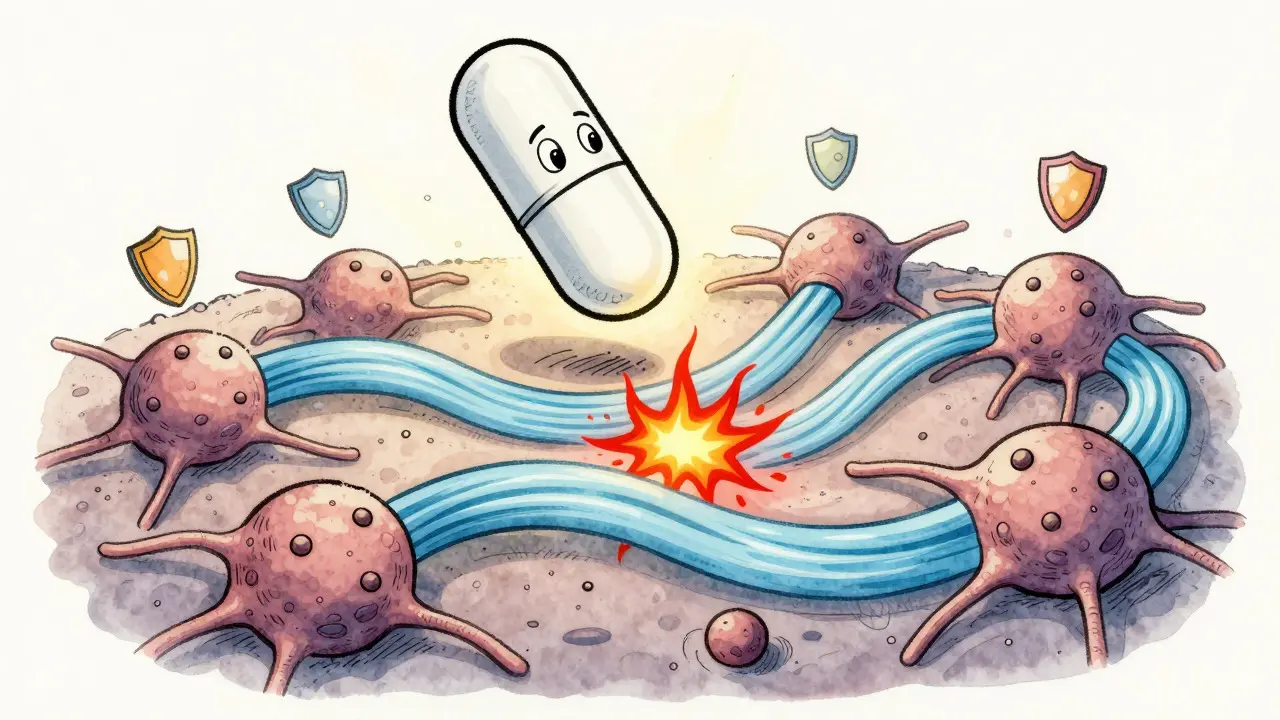
The core pathological driver in many cases is something called excitotoxicity. Glutamate is a neurotransmitter that helps neurons communicate. However, when too much glutamate builds up in the space between neurons, it overstimulates the receiving cells. Think of it like shouting at someone until they go deaf; the constant noise damages the receiver. In ALS, this excessive glutamate activity leads to calcium influx in the motor neurons, triggering cell death. Riluzole targets this specific mechanism, which is why it was such a breakthrough when it arrived in the mid-1990s.
How Riluzole Works: The Science Behind the Drug
Riluzole is a benzothiazole derivative that acts primarily as a glutamate antagonist. Approved by the FDA in 1995, it remains the gold standard for initial ALS treatment. Its mechanism is multi-faceted. First, it inhibits the release of glutamate from nerve terminals. Second, it activates the reuptake of glutamate, clearing it away from the synapse faster. Third, it blocks voltage-dependent sodium channels, which reduces the firing rate of neurons.
You might ask, "If it blocks glutamate, why isn't it a cure?" The issue is complexity. ALS is not just about glutamate; it involves inflammation, oxidative stress, and protein misfolding. Riluzole addresses one major piece of the puzzle-the excitotoxicity-without fixing the underlying genetic or structural defects. Despite this, its impact on survival is statistically significant. Landmark trials showed that patients taking Riluzole had a 35-39% reduction in the risk of death or needing a tracheostomy within 18 months compared to those on placebo. While the absolute gain in life expectancy is modest-often cited as 2 to 3 months-every single month counts in a progressive disease.
| Formulation | Brand Name | Key Benefit | Approval Date |
|---|---|---|---|
| Tablet (50mg) | Rilutek | Standard cost-effective option | May 1995 |
| Oral Suspension (50mg/5mL) | Tiglutik | Easier for swallowing difficulties | October 2018 |
| Oral Thin Film | Exservan | Dissolves quickly, less GI distress | October 2020 |
What to Expect: Dosage, Side Effects, and Monitoring
Starting Riluzole is usually straightforward, but it requires vigilance. The standard dose is 100mg per day, split into two 50mg doses taken every 12 hours. Most doctors start with 50mg once daily for a week to let your body adjust before moving to the full dose. Because the drug is metabolized by the liver, monitoring is non-negotiable. You will need liver function tests (LFTs) before starting, monthly for the first three months, and periodically thereafter. About 10-15% of patients may experience elevated liver enzymes, which can sometimes lead to discontinuation if not managed.
Side effects are common but often manageable. Nausea is the most frequent complaint, affecting roughly 25% of users, especially in the first few weeks. Taking the medication with food can significantly reduce this. Other common issues include fatigue, dizziness, and diarrhea. If you are sensitive to caffeine, be aware that it can interact with Riluzole, potentially altering how quickly your body clears the drug. Similarly, if you take theophylline (for asthma or COPD), your doctor needs to monitor levels closely, as Riluzole can increase theophylline concentrations by 25-30%.
Riluzole vs. Edaravone: Comparing Treatment Options
For a long time, Riluzole stood alone. But in 2017, the FDA approved Edaravone (marketed as Radicava), offering patients a second choice. So, how do they stack up? Edaravone is an antioxidant that works differently than Riluzole. It reduces oxidative stress in the neurons rather than modulating glutamate. In clinical trials, Edaravone slowed functional decline in some patients, showing a 33% reduction in decline over 24 weeks in specific subgroups. However, unlike Riluzole, Edaravone has not consistently demonstrated a clear survival benefit in large-scale studies.
Many neurologists now consider using both drugs together. Since they work via different mechanisms, combining them might offer additive benefits. A patient might use Riluzole for its proven survival extension and add Edaravone to target oxidative damage. The decision depends on individual health profiles, budget, and access. While Riluzole is generic and widely available, Edaravone can be expensive and is typically administered intravenously, requiring regular clinic visits. For many, the oral convenience and established safety profile of Riluzole make it the primary backbone of therapy.
Real-World Experiences and Patient Perspectives
Statistics tell part of the story, but patient voices tell the rest. On various support forums, a common theme emerges: frustration with side effects mixed with gratitude for any potential benefit. One patient shared that while nausea was brutal initially, managing it with food allowed them to continue treatment, feeling that their progression was slower than average. Another highlighted the anxiety of liver monitoring, noting that high enzyme levels forced them to stop the drug temporarily. These experiences underscore a key point: adherence is difficult. By 24 months, only about 47% of patients remain on Riluzole, often due to side effects or the natural progression of the disease making administration harder.
Despite these challenges, 62% of surveyed patients report continuing treatment because they believe it provides value, often citing "extra time with family" as their main motivation. This highlights the psychological component of ALS treatment. Knowing you are doing *something* to fight the disease can provide a sense of control in a situation that feels largely out of your hands. Support groups and patient advocacy organizations play a crucial role in helping families navigate these decisions, providing resources for financial aid and emotional support.

The Future of ALS Therapy: Beyond Riluzole
While Riluzole remains the cornerstone of care, the horizon is shifting. In 2023, the FDA approved Tofersen (Qalsody), a gene-targeted therapy for a specific subtype of ALS caused by SOD1 mutations. This represents a new era where treatments can be tailored to genetic profiles. For the 2% of patients with this mutation, Tofersen offers a targeted approach that Riluzole cannot match. However, for the vast majority of ALS patients who do not have a known genetic cause, Riluzole continues to be the first-line defense.
Research is also exploring combination therapies. Trials are underway testing Riluzole alongside other agents like sodium phenylbutyrate to enhance neuroprotection. Novel formulations, such as the thin-film version of Riluzole, aim to improve bioavailability and reduce gastrointestinal issues, making long-term adherence easier. As we move further into the 2020s, the hope is that Riluzole will transition from a standalone therapy to part of a comprehensive, multi-drug regimen that addresses multiple pathways of neurodegeneration simultaneously.
Practical Tips for Managing Riluzole Therapy
If you are starting Riluzole, here are some practical steps to maximize its effectiveness and minimize discomfort:
- Take with Food: Always take your dose with a meal or snack to reduce nausea.
- Set Reminders: Use a pill organizer or phone alarm to ensure you take the two doses exactly 12 hours apart.
- Monitor Liver Health: Keep all scheduled lab appointments. Do not skip blood tests, even if you feel fine.
- Communicate Side Effects: Tell your neurologist about any new symptoms immediately. Sometimes adjusting the timing or form (switching to suspension or film) can help.
- Check Interactions: Provide a full list of all medications and supplements to your pharmacist to check for interactions with Riluzole.
Managing ALS is a marathon, not a sprint. Riluzole is one important stride in that journey. It may not change the destination, but it can influence the pace. By understanding how it works, staying vigilant about side effects, and leveraging the latest formulation options, you can make the most of this vital tool in your care plan.
Does Riluzole cure ALS?
No, Riluzole does not cure ALS. It is a disease-modifying therapy that slows progression and extends survival slightly, typically by 2-3 months on average, by reducing excitotoxicity in motor neurons.
What are the most common side effects of Riluzole?
The most common side effects include nausea (25%), fatigue (20%), and diarrhea (15%). Elevated liver enzymes occur in about 12% of patients, which requires regular monitoring.
Can I take Riluzole with other ALS medications?
Yes, Riluzole is often prescribed alongside Edaravone. However, you should always inform your doctor about all other medications, especially theophylline and caffeine-rich products, as they can interact with Riluzole metabolism.
How long does it take for Riluzole to work?
Riluzole works continuously while you are taking it. There is no single "point" where it kicks in; rather, it provides ongoing protection against glutamate excitotoxicity. Benefits are measured over months in terms of delayed progression and survival.
What should I do if my liver enzymes rise?
Contact your neurologist immediately. They may repeat the test to confirm results. If enzymes remain high, they might pause the medication or switch you to a different formulation or alternative therapy, depending on the severity.