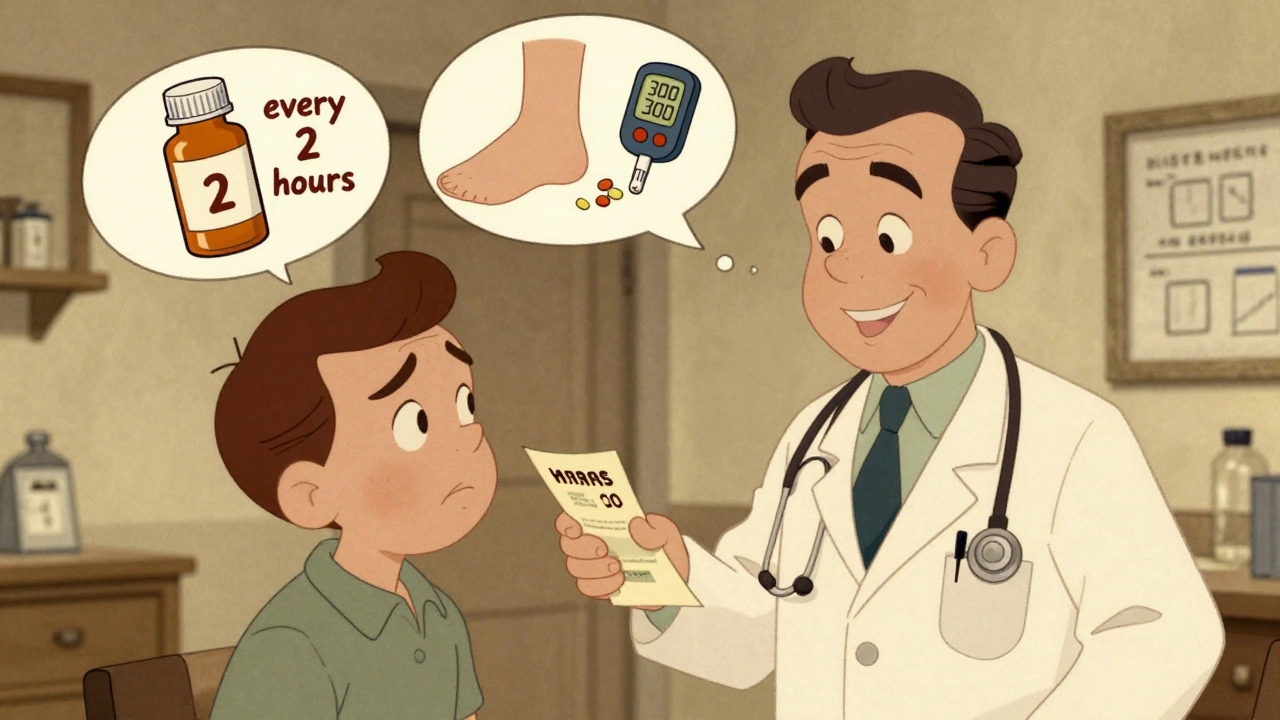
Why Tracking Generic Understanding Matters in Patient Education
Most patient education programs fail not because they don’t teach, but because they don’t know if patients actually understand.
Doctors hand out brochures. Nurses give verbal instructions. Pharmacists explain dosages. But how do you know if the patient walked out with the right idea-or a dangerous misunderstanding?
Generic understanding means the patient can apply what they learned in real life, not just repeat it back. They should know how to recognize symptoms, adjust behavior, and respond to changes without needing to call their provider every time. That’s not memorization. That’s real learning.
Studies show that up to 60% of patients misremember or misunderstand critical health instructions after a single visit. That’s not just poor communication-it’s a failure in measurement. If you can’t track understanding, you can’t improve it.
Direct vs. Indirect Methods: What Actually Shows Learning
There are two kinds of evidence when measuring understanding: direct and indirect.
Direct methods show what the patient can actually do. For example:
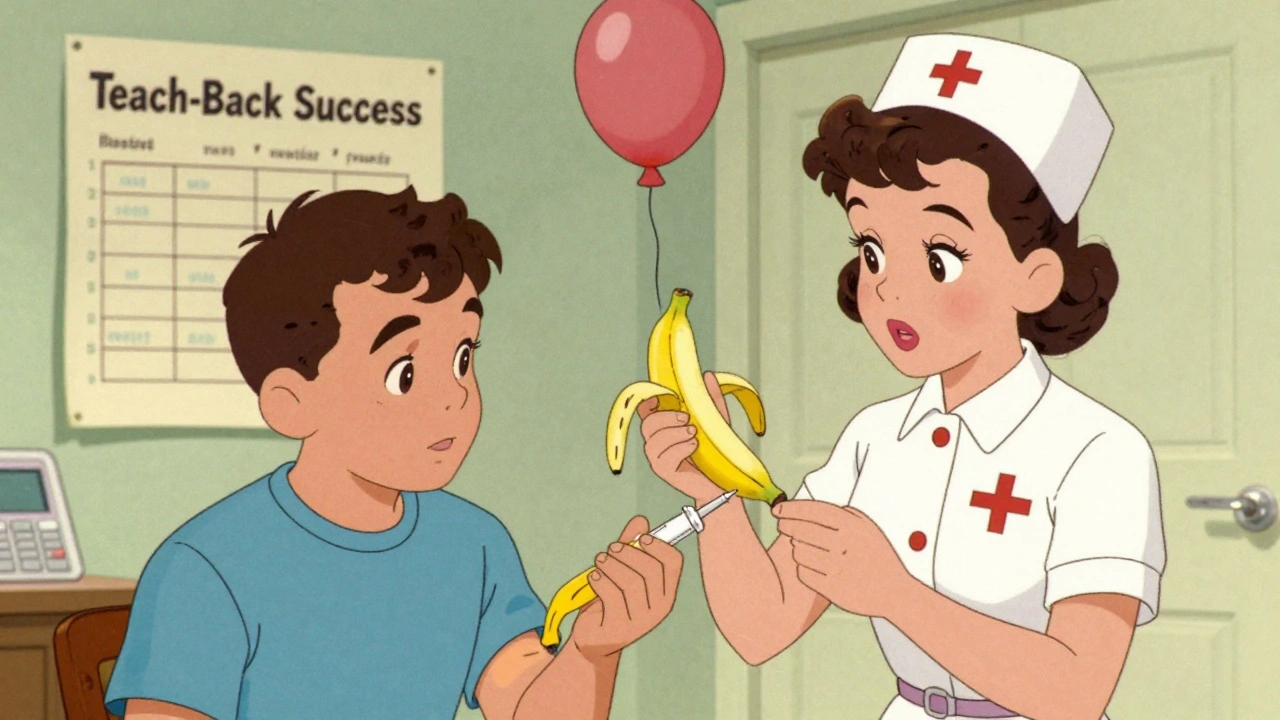
- Asking a diabetic patient to demonstrate how they prepare an insulin injection
- Having a heart failure patient explain what signs mean they need to call their doctor
- Observing a post-surgery patient correctly use a walker or wound care kit
These aren’t guesses. They’re observations of real behavior. The NIH found that direct assessments are the only way to confirm actual skill acquisition. No survey can replace watching someone do the task.
Indirect methods, like patient satisfaction surveys or self-reports (“I feel confident”), tell you how people think they’re doing-not what they’re actually doing. One study showed that 72% of patients rated their understanding as “excellent,” but failed a simple quiz on their own medication schedule.
Use indirect methods to support direct ones, not replace them. If a patient says they understand but can’t demonstrate it, something’s broken in the teaching process.
Formative Assessment: The Secret Weapon for Real-Time Learning
Most patient education ends after the discharge summary is signed. That’s too late.
Formative assessment means checking understanding while teaching. It’s not a test-it’s a conversation. Think of it like a thermostat: you adjust the heat as you go, not after the house is freezing.
Simple techniques work best:
- Teach-back method: “Can you tell me in your own words how you’ll take this medicine?”
- Return demonstration: “Show me how you’d use this inhaler.”
- Exit tickets: “Write down one thing you’re unsure about before you leave.”
One community hospital reduced readmissions by 31% in six months after training staff to use teach-back with every patient. Why? Because they caught misunderstandings before patients left the building.
These methods don’t require fancy tools. They require time, training, and a shift in mindset: education isn’t a one-way broadcast. It’s a two-way check-in.
Why Summative Assessments Fall Short for Patient Education
Summative assessments-like end-of-visit questionnaires or post-discharge surveys-are common, but they’re often useless.
They happen too late. If a patient misunderstood their blood pressure meds, and you only find out three weeks later via a survey, the damage is already done. High blood pressure led to a stroke. That’s not a data point-it’s a tragedy.
Also, summative tools often measure satisfaction, not understanding. “Did you like the education?” doesn’t tell you if they know when to call 911.
Some clinics use standardized questionnaires like the Patient Health Questionnaire (PHQ) or medication knowledge tests. But unless those tools are tied to specific, observable behaviors, they’re just checkboxes.
Don’t wait until the end to ask if learning happened. Ask during the process.
Criterion-Referenced vs. Norm-Referenced: What’s the Difference?
Norm-referenced assessment compares patients to each other. “You scored better than 70% of others.” That’s irrelevant in patient education.
Criterion-referenced assessment asks: “Did you meet the standard?” For example:
- Can you name three warning signs of infection after joint replacement?
- Can you correctly set your glucose monitor’s alarm?
- Do you know which foods to avoid while on warfarin?
There’s no ranking. There’s no curve. It’s a clear pass/fail based on safety and function.
Every patient deserves to meet the same baseline. A 78-year-old and a 32-year-old both need to know how to use an EpiPen correctly. The standard doesn’t change based on age, education, or background.
Using norm-referenced tools in patient education is like grading a driver’s test based on how well others did. You don’t care if someone else failed-you care if this person can drive safely.
Building a Simple Assessment System for Your Practice
You don’t need a big budget or fancy software. Start with three steps:
- Define the key behaviors you want patients to master. For example: “Take metformin with food,” “Check feet daily,” “Recognize symptoms of low blood sugar.”
- Choose one formative method to use with every patient. Teach-back is the most reliable. Train your staff to use it consistently.
- Track what you find. Keep a simple log: “Patient demonstrated correct inhaler use-yes/no.” No need for spreadsheets. Just note patterns over time.
One clinic started using teach-back for all new diabetes patients. After three months, they noticed 40% of patients couldn’t explain why they needed to check their feet. So they added a visual guide with pictures of foot sores and a simple checklist. Within six months, foot ulcer rates dropped by 27%.
Improvement comes from data-not guesswork.
The Hidden Barriers: Why Even Good Methods Fail
Many providers think they’re doing well because they use teach-back or hand out printed materials. But here’s what often goes wrong:
- Assuming literacy equals understanding. A patient might read the brochure but not grasp the implications.
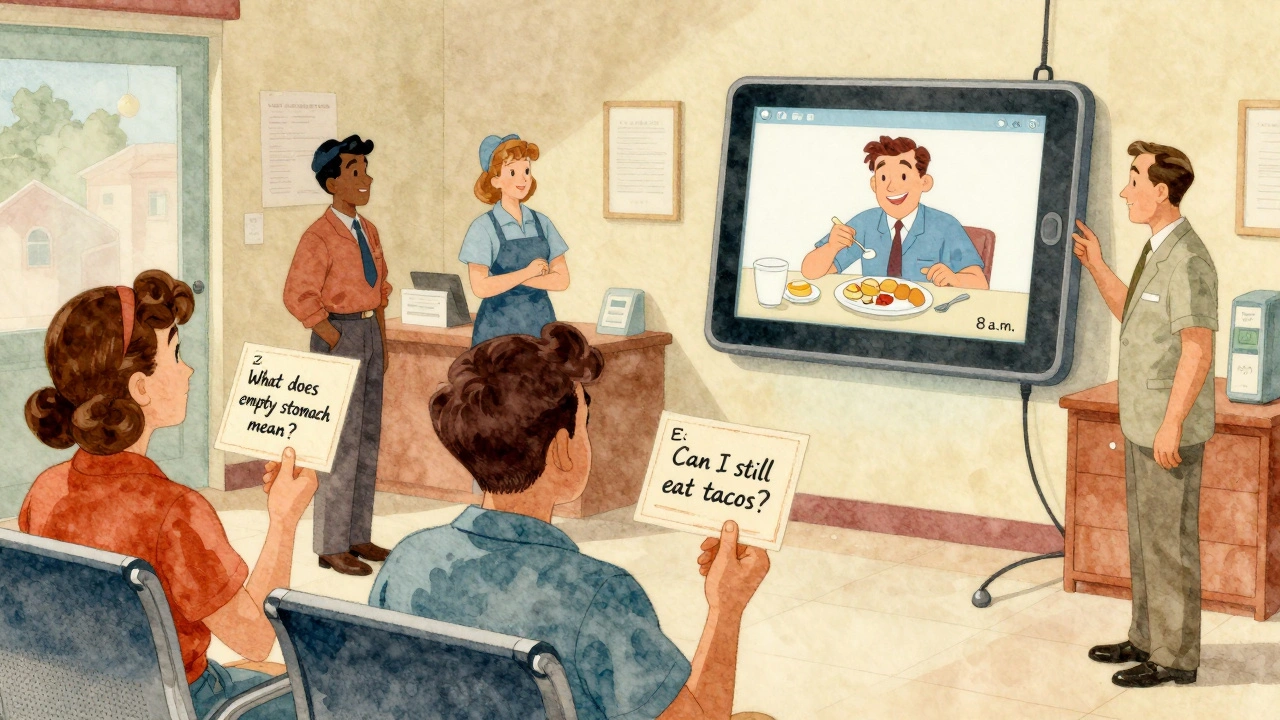
- Using jargon. “Take this on an empty stomach” sounds clear to you-but what does “empty stomach” mean to someone who eats dinner at 8 p.m. and breakfast at 10 a.m.?
- Skipping cultural context. A patient might agree to take medicine “three times a day” because they don’t want to seem difficult, even if their work schedule makes that impossible.
- Not allowing time for questions. If you rush through education, patients won’t ask. And if they don’t ask, you’ll never know what they don’t get.
One study found that patients were 5x more likely to correctly demonstrate a task if they were given time to ask follow-up questions-even if they didn’t ask any.
It’s not about the tool. It’s about the space you create for honest communication.
What the Future Holds: AI and Adaptive Learning
AI-powered tools are starting to help. Some platforms now use voice analysis to detect confusion in patient responses. Others adapt questions based on answers in real time.
Imagine a tablet asking: “You said you’re not sure when to take your pill. Let me show you a video of someone with a similar schedule.”
These tools aren’t replacing human interaction-they’re supporting it. They flag patients who need extra help before they leave the clinic.
But tech alone won’t fix bad teaching. If the content isn’t clear, the algorithm won’t help. If staff don’t listen, the AI just collects data.
The goal isn’t to automate understanding. It’s to amplify human connection with better feedback.
Final Thought: Understanding Is the Goal, Not Compliance
Patients don’t need to be obedient. They need to be capable.
Compliance is about following orders. Understanding is about making smart choices-even when no one’s watching.
When a patient knows why they’re doing something, they’re more likely to stick with it. When they’re just following instructions, they’ll forget, skip doses, or stop entirely.
Measuring generic understanding isn’t about checking boxes. It’s about ensuring that every person who walks out of your office has the power to take care of themselves.
That’s not just good practice. It’s essential care.

Comments
This is 🔥. Finally someone gets it. Teach-back isn’t optional-it’s life or death. 🙌
I’ve been pushing for this in our clinic for years. We started using teach-back with every diabetic patient last year. Before? 40% of them couldn’t explain why they needed to check their feet. After? Foot ulcer rates dropped 27%. It’s not magic-it’s just making sure people actually understand. No more assuming. No more brochures as a shield. We train staff, we document, we adjust. It’s slow, but it’s real. And yes, it takes time. But so does recovering from a preventable stroke.
I work in a rural ER in Wales, and I’ve seen too many patients come back because they thought ‘take with food’ meant ‘take after your 8pm pint’. Language isn’t just about words-it’s about context, rhythm, culture. You can have the best teach-back script in the world, but if the patient’s brain is stuck on ‘I don’t want to be rude’ or ‘I don’t trust this doctor’, it’s all noise. The real barrier isn’t the method-it’s the power dynamic. We need to stop treating patients like students and start treating them like partners. Even if they don’t speak perfect English. Even if they’re scared. Even if they’re tired. That’s the real formative assessment: do they feel safe enough to say ‘I don’t get it’?
This is the kind of performative, buzzword-laden nonsense that drains healthcare budgets. 'Generic understanding'? 'Formative assessment'? You’re not teaching medicine-you’re running a TED Talk. Real clinicians have 7-minute appointments. They’re not doing role-play with insulin pens. The system is broken, not the patients.
I wonder if the assumption that understanding = behavior is itself a form of epistemic violence. What if a patient understands perfectly but chooses not to comply due to structural barriers-poverty, housing instability, lack of transportation? Does that make them ‘uneducated’? Or does it make our system unjust? We measure what’s easy to measure, not what’s true. And then we pat ourselves on the back for ‘improving outcomes’ while ignoring the conditions that make outcomes impossible. Is teaching someone to use an inhaler enough if they live in a moldy apartment with no air filter? Or if they’re working two jobs and can’t afford the medication? The metric is not the moral.
Oh honey. You’re basically describing Socratic pedagogy but with more buzzwords and less Nietzsche. ‘Criterion-referenced’? Darling, that’s just ‘not grading on a curve’-which, shocker, works better when people aren’t being compared to each other like livestock. And ‘generic understanding’? That’s just… learning. We’ve had this for centuries. You’re not innovating. You’re just giving old wine new labels and charging hospitals for the bottle.
Ah yes, the classic ‘teach-back’ gospel. I’ve seen this in three different hospitals. It works… until the nurse gets hit with a 12-patient census and the EHR crashes. Then it becomes ‘Did you get the handout?’ and ‘You’re good, right?’ The system doesn’t support this. It incentivizes speed. You can’t fix systemic burnout with a checklist. This is like telling firefighters to be more ‘proactive’ while taking away their trucks.
I’m a clinical informaticist and we just rolled out an AI-assisted teach-back tool. It uses voice stress detection to flag when patients are hesitating or contradicting themselves. We found 32% of patients who said ‘I understand’ had micro-pauses before key phrases-like ‘take this with food’-and later failed the demonstration. The AI doesn’t replace humans. It gives us a nudge: ‘Hey, this person might be hiding confusion.’ We now have a 15-second pause protocol after teach-back. It’s not perfect, but it’s the first time tech helped us listen better.
This is why our hospitals are collapsing!!! Everyone’s obsessed with ‘assessment’ and ‘metrics’ but NO ONE is talking about the fact that insurance companies won’t pay for more than 5 minutes of education!!! And then they blame the providers when patients end up back in the ER!!! It’s not the teaching-it’s the $$$!!! They want us to be doctors, nurses, therapists, social workers, AND data entry clerks-and then charge us for ‘poor outcomes’!!! I’m so tired!!!
i just wanted to say i love this post. i work in a small clinic and we started doing teach-back with every patient last month. i used to think it was awkward but now i see how much it helps. one lady kept saying she understood her blood pressure meds but she kept taking them with grapefruit juice. we caught it because we asked her to show us. she was so relieved we didn’t judge her. it’s not about being perfect. it’s about being safe. 🙏
America needs to stop pretending education is a fix for inequality. You think teaching someone to use an inhaler matters if they can’t afford the inhaler? Or if they’re scared of ICE because they’re undocumented? This whole ‘understanding’ thing is just a distraction. We need universal healthcare. Not more checklists.
i’ve been doing this for 18 years and the only thing that changed is we started using pictures instead of words for non-english speakers. one guy thought ‘take on empty stomach’ meant ‘dont eat at all’. he was diabetic. we drew a clock with breakfast lunch dinner. he got it. no jargon. no tech. just a drawing. sometimes the simplest thing works best. just listen. really listen.
I appreciate the practical suggestions, but I still wonder-when we measure ‘understanding’ as a binary outcome (pass/fail), aren’t we ignoring the messy, nonlinear nature of learning? A patient might demonstrate correct inhaler use today, but forget under stress tomorrow. Is that failure? Or is it evidence that understanding is situational, emotional, and contextual? Perhaps the goal isn’t to ‘assess’ understanding, but to cultivate resilience in patients-the ability to recover from misunderstanding, to ask for help, to adapt. That’s not measurable with a checklist. But it’s what keeps people alive.