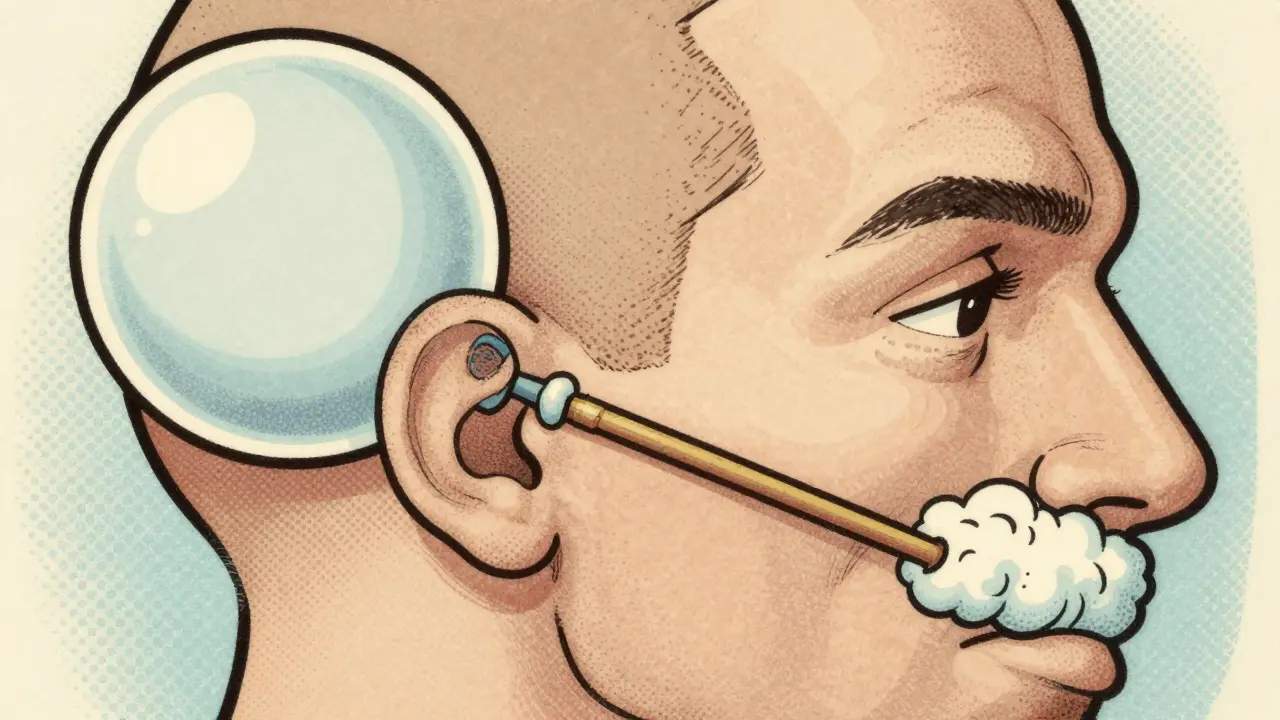
That stuck feeling in your ears after a flight or during a cold is more than just an annoyance. It’s a sign that your Eustachian tube is a small canal connecting the middle ear to the back of the nose and upper throat, responsible for equalizing pressure. When this tube fails to open properly, it leads to Eustachian Tube Dysfunction (ETD), a condition where the middle ear cannot equalize pressure with the outside environment, causing discomfort and hearing changes. You’re not imagining it; this is a very common issue affecting millions of people, from children to frequent flyers.
Most cases resolve on their own within two weeks, but knowing how to manage them can save you days of frustration. This guide breaks down why it happens, what symptoms to watch for, and practical ways to find relief without jumping straight to surgery.
Why Your Ears Feel "Stuck": The Mechanics of ETD
To understand the fix, you need to see the problem. Your eardrum acts like a balloon. Normally, air moves in and out of the middle ear through the Eustachian tube, keeping the pressure balanced on both sides. When the tube gets blocked-say, by mucus from a cold or swelling from allergies-the trapped air inside the middle ear gets absorbed by the lining.
This creates negative pressure. Think of it like sucking on a straw: the vacuum pulls the eardrum inward. According to Stanford Medicine, this inward pull can cause measurable hearing loss of 15 to 40 decibels. If the blockage lasts longer than three weeks, fluid may start to accumulate in the middle ear, a condition known as serous otitis media. This fluid adds weight and further distorts sound, pushing hearing loss up to 50 decibels in severe cases.
The root causes are usually straightforward. Upper respiratory infections account for 68% of cases, followed by nasal allergies at 22% and sinus infections at 10%. Children are particularly prone because their tubes are narrower and more horizontal, making them harder to drain naturally.
Recognizing the Signs: Is It Really ETD?
It’s easy to confuse ETD with other ear issues, so distinguishing the symptoms is key. Here’s what most patients report:
- Fullness or Pressure: Reported by 87% of patients. It feels like your ear is underwater or clogged.
- Muffled Hearing: Affects 92% of cases. Sounds seem distant or quiet, often in one or both ears.
- Popping or Clicking: Experienced by 78% of sufferers. These sounds happen when the tube finally forces itself open.
- Tinnitus: Ringing or buzzing in the ears, reported by about 65% of patients.
- Mild Imbalance: Around 42% of people feel slightly off-balance due to the pressure difference affecting the inner ear.
If you have constant, severe pain, it might not be ETD. As noted by Patient.info, ETD rarely causes intense pain. Severe, unrelenting pain could indicate an infection like acute otitis media or even a more serious issue behind the eardrum. However, mild ache or tenderness is common in ETD, especially when the eardrum is stretched thin.
Home Remedies That Actually Work
Before you rush to the doctor, try these evidence-based maneuvers. They work by mechanically forcing the tube open or reducing swelling around it.
- The Valsalva Maneuver: Pinch your nose shut, close your mouth, and blow gently as if blowing up a balloon. Do this 3-5 times per hour. Be gentle; blowing too hard can damage the eardrum. About 45% of first-timers struggle with the technique, so practice slowly.
- Swallowing and Yawning: These natural actions activate the muscles that open the tube. Try swallowing every 15-20 minutes during a flare-up. Chewing gum for 10-15 minutes every two hours also helps mobilize the tube.
- Nasal Decongestants: Sprays like oxymetazoline (Afrin) can shrink swollen tissue quickly. But here’s the catch: use them for no more than 3 consecutive days. Overuse leads to rebound congestion, which makes the problem worse.
- Steroid Nasal Sprays: For allergy-driven ETD, sprays like fluticasone (Flonase) reduce inflammation over time. These are safer for longer use, typically 2-4 weeks, but they take a few days to kick in fully.
Many people skip these steps because they feel tedious. But data shows 70% of cases resolve spontaneously within two weeks if you keep at it. Consistency beats intensity here.
When Home Care Isn't Enough: Medical Interventions
If symptoms persist beyond four weeks, or if you’re dealing with chronic issues, it’s time to see an ENT specialist. Here’s what the medical landscape looks like in 2026:
| Approach | Best For | Success Rate | Recovery Time |
|---|---|---|---|
| Medical Management | Acute cases, allergies | ~70% (spontaneous) | 1-2 weeks |
| Myringotomy | Fluid buildup, persistent cases | High short-term | Days |
| Balloon Dilation (BDET) | Chronic structural blockage | 67% at 12 months | Same day |
Myringotomy involves placing a tiny tube in the eardrum to allow air to flow directly into the middle ear. It’s effective for draining fluid but doesn’t fix the underlying tube issue, so it’s often a temporary measure.
Balloon Dilation of the Eustachian Tube (BDET) has become the go-to procedure for chronic cases. It’s minimally invasive, done in-office under local anesthesia, and takes about 20 minutes. A small balloon is inflated inside the tube to stretch it open. Recent data shows a 67% success rate at 12 months, with some studies citing up to 72% effectiveness at 6 months. It’s significantly less painful than older surgical options and allows you to return to normal activities almost immediately.
Newer research is also looking into bioabsorbable stents, which provide support while the tube heals. Early trials show promising results, with 85% symptom improvement at three months, though these aren’t widely available yet.
Preventing Future Episodes
Since viruses and allergies are the main culprits, prevention focuses on managing those triggers. During cold and flu season (October to March), 65% of ETD cases occur. Keeping your nasal passages clear with saline rinses can help prevent mucus from backing up into the tubes.
If you have seasonal allergies, consider starting antihistamines before peak pollen season. For frequent flyers, stay hydrated and avoid alcohol before flights, as both can thicken mucus. Some pilots and divers use specialized techniques to maintain pressure equilibrium, but for most of us, simple chewing gum and slow yawning are enough.
Don’t ignore the signs. While ETD is usually benign, untreated chronic cases can lead to permanent scarring of the eardrum or recurrent infections. If you notice changes in your hearing or balance that don’t go away after a week, get it checked.
Frequently Asked Questions
How long does Eustachian tube dysfunction last?
Most acute cases resolve within 7 to 14 days. If symptoms persist beyond 3 weeks, it becomes chronic and may require medical intervention like balloon dilation or myringotomy.
Is the Valsalva maneuver safe?
Yes, if done gently. Pinch your nose, close your mouth, and blow softly. Avoid forceful blowing, as excessive pressure can potentially damage the eardrum or push infection deeper into the middle ear.
Can ETD cause permanent hearing loss?
Rarely, if left untreated for a very long time. Chronic negative pressure can stretch the eardrum permanently or lead to adhesions (scarring) in the middle ear space. Early treatment prevents these complications.
What is the difference between ETD and an ear infection?
ETD is primarily a pressure issue caused by blockage, leading to fullness and muffled hearing. An ear infection (otitis media) involves bacterial or viral growth, causing significant pain, fever, and often visible pus behind the eardrum. ETD pain is usually mild or intermittent.
Do decongestant sprays work for ETD?
Yes, but only for short periods. Oxymetazoline sprays reduce swelling quickly, helping the tube open. However, limit use to 3 days max to avoid rebound congestion, which can worsen the blockage.




Comments
I’ve been dealing with this for years, and honestly, the Valsalva maneuver is a game-changer if you do it right. Most people blow way too hard, which just makes the pressure worse. I learned from an ENT that gentle pressure is key; think of it like trying to pop a balloon slowly rather than ripping it. Also, don’t ignore the nasal sprays; they work wonders for me during allergy season. The rebound congestion thing is real, though, so keep a strict schedule. If you have chronic issues, look into balloon dilation before jumping to tubes. It’s less invasive and feels much more natural. This article did a great job explaining the mechanics without being too technical.
Pressure equilibrium is a fundamental aspect of human physiology often overlooked until failure occurs. In many cultures, ear discomfort is attributed to spiritual imbalance rather than mechanical blockage. Understanding the tube's role clarifies the need for targeted intervention rather than generic remedies. The statistics on respiratory infections as a primary cause are particularly relevant in tropical climates where humidity affects mucosal thickness. A philosophical perspective suggests that our bodies seek homeostasis constantly; ETD is simply a temporary disruption of that balance. Addressing the root cause, whether viral or allergic, aligns with holistic health principles. We must respect the body's natural healing processes while providing necessary support. This condition reminds us of the delicate interplay between environment and anatomy. Prevention through hydration and air quality management is crucial. Let us view these symptoms not as enemies but as signals requiring attention. The shift towards minimally invasive procedures reflects a broader medical trend towards precision. Knowledge empowers patients to advocate for themselves effectively. Ultimately, relief comes from understanding the 'why' behind the pain.
finally someone explains why my ears hurt after every flight its not just bad luck. i hate how doctors always say wait and see when you can just fix it. american healthcare is so slow about these things we should be using better tech sooner
This is a fantastic resource for anyone suffering from ETD! It is truly empowering to know that most cases resolve spontaneously within two weeks. Consistency with simple maneuvers like swallowing and yawning is indeed the key to success. Do not underestimate the power of patience and persistence in your recovery journey. Every small step toward equalizing pressure brings you closer to relief. Stay positive and keep at it!
Ooh, I love this breakdown! It’s like having a mini-ENT consult right here. The part about the eardrum acting like a balloon really clicked for me. I used to think my ears were just 'clogged' with wax, but it was all about pressure! Thanks for making it so easy to understand. I’m going to try the gum trick immediately. Here’s hoping my next flight doesn’t feel like a deep-sea dive!
I had this last winter and thought I was losing my mind. The muffled hearing is so disorienting. What worked best for me was combining the decongestant spray with steam inhalation. It felt weird but actually helped clear the back of my nose. Don't skip the saline rinses either, they keep the mucus thin. It took me about ten days to feel normal again, but worth it. Just stay consistent with the treatments.
ok so i read this while eating popcorn and now i feel like my left ear is judging me. the popping sounds are basically my internal skeleton crew doing their thing. who knew a tiny tube could cause so much drama? also the bit about alcohol thickening mucus is a bummer for wine lovers. maybe i need to swap my merlot for sparkling water before flights. this stuff is wild. glad to know its not permanent damage usually. thanks for the info vibes.
The distinction between acute and chronic ETD is critical for determining appropriate treatment pathways. Many patients suffer unnecessarily because they assume all ear fullness is transient. Recognizing the three-week threshold allows for timely specialist consultation. Balloon dilation represents a significant advancement in managing structural obstructions. Its high success rate offers hope for those with persistent symptoms. Furthermore, the emphasis on prevention highlights the importance of environmental control. Managing allergies proactively can significantly reduce the frequency of episodes. This comprehensive overview serves as an excellent educational tool for both patients and providers. Understanding the underlying mechanics fosters better patient compliance with recommended therapies. Ultimately, informed decision-making leads to improved outcomes and reduced anxiety. Let us continue to prioritize evidence-based practices in otology. The future of ETD management looks promising with emerging technologies like bioabsorbable stents. Education remains our strongest ally in combating common health misconceptions.
i totally agree with the gum tip. i chewed like a cow for two hours last week and it finally popped. felt amazing. also the steroid spray took like 3 days to work but then i was fine. consistency is key i guess
Oh my god, does anyone else remember the absolute terror of getting off a plane and realizing one ear is completely sealed shut while the other is fine? It’s like living in two different worlds simultaneously, one loud and one muted, and you’re just sitting there wondering if you’re going crazy or if the pilot just forgot to pressurize the cabin properly. I spent three days thinking I had an infection because the fullness was so intense it made my head feel heavy, like I was carrying a bowling ball inside my skull, and every time I tried to swallow it would click painfully which just added to the overall misery of the situation. Then I read somewhere that chewing gum helps and I thought, well what do I have to lose, so I bought a pack of minty fresh gum and started chewing it aggressively like I was trying to dissolve it with my teeth, and sure enough, after about twenty minutes of relentless jaw action, I heard this huge satisfying POP and suddenly I could hear the world again, which was honestly the most beautiful sound I’d ever experienced in my entire life. It’s such a simple fix for something that feels so complex and scary, and I just wish more people knew about it before they panic and book emergency appointments for what turns out to be a minor pressure issue.
Great summary. Focus on the nasal side first. Clear the drain, the pipe opens. Simple logic. Hydration matters too. Thick mucus is the enemy. Keep it flowing. You've got this.
They tell you it's allergies, but have you considered the fluoride in your tap water causing micro-inflammations in the nasopharyngeal tissue? Or perhaps the 5G towers nearby are disrupting the barometric sensitivity of your middle ear lining. My ENT dismissed my concerns, naturally, because he's paid by Big Pharma to push those useless steroid sprays. I switched to filtered alkaline water and my ears cleared up in a week. Coincidence? I think not. The mainstream medical establishment prefers you to believe in 'natural resolution' so they can sell you another appointment next year. Wake up people. Check your local water reports. The truth is in the pH levels.
great post bro 😎👍 i suffered this last monsoon season in india. the humidity + cold weather combo is brutal. doctor gave me antibiotics but i also used turmeric milk daily 🥛✨ it helped reduce swelling fast. dont forget to breathe warm steam! 🌬️💪 keep fighting!!