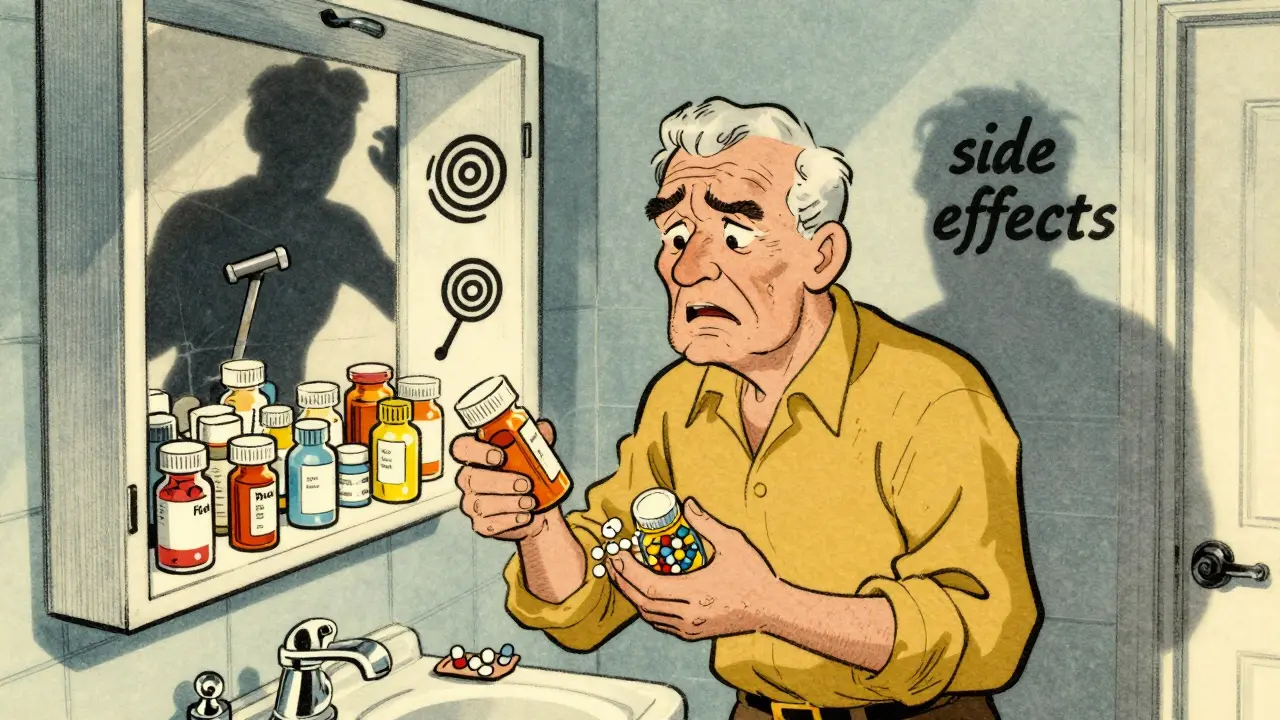
Did you know that older adults make up just 13.5% of the U.S. population but take 34% of all prescription medications? That imbalance creates a perfect storm for side effects, falls, and hospital visits. If you are caring for an aging parent or managing your own prescriptions after age 65, one name keeps coming up in medical circles: the Beers Criteria. It is not just a list; it is a safety net designed to catch dangerous drug habits before they cause harm.
For years, doctors prescribed the same pills to seniors that they gave to younger patients. We now know that doesn't work. Aging bodies process chemicals differently. Kidneys slow down. Livers change how they break down toxins. The Beers Criteria helps healthcare providers navigate this biological shift, ensuring that the medicine cures rather than harms.
What Exactly Is the Beers Criteria?
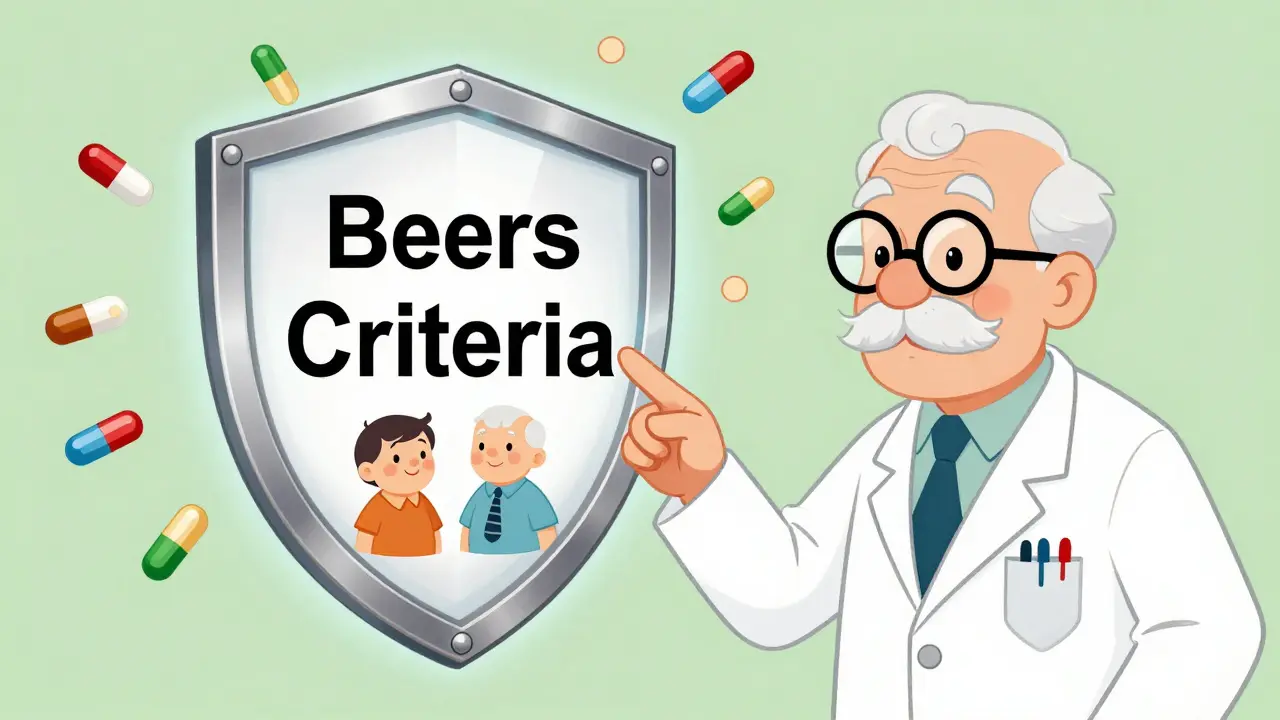
The American Geriatrics Society (AGS) Beers Criteria is a clinical guideline system that identifies medications with risks that outweigh their benefits for adults aged 65 and older. Think of it as a "do not fly" list for certain drugs when combined with aging physiology.
It started small. In 1991, Dr. Mark Beers created a simple list of meds to avoid in nursing homes. By 2011, the American Geriatrics Society formally adopted it. Since then, it has been updated every three years. The most recent major update dropped on May 3, 2023. An expert panel reviewed over 7,300 high-quality studies to refine the list. They added 32 new medications and removed 18 based on fresh evidence. This isn't static advice; it evolves with science.
Why does this matter to you? Because potentially inappropriate medication use affects about 23% of community-dwelling seniors. It contributes to 15% of all hospital admissions among older adults. When you understand the Beers Criteria, you gain a powerful tool to question prescriptions and advocate for safer alternatives.
The Five Pillars of the Beers List
The criteria aren't just a random collection of bad drugs. They are structured into five distinct sections to help clinicians think critically about prescribing. Here is how the logic breaks down:
- Avoid Generally: These are drugs that offer little benefit and high risk for almost all seniors. First-generation antihistamines like diphenhydramine (Benadryl) sit here. They cause confusion, dry mouth, and constipation due to strong anticholinergic activity. The evidence against them is solid.
- Avoid in Specific Conditions: Some drugs are okay for healthy seniors but dangerous if you have certain diseases. For example, nonsteroidal anti-inflammatory drugs (NSAIDs) like ibuprofen can worsen heart failure. If you have a weak heart, these painkillers might push you toward crisis.
- Use with Caution: These meds require close monitoring. Anticoagulants like dabigatran carry a strong caution flag for adults over 75 or those with low kidney function. The risk of gastrointestinal bleeding is higher compared to older options like warfarin.
- Harmful Drug-Drug Interactions: Two "safe" drugs can become deadly together. Combining anticholinergic medications with opioids increases the risk of severe constipation and cognitive decline. The whole becomes more toxic than the sum of its parts.
- Renal Dosing Adjustments: As kidneys age, they filter less. Drugs like gabapentin must be dose-reduced when creatinine clearance drops below 60 mL/min. Ignoring this leads to drug buildup in the blood, causing dizziness and falls.
In the 2023 update, there are 134 medications or classes flagged across these categories. Knowing which bucket a drug falls into helps you have smarter conversations with your doctor.
Beers vs. STOPP/START: Which Tool Wins?
You might hear about another tool called STOPP/START (Screening Tool of Older Persons' Prescriptions). It is popular in Europe. So, which one should you trust?
| Feature | Beers Criteria (AGS) | STOPP/START Criteria |
|---|---|---|
| Primary Region | United States | Europe / Global |
| Adoption Rate | 87% of U.S. healthcare systems | 42% of European systems |
| Focus | Individual medication risks | Condition-specific prescribing |
| Regulatory Link | Mandated by Medicare Part D for MTM | Voluntary clinical guideline |
| Best For | Outpatient polypharmacy management | Complex comorbidities |
The Beers Criteria wins on adoption in the U.S. because it is baked into Medicare Part D programs. If you are on Medicare and take eight or more medications, your plan likely uses Beers to review your regimen. However, STOPP/START has an edge in complexity. It looks at whether you are missing a treatment (START) rather than just avoiding a bad one (STOPP). Beers can sometimes generate "false positives," flagging a drug as bad even if it’s necessary for a specific short-term issue. Both tools have value, but Beers is the standard for American seniors.
Real-World Impact: Does It Actually Work?
Guidelines are useless if they don’t change behavior. Doctors and pharmacists are reporting real results. A study in the Journal of General Internal Medicine showed a 28% reduction in adverse drug events when practices implemented Beers properly. That is nearly a third fewer bad outcomes.
Consider Dr. Lisa Chen, a geriatrician who shared her experience on Sermo. After integrating 2023 Beers alerts into her electronic health record (EHR), she saw a 43% drop in benzodiazepine prescriptions for insomnia in patients over 75. Benzodiazepines are notorious for causing falls and memory issues in seniors. Replacing them with non-drug therapies or safer alternatives saved lives.
But it’s not all smooth sailing. Alert fatigue is a real problem. Dr. Robert Torres, a primary care physician, noted that his system generates 12 Beers alerts per patient visit. When everything is a warning, nothing feels urgent. This is why pharmacist-led reviews are crucial. Pharmacists spend time digging into the "why" behind the alert, distinguishing between a critical error and a manageable exception.
Common Culprits: Drugs to Watch Out For
You don’t need to memorize all 134 entries, but knowing the frequent offenders helps. Here are some common household names that often trigger Beers flags:
- Diphenhydramine (Benadryl): Often used for sleep or allergies. It causes next-day grogginess and confusion. Safer alternatives include second-generation antihistamines like loratadine for allergies or cognitive behavioral therapy for insomnia.
- Benzodiazepines (Xanax, Valium): Used for anxiety and sleep. High risk of falls, fractures, and dependence. The 2023 update emphasizes tapering off these drugs gradually rather than stopping cold turkey.
- Opioids (Oxycodone, Hydrocodone): While useful for acute pain, long-term use in seniors carries high risks of constipation, respiratory depression, and falls. Non-opioid pain strategies are preferred.
- Metoclopramide (Reglan): Used for nausea. Long-term use increases the risk of tardive dyskinesia, a movement disorder that can be irreversible.
If you see any of these in your cabinet, ask your doctor if there is a safer alternative. Just because it worked ten years ago doesn’t mean it’s safe today.
Implementation Challenges and Future Directions
Even with clear guidelines, implementation is tricky. Only 41% of primary care practices consistently apply the Beers Criteria according to CDC data. Why the gap? Time and training. Doctors are busy. Learning the nuances takes 4-6 weeks of practice. The AGS offers a 2.5-hour continuing education course, but not everyone completes it.
Technology is helping. Epic Systems, a major EHR provider, reports that organizations using their Beers module saw a 37% reduction in inappropriate prescribing within six months. The key is integration. Alerts must be smart, not spammy.
Looking ahead, the landscape is shifting. In July 2025, the AGS released an "Alternative Treatments" guide, offering 147 evidence-based swaps for Beers-listed drugs. This moves beyond saying "no" to saying "try this instead." For example, instead of benzos for sleep, consider cognitive behavioral therapy for insomnia (CBT-I).
Artificial intelligence is also entering the fray. The AGS is partnering with Google Health AI to predict which patients are at highest risk from Beers-listed meds. By 2026, we expect expanded renal dosing guidance to cover 100% of medications eliminated by the kidneys, closing a current gap where only 68% have specific recommendations.
How to Advocate for Your Safety
You are the final checkpoint in your medication safety. Here is what you can do:
- Keep a Master List: Write down every pill, supplement, and over-the-counter med you take. Include doses and frequencies.
- Ask About Alternatives: If prescribed a Beers-flagged drug, ask, "Is there a safer option for my age group?"
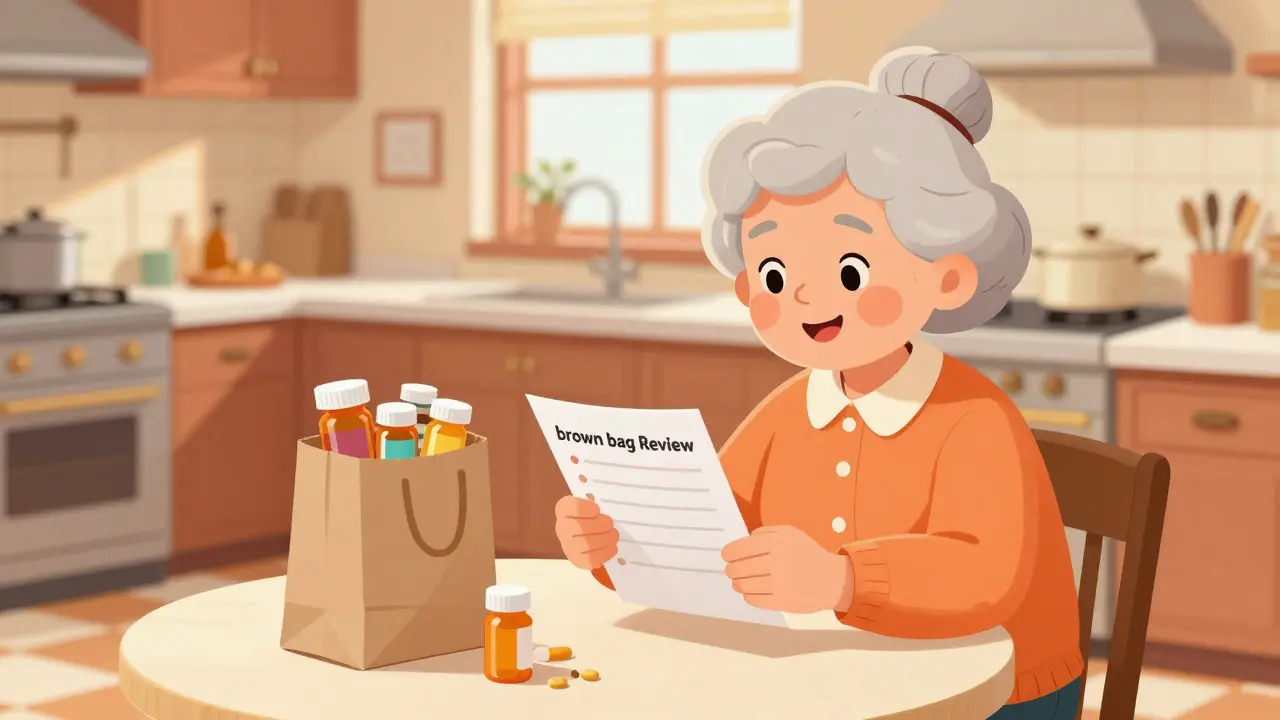
- Review Annually: Schedule a "brown bag" review with your pharmacist once a year. Bring all your bottles. Let them check for interactions and appropriateness.
- Monitor Side Effects: New confusion, dizziness, or falls? Report them immediately. They may be drug-related, not disease-related.
- Understand Exceptions: Sometimes a Beers drug is necessary. Palliative care is a prime example. Symptom relief may justify a risky drug. Discuss the risk-benefit ratio openly with your provider.
Remember, the goal isn't to stop all medications. It's to optimize them. Polypharmacy-taking many drugs-is common in seniors. But each additional pill adds complexity and risk. The Beers Criteria helps trim the fat, keeping only what works safely.
Is the Beers Criteria legally binding for doctors?
No, the Beers Criteria is a clinical guideline, not a law. Doctors can prescribe listed medications if they believe the benefits outweigh the risks for a specific patient. However, Medicare Part D plans use it for mandatory medication therapy management reviews, making it a de facto standard for coverage decisions in many cases.
Can I stop taking a Beers-listed medication on my own?
Never stop a prescription medication without consulting your doctor. Suddenly stopping drugs like benzodiazepines or beta-blockers can be dangerous or even life-threatening. Always work with your healthcare provider to create a safe tapering or switching plan.
How often is the Beers Criteria updated?
The American Geriatrics Society updates the Beers Criteria every three years. The latest version was published in May 2023. The next major update is expected in 2026, which will likely include expanded renal dosing guidelines and AI-driven risk predictions.
Does the Beers Criteria apply to supplements and over-the-counter drugs?
Yes. Many over-the-counter drugs, such as diphenhydramine (Benadryl) and certain NSAIDs, are included in the Beers Criteria. Supplements can also interact with prescription meds. Always disclose all OTC products and supplements to your doctor and pharmacist.
What is the difference between Beers and STOPP/START?
Beers focuses on identifying individual medications that are potentially inappropriate for older adults. STOPP/START is a broader tool that also identifies under-prescribing (treatments that should be started). Beers is dominant in the U.S., while STOPP/START is more common in Europe. Both aim to improve medication safety but approach it from slightly different angles.


Comments
The distinction between clinical guidelines and legal mandates is crucial for understanding patient autonomy in geriatric care.
you are all just sheep following the herd. these lists are designed to make you feel helpless so you buy more supplements from big pharma fronts. it is a moral failing of society to let old people suffer instead of letting them die with dignity on their own terms.
This is exactly why we need proactive reviews! Great info here. Keep fighting for safer meds!
OMG my mom takes benadryl every night and i thought she was just getting senile but now i realize its the drugs!!! i am so mad at her doctor for not telling me this sooner like how could he be so negligent?? i am going to yell at him next time i go in there because its totally his fault she is confused and falling down all the time and its just unacceptable behavior from medical professionals who should know better than to give seniors poison
It is quite evident that the AGS is merely a front for pharmaceutical companies seeking to shift liability away from themselves while simultaneously creating new markets for "safer" alternatives which are equally toxic yet marketed under different names to confuse the elderly population into compliance with their sinister agenda.
One must consider the profound implications of such standardized criteria when applied to individuals whose physiological complexities defy reductionist categorization, for the very essence of geriatric medicine lies in its nuanced approach to each unique constitution rather than blanket prohibitions that ignore the holistic interplay of mind, body, and spirit in the aging process which cannot be encapsulated by mere lists compiled by bureaucrats who lack true understanding of human vitality.
they want you to stop taking painkillers so you suffer in silence while they count their money its a conspiracy against the poor and old people think about it why would they release this list right before the new tax season its all connected to control your healthcare spending and keep you weak and dependent on their system never trust the government or doctors they lie to you all the time
The epistemological framework underlying the Beers Criteria reveals a fascinating tension between empirical data and clinical intuition, suggesting that while statistical significance may dictate avoidance, the phenomenological experience of the patient often necessitates a more fluid interpretation of these rigid boundaries, thereby inviting us to contemplate the very nature of therapeutic efficacy in the twilight years of existence where comfort frequently outweighs longevity as the primary metric of success.
I love seeing American standards leading the way in healthcare safety! It shows our superiority in medical science compared to other nations who still rely on outdated methods. We should be proud that our Medicare systems enforce these rigorous checks to protect our citizens from harm, proving once again that the US leads the world in innovation and care for our elders.
Great points!! I always recommend bringing ALL bottles to the pharmacist!! It really helps catch interactions!! Stay safe everyone!!
The ethical imperative to prevent harm through medication optimization is undeniable, yet one must critically analyze the systemic failures that allow inappropriate prescribing to persist despite clear guidelines, for it reflects a deeper moral decay within our healthcare infrastructure where profit motives often supersede patient welfare, demanding immediate and assertive action from both practitioners and policymakers to rectify these egregious oversights before further tragedy occurs among our vulnerable senior population.
it is absolutely disgusting how people blindly follow these lists without questioning the ulterior motives behind them. the elites who create these guidelines have no idea what real life is like for normal people. you are all fools for believing that stopping a drug will magically fix your problems when the root cause is societal neglect and lack of spiritual guidance. wake up sheeple!
The dichotomy between prescriptive caution and therapeutic necessity invites a philosophical inquiry into the nature of risk itself, compelling us to examine whether the avoidance of potential harm constitutes a higher virtue than the pursuit of symptomatic relief, thus challenging the foundational assumptions upon which modern geriatric pharmacology is constructed and urging a reevaluation of our collective values regarding quality of life versus mere survival.