
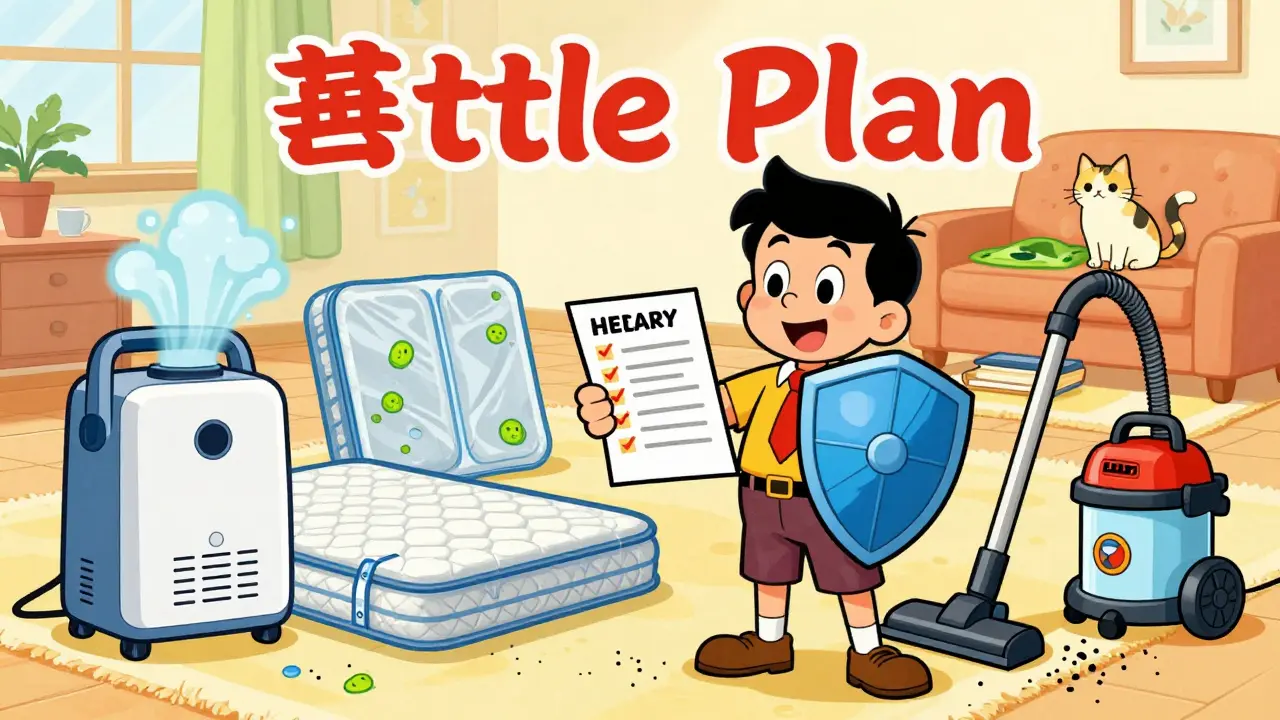
You wake up sneezing, your eyes itch, and that familiar chest tightness is back. You take your medication, but the symptoms linger. Why? Because while medicine treats the reaction, it doesn't stop the trigger. If you live with allergies or asthma, your home might be working against you. Allergen avoidance is the systematic reduction of exposure to substances that trigger immune responses in sensitive individuals. It’s not just about cleaning; it’s about engineering your environment to keep allergen levels below the threshold where they cause harm. The American Academy of Allergy, Asthma & Immunology (AAAAI) has long identified environmental control as a primary goal in managing respiratory conditions. Recent data from the 2023 Allergic Rhinitis and its Impact on Asthma (ARIA) guidelines reinforces this: avoiding triggers isn’t optional-it’s essential for reducing medication needs and improving quality of life. With nearly 50 million Americans affected by allergic diseases, mastering these strategies can change how you feel every single day.
Why Single Fixes Fail: The Power of Combined Strategies
It’s tempting to buy one gadget and think you’re done. Maybe you get an air purifier, or maybe you wash your sheets once. But here’s the hard truth: single-intervention strategies often fail. A 2023 scoping review of 15 randomized controlled trials found that doing just one thing-like using bedding encasements alone-reduced allergen exposure by 40-65% but failed to produce statistically significant symptom improvement in 78% of studies. To see real results, you need a multi-faceted approach. Comprehensive plans combining three to five interventions-such as HEPA filtration, humidity control, and targeted cleaning-reduce allergen exposure by 75-90%. These combined efforts demonstrated clinically meaningful symptom reduction in 83% of cases. Think of it like locking doors: if you lock the front door but leave the windows open, the burglar still gets in. You have to seal all the entry points.
Taming Dust Mites: The Most Common Indoor Enemy
If you have indoor allergies, house dust mites (HDM) are likely your main culprit. They affect 80% of allergy sufferers in the United States. These microscopic creatures thrive in warm, humid environments and feed on dead skin cells. Their waste products are what actually trigger your immune system. Here is how you fight them effectively:
- Impermeable Covers: Encase your mattress, duvet, and pillows in zippered, allergen-proof covers. Studies show this reduces allergen exposure by 73-90%. Look for covers labeled "impermeable" or "allergen-proof," not just "dust-resistant."
- Hot Water Washing: Wash all bedding weekly in hot water. The temperature must reach at least 130°F (54.4°C) to kill the mites. Cold water cleans the fabric but leaves the mites alive.
- Humidity Control: Dust mites cannot survive in dry air. Keep your indoor relative humidity below 50%. Use a hygrometer to monitor levels and a dehumidifier if necessary.
Pet Dander Management: Coexisting Without Symptoms
Loving your pet but hating the sneezing? Pet dander management requires rigorous intervention because proteins like Fel d 1 (from cats) and Can f 1 (from dogs) are sticky and airborne. Removing pets entirely reduces cat allergen concentrations by 100- to 1000-fold over six months, but that’s not always realistic. If you keep your pets, try these proven methods:
- Create Pet-Free Zones: Restrict pets to specific areas, particularly keeping them out of the bedroom. This reduces allergen levels in those zones by 30-55%.
- Bathing Pets: Bathing cats weekly can reduce airborne Fel d 1 by 41%. For dogs, regular grooming helps remove loose fur and dander before it spreads.
- HEPA Vacuuming: Use a vacuum cleaner with a true HEPA filter. Controlled studies show this reduces airborne dog allergen by 66%. Standard vacuums often blow fine particles back into the air.
Mold and Cockroaches: Hygiene and Infrastructure
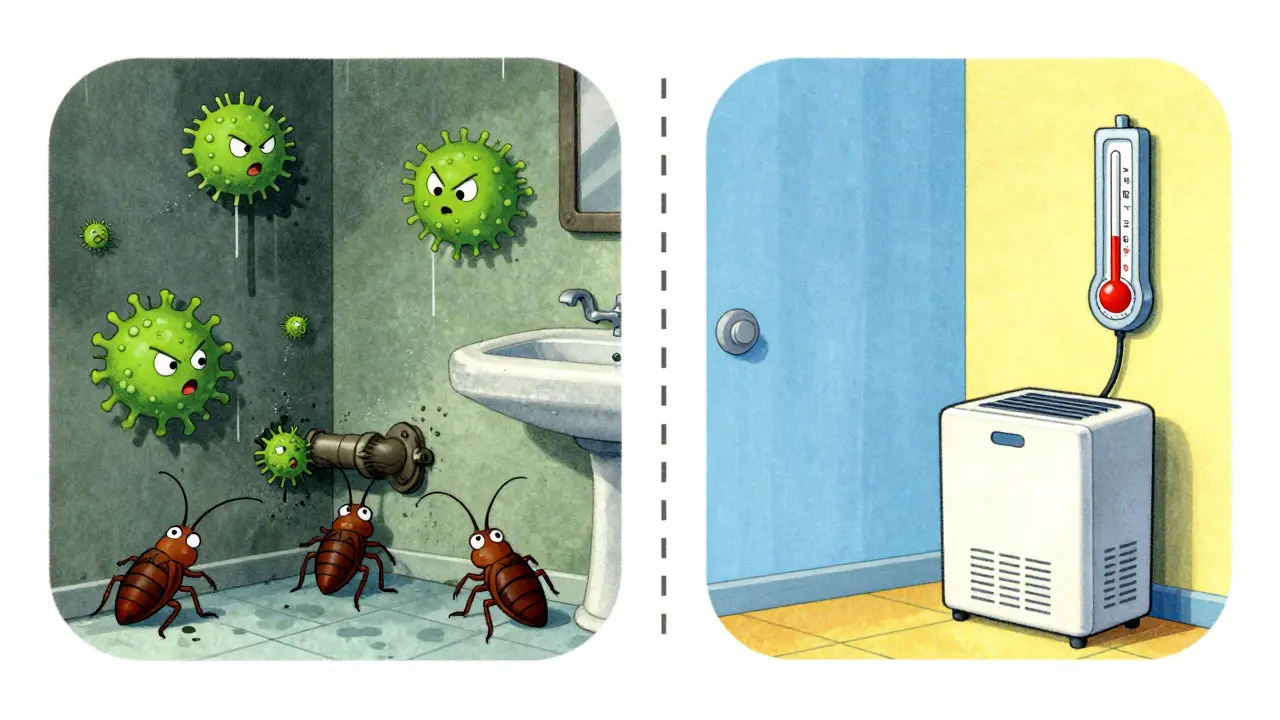
Mold spores and cockroach droppings are potent triggers, especially for asthma. Controlling them involves fixing infrastructure issues rather than just surface cleaning. For mold:
- Control Humidity: Maintain indoor humidity between 30-50%. Dehumidifiers can reduce mold spore counts by 70-85% when used correctly.
- Fix Leaks Fast: Address any water leaks within 24-48 hours. Mold grows rapidly on damp surfaces.
- Clean Regularly: Wipe down bathroom surfaces weekly with antimicrobial agents to prevent colonization.
- Integrated Pest Management: Professional extermination followed by routine cleaning reduced floor allergen levels by 86% in urban studies.
- Eliminate Food Sources: Store all food in airtight containers and empty garbage daily.
- Avoid Aerosols: Use boric acid or bait stations instead of spray pesticides, which can irritate airways further.
| Intervention | Target Allergen | Effectiveness | Estimated Cost |
|---|---|---|---|
| Bedding Encasements | Dust Mites | Reduces exposure by 73-90% | $30-$100 per set |
| HEPA Air Purifier | Pollen, Dander, Mite Waste | Captures 99.97% of 0.3-micron particles | $150-$500+ depending on size |
| Dehumidifier | Mold, Dust Mites | Reduces spore counts by 70-85% | $100-$300 |
| Pet-Free Bedroom | Pet Dander | Reduces allergens in zone by 30-55% | $0 (Behavioral) |
| Professional Extermination | Cockroaches | Reduces floor allergens by 86% | $150-$300 per treatment |
Air Filtration: What Really Works
Not all air cleaners are created equal. To effectively remove airborne allergens, you need a unit with a true HEPA (High-Efficiency Particulate Air) filter. This standard means the filter captures 99.97% of particles as small as 0.3 microns. Many cheap "HEPA-type" filters do not meet this standard. Placement matters too. Studies show that units providing 4-6 air exchanges per hour in the bedroom yield optimal results. Don’t put the purifier in the corner behind a curtain; place it where air flows freely. For severe cases, whole-house systems ($800-$2,500) offer broader coverage, though portable units are more cost-effective for most people starting out.
Implementing Your Plan: A Phased Approach
Overhauling your home environment can feel overwhelming. The ACAAI recommends a three-phase process to make it manageable: Phase 1: Immediate Actions (Weeks 1-2)
- Install HEPA air purifiers in bedrooms.
- Apply dust-proof covers to mattresses and pillows.
- Establish strict pet-free zones.
- Implement humidity control using hygrometers and dehumidifiers.
- Start the weekly hot-water bedding washing routine.
- Begin targeted cleaning regimens for high-allergen areas.
- Engage professional pest control if needed.
- Monitor allergen levels and adjust strategies.
- Replace filters and maintain equipment regularly.
Cost vs. Benefit: Making Smart Investments
Environmental control costs money, but it also saves money by reducing emergency visits and medication use. Basic interventions like humidity control (<$150 for a dehumidifier) and bedding encasement ($30-$100) offer the highest benefit-to-cost ratio. Whole-house purification and professional services have longer payback periods but are worth considering for severe, uncontrolled cases. Remember that strategies targeting multiple allergens simultaneously are 2.3 times more likely to improve symptoms. Investing in a comprehensive plan upfront is smarter than buying random gadgets that don’t work together.
How long does it take for environmental controls to reduce allergy symptoms?
You may notice some relief within days from air filtration and humidity control. However, significant reductions in allergen levels, especially from dust mites and pet dander, can take weeks to months. Comprehensive studies show that consistent implementation over 6-8 weeks yields the most reliable symptom improvement.
Is it better to use an air purifier or a dehumidifier?
They serve different purposes. An air purifier removes airborne particles like pollen and dander. A dehumidifier kills mold and dust mites by lowering moisture. For best results, use both. If you must choose one, pick based on your primary trigger: purifier for pollen/dander, dehumidifier for mold/mmites.
Can I really eliminate pet dander without giving up my pet?
You cannot eliminate it completely, but you can reduce it significantly. Creating a pet-free bedroom, bathing pets weekly, and using HEPA vacuums can lower allergen levels enough to manage symptoms for many people. Combining these with medication often allows successful coexistence.
What humidity level is best for preventing allergies?
Keep indoor relative humidity between 30% and 50%. Levels above 50% encourage dust mite and mold growth. Levels below 30% can dry out mucous membranes, potentially irritating airways. Use a hygrometer to monitor this accurately.
Do air conditioning units help with allergies?
Yes, primarily by filtering outdoor pollen and controlling indoor humidity. Ensure your AC filters are replaced regularly and consider adding a higher-efficiency filter if compatible. Central AC keeps windows closed, which blocks outdoor allergens from entering.